
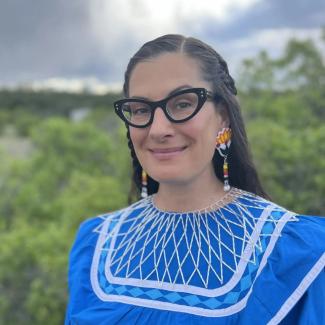
Halito akana (Hello friends),
I hope you, your loved ones, and your communities are well. It’s Spring where I live; the plants are awakening, and the birds are singing exuberantly as the sun rises. After a dry winter, the streams and our community’s water supply are low. Thankfully, rain arrived recently as we planted corn, giving us renewed hope for the growing season. Yet, all feels precarious as climate change underscores how globally cumulative actions impact our local conditions.
Indigenous cosmovisions centered on interconnectivity and relationality teach us how one cannot be truly well without also tending to the wellness of the beings and world around us. This Traditional Knowledge shapes how we care for ourselves and each other, informing what it means to be well and to heal in ways that are holistic, community-oriented, and guided by our relationships to Mother Earth. Although colonialism disrupted our lifeways, including our systems for nurturing health and wellness, Indigenous Peoples are revitalizing these practices.
In this issue, you’ll learn about holistic systems of care rooted in ancestral wisdom informing the present and shaping the future of our communities. These stories speak to the healing power of Indigenous midwifery, culturally-based arts, intergenerational transfer of knowledge about traditional medicines, reviving the feminine path, and a movement shaping social work that incorporates Indigenous Knowledge and respectfully serves Indigenous people. As Hilary Weaver (Lakota) writes, “When we are guided by and can embrace our own ways of being and knowing, we continue our focus on the person and their community, spiritually, physically, emotionally, and psychologically. The health of the whole person is essential for the health of communities.” And as Ukhin Nue Chak (Chak) explains, “well being is not only about physical health, but also about safeguarding traditions, protecting nature, and maintaining strong community connections.” Our communities need us to be well, and we need our communities and our environments to be healthy to experience mutual flourishing.
The World Health Organization (WHO) articulated health as a human rights issue in its 1946 Constitution, and it was formally bound in international law in 1966, via Article 12 of the International Covenant on Economic, Social, and Cultural Rights. More recently, in 2023, the UN Permanent Forum on Indigenous Issues adopted a member-led study with input from the Indigenous Determinants of Health Working Group. In the same year, the WHO adopted the Indigenous Determinants of Health, including “indigeneity” and “colonialism,” when member states passed Resolution 76.16 on the Health of Indigenous Peoples and began directly supporting the design and development of Indigenous-led implementation plans. The second draft of the Global Plan of Action for the Health of Indigenous Peoples (2027-2040) is now available for review and consultations.
Reflecting Indigenous wisdom, the WHO and other bodies define Indigenous Determinants of Health as holistic, collective factors that shape well-being beyond just biomedical models, including connection to land, culture, language, self-determination, and traditional knowledge. These factors are essential for addressing health inequities rooted in colonization, racism, and environmental degradation, and ultimately, they benefit all of humanity and Mother Earth.
As a supporter of Cultural Survival, you are contributing to the efforts of Indigenous Peoples who are safeguarding knowledge systems, languages, and lifeways for future generations. You are also helping us to amplify the voices of those who are leading the way to healing humanity and co-creating a future of mutual flourishing for all of us. Please give generously at www.cs.org/donate.
Hochi yakoe li hoke (I thank you all so much),
Aimee Roberson
(Choctaw and Chickasaw)
Executive Director
Cultural Survival