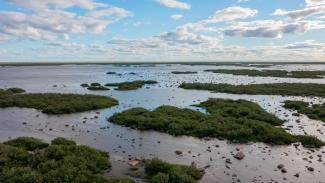
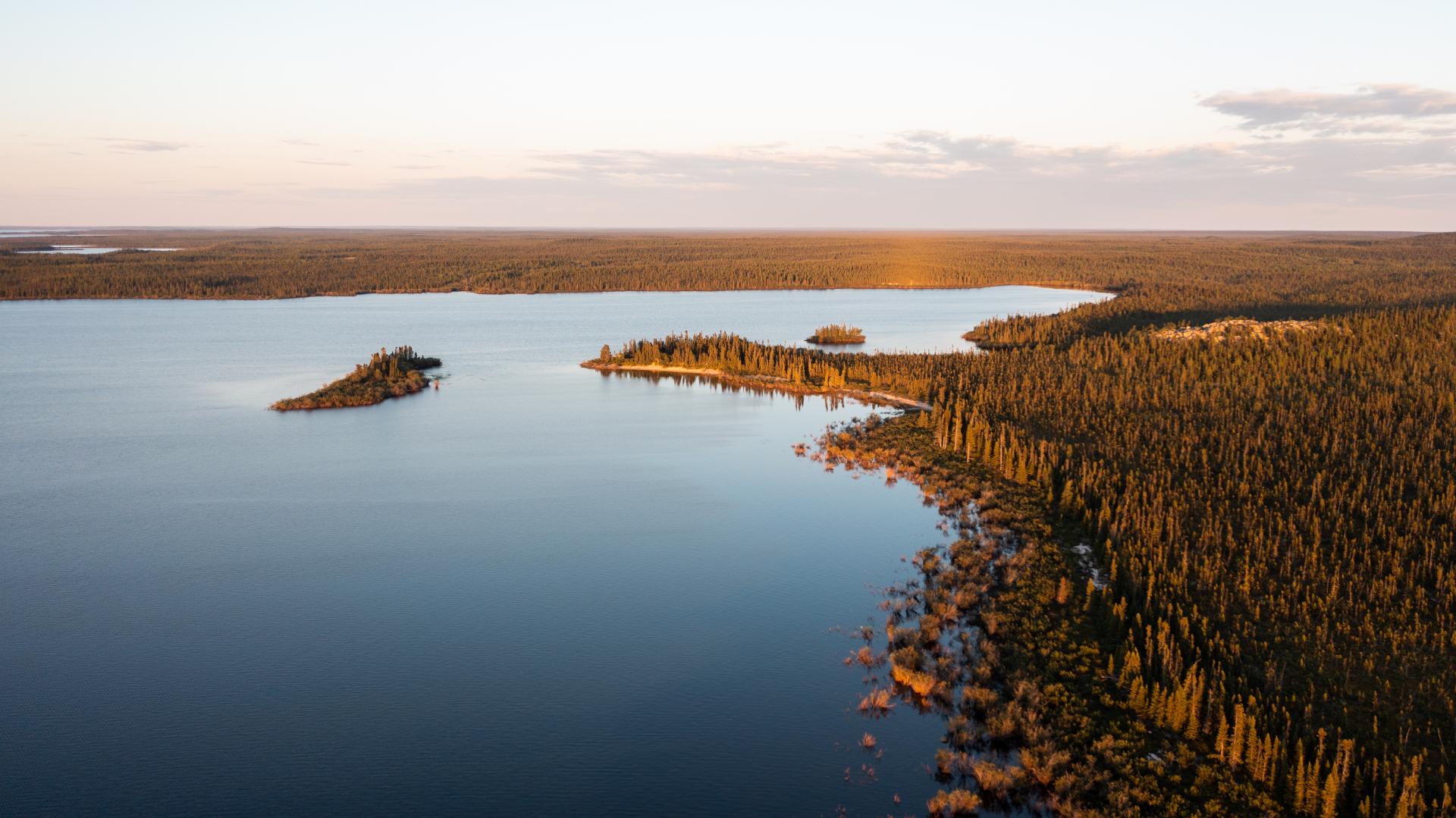
The Seal River watershed in what is now northern Manitoba, Canada, is 12 million pristine acres of forests, wetlands, lakes, streams, and rivers that support iconic species like polar bears, wolverines, gray wolves, and barren-ground caribou. It is also a critically important breeding and migratory stopover location for millions of birds of hundreds of species. Renowned as one of the world’s last remaining ecologically intact watersheds, it covers 50,000 square kilometers of boreal forest and tundra. Stephanie Thorassie (Sayisi Dene) is the Executive Director of the Seal River Watershed Alliance, an Indigenous nonprofit coalition of four First Nations that has been working to establish an Indigenous Protected and Conserved Area to keep the lands and waters protected as industrial interests creep further northward. Shaldon Ferris (Khoisan), Cultural Survival Indigenous Rights Radio Coordinator, recently spoke with Thorassie.
Shaldon Farris: How did you get into this line of work?
Stephanie Thorassie: My parents, my aunties, my uncles, my grandparents, my great-grandparents, my great-great-grandparents, my great-great-great-great-grandparents all come from the land. It is a pleasure for me to do the work that they have been doing for millennia, to steward and help to protect the land that we come from. It is a great honor to pass that responsibility onto my children.
I’ve always been an advocate for culture and language. Not long after I had my daughter, I had to get some work to support my daughter. I actually worked at a salon. I learned through this work how to talk to people and how to connect with people. It’s a really big part of my journey and my story because it helps me now in the work that I do. Before I started in this work, I was in a little accident. I broke both my wrists, and I had to change my career. I remember sitting on the couch in two casts with my partner, and I was talking about this job that I wished existed, where I could go back to my community to advocate for the land, culture, and language, to be with my People and still be able to support my daughter, who was in high school at the time. Six months later, I was pulled into an exciting new project as a project assistant. I have been doing this work for almost seven years now, and I’ve worked every job on this project at the Seal River Watershed Alliance.
SF: How has the Seal River shaped your community’s identity?
ST: The Seal River is one of the major river systems that goes through the watershed. It is the traditional territory of my Nation, the Sayisi Dene, neighboring Dene First Nation community Northlands Denesuline, and two other Cree communities, Barren Lands First Nation and O-Pipon- Na-Piwin Cree Nation. It is an incredible landscape. We have 1.7 billion tons of carbon in the watershed sequestering and turning back into oxygen. It’s like a tiny set of lungs for this planet, the size of Costa Rica. A place without roads, without power lines, without industry or development. And it is our goal to keep it this way, to keep it as nature should be for our Peoples and for humanity.
For us, in our identity, the land is who we are. It’s who we have been. When I’m there, I just feel whole again. Every part of me feels full, and things make sense.
SF: What inspired you to take action to protect the watershed?
ST: It’s about having a voice for the land and having a say in what happens in our backyard. Our Nations, the opinions of our Elders and our community members, our leadership, were never taken into consideration. One year, thousands of caribou came to my community. It was a wonder of nature. People from down south heard about this and came in waves to kill caribou. The caribou are so connected to the Dene Peoples that it was like a part of us was being harmed as well. The late founder [of the Seal River Watershed Alliance], Ernie Buzador, started advocating and talking to people about what to do. In 2016, there were no conservation officers supporting us. We thought, we needed to take this into our own hands to start finding ways to protect the land, the habitat for the caribou, and for all of the animals and birds that use the place.
For us, you cannot separate spirit away from the land. Having this understanding has set up the protected space in a different way than other places around the world, and utilizing, honoring, and upholding that First Peoples’ knowledge sets up the workings of this protected space in a real and holistic way. This philosophy carries us into this project, this way of knowing that we are not better than the nature that we come from. We’re here to work with the land and to try to make decisions with the land based on the ebbs and flows, based on the [beings] that live there who have been on these lands for thousands of years.
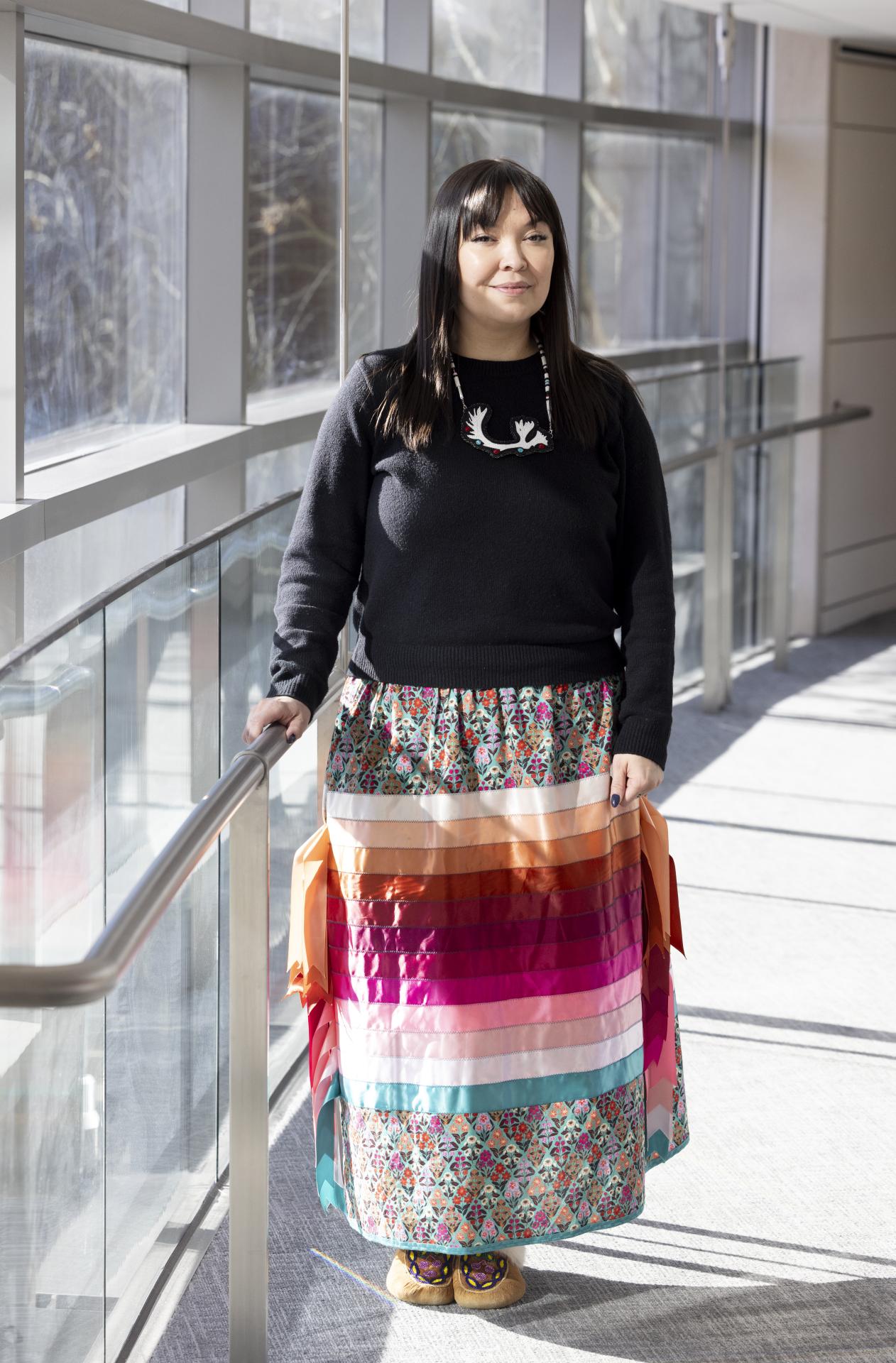
Stephanie Thorassie. Photo by Laurie Swope.
SF: What is the role of women and youth in this movement?
ST: The women, the girls of my Nation and the project, they’re the eyes and ears on the ground, the boots and the moccasins on the land. They’re the ones helping to organize the community engagement. They’re the ones that partner with outside organizations. The women are stepping up and getting the firearms licenses and all the training that’s needed to help with this two-eye seeing approach of utilizing western science as well as Indigenous science and Indigenous knowledge to do the conservation work, the science work, the environmental work, but also the traditional work. It’s the women who work on the caribou hides to make the leather and the tools. We know that without the women in our societies, we will not be successful.
Secondly, the youth are the driving force behind this work. It is the youth that keep us current and remind us often the things that we need to be doing to be better. Before, they didn’t have hope for their futures. We started creating ways to employ people and pay them well for being out on the land, to be themselves, to harvest for people, to check nets for ice and fish, and to go out geese hunting, these kinds of things. Young people now are starting to post on social media that they’re going to be a land guardian. They’re the ones that are doing the monitoring work and the patrolling. We are trying to get them as much training as possible.
SF: How do Indigenous Protected and Conserved Areas differ from other protected areas?
ST: We are utilizing the laws and the rules that govern our people on the land to create and declare the area protected under the philosophies, the Creation stories, and the rules that govern our Peoples on the land. Other protected areas [are] done without the inclusion of the local community members or local Indigenous people. There are issues that come with these other protected places because they expect people to stay out of it, not to hunt in it. They don’t utilize the laws of the people who live there. We’re creating a new type of protected area that doesn’t try to separate science from nature, people from the land. We’re utilizing our culture and our language to keep all of this united in the work to ensure that the biodiversity stays intact.
SF: Tell us about the film, “We are Made From the Land: Protecting the Seal River.”
ST: [It] is a documentary that is on YouTube now. It was created because we needed a way to connect the human side of our project to people. We needed people to see themselves in the work we do and not see nature and the environment as separate. We also needed a way to advocate and to help people understand our reasons for doing this work. We have to do everything we can to protect the land.
Watch the documentary here:
Seal River Watershed. Photo by Jordan Melograna.