By Angel Yraê Ferreira (Payayá, CS Intern)
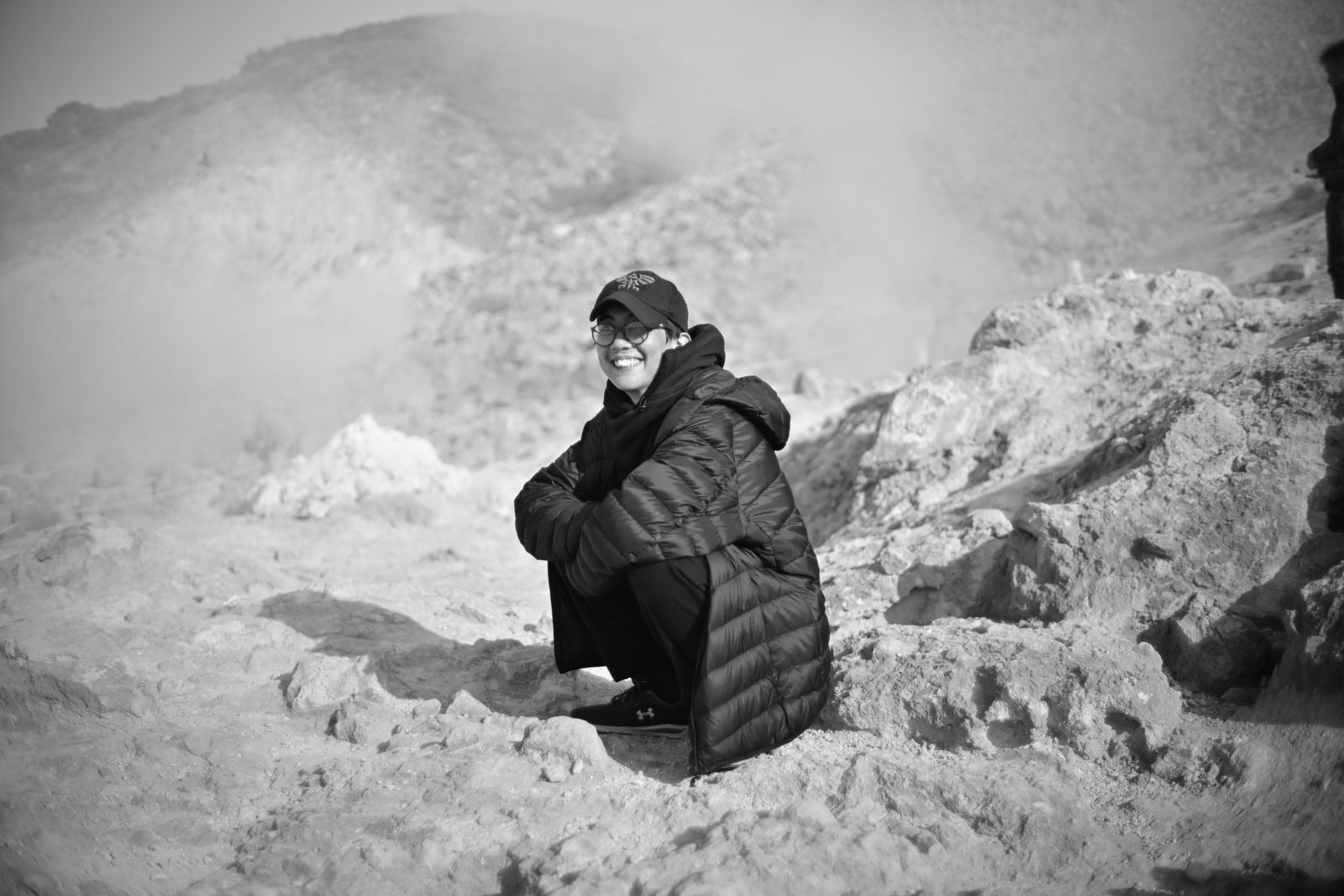
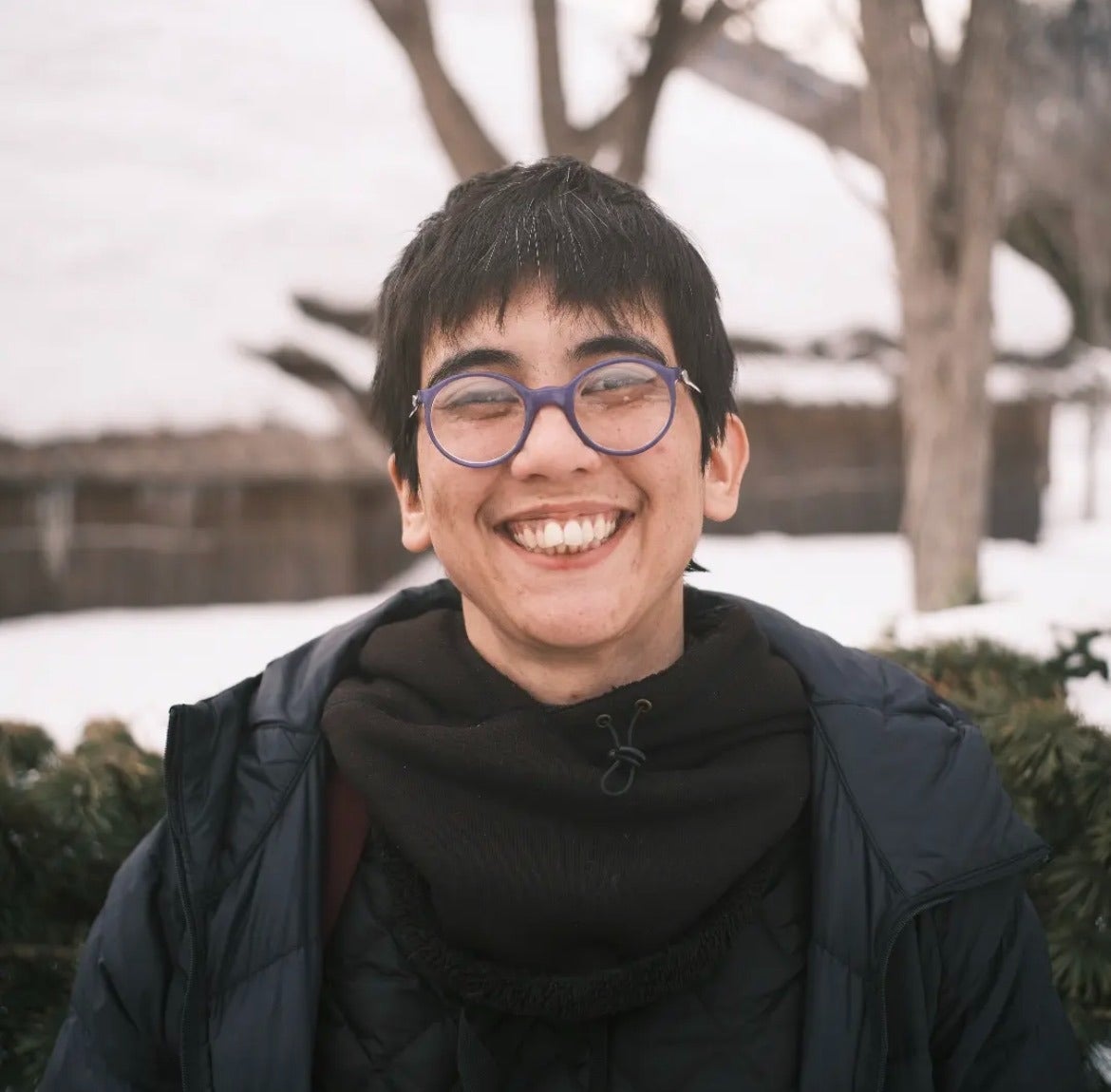
The concrete sprawl of São Paulo can act as a cultural centrifuge, pulling diverse lives into the gears of white aesthetics and capitalist consumption. Yet, it is within this complex urban-diaspora reality that Umeno Morita (Ainu), a descendant of small-town furnishing trades and the Ainu diaspora, navigates academic philosophy. Umeno pursues the intricacies of how Asian-Brazilian bodies are physically and culturally structured across ethnic differences. Refusing to fragment their non-binary identity to fit either the rigid assimilation standards of the Nikkei community or homogenized urban queer narratives, Umeno uses their research to unearth conceptual possibilities within the practices, lived experiences, and stories of the Ainu people in diaspora. In their view, existence transcends the Western binary: in the Ainu language, Ainu simply means "human," offering a powerful framework for indigenous 2SLGBTQ+ survival that reclaims what history attempted to erase. Cultural Survival recently spoke with Morita.
Cultural Survival: What does it mean to you to live Pride from an Indigenous identity, and how does it differ from more visible or urban 2SLGBTQ+ narratives?
Umeno Morita: I live in the city of São Paulo, and while I recognize it as a reference for diversity, it is also a place that "centrifuges" experiences, especially those that exist in "difference." Everything in São Paulo easily falls into the logic of consumption, where access to spaces becomes about money. Consequently, preferences and niches are easily centrifuged into a white aesthetic, capturing and transforming non-white experiences into mere trends.
Existing in a non-binary, non-white, and non-Japanese body gives me a very specific experience in São Paulo. On one hand, the city offers an anonymity that grants greater autonomy away from the 2SLGBTQ+-phobia of my own community (which is highly assimilated and tied to Nikkei/Japanese stereotypes). On the other hand, mainstream 2SLGBTQ+ identities captured by white privilege fail to understand that I cannot separate my indigenous identity from my physical existence. I often feel that if my existence is non-binary, it is because in our language, Ainu means "human/people" and Kuru means "person as an existence of self in a body", and a human is neither man nor woman; it is just a human.
White-washed urban experiences often focus on breaking away from conservative families to create a brand-new gender paradigm. To me, this non-binary, transforming world has always existed. It is embedded in the very words my people use to describe reality. This doesn't mean pre-colonial life was a perfect romance; reproductive ages implied specific community roles regarding who would hunt, plant, or prepare food. But if there were functional roles that we now view as gender roles, our people did not understand themselves through gender before colonization, but through their practices within the community. I don't want to break grand paradigms in the binary gender system; I just want our people to remember that we have always existed without fixing ourselves to binaries. For white people, this always seems to start from a place of creating something new. I think it is more about reclaiming, recreating, and rebuilding what they made us forget about ourselves.
CS: Pride is often talked about as visibility, but visibility can also bring risk. How do you balance the desire to be seen with the need to protect yourself and your community?
UM: Japanese assimilation brings a very rigid moral package. The domestic environment of an Asian family often imposes strict cis-heteronormativity, and I am not just talking about obvious, aggressive rejections. In my own family, I have to protect myself from my sisters, cis-hetero women who align with anti-oppression discourses and vote for trans politicians (like Érika Hilton), yet feel perfectly comfortable practicing violence and belittling me with mockery. Often, they pretend I don't exist to avoid dealing with their own contradictions: understanding political discourse but failing to stop reproducing violence. Inside our families, making yourself visible means being exposed to the violence of cynicism, not from a lack of access to reality, but from deliberate denial.
Protecting the community is a responsibility for anyone who understands themselves as Ainu, cis, or non-cis. I deeply desire for us to reclaim our knowledge of the body and existence in a sense much broader than gender. But I fear São Paulo as a territory of power. This creates a double problem: inside my community and families, there is violence I must protect myself from, and simultaneously, my community needs to be protected from outsiders who, by differentiating us from the Japanese, treat us as objects of ethnic curiosity, pulling us into a loop of consuming ourselves. They consume us as a cultural product under the guise of giving us "visibility." Visibility is deeply tied to this consumption, justifying our introduction into the system as consumers too.
Going back to the violence practiced by my sisters, who are Ainu cis women racialized as East Asian, I realize that protecting ourselves from a visibility we didn't choose involves addressing how our families are already captured by these superficial identity discourses. They are ready to vote for a trans woman for parliament, but not ready to welcome a trans existence in their family. The most agonizing part is seeing the urgency to also protect my sisters from what they consume and from violent logics, as women who have already been targeted by misogynistic pornographic tropes like "asian girls." In this confusion, I realize I need to find spaces where they understand that by violating me, they contribute to the systems that violate them.
There is no real balance; I can't balance it much. But I try to understand the "harm reduction protocol" of each environment by looking at the violence we reproduce among ourselves, our people, and our families. Identifying these patterns in our loved ones is incredibly painful, but inevitable. Concurrently, I try to practice a world that protects my people from what they learned all too well from white people, because reproducing violence is a double self-inflicted wound. This also means looking at the violence practiced by me, because my responses to the world are also contextualized within these systems of oppression.
CS: What aspects of your culture, language, spirituality, or territory have helped you understand your gender identity or sexual orientation in a deeper way?
UM: "Existence" is a word that, to me, connects visible and invisible realities. Whenever I think about how the word "Ainu" simply means "human," I grant myself the existence of a human. The name of our territory is Ainu-Moshiri, meaning "the place where there are humans." Kuru is closer to "person," and even animals can be a person, like crows, which are called Paskuru, meaning something like "messenger person." Or how we in the diaspora call ourselves Ainu-Repunkuru, meaning "Ainu who is a person existing beyond the ocean." Existing is not exclusive to humanity, much less to gender, which is why Ainu words do not define gender the way Portuguese does. I prefer the concept of "existence" because it encompasses everything that is.
This reminds me of a scene in the Brazilian film "Bacurau," when spies from the south enter a bar and ask a local child, "What is someone born in Bacurau called?" They expect a civic demonym like "Bacauruense," but the child simply answers: "A human!" Anyone born in Ainu-Moshiri or descended from it is a human.
To exist with, among, and as animals, plants, and things. I am like the crow, and also like the ocean. I exist in the crossing that defines my existence. I am the ocean itself and the crow itself. Binary gender cannot hold an ocean. We are much more than gender. Continuing to be an island, an ocean, a crow, and ancestors is how we keep ourselves and all of those things alive. How can gender be allowed to anchor so much of a human's existence?
CS: What colonial ideas do you think still influence the way some communities understand gender, sexuality, or diversity?
UM: The community assimilated as Japanese-Brazilian is still perceived through the "model minority" myth. This is a prescriptive myth designed for East Asian ethnic groups, framing them as a distinct phenotype hierarchized above Black and Indigenous groups. It serves to absolve whiteness of historical violence, acting as if Japanese people possess a racial quality of effort, domesticity, obedience, and resignation that Black or Indigenous people supposedly lack. Tucked inside this "model minority" package is cis-heteronormativity as a standard component: the provider father, the cis-composed family, the hetero-composed family.
The pressure to hide diversity gets tangled up with ideas of "etiquette" regarding intimacy. It is true that in Japan, people keep their private lives hidden within the domestic sphere much more than their descendants do in Brazil. This standard of keeping intimacy at home creates an inversion where you cannot speak about anything that deviates from the status quo, all for the sake of maintaining "etiquette." In reality, etiquette is a moral rule with nuances, but it shouldn't be understood as natural. Naturalizing the idea that Japanese people are just "inherently reserved" traps our physical expressions within this rule.
People told me that when I visited Japan, I would miss hugs because people don't hug to greet each other, or that couples don't show affection in public. It's true that you don't see couples kissing in public, and holding hands is rare. But affection *is* shown: children hug their parents, friends walk arm in arm, and grandparents carry their grandchildren. It is sexualized intimacy that is kept out of public view, out of respect for the collective space, not the other way around. While these boundaries are culturally interesting, it becomes incredibly convenient for erasing dissident genders and sexualities.
Conversely, the Ainu people hug with great joy when they greet each other, during celebrations, meetings, or when visiting relatives. Physical contact as a blessing, like placing hands on a younger person's head and face, is very common. Yet, much of the "Japanese etiquette" has also permeated our interactions.
To conclude, the physical gestures minimized under the guise of "Japanese etiquette" are what I perceive as colonized bodies: an economy of movement, a way to ensure certain expressions remain hidden from the public eye. This can serve to protect intimacy in a safe community space, but it can also conceal dissidence. It is no coincidence that the 2SLGBTQ+ community faces deep erasure both in Japan and within Japanese-Brazilian communities.
CS: When you hear the phrase “this didn’t exist before in our cultures,” how would you respond from your experience or from the memory of your Peoples?
UM: I would answer that not even the relational practices of the Shogunate were what people want us to believe they were. The truth is, nobody can truly map exactly how it was; we can only strive to live in our bodies authentically today. In doing so, we discover that many things can and should be different from how our ancestors lived.
I could try to trace a non-binary genealogy into "ancient Ainu history" to prove binaries didn't exist before colonization. I believe I would find many possibilities, especially since, as I mentioned, gender does not appear in our speech, and our language doesn't even have possessive pronouns (like "mine" or "yours"). Ainu is human.
But even if it were true that before colonization there were strictly defined binary gender roles, and no sexual practices deviated from monogamous cis-heteronormativity, would we be forced to accept tradition exactly as it was? I prefer to think that whether "this existed before" or not (and it did), the fact is that it exists *now*, as both ancient and new ways to continue our ancestral paths.
CS: What wounds are caused by having to choose between belonging to your Indigenous community and belonging to the 2SLGBTQ+ community? Is it possible to inhabit both without fragmenting yourself?
UM: It is impossible to exist in the world without fragmenting yourself. Cis-heterosexual identities are also split and fragmented. There is no existence without change, fragments, shifting choices, and evolving attitudes. In my indigenous community, a lot of prejudice is reproduced, and a strict etiquette is demanded. In the 2SLGBTQ+ community, a massive amount of whiteness and consumer logic drives self-affirmation, collectives, and cultural scenes, which is also violent.
Flexibility, having the "agility" to navigate spaces, is perhaps a good way to describe how to inhabit these environments with autonomy and authenticity. The fragments of my indigenous identity give me the strength to confront white aesthetics, and the fragments of my non-binary identity give me the strength to confront the oppressions reproduced within my indigenous community. It is always exhausting, but I need to exist.
CS: What does Indigenous 2SLGBTQ+ resistance look like beyond marches, flags, and institutional spaces?
UM: It manifests in the fight for community protection of our gender and sexual dissidences. I believe we must insist within our communities so that we, as 2SLGBTQ+ indigenous people, receive protection from our elders and across all generations. We must demand that our communities be places of safety. It is difficult because internal moral conservatism is violent. But our people need to understand that not all elders are inherently conservative, and younger people can sometimes be more conservative than the older generations. Once we find those who protect us indiscriminately, exactly as we are, we must push to expand that safe space. Ultimately, we must protect our communities both from external oppressions and from the violence generated by our own internal diversity.
CS: What role do Indigenous languages play in naming identities, affections, and bodies that often do not fit into western categories like “gay,” “lesbian,” “trans,” or “queer”?
UM: I believe they play a role in fragmentation, much like my previous answer. There is no way not to split the experience of living. Identity is mobile. Western categories always seem too fixed to me, with borders that are far too rigid. I think our languages are more "open" or less rigid in what they define.
CS: What would you say to organizations, media, or allies who want to support 2SLGBTQ+ Indigenous people, but sometimes end up using their stories in a tokenistic or extractive way?
UM: Hire 2SLGBTQ+ indigenous people to tell their own stories through your platforms. If media outlets have the means, fill your positions with us so we have the autonomy to use those tools to communicate, or choose not to communicate, on our own terms. I would say to always prioritize community-led choices of communication rather than sending external "correspondents" into our territories and lives. Let us speak for ourselves. We do not want to communicate everything, nor do we want to use the same methods.
CS: Imagining a truly free future, what would an Indigenous community look like where 2SLGBTQ+ people are not only accepted, but recognized as bearers of knowledge, leadership, and healing?
UM: It would be a future focused on protecting existences—both as a people and as a territory. Every fragment matters. Identity would not be static. The practices, functions, and community choices to keep existing wouldn't be tied to this or that specific body, but to the collective importance of what needs to be done for us to be who we are. We exist for the importance of the practice, not for the individual practicing it.