By Maya Lazzaro (Quecha, CS Staff)
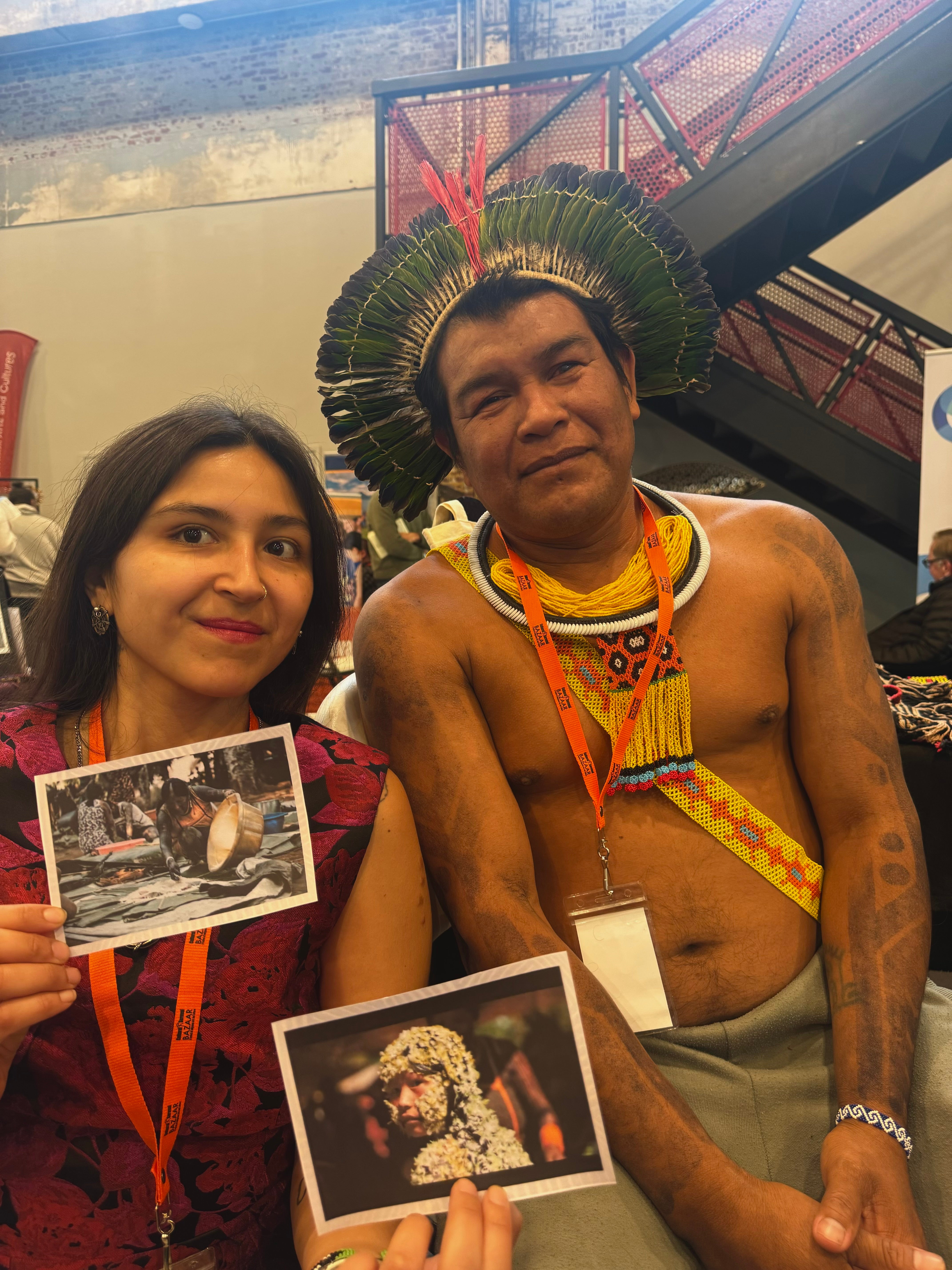
In December 2025, in the cultural epicenter of New York City, where it has been said that more languages are spoken than anywhere else in the world, Pat-i Kayapo (Kayapó) and Dhayany Rios from Associação Indígena Pykôre arrived with three heavy suitcases in hand. Kayapo is a filmmaker whose traditional territories span across the states of Parà and Mato Grosso, Brazil, along the Xingu River.
As he stepped out of the airport, fully covered in his traditional body and face markings of red and black paint made from plant dyes Indigenous to his region, Urucuns, the first stop Kayapo requested was for Mexican food. He had never tasted it before and wanted to try spicy food. So we drove into Queens, found a spot, and for breakfast I ordered him a torta.
It is moments like these that the Cultural Survival Bazaars feel like an out-of-this-world experience, and they often are—welcoming and spending time with artisans like Kayapo and Rios, who arrive in New York en route to the Cultural Survival bazaars after traveling by boat, bus, and finally three planes.
Cultural Survival Bazaar artisans travel long distances to attend our bazaars. Often, it is their first time outside their communities and may be the first time they introduce their art and products to a public market, much less an international one. Through their work, they share pieces of their history and identity: handmade earrings, necklaces, bracelets, rings, baskets, and clothing. During their demonstrations, they also present a variety of materials produced by Indigenous communities themselves, reflecting the traditions of the five territories they represent. A’Úkre, Ngotajte, Pykararankre, from Terra Indígena Kayapó and Kendjam & Karema from Terra Indígena Menkragnoti.

One of the biggest signals of a different culture, and one of the most important traditions for many Indigenous communities, is food: hunting, harvesting, fishing, the meals they eat, and the way they cook them. During his time here and at any time of day, Kayapo often asked for rice, beans, yuca, and plantains. This meal represented his community and his People perfectly; the land, territory, and animal relations. He would often request this meaningful meal to nourish himself during the long days at the Bazaar.
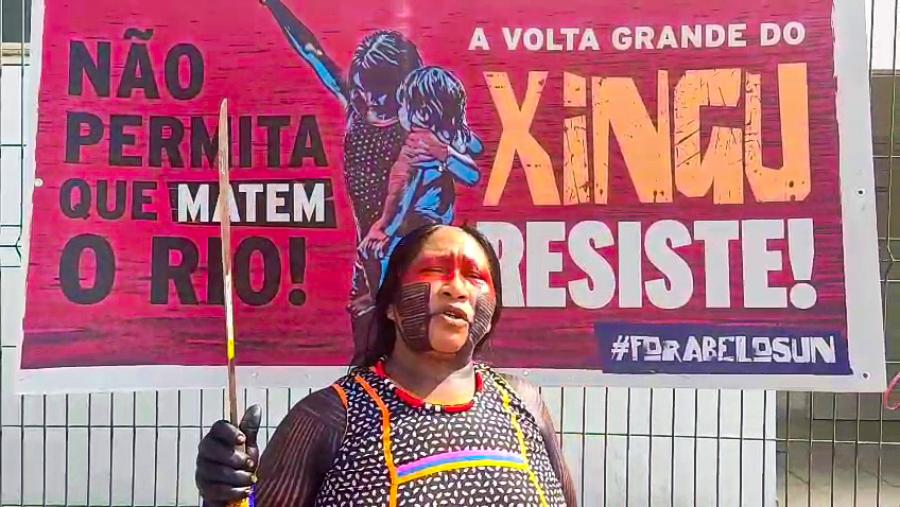
Today, there are about 12,000 Kayapó living amongst approximately 50 villages, spread across more than 9 million hectares on 5 federally demarcated Indigenous lands. Their land is their cosmological universe. For the Kayapó, resistance is dance, food, beadwork, traditional bodypainting, and song. Their resistance is against mining and logging in their forest home.
Also known as “The People of the Water Source,” the Kayapó warn us outsiders—the rest of the world—about the consequences of our consumption and consumerism. They see firsthand how the beings of the forest reveal the damage being done.