By Edson Krenak (Krenak, CS Staff)
Many things bring Indigenous Peoples, Quilombola, and local communities of Brazil’s Jequiitinoha Valley together: festivals, religious celebrations, schools, churches, artisan fairs, family fathering, and the everyday work of surviving in a dry and beautiful territory. Every time I visit them, I'm blessed with the radical hospitality of those who live their lives not only to survive the historical challenges of the region, but also to maintain the beauty and the force of the region's cultural expressions, where once my ancestors traveled.
But on this day, these communities gathered for justice. They came to different things that should never have to be defended in a courtroom: water, food, health, safe homes, the right to come and go, and the right to live with dignity in their own healthy and traditional territory.
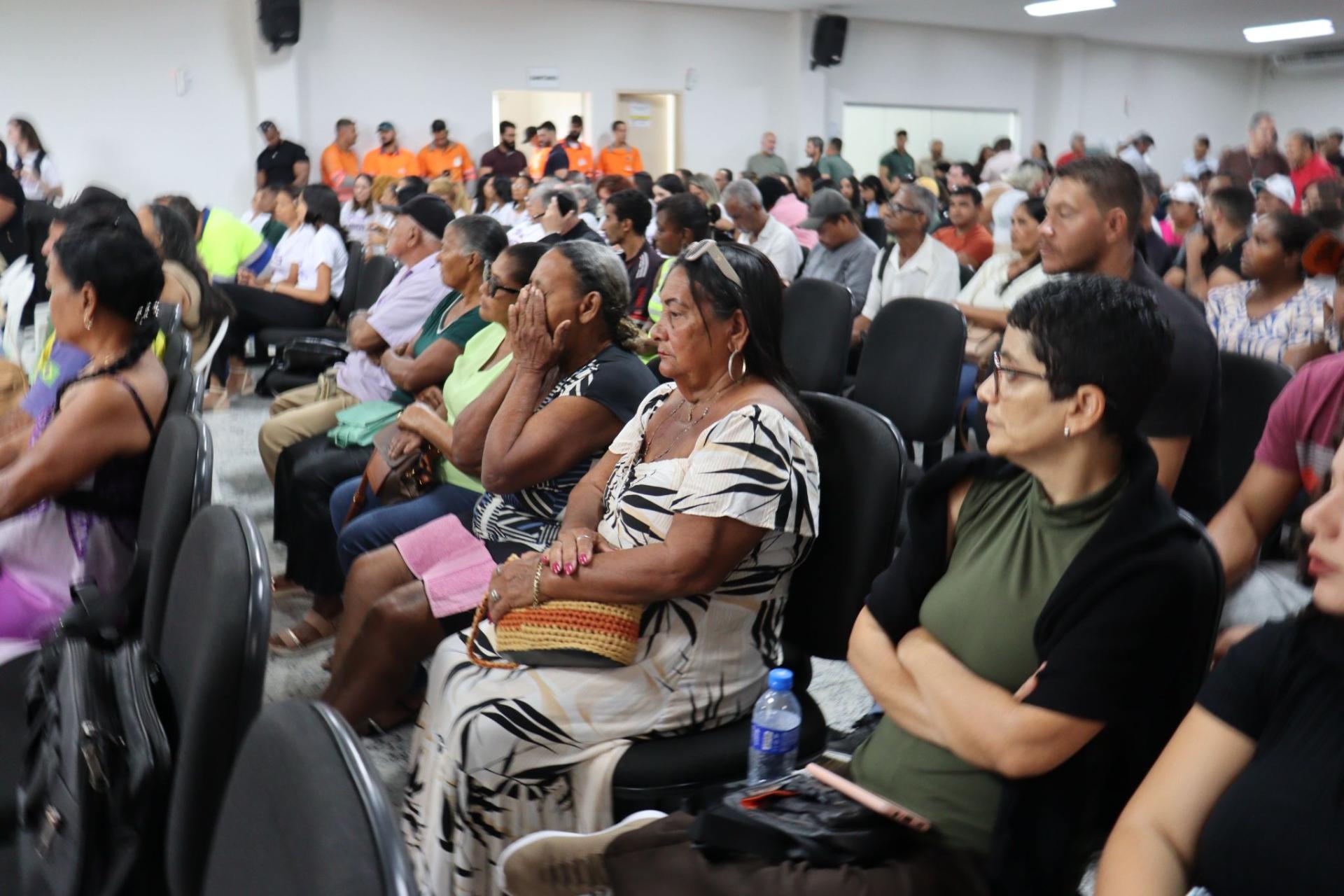
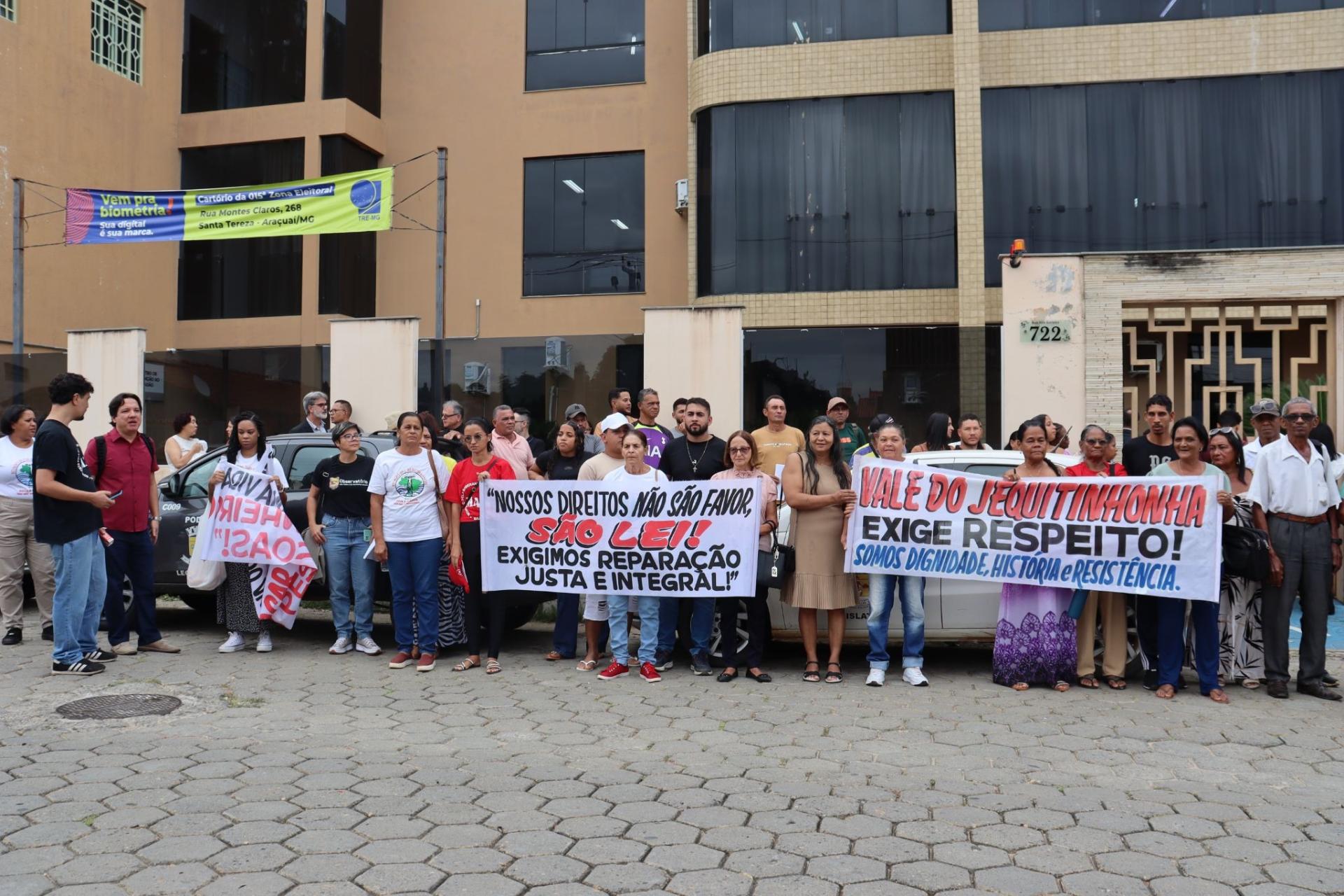
It was hot. It was dry. The Valley has been facing the pressure of several climate events, drought, scarcity, biodiversity loss, rivers drying, but people arrived carrying more than bother of water, they carried placards, Tshirts, banners, and handwritten signs with phrases that perhaps the court had not heard before, or had heard too many times without listening, also for the visitors, journalists, authorities, curious Peoples and especially the company`s staff:
“Our rights are not favors; they are law.”
“The Jequitinhonha Valley demands respect.”
“No profit is worth more than life.”
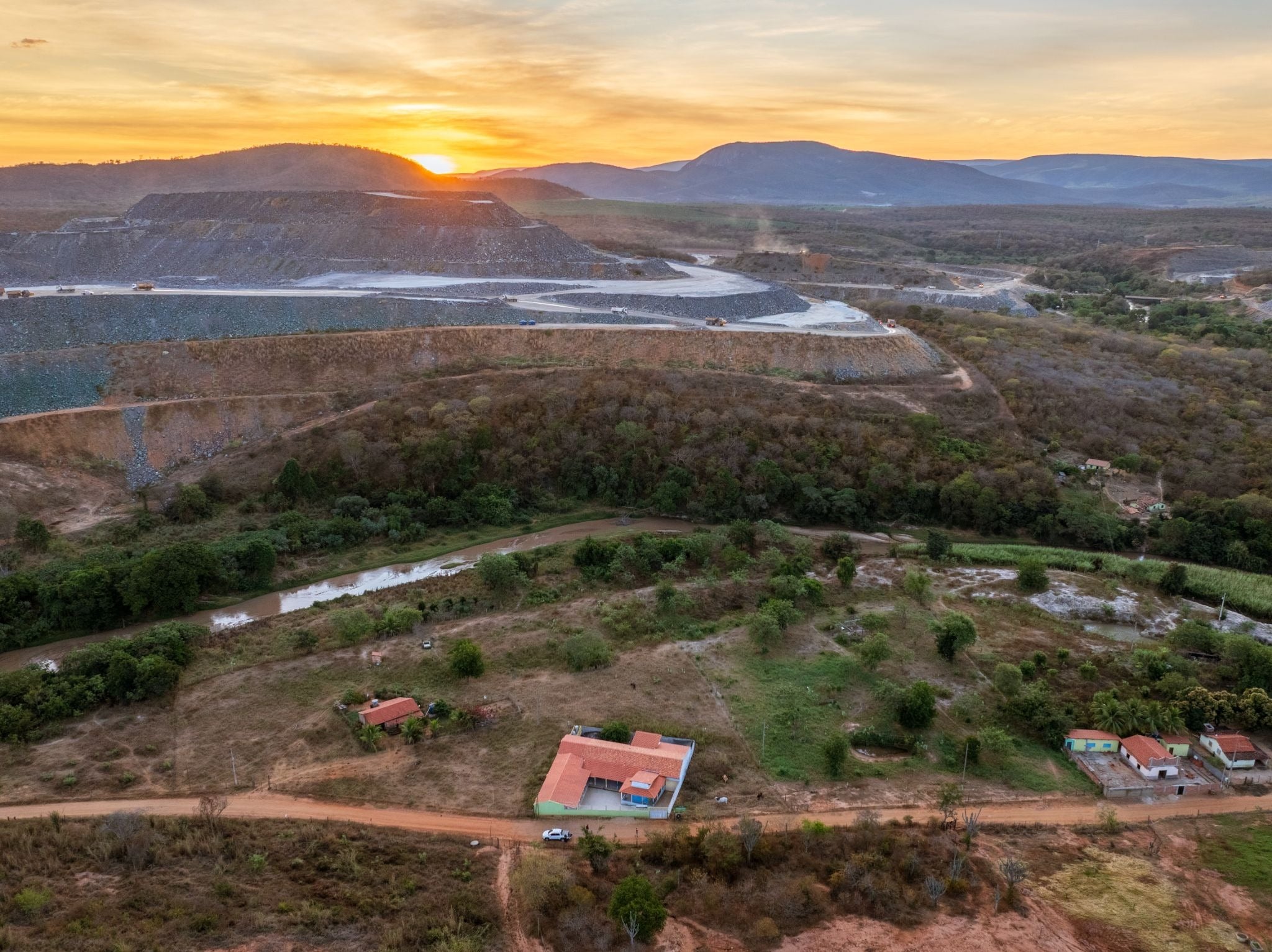
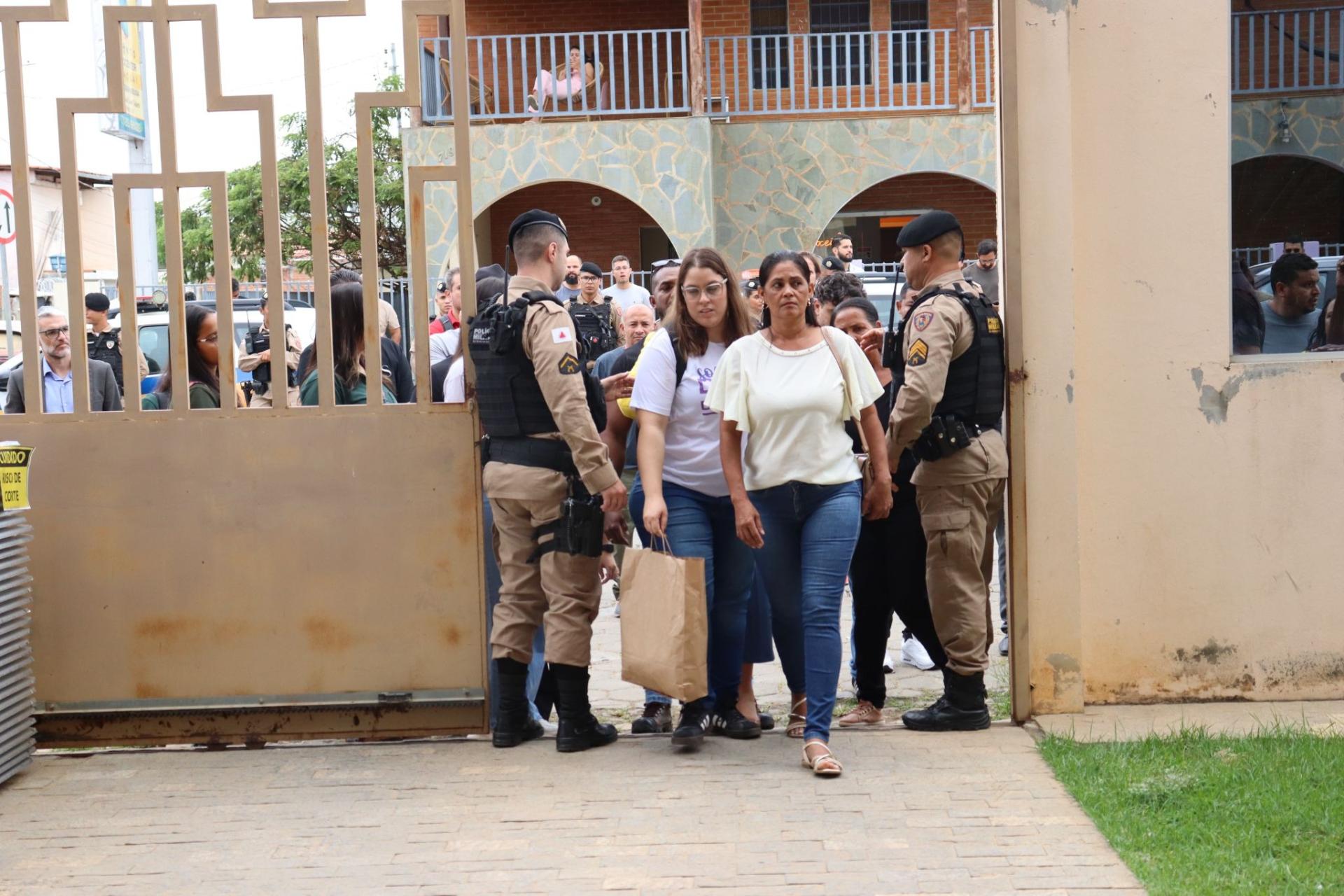
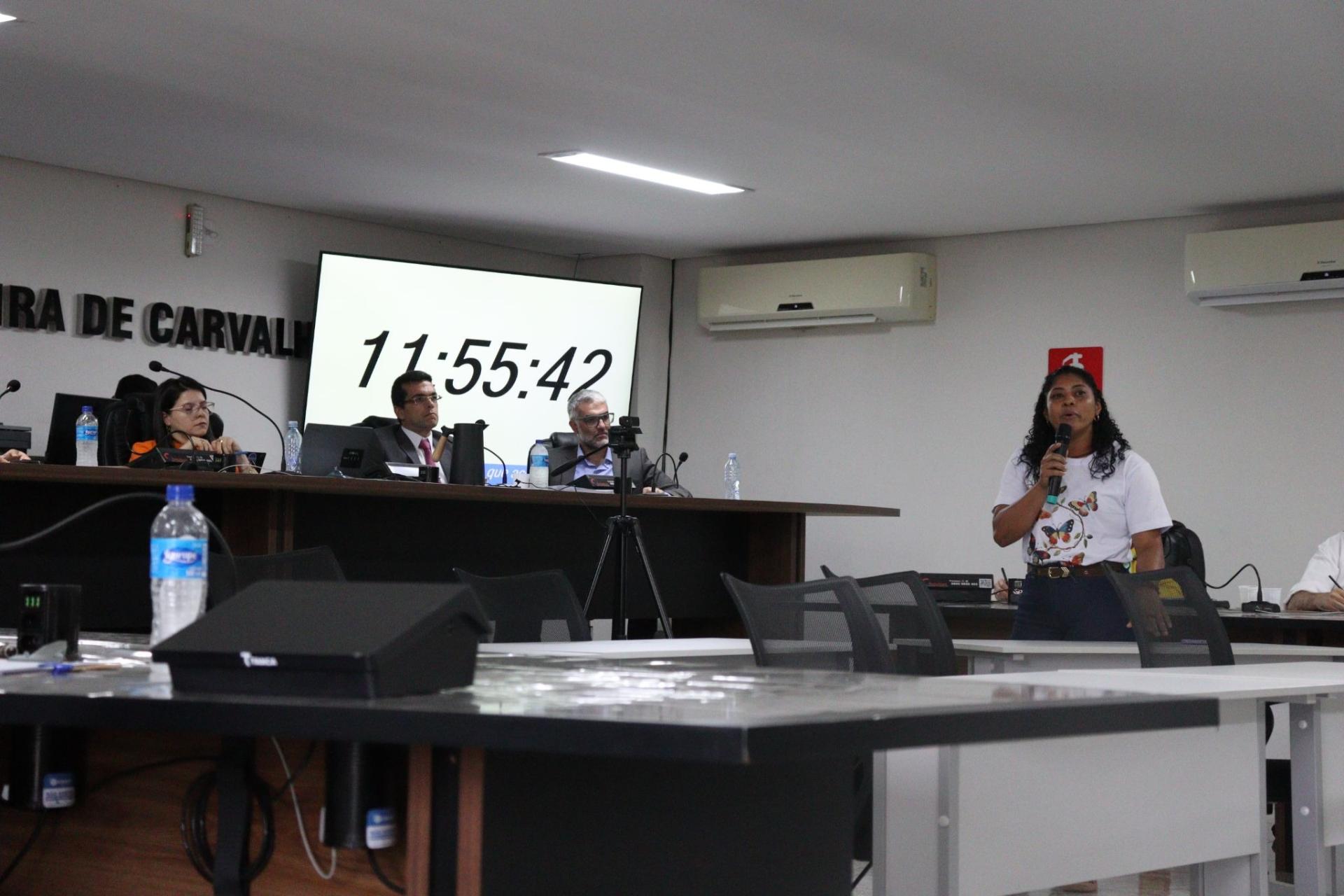
Inside the courtroom, the conflict was translated into legal language: civil action, precautionary measures, public prosecutor evidence, amicus curiae advocacy brief and testimonies, monitoring data, technical reports, burden of proof. Outside and inside, the communities translate the same conflict into another language: dust in the lungs, explosions shaking and cracking the walls and houses, roads blocked and controlled by ming infrastructure, fear and anger, thirst, and the sensation the the so-called green transition is everything but not just, and arrived in their territory wearing the old face of extraction that creates sacrifice zones and and loss of livelihoods.
The Sigma Lithium case in Minas Gerais Brasil, is more than a local mining dispute. It is a test case for responsible finance and for what a just transition really means. But given only who has the money, we ask whether investors, development banks, and global markets are willing to listen to communities before the courts force them to.
Sigma Lithium has presented itself internationally as a model of “green lithium” and sustainable mining. Their website and public relations are very close to the language of markets, as it appears as part of the solution to the climate crisis: lithium for electric vehicles, batteries, decarbonization, and the energy transition. This language and narrative travel easily through the world, especially for investor presentations, ESG reports, sustainability claims, and financial media. In the documents, ads, and presentations, it looks clean, efficient, technical, and global.
But in the Jequitinhonha (zheh-kee-chee-NYOHN-yah) Valley, home to dozens of Indigenous and Quilombola communities and hundreds of families, another reality and report, vivid and written by the bodies and houses of the people who live beside the mining project. Communities have reported unbearable dust, constant noise, blasting impacts, water concerns, damage to homes, health fears and problems (the local hospital is over capacity for months. Last week we saw tents in front of the building to receive people, like in the times of the COVID-19 pandemic crisis…), and even restrictions on mobility and access to their villages and traditional roads.
The Public Prosecutor's Office of Minas Gerais, known for a conservative approach to these issues, documented in 2023 that 87.5% of nighttime noise measurements supplied by Sigma itself exceeded the limits. It also pointed to PM2.5 particulate matter (Fine particulates in mining environments primarily originate from high-energy activities; for more, see the State of Global Air portal) above annual limits in monitored communities, reports of structural cracks in homes, and families geographically enclosed by the mining operation. The Pataxo and Pakararu communities reported disturbances among animals and insects, leading to attacks that had never occurred before.
This is the heart of the case: the deep discrepancy between the company's representation and the community's experience, associated with local bad governance and ethical issues involving the company's executives.
For investors, this discrepancy should be viewed not only as material information but also as an opportunity to make an impact on the world. We see too often that responsible finance systems depend on company-generated documents, formal licenses, consultant reports, and ESG narratives from the same, often only sources, never communities. These instruments can be useful, but they are not neutral and can sometimes be incomplete or even unreal, because the company that wants the money controls too much of the data. In the Sigma case, the two central problems we identified are the self-monitoring mechanism and its poor relationships with communities. The absence of permanent, independent, publicly accessible monitoring of dust, noise, vibrations, and community engagement is one of the causes.
Communities and their allies had to request information from the company, and the company decided what, when, and how to provide. That is not only an environmental or governance problem, but also a power and ethics problem.
Responsible finance, so far, has the silly practice of asking a project for its documents, as BNDS did, without checking or sending someone to verify them. Communities ask whether they can breathe, drink clean water, and if the water is safe. Finance asks whether there is a compliance and grievance mechanism, and whether risks have been assessed and mitigated, which did not happen properly here. Communities ask why their homes and livelihoods are falling apart. The justice and the court ruling matter because they have interrupted this imbalance, offering a glimpse of hope.
On May 17, 2026, Judge Patrícia Bergamaschi de Araújo, from the 1st Civil Court of Araçuaí, granted urgent measures requested by the Public Prosecutor`s Office against Sigma Mineração S.A., responsible for the Grota do Cirilo lithium project in Araçuaí and Itinga, municipalities of Minas Gerais state. The decision recognized consistent indications of violations of fundamental rights, including those in the areas of health, housing, and freedom of movement. The court, however, did not rule on FPIC (Free, Prior and Informed Consent) yet, since in Brazil, Indigenous Peoples` claims must be adjudicated in federal courts. We are now assessing, based on the community's priorities and needs, when and how to advance the FPIC case.
Sigma appealed, and on June 3, 2026, the Court of Justice of Minas Gerais maintained most of the obligations, preserving key measures:
- An independent technical audit chosen by the court and paid for by the company;
- Independent technical assistance chosen by the communities;
- Guarantees of road access for families enclosed by the operation;
- Suspension of noise-generating nighttime activities until compliance is proven;
- Restrictions and prior notice for blasting;
- The obligation to prepare an emergency optional resettlement program.
(Judge Maria Inês Souza - Appeal No. 1.0000.26.185745-2/002. Pursuant to Article 1,019, I, of the Code of Civil Procedure, the examination was limited to verifying the possibility of granting a stay of execution.
From our perspective, it is just a stopgap because it is based on an intervention. A due FPIC process would guarantee a durable peace and shield any project from endless judicial review; the company, the courts, in other words, would go from a litigation-based model to a rights/consent-based governance model, because a FPIC agreement would:
- Bring the communities in as co-regulators and leaders in a governance model that manages grievances internally and immediately, avoiding escalations, lawsuits, and so on.
- Environment and territory monitoring, driven by communities and experts, to provide a clear, safe definition of damage. For example, if water contamination exceeds X parts per million, or if fish presence and taste are affected, production could be automatically stopped to solve the problem. Now they all need a judicial interpretation of damages, based on thousands of cases and stories.
- Consent replaces imposition: communities can actively negotiate and agree to the rules when they are heard, and their priorities are respected. Some of these communities declared that they are not opposed to development and new jobs for society; they are opposed to being disrespected and overlooked when they present their needs and priorities. The imposition of projects like these has not only financial costs, but also political and social.
- Investor confidence improves: a proper and due FPIC process with robust mitigation (by law) and compensation (by negotiation) reduces the risk of operational stoppages and reputational damage, making even the BNDES and other more defensible. BNDS is seen not as an ally of the Brazilian people there, but a complicity and sponsor of rights violations.
These compensation measures - never discussed by the local communities - outlined above water infrastructure, livelihood funds, health monitoring, and governance and monitoring committees are not concessions to the communities, they are the minimum cost of doing business responsibly in a territory rich in water, food, and culture. Without them, the courts will remain a familiar door, and global investors (BlackRock, Norges Bank, A:10 Invest) will continue operating under the shadow of an inevitable, explosive social and environmental crisis, and their reputations will be as dirty as the roads.
Thus, the ruling was not a final judgment on all facts. But it was a profound legal signal: the evidence against green projects is becoming serious enough to justify interventions.
The most important part of the court decision may be the reversal of the burden of proof. This is relevant for numerous other cases where mining operates. The court recognized that operational data, environmental studies, monitoring records, emission controls, measurements of noise, vibration metrics, and, most alarmingly according to our report and in another article, the structural safety and geotechnical monitoring of the tailing facility (the company claims that there are no tailings, however our report based on observation in loco and Brazilian regulatory frameworks, sterile rock piles and ore stockpile are de facto tailings facilities holding hazardous mining waste whose failure triggers the same catastrophic sediment release, dust, etc. These facilities are the same and expanding yearly in the last 5 years) are largely under the company`s control and decision.
In that context, forcing communities or prosecutors to prove technical harm would impose an excessive burden on those already in a position of information disadvantage. Here, not only FPIC, again, could play a key role, but educated investors could help.
But the lesson now is clear for them: “When the evidence is controlled by the operator, neutrality is not neutral, it favors the powerful and fools the supporters.”
The Limits of ESG and the Power of Community Advocacy
The ruling exposes not only the wrongdoing of a technical enterprise but the limits of ESG (environmental, social, and governance policies). Banks and investors believe they are supporting low-carbon development, financing climate solutions, contributing to the just transition, and legitimizing sustainability credentials. But if affected communities, excluded from the beginning from all processes, start reporting harm, and the courts later determine that independent audits and community technical assistance are necessary, then the investors must ask themselves: what did our due diligence fail to see?
Cultural Survival spoke to some investors and learned that they fail to connect with, engage, and speak directly to affected communities. ESG sounds nice, but it does not work on the ground because Indigenous Peoples, Quilombolas, and local communities are not involved. Our partners from the Tallgrass Institute defend adding an I to ESG, becoming ESG+I, but only if it comes with implementation.
The Sigma case teaches us about the power of community advocacy. The court did not arrive in the Valley by accident. The hundreds of national and international media outlets, civil society organizations, the local Catholic bishop leading the Coletivo Ecologia Integral, the universities, and our local media support Agencia Voz do Vale are driven by the community's force. The case was built through years of denunciation, public hearings, testimonies, organization, documentation, pressure, and smart articulation of allies. In 2025, they hosted an international dialogue among communities impacted by lithium extraction, supported by Cultural Survival and the SIRGE Coalition, to understand the context and develop strategies to defend their territories and livelihoods. This moment was powerful and inspiring (see the photo).
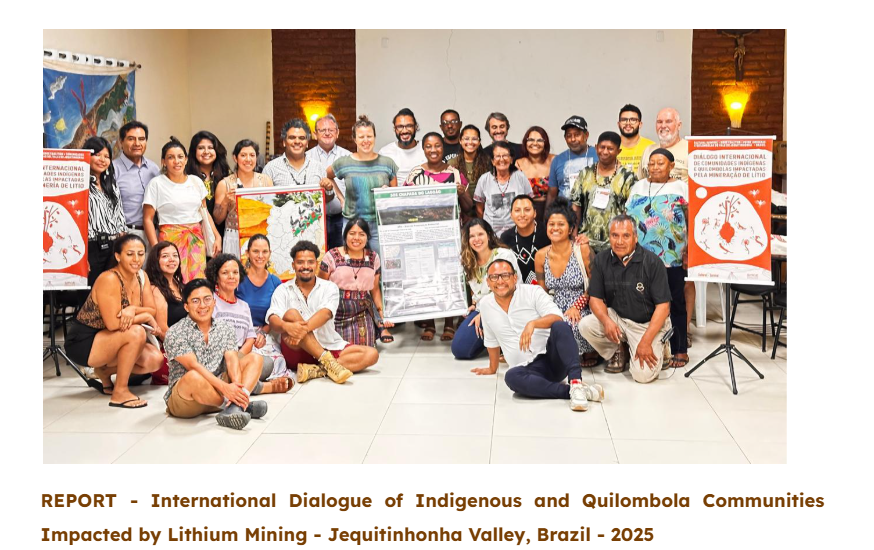
Communities transformed solidarity and lived experience into public evidence. They refused to let the Valley be a lithium deposit. They insisted that the territory is memory, water, art, culture, ancestry, and future. The Valley is more than the palace where they live; it is who they are.
This is why community advocacy should not be treated as an obstacle to investment, but an opportunity to stronger ethical work, true development. Community advocacy is an early warning system, a form of democratic risk assessment that often shows the truth that official reports failed to inform.
Five Takeaways for Investors
- Company reporting is not enough, especially for mining companies that often fail to document properly. We learned here a common pattern: when communities and corporate disclosure diverge, investors must investigate independently.
- Self-monitoring is not only sufficient in high-risk projects, but is very prone to hiding even more information - see the Mariana case. Monitoring mechanisms must be independent, real-time, and publicly accessible. This is a baseline expectation.
- FPIC and community testimony are powerfully material. Taking this as part of risk assessment before harm escalates into litigation makes a project safe for the people and for the environment.
- There is no human rights due diligence if it does not include Indigenous Peoples, Quilombolas, and traditional communities as rights holders and political actors. They are not passive stakeholders!
- The energy transition cannot be used as a moral shield for old extractive practices, where sacrifice zones are the common byproduct locally. A just transition must bring prosperity locally, protect rights locally, and promote healthy environments and livelihoods locally!
The Jequitinhonha Valley is not against the future. The Peoples living there are defending the possibilities of many futures in which their lands are not transformed into sacrifice zones. A battery in a fancy, silent electric car cannot claim to use clean energy (from a scientific point of view, is there such a thing as clean energy?) if its production depends on dirty water, harmed communities, and territories treated as disposable.
It is time to ask society and investors, not mining companies, who get to define what is “green”.
If the answer comes only from corporations, markets, and financial institutions with questionable reputations, responsible finance will remain a confused sustainability brand. But if the answer comes from the forest peoples and the water people, who carry the impacts in their bodies, homes, rivers, and roads, then responsible finance may still become what is claimed to be: accountable, rights-based, and capable of distinguishing transition from extraction.
In the Jequitinhonha Valley, Indigenous women, Quilombola men, local families, and community leaders came with water bottles and placards. They came walking gently but strongly with the dignity of those who know that rights are not favors. They came not to blame or shame anyone, but to say that no profit is worth more than life.
Responsible finance, companies, and authorities should have heard them before the judge had to.
A special thanks to the journalist Katia Torres from Brazil de Fato and Agencia Voz do Vale for the photos of the court and the updates.
Top photo by Jamie Malcolm-Brown.