By Moshe Maghundu (San)
The Southern African San Development Organization (SASDO) engages in initiatives that strengthen Indigenous communities through education, poverty reduction, cultural preservation, and development projects. Our work is not only about projects, but about affirming identity, reclaiming space, and ensuring that Indigenous voices remain central in shaping the future.
Our current project focuses on youth empowerment via workshops on Traditional Knowledge, leadership, and modern skills. These sessions aim to bridge generational gaps, ensuring that young people remain connected to their heritage while preparing for future opportunities.
Education
The Artisan Project gives young people the opportunity to learn skills in bricklaying, flooring and roofing, plumbing, and welding. This project is currently in the beginning phase of bricklaying for houses to be built and completed for SASDO’s operations. The aim is to empower youths with the skills to one day build their own houses or start their own businesses.
The Keepers of the Earth Fund's current grant from Cultural Survival enabled us to host arts and crafts workshops in Platfontein, South Africa, and Bwabwata, Namibia. Participants could make new arts and crafts or bring what they had already made, and tell the story behind the object. Artisans discussed whether they had previously sold their work and the challenges they faced in the marketplace for the rest of the group to learn from their experience. We discovered that there are many skilled and talented youth, but they are discouraged by the rising economic challenges.
For craftmaking, we asked a community Elder to facilitate these workshops by sharing their rich knowledge. For the arts, we got an outside professional to facilitate. At the end of the workshops, participants demonstrated the skills they had gained.
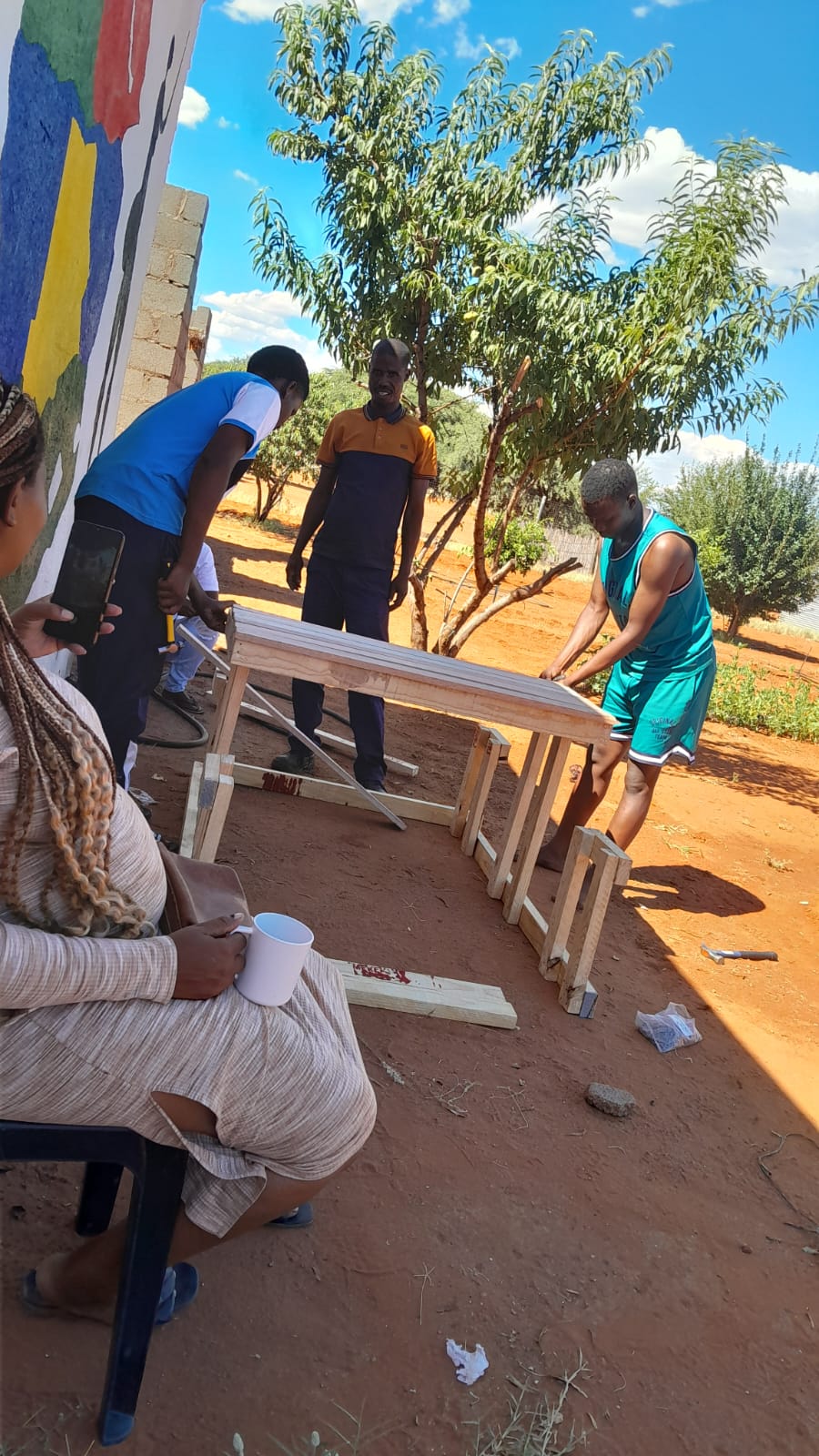
After a workshop session in which an Elder transferred craft-making skills, the youth took the initiative to create a desk with built-in benches for sitting and eating. This project produced three more of such pieces. The young participants engaged with great enthusiasm and thoroughly enjoyed the process, eager to continue making more.
Poverty Reduction
We have witnessed, especially among women from Platfontein, the hardship of walking 8 km early in the morning to the Kimberley dump site to collect expired food discarded by major shops in order to feed their families. Most people in this settlement have no source of income, with only a few receiving government social grants.
With this reality in mind, we began seeking government funding to establish a feeding scheme. The initiative was first funded by the National Lotteries Commission, then by the Department of Social Development, and, more recently, by the Palms for Life Fund. This program ran until the end of December 2025.
Through this program, we provided one meal a day from Monday to Saturday, primarily to children aged 5–12, youth, and Elders, primarily women. Some of our clients have underlying health conditions and depended on this plate of food before taking their medication. For them, this is not just a project: it is a lifesaver.
The biggest challenge we faced was that the grants we received were not sufficient to accommodate everyone in need. As a result, some people returned home without food, even though we know they may have nothing at home. This reality affects our team psychologically, and we recognize that at some point our staff will need counseling, as working under these circumstances takes a heavy emotional toll.
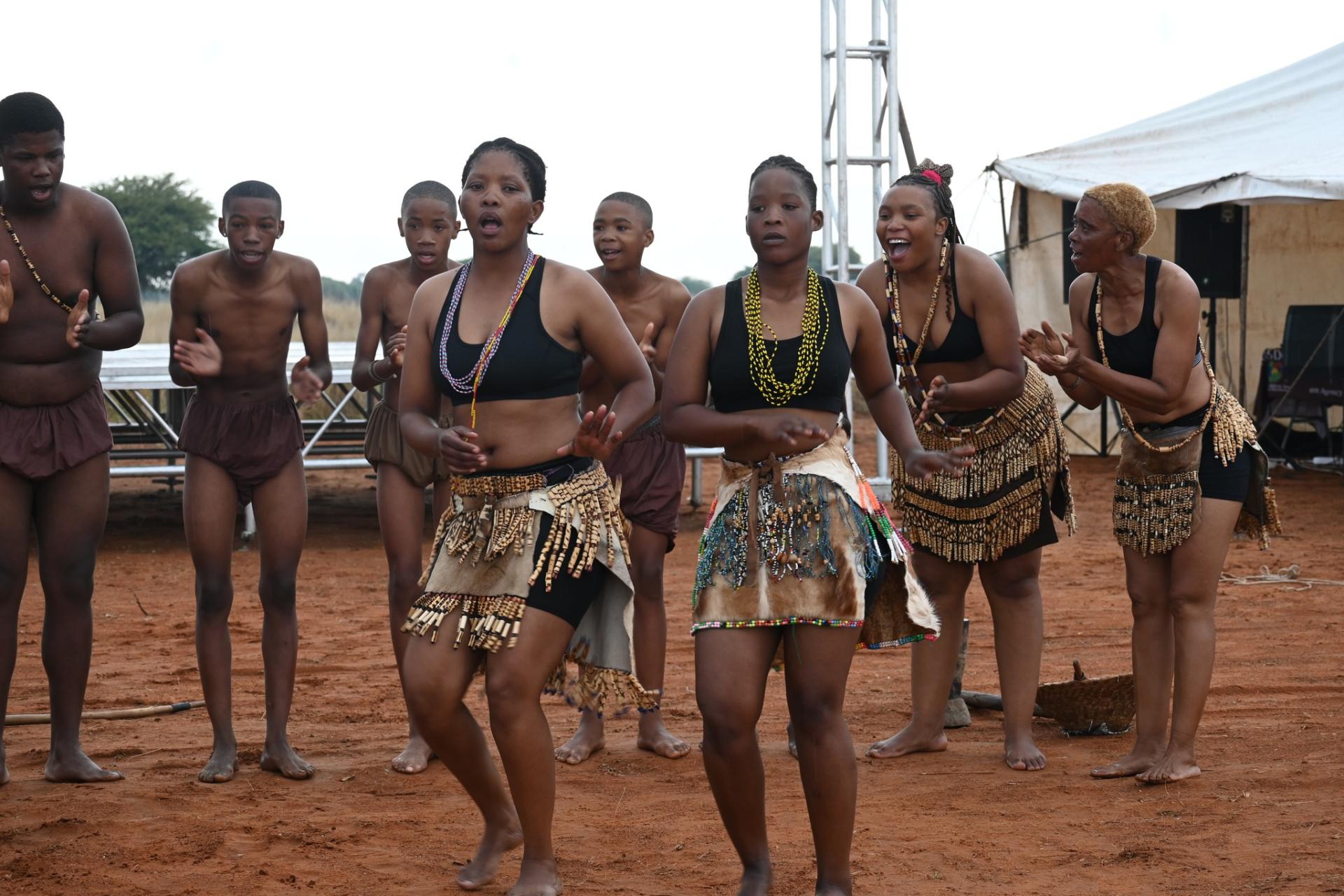
A healing dance ceremony, during which the healer reaches out to the ancestors and communicates on behalf of the sick person, seeking to understand the cause of the illness and how the healing process should be carried out. Meanwhile, the rest of the group continues to dance and sing while the traditional doctor speaks to the ancestors.
Cultural Safeguarding
We have hosted cultural events and festivals in Platfontein, the Kalahari, Andriesvale, and one in Bwabwata, Namibia, in 2023. Attendees perform cultural dances and other performances, which we document with photos and videos for preservation. We plan to build a permanent exhibition in Platfontein at the SASDO offices that will serve as our own museum to showcase the current lives and lifeways of the San. We also run cultural exchange programs where we share our San cultural dances and other performances with non-San-speaking communities. We travel with our programs to Namibia and Botswana to share with them how the San in South Africa conduct their cultural activities. They do that with us as an exchange, which we also document.
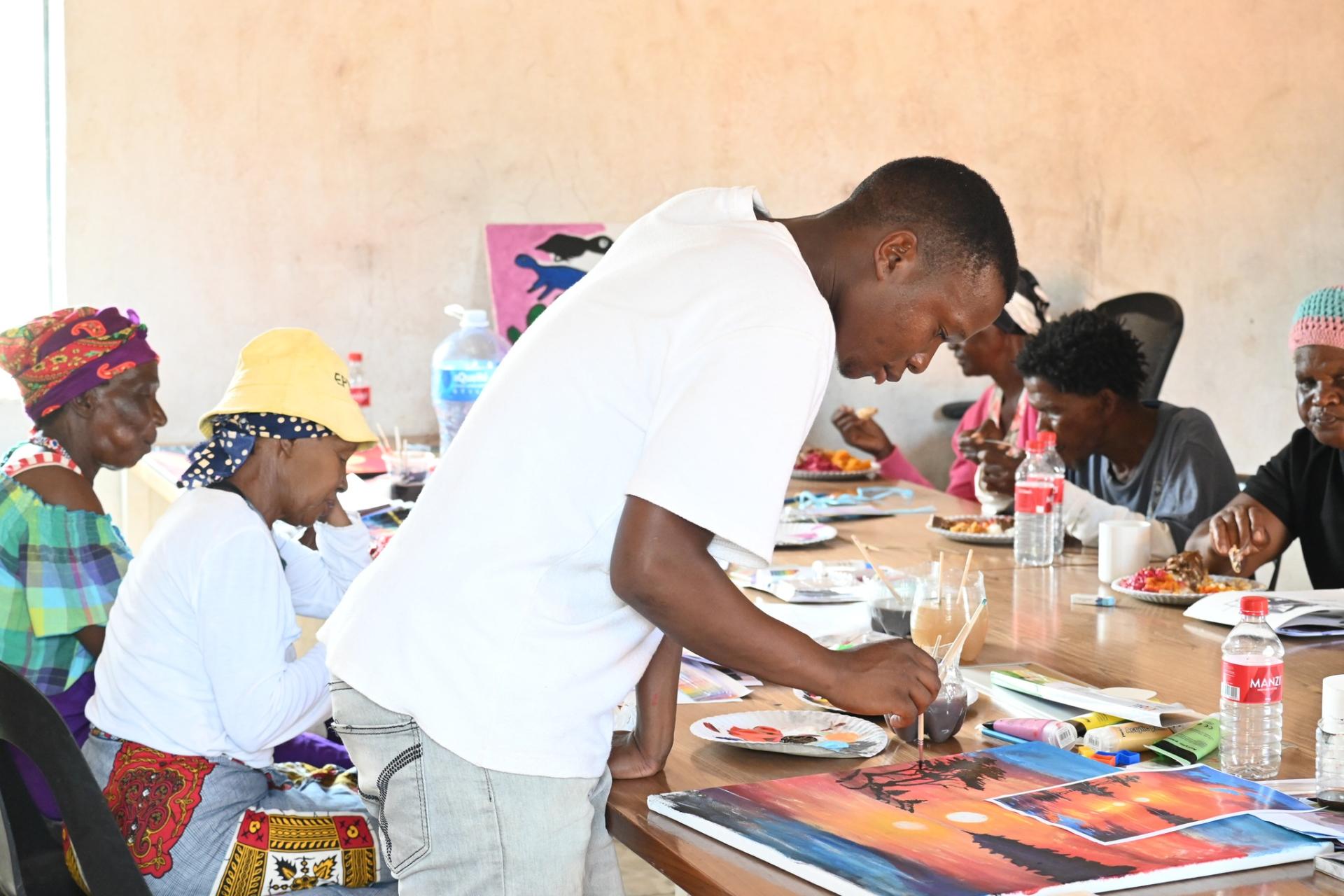
Attending an artistic workshop where painting is the main activity. The facilitator, a qualified professional from Kimberley, hosted the session. The participants included both youth and elderly people under one roof, and the outcome was remarkable. Success stories were told and expressed through paintings on both canvas and paper.
Khwedam Language
SASDO has been engaging in workshops and conferences where the Khwedam language has been a crucial point of discussion. Such workshops focus on how this language will be developed and taught so that it can be used on social media and other modes of communication. We are in the process of writing a booklet for publication. Our priority is to see that the language is included in the local school curriculum, starting from grade R upwards.
Despite significant progress across all these programmatic areas, communities continue to face pressing challenges. Unemployment and poverty remain widespread, limiting access to resources in all countries where the San live. We face further discrimination in terms of our identity and the fact that we speak clicking languages. Land rights disputes and environmental degradation threaten traditional ways of life, especially in Namibia and Botswana. Healthcare access is uneven, with rural areas struggling to receive adequate services. Cultural erosion persists as younger generations are drawn away from Indigenous practices by urban migration and other Bantu cultural influences. Mostly, young people are leaving rural areas in search of jobs and opportunities; in towns, they learn new cultures, and some shy away from their own.
These issues highlight the need for collective action and advocacy to ensure that Indigenous voices are heard in policymaking spaces. Serious interventions are needed in Namibia, Botswana, and South Africa, where the input of Indigenous people will be heard and their voices included in policymaking.
Behind every project are individuals whose resilience inspires others. One such story is that of a local Elder who mentors youth in traditional crafts and storytelling. Her efforts not only preserve cultural practices but also instill pride and identity in younger generations. Another inspiring project that we do is the soup kitchens and vegetable gardening for both Khwe & !Xun communities. These address food security by teaching families to grow sustainable gardens that integrate Indigenous knowledge with modern techniques.
Indigenous Work and Identity
Working within Indigenous communities is both rewarding and challenging. It requires balancing tradition with modern realities, navigating systemic barriers, and holding onto cultural identity. Indigenous identity is not static; it evolves with time, shaped by history, resilience, and the ongoing struggle for recognition. The challenges we face, whether in education, land rights, or representation, are reminders of the importance of solidarity.
The issue of land rights is becoming a challenge everywhere the San people live. Platfontein, the 10-hectare farm where the Khwe and the !Xun communities are living, which is attracting tension. The people in these communities are being called refugees and told that they don’t have the right to own such land—it’s a ticking bomb waiting to explode. In Bwabwata, there is also ongoing tension between the Hambukushu Tribe and the Khwe communities, who have lived in the region for decades but are not said to be the land's owners. It is very evident that land rights issues remain unresolved as far as the ownership of San communities is concerned.
-Moshe Maghundu (San) is SASDO Founder and Managing Director.
The Southern African San Development Organization (SASDO) is a grant partner of the Keepers of the Earth Fund. In 2026, SASDO received a grant to implement its project in the communities of Platfontein and the Kalahari region. The goal is to empower San communities through cultural safeguarding and sustainable livelihoods by supporting local artists, promoting Indigenous knowledge, strengthening cultural identity, and creating economic opportunities through arts, crafts, and cultural tourism. The project will directly benefit approximately 60 people from Indigenous communities, while also contributing to the protection of Indigenous languages, traditions, and community well being.
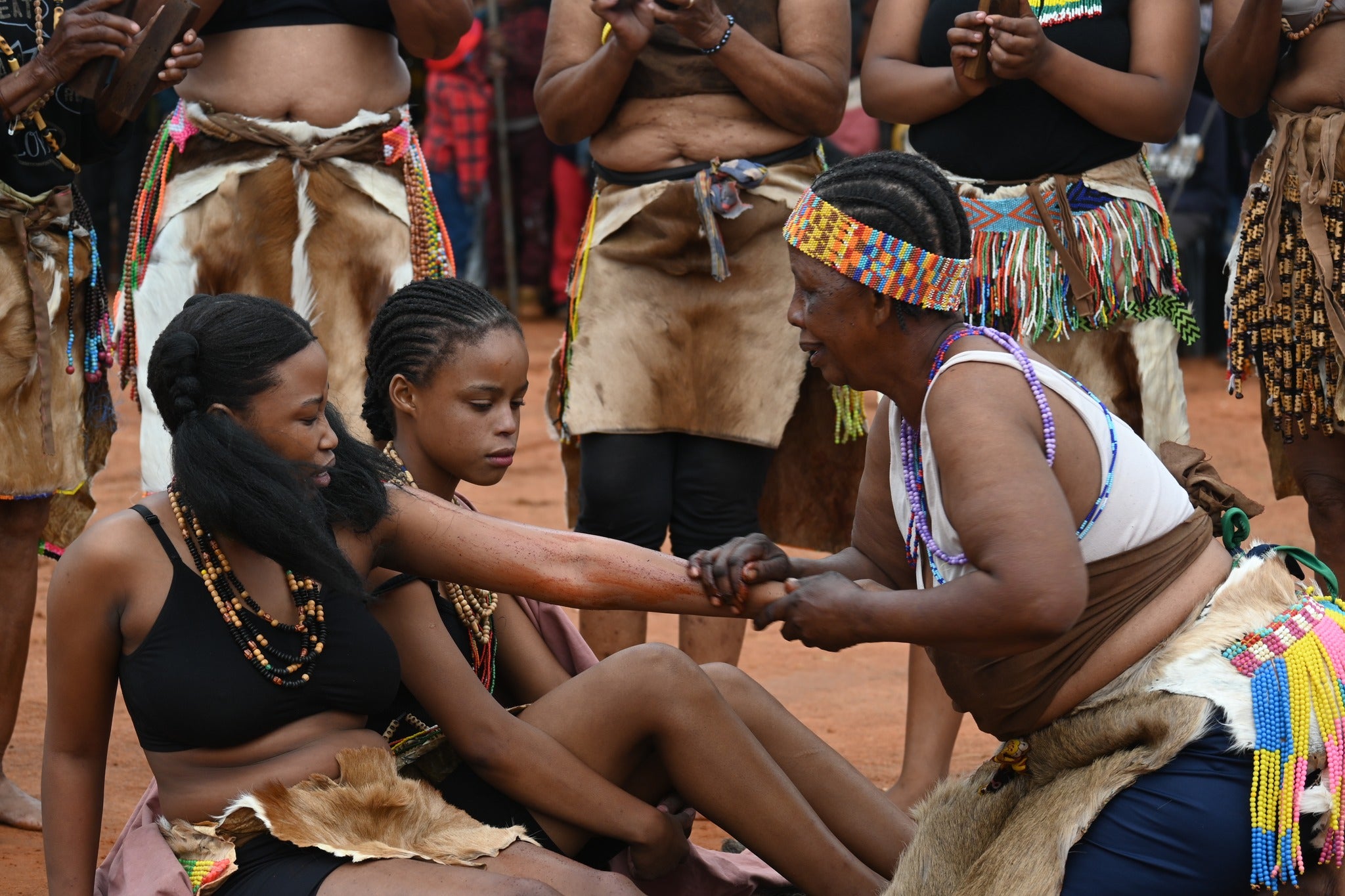
Top photo: A demonstration of how, in the olden days, ceremonies were held in which girls were unveiled to the public after transitioning from childhood to adulthood. Such rituals used to take place when the San people strongly upheld their cultural traditions. Some communities in villages still practice them today, but most no longer do—not because they don’t want to, but because circumstances no longer allow them to continue.
All photos courtesy of Southern African San Development Organization.