By Sandra Peláez (CS Intern)
Women's Association for the Development of Sacatepéquez (AFEDES) is an association founded in the 1980s by Kaqchikel Maya women from the municipality of Santiago Sacatepéquez, Guatemala, who organized in response to malnutrition and food insecurity. Currently, the association comprises 522 members hailing from the departments of Sacatepéquez, Chimaltenango, Santa Lucía Utatlán, Sololá, and Tactic in Alta Verapaz. The members come from diverse backgrounds, representing a wide range of ages; Kaqchikel, K'iche', and Poqomchi' ethnicities; occupations, knowledge bases, and skill sets.
AFEDES considers it essential to reclaim historical memory and implement the "Web of Life" (Utz’ K’aslemal) philosophy to confront the social structures that oppress them. This approach challenges the Western worldview—which centralizes power and tolerates totalitarian narratives—by proposing a perspective based on vital interconnection and the necessity of care. Furthermore, they incorporate global feminist concepts, such as the gender perspective, to analyze power dynamics between men and women shaped by the sexual division of labor and the imposition of patriarchal and colonial roles. Drawing on these frameworks, they seek to strengthen skills and capacities while promoting women's autonomy in three areas—physical, economic, and political—to improve the living conditions of Indigenous women, free from oppressive colonial-patriarchal practices. They also advocate for the defense of their rights and ancestral knowledge, as well as the exercise of self-determination as peoples in the face of oppression.
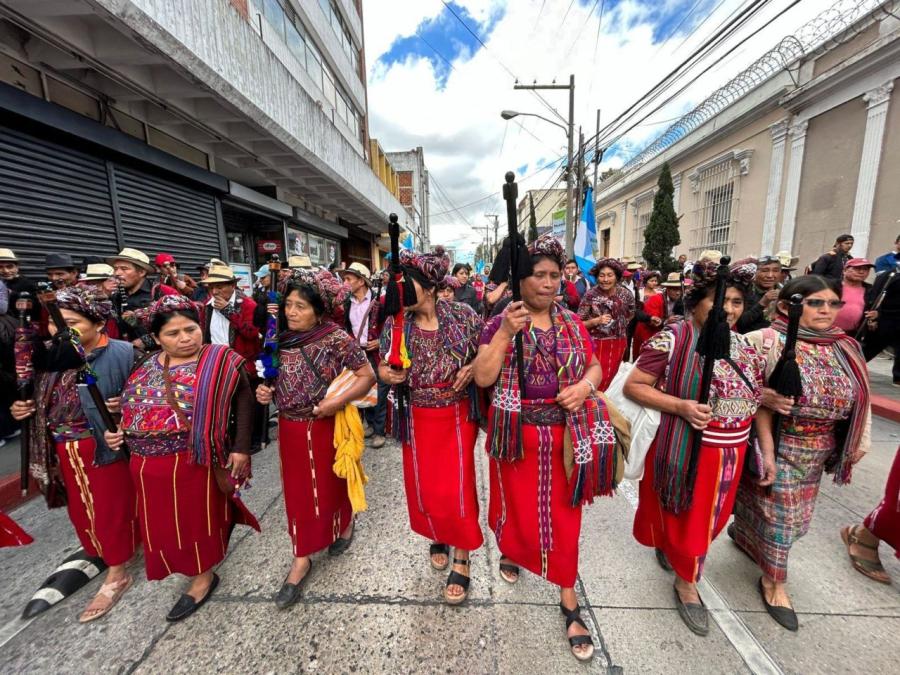
After identifying instances of cultural appropriation, industrialization, and unauthorized commercialization of textile art—specifically around 2012, when a designer asked a group of weavers to create "exclusive" designs for resale—a legal process was initiated in 2014 to safeguard the collective intellectual property rights regarding the creations and clothing produced by Indigenous women. This situation led to the creation of the National Movement of Weavers of Guatemala (*Ruchajixik ri qna’ojbäl*), which operates through Weavers' Councils located across seven departments. Although autonomous, these councils receive support from AFEDES in securing resources for political training, weaving schools, regional meetings, and Weavers' Council gatherings, encouraging them to participate in further organizational activities. Since 2005, AFEDES has conducted these weaving schools, training over 2,000 Maya women in the use of the backstrap loom. The Weavers' Councils are now particularly keen to continue developing weaving schools in their territories, given their potential as tools for safeguarding their ancestral knowledge.
In 2024, with support from the Keepers of the Earth Fund, AFEDES carried out two activities to safeguard ancestral knowledge of textile art and the food systems of Indigenous communities in Guatemala. The first activity—addressing the needs identified by AFEDES and the National Movement of Weavers—was the Weaving School initiative in Santiago Sacatepéquez and Santo Domingo Xenacoj, designed to strengthen Indigenous women's identity through learning textile art, with the aim of safeguarding ancestral and intergenerational knowledge immediately. The program was conducted in two phases: the first focused on teaching basic techniques, and the second on design and color combinations. Classes were taught in Kaqchikel, with Spanish serving as a tool for those who do not speak a Mayan language.
Additionally, the school served as a space for occupational therapy; weaving—beyond being an economic and cultural activity—was reimagined as a practice that contributes to the emotional well-being of Mayan women. Part of this process involved using color therapy and excursions through the local landscape, allowing women to connect their use of color with their surroundings and emotions. Furthermore, the school provided a forum for political discussion, addressing topics such as identity, historical memory, and the individual and collective rights of Indigenous women, while fostering intergenerational learning among girls, young women, and adult women.
“Before joining the weaving school, I had never found a space that truly felt like it was for me. I was always busy helping at home or working, but here I found a place where I can learn and connect with other women. I’ve learned not just how to weave, but also about women’s rights. It’s wonderful to know that while we weave, we also grow as individuals. Now, I dream of creating my own designs and perhaps teaching the women I know,” says 33-year-old Floridalma.
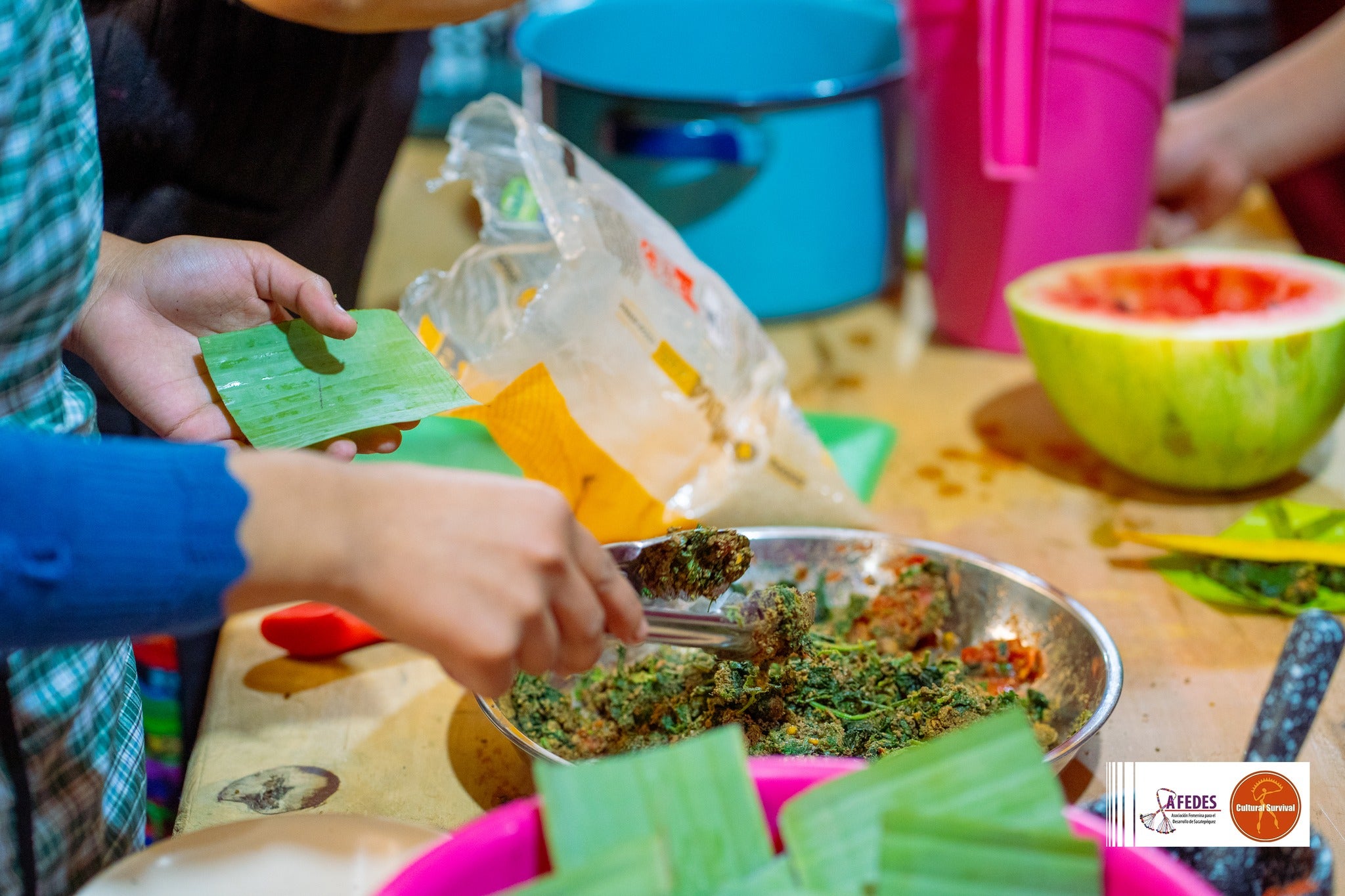
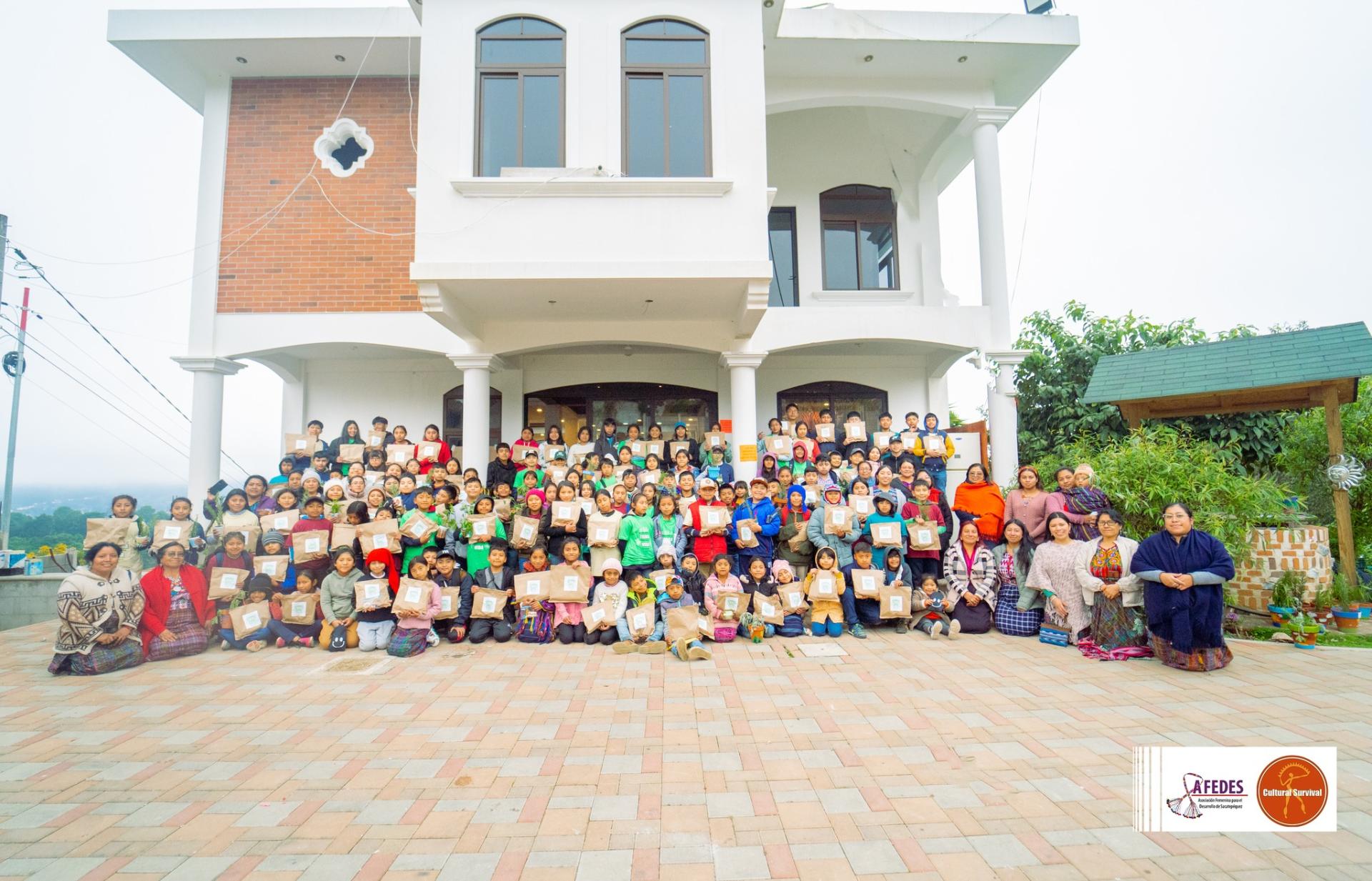
From their position of authority, the weavers extend their influence to safeguarding knowledge regarding food and medicine. For this reason, AFEDES’s Agroecological Vacation Schools have been pivotal in raising children's awareness of issues such as food sovereignty. Cultural Survival also supported the organization of an Agroecological Vacation School to safeguard and pass on knowledge and practices that promote healthy, culturally appropriate nutrition. These were divided into two workshops comprising five stations: “Web of Life,” focusing on the connection between nature and art; “Caring for Gardens, Soil, and Water,” covering traditional medicine and agroecology; “Mayan Cuisine,” dedicated to recovering and sharing local gastronomy and its health benefits; “Free from Violence,” addressing gender and school-based violence in an age-appropriate manner; and “What I’ve Learned,” a concluding session for reflection and applying lessons to daily life. As with the Weaving Schools, these workshops were conducted in both Kaqchikel and Spanish.
These spaces helped children and adolescents internalize the knowledge and apply it to their daily lives, ranging from identifying the plants in their family gardens to understanding the care they require. “I like cooking and helping my mom prepare meals; I enjoy caring for the plants because they heal me when I’m sick, and it’s my way of thanking them for their kindness,” said 14-year-old Alberth. The workshops also fostered a critical mindset regarding family and romantic dynamics, enabling participants to recognize potential forms of violence and reflect on their implications in order to identify and prevent them: “Now I know I should help my mom with household chores according to my abilities, whereas before, I didn’t help her.”
"I also know that I am capable of thinking and contributing in a positive way," remarked 11-year-old Juan José.
The case of AFEDES prompts various reflections. On one hand, the ability to apply its traditional "Network of Life" philosophy through a gender-sensitive lens demonstrates that it is possible to reconcile traditional Indigenous philosophies with Western ones—to the benefit of community members, including children, adolescents, women, and others associated with AFEDES. These individuals have gained new, critical perspectives on their identities while remaining true to their roots. This highlights the importance of intergenerational projects: while sharing a common goal, they can be approached in different ways, depending on participants' ages, to more effectively achieve their objectives. Finally, the case presents textile art as both a space and a symbol of Indigenous resistance—serving simultaneously as a venue for memory-making, a means of livelihood, and a therapeutic activity.