By Carlos Escalante Villagrán (Maya K’iche’), Judiel López Cabrera (Maya Mam) and Anna Aziza Grewe
Ancestral medicine in the western region of Guatemala remains a constant subject of inquiry, upheld by individuals from the Maya Mam and Maya K’iche’ areas who serve as healers (yoq’ol or ajkun kech ak’alab’), midwives (chujal or iyom), and Guardians of Time (ajb’kab or ajq’ij).
These men and women are deeply concerned with the health of children, youth, adults, and elders within Indigenous communities; they also keep medicinal plants alive and thriving on their various plots of land. They carry out their work through unity, humility, respect, and knowledge, fostering understanding and exchange to heal the imbalances affecting the population. Recently, groups of people have shown a profound interest in Maya medicine because it has brought healing to so many. It is a natural system highly valued for restoring vitality and fostering new opportunities. Ancestral Maya medicine constitutes a comprehensive body of knowledge and encompasses a vast array of healing methods—all grounded in the fundamental principle that everything possesses life and energy. It must be understood that "illnesses" reveal an imbalance between the spiritual and physical bodies; moreover, all parts of the body are interconnected, so an imbalance in one inevitably affects the others.
Each group—healers, midwives, and Guardians of Time—possesses its own distinct healing system. They also identify the various ailments afflicting individuals—for instance, "cold" ailments versus "unnatural" ailments—recognizing that, depending on the specific origin of the affliction, each requires its own specific cure.
The practice of these healers is rooted in the use of medicinal plants and an understanding of their effects, as well as in maintaining a close and constant presence alongside those suffering from ailments. The support that midwives provide to individuals is grounded in their knowledge of the human body—its systems, functions, and organs—and involves the use of the steam generated by the chuj or tuj (the traditional sweat lodge, or temazcal). It is through the use of various plants and this steam that a person's physical and energetic stability is restored. The Guardians of Time (spiritual guides) perform healing through each individual's nahual: the nahual represents the specific energy inherent in every being, determined by their date of birth. These practitioners—both men and women—observe the various phases of the moon—waxing, full, waning, and new—and read the signs in the sky to identify any imbalances disrupting the patient's equilibrium.
Furthermore, when patients are in critical condition, the three practitioners—the midwife, the Guardian of Time, and the herbalist—convene to conduct a comprehensive assessment aimed at healing the individual. Each contributes their specific expertise, invoking the energies associated with the day, the sun, water, air, and earth to facilitate the healing process. Of particular importance in this healing work are the nahuales I’x, Tijax, Imox, Kan, Kame, and Q’anil (six of the twenty nahualib’ that comprise the Mayan Cholq’ij calendar). Every patient requires a thorough physical examination—involving careful observation and listening to the heartbeat—conducted within a very tranquil setting to ensure that any underlying imbalance can be accurately detected.
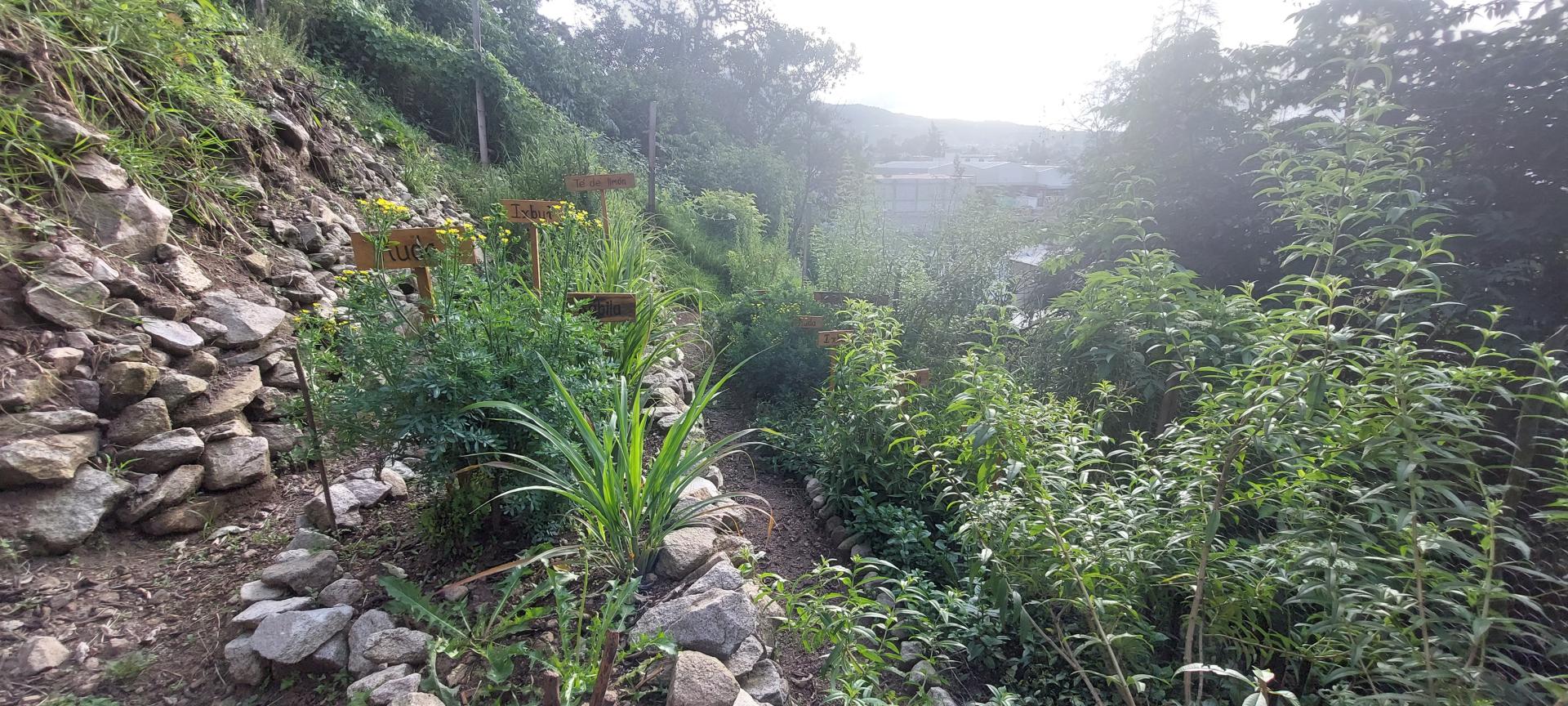
Medicinal plants are used in the treatment of two ailments that are widely recognized: the "evil eye" (mal de ojo) and the "fallen fontanelle" (caída de la mollera). Infants and young children are the most susceptible to the evil eye. Its symptoms include diarrhea, fever, vomiting, incessant crying, fatigue, and a loss of appetite. Additionally, physical signs may be observed, such as darkened eyes or, as is often the case, a greenish discoloration between the eyebrows. To ensure the efficacy of the treatment, it is crucial that the person performing the spiritual cleansing (limpia) be a trained healer (curandera), rather than a family member. The healing process demands intense focus and the channeling of the necessary vital energy into the affected child or infant. There is a simple treatment to soothe the distress you are experiencing: Inside a red handkerchief, place a farm-fresh chicken egg, a lemon, rue (Ruta graveolens), 9 allspice berries, 9 cloves, 9 small dried chilies, 9 cloves of garlic, and a small handful of annatto seeds (Bixa orellana). Moisten the handkerchief with artisanal liquor or Florida Water. The egg must be cold so that it can absorb the heat and dispel the child's ill temper. To begin the healing process, one spiritually invokes the specific location where the person contracted the "evil eye"—whether it was on the street, at a family gathering, through an encounter with someone in distress, or via an intoxicated person. During this spiritual cleansing, one requests that the negative energy be withdrawn. The egg and the other elements contained within the handkerchief are passed over the baby's body from head to toe—first along the front, and then along the back—while reciting special prayers that vary from region to region. This treatment is administered once daily for three days—or for nine days in cases where the ojo (evil eye) is particularly severe. The healing ritual to restore the person's energy is preferably performed at midday. Afterward, the person is given a protective amulet: either a red necklace featuring three cloves, three allspice berries, annatto seeds, a garlic clove, and a chili pepper; or a red bracelet adorned with an ojo de buey (ox-eye) seed (Mucuna urens).
Another highly prevalent ailment is caída de mollera (fallen fontanelle). This condition affects children and adolescents—often resulting from lifting heavy objects—but is most commonly observed in infants. It is identified when an infant exhibits excessive phlegm, struggles to nurse, or has difficulty breathing. To treat a fallen fontanelle, the infant must be taken to a traditional healer (curandera) for a mouth-and-throat cleansing; during this process, she can determine whether the condition was triggered by a sudden fright or a physical blow. By reaching inside the mouth, she palpates the palate to gently lift it back into place, then carefully cleanses the gums and the area beneath the tongue using warm water infused with black salt and either chamomile or epazote (Dysphania ambrosioides). In certain parts of the Mam region, the healing water is also prepared by placing three river stones into the boiling water intended for the treatment.
The infant, child, or adolescent undergoing the procedure is expected to expel phlegm during the cleansing process; therefore, a receptacle is kept close at hand. This treatment is performed twice daily: once in the morning on an empty stomach, and again before dinner. The duration of the treatment depends on the severity of the patient's condition, typically lasting for three or nine days. Following the cleansing, the patient is given a herbal tea made from pericón (Tagetes lucida), fennel (Foeniculum vulgare), and verbena (Verbena officinalis). Finally, a cloth or handkerchief is tied firmly around the infant's, child's, or adolescent's forehead. It is crucial to keep the nose and mouth covered immediately after treatment to prevent cold air from entering. Throughout the healing process, the child must refrain from running, jumping, or lifting heavy objects. In rural areas, medicinal plants have proven remarkably effective in maintaining health, particularly among children. They are easy to apply—especially with the guidance of those knowledgeable about specific ailments—and their cost is affordable.
We have selected two cases of healing that are widely renowned within local communities. We work closely with community healing and wellness groups and remain fully available to address any questions regarding the use of medicinal plants, as well as the work of traditional healers, midwives, and Guardians of Time.
--Carlos Escalante Villagrán (Maya K’iche’) and Judiel López Cabrera (Maya Mam) are Guardians of Time. Anna Aziza Grewe is a Iyom (Midwife/Healer).
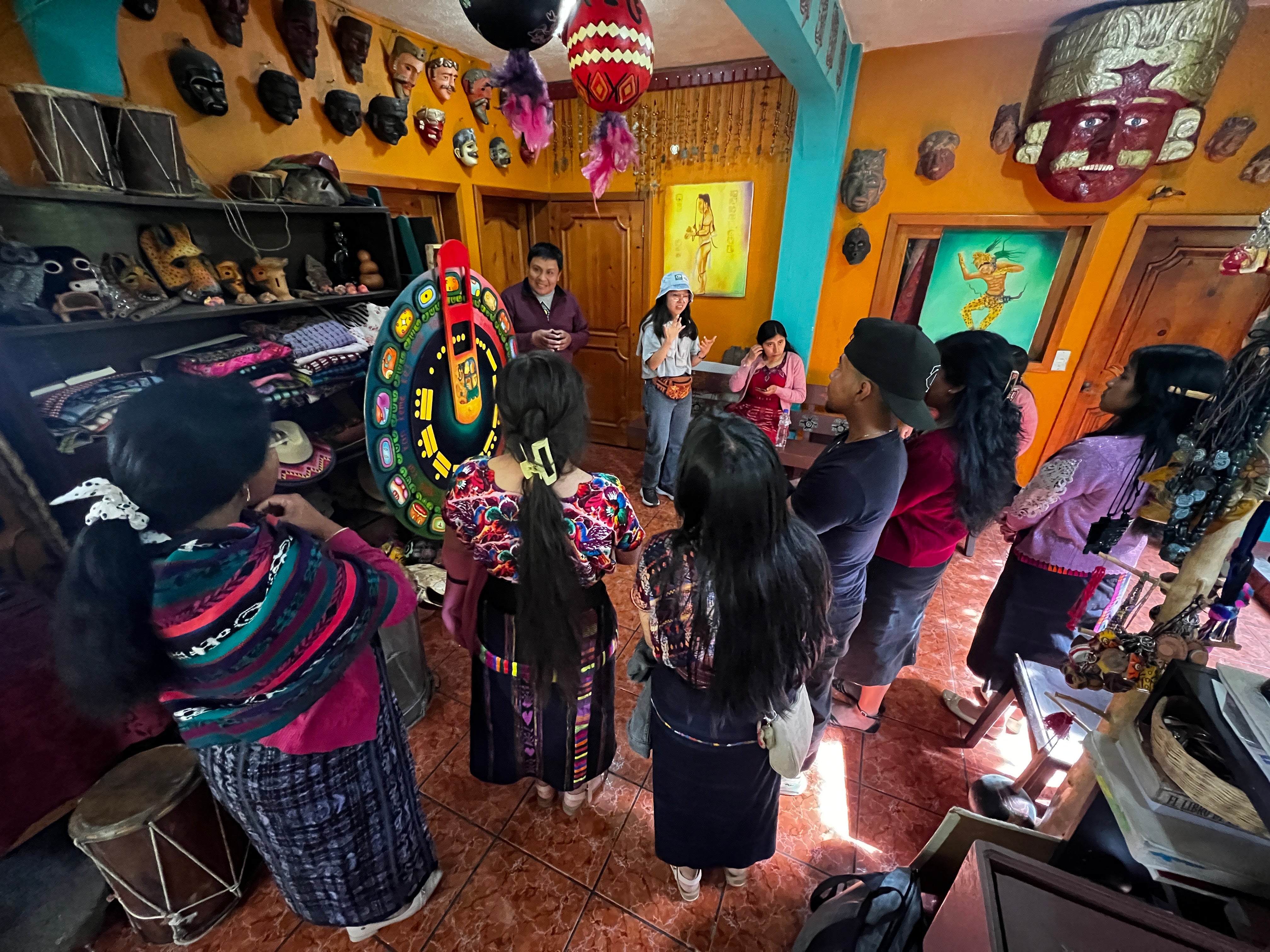
In 2025, Asociación Colectivo Vida Digna received a Keepers of the Earth Fund grant. Vida Digna is a Maya organization based in western Guatemala dedicated to affirming Indigenous identities. It supports rural youth, women, and families in realizing their full potential as they contribute to the growth of their communities. Vida Digna strives to revitalize intergenerational wisdom by disseminating the Maya worldview and fostering the practice of Maya spirituality—an approach that promotes the flourishing of life and harmonious relationships among humanity, nature, and the cosmos. The organization promotes the practices of Maya Healing Sciences through collective action, personal accompaniment, and training programs for Indigenous youth, midwives, and traditional healers.