
Freelance journalism is growing increasingly global every year, but finding the right people for the right stories or projects can still be a challenge. In response, the Indigenous Journalists Association (IJA) launched its Freelancer Database in September 2025, which is a searchable directory to support and spotlight IJA members while connecting them with vetted organizations. As part of IJA’s membership offerings, the tool functions as an opt-in system, allowing members to choose to add a short profile. Designed to be organized and straightforward, the platform provides a practical way for media professionals to connect across regions through a single, accessible space.
The idea for the database took shape as editors began reaching out to IJA looking for Indigenous journalists. IJA’s Director of Membership, Sheena Roetman-Wynn (Lakota/Muscogee), explained that two clear industry trends contributed to the decision: the rise of freelancers and a growing interest from publications in hiring Indigenous journalists. “We received overwhelming requests from editors seeking Indigenous journalists,” she said, noting that these factors ultimately encouraged IJA to create a centralized directory designed to elevate member visibility and help them secure more opportunities while also providing vetted organizations with access to qualified media professionals.
While the directory itself is straightforward — members fill out a brief profile with their work focus, location, community, and portfolio links — its broader significance extends far beyond these basic features. For many Indigenous journalists, especially early-career reporters, photographers, and media creators, industry access has often depended on personal networks or chance connections. The database addresses this by giving freelancers a dedicated space where their work can be found by editors seeking Indigenous journalists for a range of coverage needs.
As the database grows, questions about who can participate continue to surface. Roetman-Wynn addressed a common misconception that the association is limited to Indigenous, Native American, or North American journalists. She explained that this assumption likely persists because the organization was formerly known as the Native American Journalists Association (NAJA). She clarified that IJA’s membership and the new database are open to media professionals globally. Its rebranding to the Indigenous Journalists Association (IJA) reflects this broader, international vision. “We’re open to Indigenous peoples everywhere and even non-Indigenous allies as long as they hold an active membership,” she said, underscoring that the database is fully open and welcoming to members regardless of their identity or geographical location.
Within its first month, around 20 freelancers and editors had already signed up — an early response Roetman-Wynn described as encouraging for a tool in its beginning stages. She noted that the team has already sent out the first round of editor responses, marking the beginning of new connections for members.
The database is also built to welcome a wide range of media professionals. Roetman-Wynn encouraged not only journalists but also photographers, videographers, and designers to join, noting a particular hope that more photographers will participate. For younger members or those just entering the field, she expressed optimism that the tool could help them earn income from their skills—sometimes for the first time in their careers.
Positioned within a global landscape where Indigenous peoples continue advocating for fair representation and narrative sovereignty, the IJA Freelancer Database marks an important shift. By reducing the distance between organizations and journalists, the tool helps address long-standing gaps in visibility by giving organizations a clear and direct way to reach Indigenous and allied media professionals. It also opens a clearer route for media workers to be recognized for their work and for their lived experience to inform the stories shaping public understanding.
Taken together, the IJA Freelancer Database provides a dedicated space to showcase their skills, while giving organizations a trusted place to find qualified media professionals. By creating clearer pathways between contributors and editors, the tool strengthens professional networks across regions — including Indian Country and beyond. For many freelancers, whether based in the United States, the Pacific, South Asia, Latin America, or elsewhere, the platform offers not just visibility but connection. As Roetman-Wynn noted, it is still in its early stages. The hope is that, as it continues to grow, more editors and media organizations will find the professionals they need, and more Indigenous and allied members will gain the opportunities they deserve.
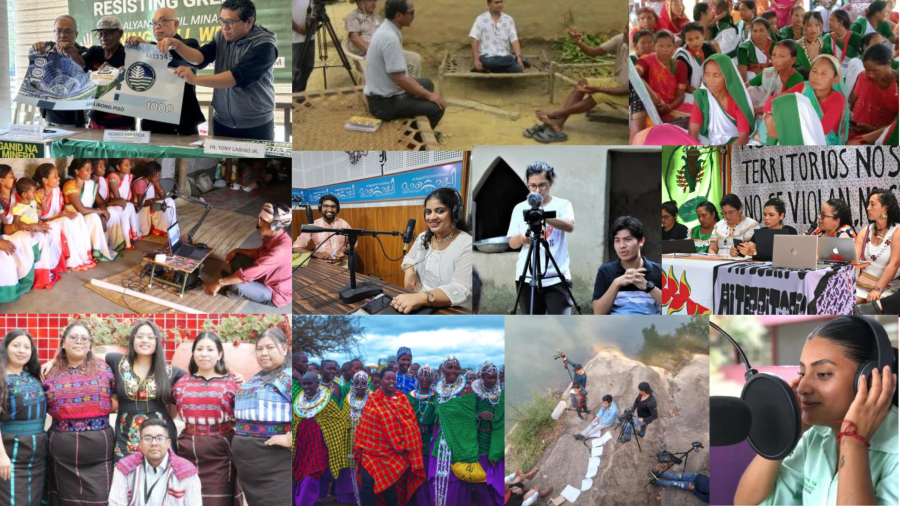
Top photo: Indigenous Journalists Association (IJA)