Cultural Survival's community includes people from all walks of life, with beautiful stories to tell of your own about why you decided to become an advocate for Indigenous Peoples' rights. Sharing these stories further connects our community, provides much-needed solidarity and validation to our staff and partners on the ground, and helps us inspire others to join our movement. We are excited to spotlight members and former interns of our community and highlight your contributions and perspectives through our Cultural Survival Spotlight series.
Are you a former Cultural Survival intern or a passionate member of our community? We'd be honored to hear and share your story!
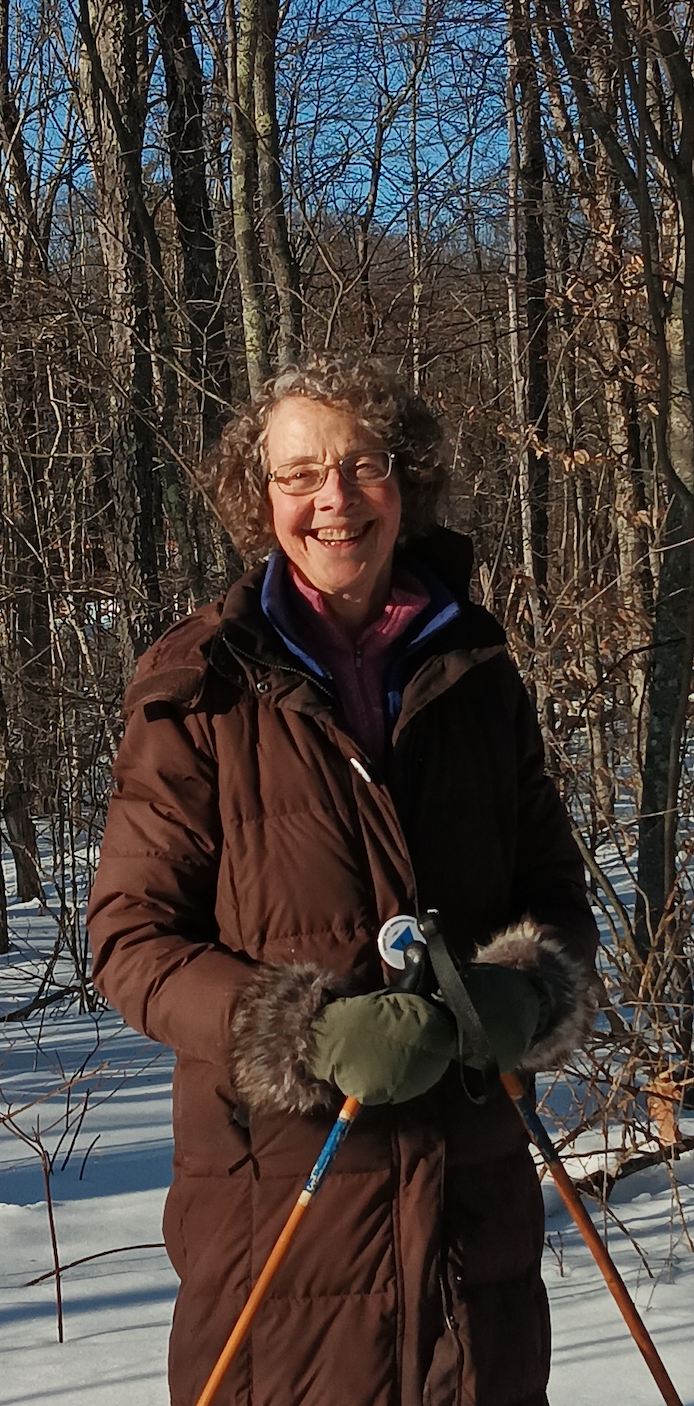
Martha Rogers, Cultural Survival Member
CS: Please tell us a little bit about yourself.
Martha Rogers: My grandparents on both sides moved to Oregon in the early 1900's from the Midwest and Southern parts of this country [the United States]. Besides that, I know little about my ancestral roots except that my ancestors came from Northern “Europe” and “England.” Growing up in Oregon gave me a strong connection to the land and its gifts. Since childhood, I love being outside–walking, camping, exploring. Music is my primary and beloved creative and professional focus–playing, teaching, improvising. I study Spanish for the joy of it and because it is a major language in this country. At this pivotal moment in history, I work in simple and hopefully meaningful ways to support immigrants in this country.
CS: When did you first learn about Cultural Survival?
MR: I first discovered the Bazaar about 10 years ago. I immediately loved it but had no idea that it was part of a much larger mission. Eventually when I found the quarterly journal and read the inspiring story of Cultural Survival, I was in awe. Every year I come to buy gifts from talented artists but also for the inspiration and sense of deep global connection. I love giving gifts to my loved ones that carry stories and traditions from other parts of the world. Supporting Cultural Survival’s remarkable mission uplifts my spirit.
CS: Do you have a connection or interest in a particular country/region or one of our programs (e.g., Indigenous Youth Fellowships, Indigenous Rights Radio, Cultural Survival Bazaars, etc.)?
MR: The Bazaars, the [Cultural Survival] quarterly journals and the Indigenous Rights Radio all inspire me. I love the quarterly journal stories of strategies, setbacks and successes. They come alive in the voices of the communities who live them, and I cheer at every "thumbs-up" in the advocacy updates at the beginning.
CS: What motivated you to become a member of the Cultural Survival community?
MR: I deeply believe in the power of one's cultural, spiritual, and geographical heritage. Our roots provide wisdom and connection like nothing else I know, anchoring us in both humility and divine pride. Both of those anchors can guide us to live in balance in the world. Cultural Survival promotes these values in a wide, vibrant network grounded in the wisdom of millennia. The Indigenous Rights Radio program makes this network brilliantly accessible. This work is our hope for our children and the future.
CS: Cultural Survival advocates for Indigenous Peoples' rights and supports their self-determination. Why is this cause important to you? Why do you support Cultural Survival?
MR: Self-determination empowers any people to uphold their generational wisdom. Without that wisdom, we all lose. With it, we have hope and resources to sustain all beings on this earth.
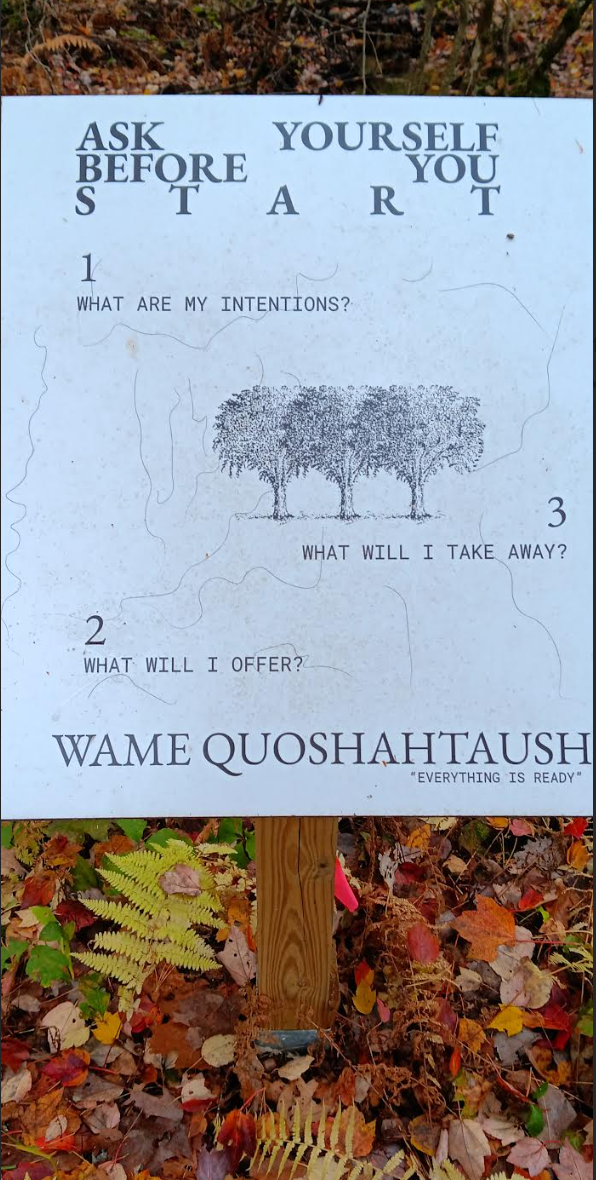
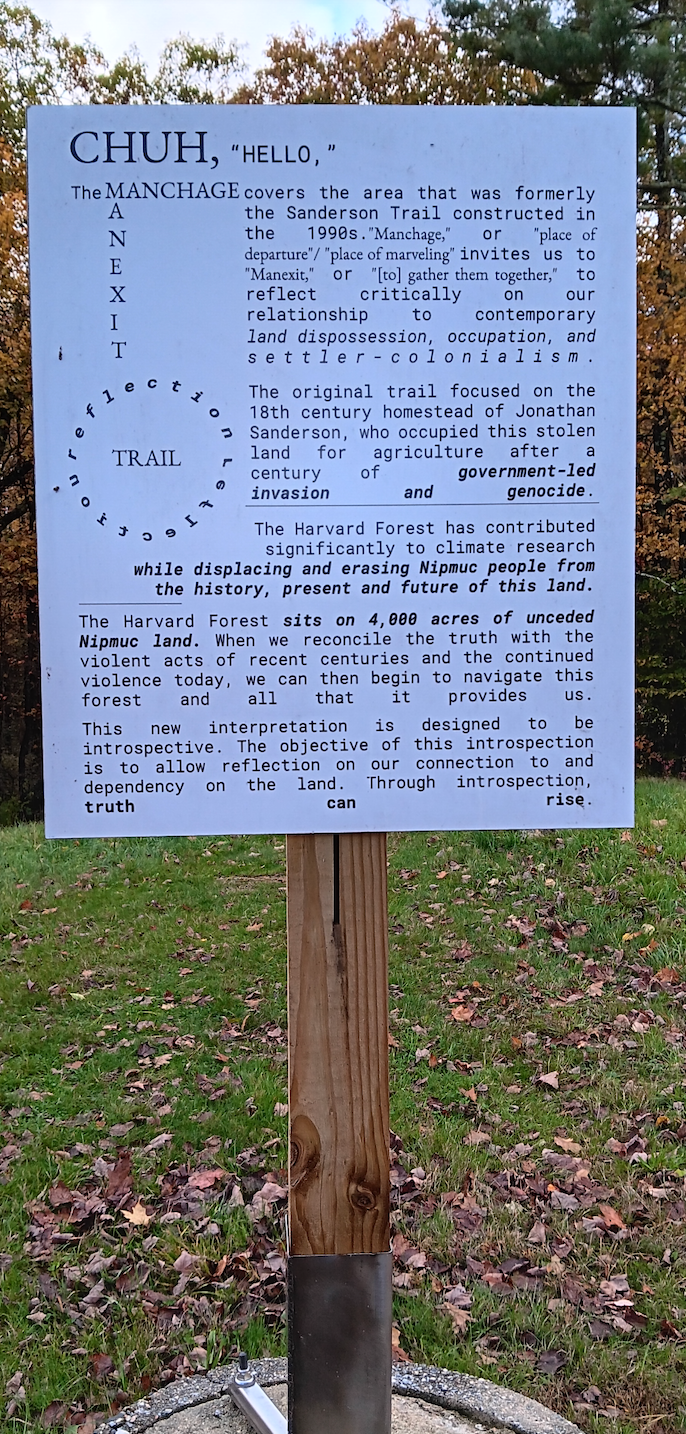
Signage by local Nipmuc people on a trail near Pelham, Massachusetts.
Top photo: Martha Rogers on a trail with signage by local Nipmuc people, near Pelham, Massachusetts.