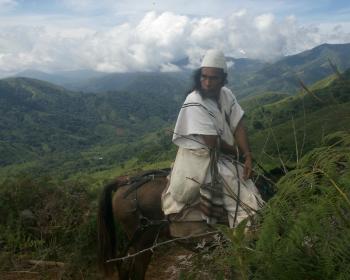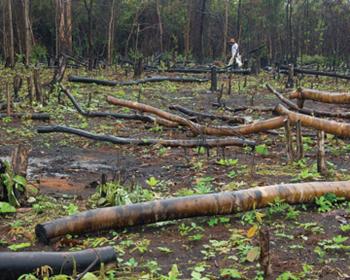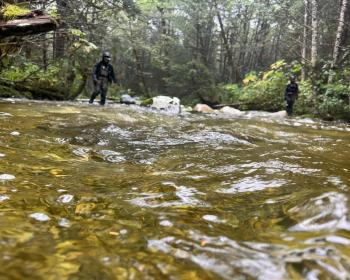

On March 8, 2012 several hundred Indigenous people began a two week march across Ecuador to call attention to their protest of a large-scale open-pit copper mine. Ecuacorriente, a Chinese company, has been authorized by the Correa government to develop a mine near El Pangui, Zamora-Chinchipe Province, in the southern part of the country.
By Boureima Guindo (Dogon, CS Investigative Journalism Fellow)
In Mali, particularly in Dogon Country, an upland area of the former Mopti region, communities are increasingly feeling the effects of climate change. Indigenous women involved in market gardening are among those most affected.
Despite growing difficulties in accessing water, these women continue to work hard to maintain their gardening activities. Faced with severe water shortages, many of them have turned to traditional methods of finding and conserving water.
By Damaris Lenantare (Rendille, CS Journalism Fellow)
For pastoralist communities in Northern Kenya, livestock is everything. It is more than a source of livelihood; it is a means of survival.
From September 24-27, 2026, Cultural Survival was proud to be part of Terra Madre Salone del Gusto in Turin, Italy. Organized by Slow Food International, Città di Torino, and Regione Piemonte, Terra Madre brought together over 1,500 delegates from 125 countries to "celebrate biodiversity, share stories, and reaffirm the power of food to build bridges across communities, cultures, and borders."
By Byron Tenesaca (Kichwa Kañari, CS Staff)
In the Andes of southern Ecuador, Indigenous women, youth, and community organizations once again took their territorial defense to the streets of Guapondelig (Cuenca) with their flags, signs, voices, and bodies and with a clear message: water must be protected.
Rendille Indigenous Community Faces Growing Water Crisis as Climate Change Intensifies Drought
By Damaris Lenantare (Rendille, CS Journalism Fellow)
By Damaris Lenantare (Rendille, CS Journalism Fellow)
In Marsabit’s vast Arid and Semi-Arid Lands (ASAL), a land of great beauty, a quiet crisis is unfolding in Kenya. Repeated failed rainy seasons are pushing Indigenous pastoralist communities to the limits of their resilience.

Land Acknowledgement
We acknowledge that we are headquartered on Massachusett land, in Cambridge, MA, and we thank the past, current, and future Indigenous stewards of this territory.