
By CS Staff
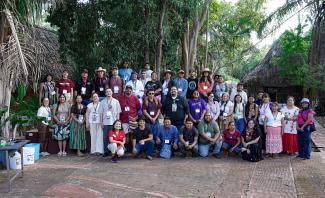
As Indigenous communities around the world face ever-escalating threats and endangerment as a consequence of destructive and extractive ideologies, practices, and industries, food sovereignty and water security are urgent priorities. In January, Cultural Survival and the Indigenous Resilience Center (IRes) from the University of Arizona co-hosted the Indigenous Regenerative Agriculture Knowledge Exchange Gathering in Yucatan, Mexico. Inspired by our community partners and our mutual interests in these issues, we gathered representatives from 20 Indigenous collectives and organizations in the United States and Mexico who are working on regenerative agricultural projects to share knowledge and experiences about how they are positively impacting their communities and territories.
Before colonization and the current national borders were drawn, Indigenous communities were connected by kinship and trade routes spanning great distances across Turtle Island. Revitalizing wisdom and knowledge from our ancestors by drawing on our shared history and the strength of our cultures and traditional lifeways with our relatives on either side of the border is a way to rebuild networks and ensure a sustainable future for all our Peoples. For both Cultural Survival and IRes, it is vital to create spaces where our partners from various communities can interact and share lessons, techniques, and strategies for Indigenous and regenerative agroecological practices. Keeping ancestral wisdom and practices alive is essential in the face of environmental threats such as climate change, industrial-scale and monocrop agriculture, and biopiracy, as well as the degradation of the ecosystems and biodiversity that we all depend on.
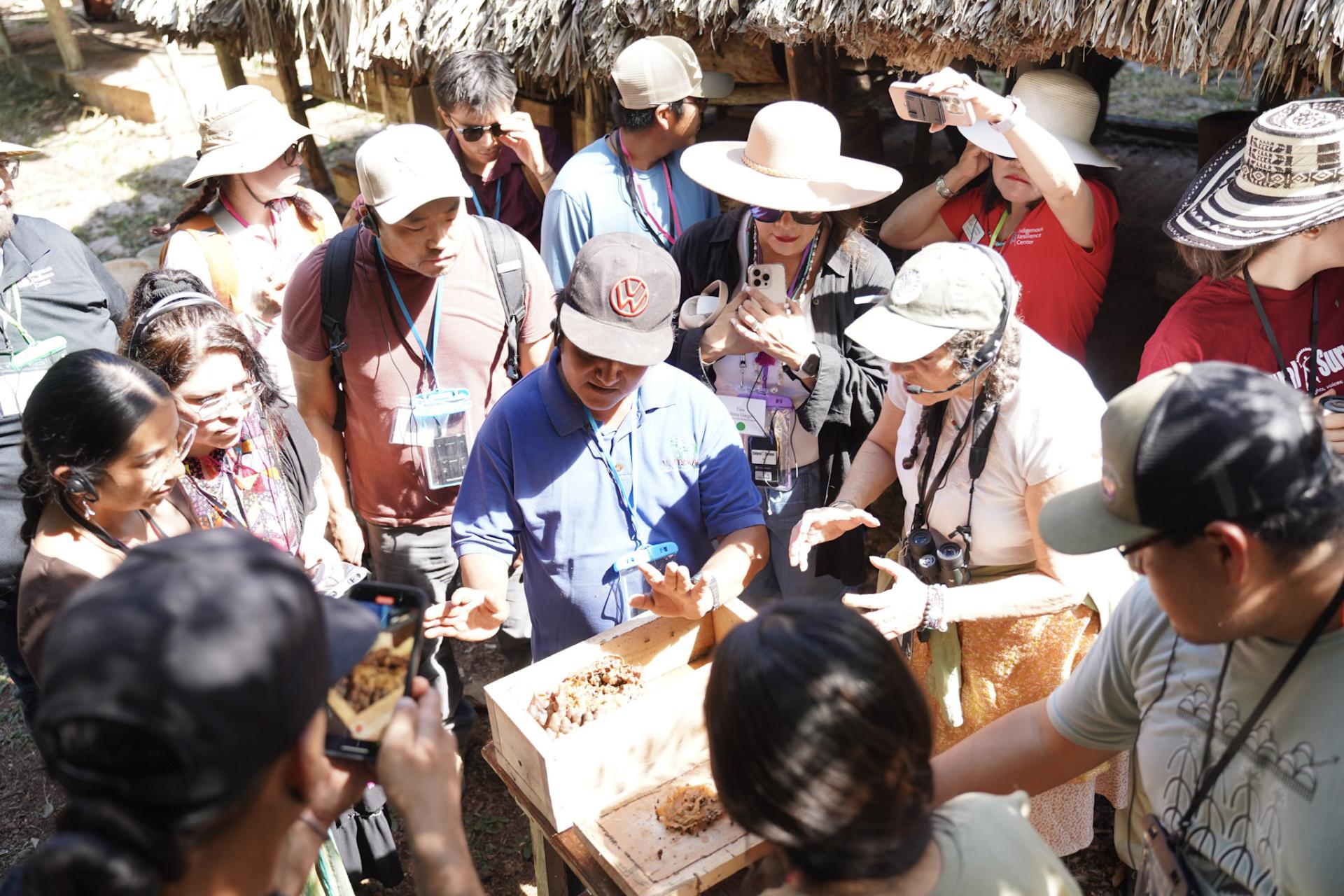
Sacred to the Maya Peoples, melipona bees make honey that is used in traditional medicine. A member of the U Yits Ka’an School showing a melipona beehive. Melipona bees are native, stingless, wild pollinators found in tropical regions of the Americas, notably the Yucatan
Peninsula.
The knowledge exchange took place in the U Yits Ka’an Ecological Agriculture School, which opened its doors to host us. U Yits Ka’an has a deep and rich history in Maní, Yucatan, and has dedicated its efforts and resources to working with several Maya communities on agriculture, water conservation, medicinal plants, apiculture, seed selection and protection, and other environmental practices. The participants in this event, representing more than 10 Indigenous Peoples, work on a wide variety of agricultural projects, including crop production (coffee, corn, and native crops), livestock production, and beekeeping. This allowed participants to exchange knowledge and practices not only among themselves but also with the host organization, whose members generously shared their diverse production spaces, practices, and projects.
The diversity of communities and projects represented was a key element in making this exchange an enriching experience. Throughout the panels, presentations, and discussions, participants had the opportunity to delve deeper into one another’s expertise. They were able to ask questions, reflect on their current situations, and imagine ways to address environmental challenges by using Indigenous Traditional Knowledge as an antidote to the wide-spread industrialized agricultural practices that have taken an especially impactful toll on Indigenous territories.
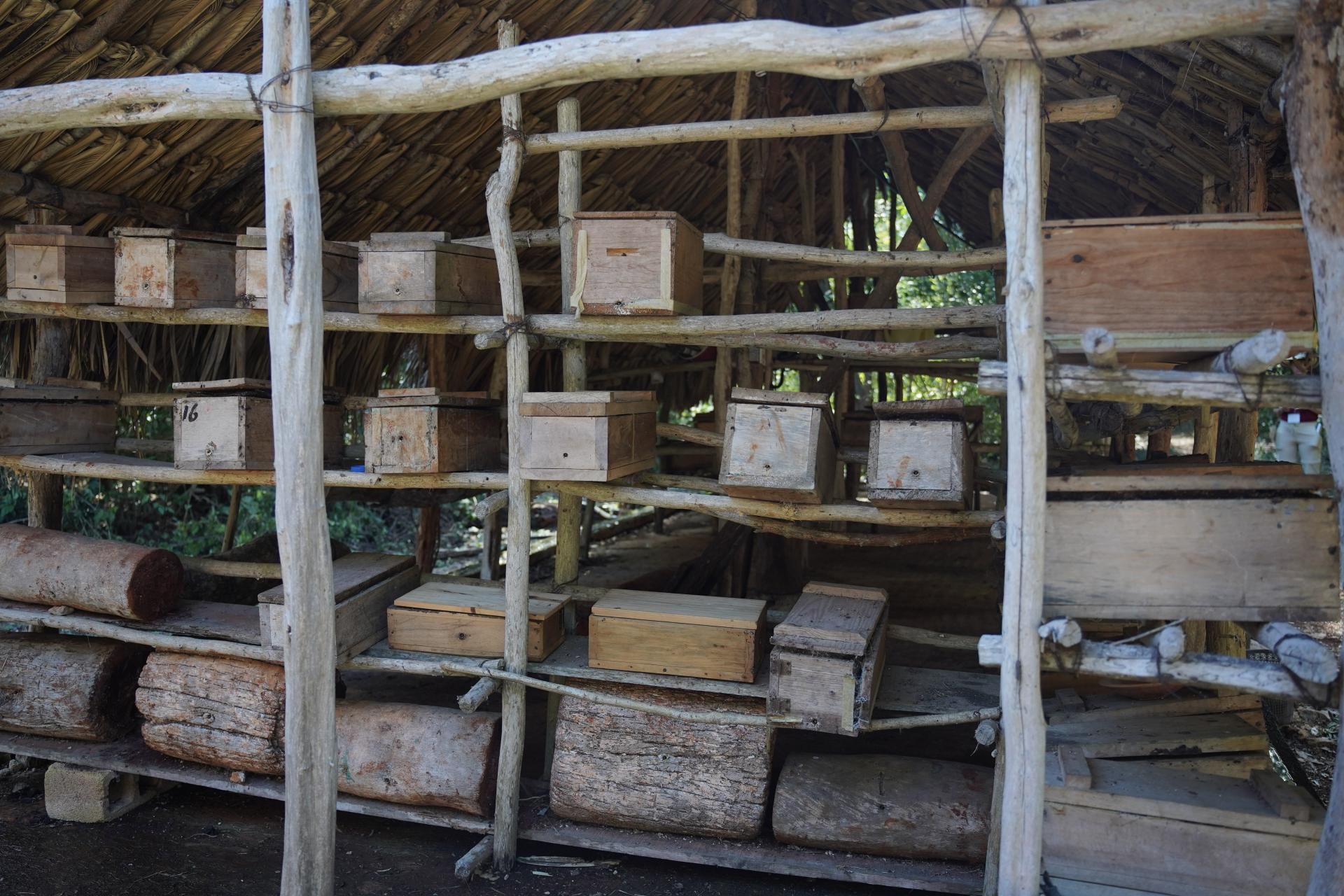
Melipona bee hives.
The days we spent together offered an open space for reflection and for raising concerns that Indigenous Peoples have regarding threats such as corporate interests, displacement, and climate change. Participants agreed that the wisdom that they and their communities hold serves as a bastion against these challenges. In particular, Traditional Knowledge concerning agriculture, which embodies more resilient and respectful attitudes and practices towards Mother Earth than modern methods of intensive, chemical-dependent agricultural production, is essential to ensuring each community’s continued and self-determined existence and to providing sustenance for generations to come despite our changing climate. Rekindling these traditional agricultural practices is a direct way to reclaim Indigenous food sovereignty.
The gathering also included a field visit to Milpa Colectiva, a collective agricultural project located in José María Morelos, Quintana Roo. Maya men and women from surrounding communities participate in the project, which is primarily focused on planting and harvesting various types of corn, potatoes, and squash using traditional and ancestral agricultural techniques. What began with the intention of promoting collective work locally to help families sustain themselves quickly grew into a broader movement connecting participants with similar initiatives in other communities and regions, and an expanded focus on the conservation and propagation of native seeds. Milpa Colectiva does not use any fertilizers or pesticides, which ensures the safety of its crops for human consumption and promotes biodiversity. At the same time, it allows them to maintain ancestral and regenerative practices grounded in connection and respect toward Mother Earth.
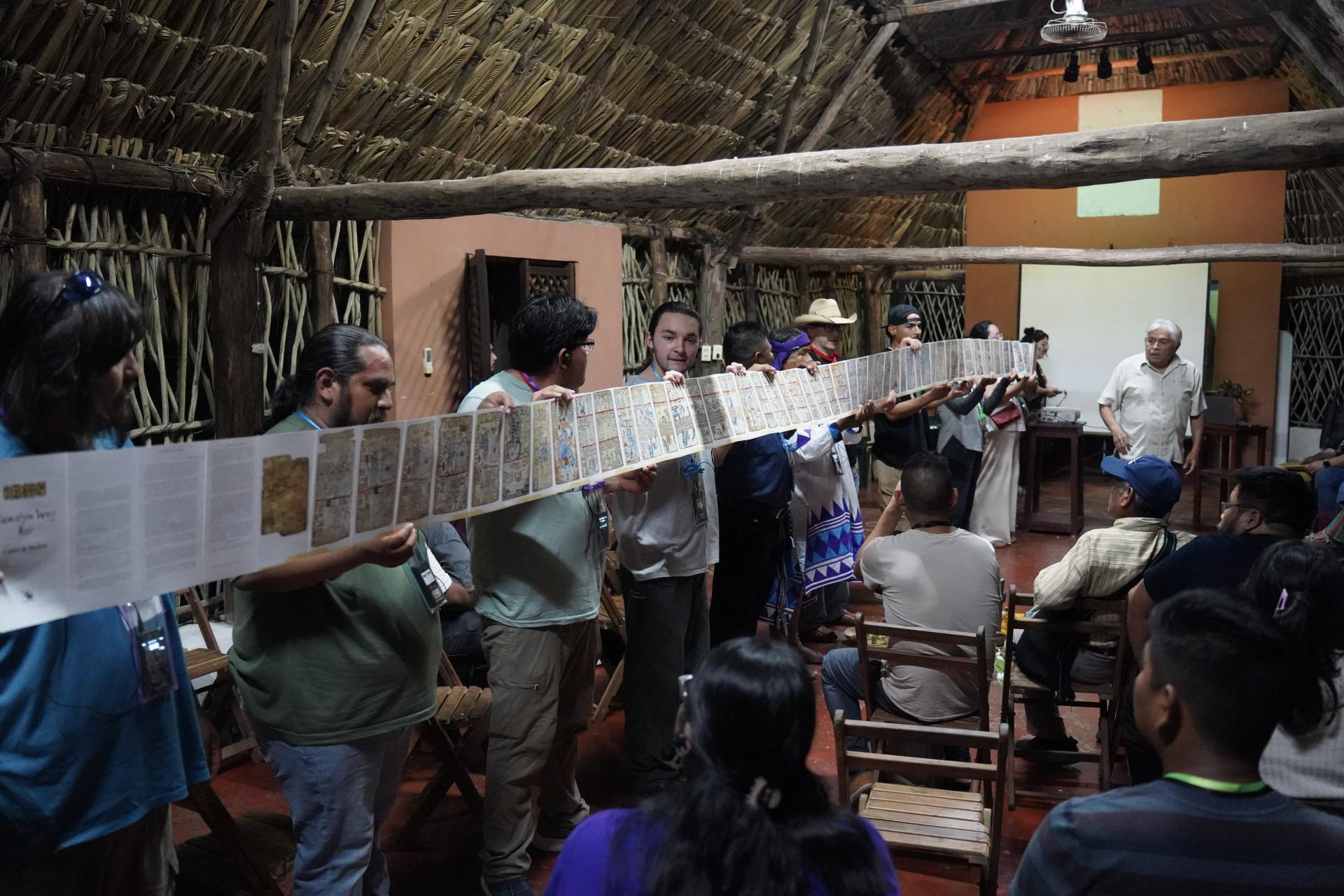
Exchange participants learn about a project by the U Yits Ka’an school to recreate a Mayan codex with children from local Maya communities.
As our gathering progressed, participants highlighted the importance of sharing this communal space as a powerful way to build lasting relationships between the different Peoples in attendance. Our time together became a source of inspiration, enthusiasm, and momentum for each representative’s work in their home communities, as well as for the work of this newly formed network. We shared delicious meals prepared by members of the school and also learned about the locally grown ingredients. As we learned about the school’s ecologically conscious practices, each participant was fully immersed in a working environment and encouraged to implement or improve these practices in their own communities and projects.
Towards the end of the event, we reflected on lessons learned and on the future not only for participants, but also for Indigenous Peoples in general. Among the key takeaways is that defending Indigenous food systems and sovereignty must be an intergenerational process that involves Elders, youth, and children. In the face of destructive neo-colonialist and extractive practices, revitalizing ancestral knowledge has become a priority, and participants urged one another to seek out and create more spaces like this gathering. The fact that all the projects represented in this gathering are thriving in spite of the multiple threats they face is living evidence that Indigenous kinship and cultures not only safeguard ancestral wisdom, but also build bridges, connect communities, and foster resilience. These elements are crucial to steward Indigenous lifeways and to be good stewards of Mother Earth.
Recognizing that food sovereignty is an inherent part of Indigenous rights, cultures, and self-determination, participants highlighted the importance of building networks of support and reflection to keep the momentum we created. Achieving and maintaining food sovereignty is only one way to defend and protect Indigenous lifeways, a process that must include both Elders and younger generations. Participants emphasized the importance of teaching the ancestral practices that have kept their foodways alive for many generations to the youth. This transmission is a form of resistance to extractivism and a way of advocating for Indigenous rights to govern our present, determine our futures, and be good stewards of our communities and Mother Earth.
The event was a meaningful opportunity to learn more about practices that Indigenous communities have kept for centuries. It was inspiring to see that, despite the complex issues the world currently faces, Indigenous communities continue to resist extractivism and remain connected to their traditional lands and livelihoods. One participant summed it up: “Our strength lies in sharing our knowledge. That is truly what we call autonomy . . . being able to decide what to do, when, how, and who to do it with.”
Top photo: Participants at the Indigenous Regenerative Agriculture Knowledge Exchange at the U Yits Ka’an School of Ecological Agriculture.
All photos were taken by Torran Anderson and Trinity Norris/IRes.