
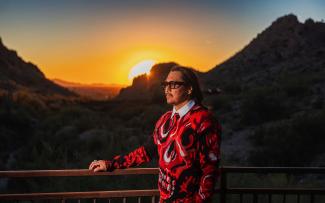
What does it take to stay present every day as an Indigenous man, artist, father, and recovering alcoholic and addict? Every morning I wake up with the sun and make my bed. I brush my teeth and wash my face, congratulating the man in the mirror. I push the power button on my thriftstore stereo, classical music echoing through the lo-fi speakers, and I light a sprig of cedar. Wafting the smoke onto myself, I walk through my home, speaking aloud everything that I’m thankful for and the gifts and blessings I’ve received. My ceremony offers prayers, and the smoke carries them through my humble abode. I say aloud how abundant the universe is in giving and receiving energy that flows through me like the air I breathe. My morning routine has become my ritual and is the way I welcome each day with renewal and gratitude. I’m still here.
My story is one of resilience, survival, creation, and destruction; a continuous cycle that is not linear, but moves in waves like the vibration emanating from the Earth. I’m a cultural strategist who uses art, fashion, and design to interpret the complexities of being a contemporary Indigenous person. My work is pulled from life experience and a lifelong history in the arts. I am a painter, muralist, graphic designer, graffiti vandal, multimedia artist, and fashion designer all balled up into one. I come from a long line of storytellers who are not what you see in museums. My family tree is made of people who shy away from the spotlight, as we’ve been known to break the law or are extremely private. Whether that be of a sacred nature or one that comes with street life, it’s all one in the same.
Only six short years ago, I was completely lost and disconnected from myself, my son, my culture, and my purpose. State prison isn’t the type of place you would imagine your life changing, but that’s where it happened for me. Alcoholism, drug addiction, hypertension, high blood pressure, type-2 diabetes, high cholesterol, heart disease, malnourishment, and dehydration was the state I was in. Sitting in Alhambra, a maximum security prison complex in central Phoenix, I thought about every choice and decision that got me to this point. My short sentence of 120 days seemed like 120 years. Before surrendering into state custody, I made the conscious decision to quit everything and use this time to work on myself. It was only four months, but there was plenty of time for me to figure out my next move. I would reinvent myself in the most unlikely of places.
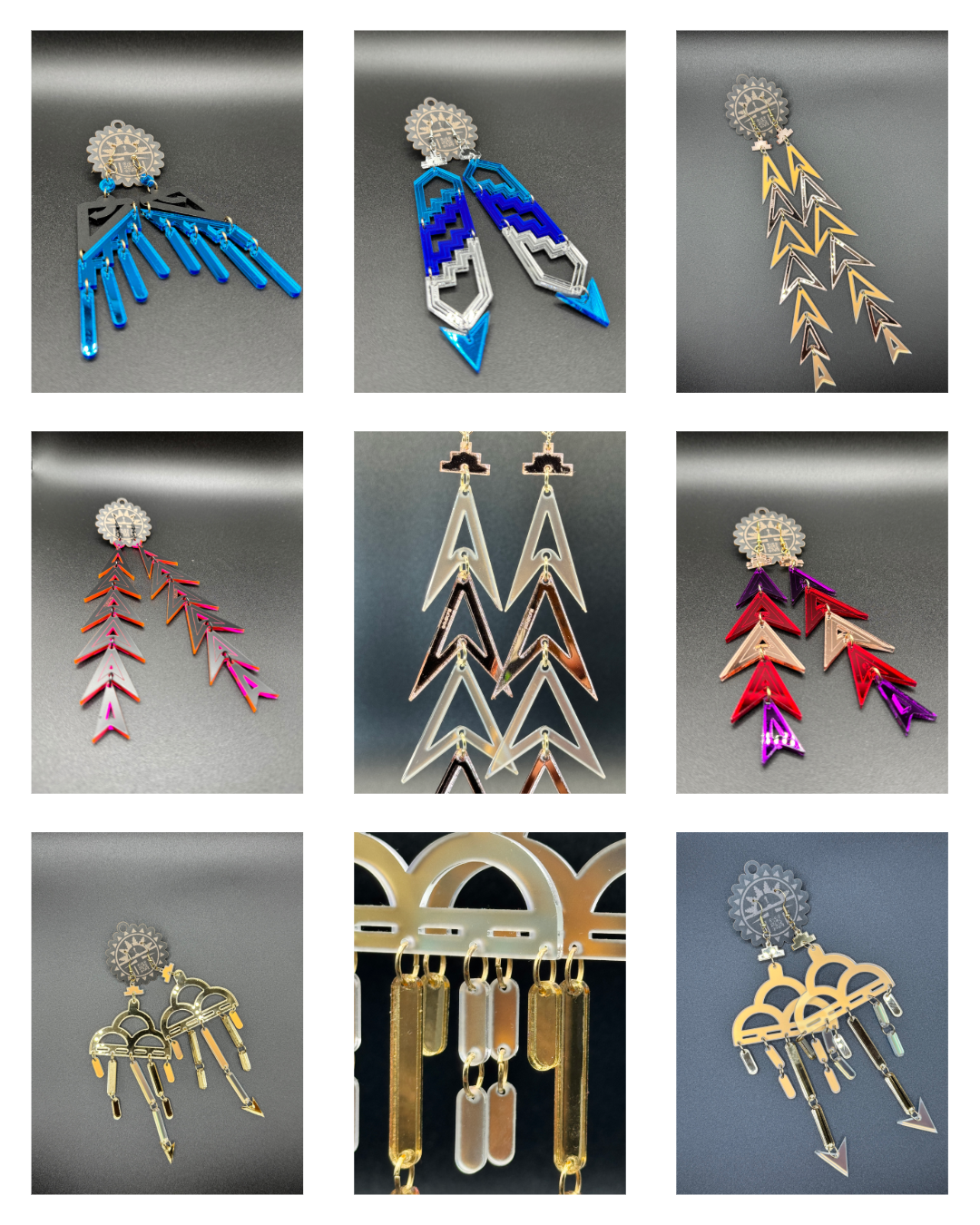
Laser cut acrylic earrings designed by Jeremy Arviso.
I was in pretty bad shape physically, mentally, emotionally, spiritually, financially, and legally. My first goal was to start building physical strength; my mind wouldn’t heal itself if my body wasn’t strong enough. I needed to do what I could heal my soul and start working on emotional and behavioral health. As a teenager I discovered yoga through a book called “Be Here Now,” and memorized the asana poses from years of practice. It must’ve been 10 years since I last tried, but there I was, dressed head-to-toe in orange, doing the downward dog and standing on my head. Every morning after chow, I would end my reps with a round of asanas. During this transcendental moment of alignment, I didn’t feel like I was in a prison until my head hit my knees.
I spent hours in the library and purchased a dictionary to understand the literature I was absorbing. My hunger for knowledge increased as my vocabulary and comprehension of the written word grew. What started as three-page, double-sided letters turned to six, and my handwriting improved. My fascination with learning kept me focused and steadfast. I wrote my goals down and drew diagrams and charts to keep them organized, which led me back to the basic fundamentals of drawing and composition. Never in a million years did I imagine designing jailhouse tattoos for inmates, but there I was!
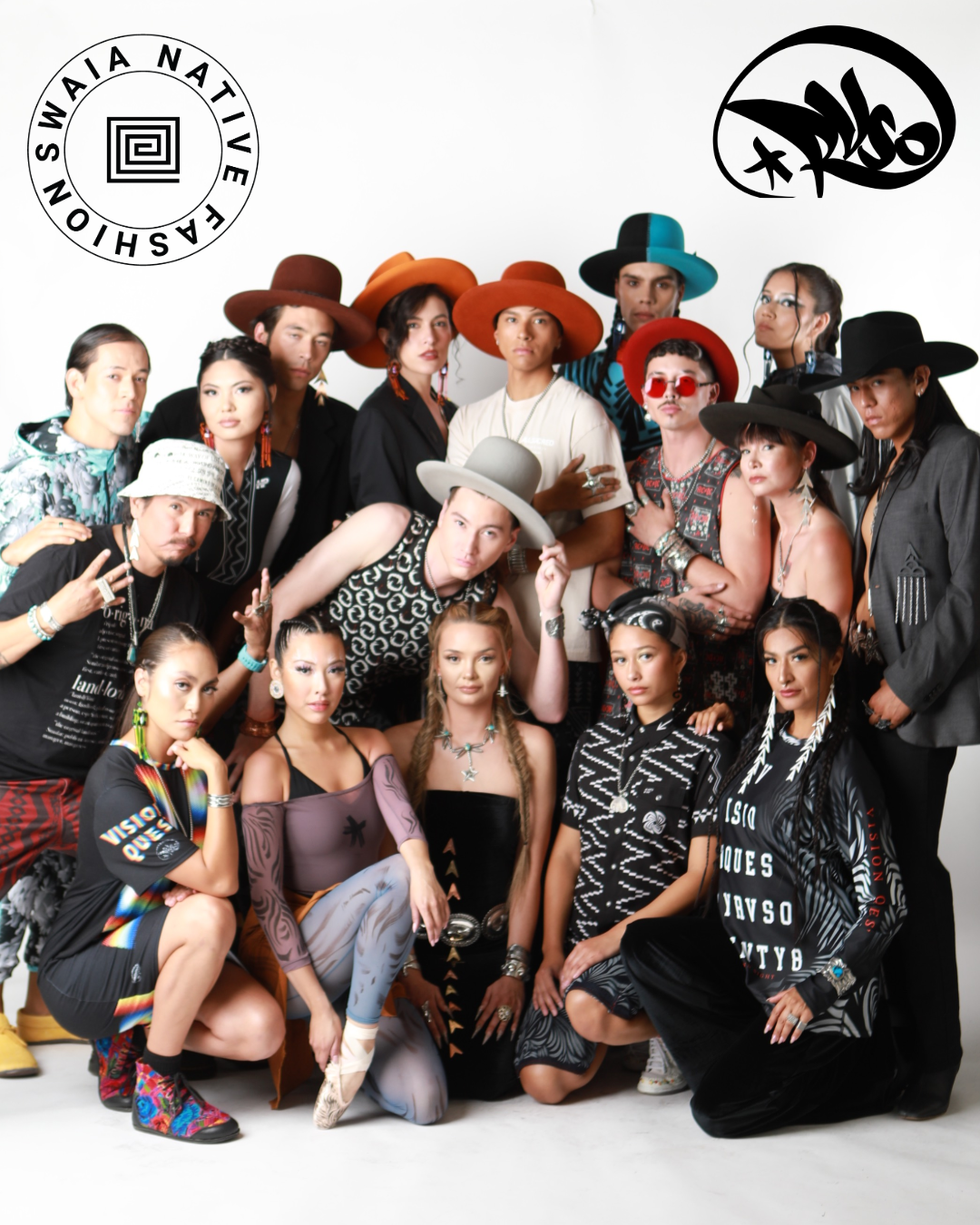
“Vision Quest” Collection by RVSO78 at the 2025 SWAIA Santa Fe Native Fashion Week. Photo by Zoey Urness.
At the time of my incarceration, the entire planet was topsy-turvy from the COVID-19 pandemic. Everything seemed to be in complete chaos, except for me. It seemed as if the world on the outside was of no importance compared to what I was doing on the inside of those prison walls. What grounded me and kept my life strong was brotherhood, education, creativity, physical fitness, and ceremony. One of the first things I noticed at Phoenix West DUI yard was the frame for a sweat lodge. I longed to be in there with my brothers, but it was up to the chaplain and warden. They were worried about the virus spreading into the prison system, and our right to spiritual freedom was at stake. After weeks of waiting, we were granted one sweat with only a handful of us being able to take part. I was one of them. I attribute this experience and connection with the Creator that day to the continued success of my sobriety.
I recently returned from a two-week excursion through Sweden, Norway, Denmark, and Germany. My services as a creative director were sought out for an activation at the Världskulturmuseerna Museum of World Culture in Gothenburg, Sweden. One year ago, I served as exhibition designer and brand identity developer and collected artists showing work in the “Native American Fashion Exhibition: From Roots To Runway.” The museum asked me back to direct a collaborative activation for the one-year anniversary that included dance choreography, fashion design, and storytelling.
As I stood there receiving praise before a crowd of hundreds, I felt slight chill run through my body. I grabbed the microphone and introduced myself. “My name is Jeremy Donavan Arviso, and I’m of the Diné, Hopi, Akimel O’odham, and Tohono O’odham Nations: four Indigenous Tribes from the state of Arizona in the southwest United States. I’m very happy to be here with you on your land to share our culture, fashion, and stories. Thank you all for coming today.” Becoming present required sacrifice. In order to live the life I’m currently enjoying, I had to give up the old ones. This included a multitude of acquaintances, environments, attitudes, and behaviors. One cannot create the future if one holds onto the past.
Art is an imitation of life. Art, or creativity, among my People was never meant to be a commodity. It was developed for ceremony, survival, and community. Business is a whole other art form, and is what separates a commercially successful artist from a starving artist. The business of art has changed my life and how I move through the world now. It’s an experience that is defined by failure, but within those outcomes are lessons. It’s within these patterns that a code is tightly woven together by the architects of capitalism.
The system is meant to keep artists out, but if you can decipher the code, a whole other world can change your work, for better or for worse.
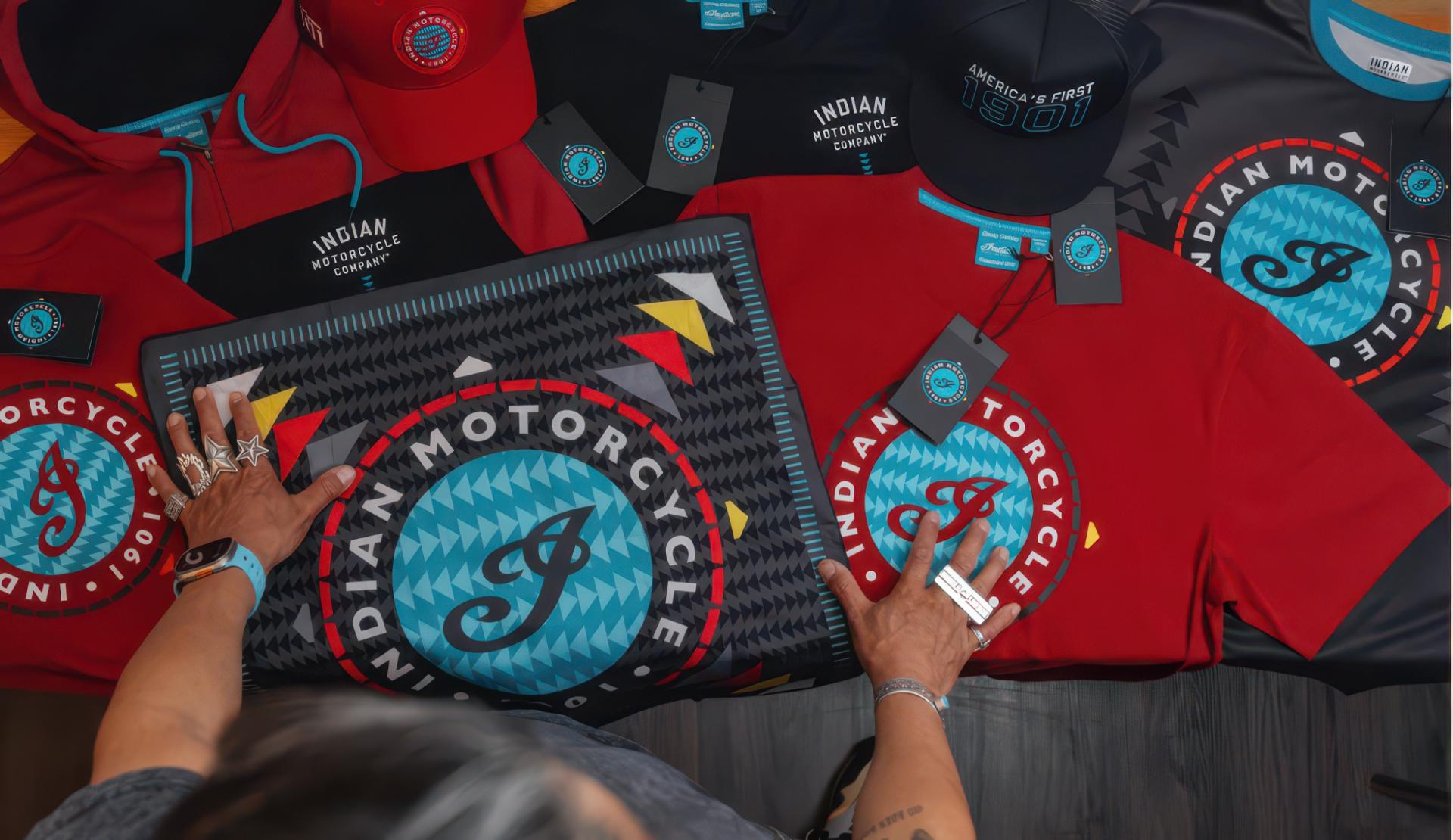
As a father, I’m responsible for another human being, and must be able to make a living for both of us. Leading by example, I’m able to share what I’ve learned not just with my son, but with the community around me. My work has never been just about fashion, art, or design. It’s about context, responsibility, and relationship. As Indigenous creatives step into global industries, there’s a growing need for cultural fluency, ethical collaboration, and strategy rooted in lived experience. That’s where I come in. I help brands, institutions, and organizations think deeper about the work they put into the world and the communities it impacts. From creative direction to cultural advisory, my role is to bridge worlds while protecting the integrity of the culture that shaped me.
Sobriety, creativity, and community changed the direction of my life. Today, the work I do through art, fashion, design, and entrepreneurship is about building ownership, opportunities, and pathways. I’m not just designing jewelry, clothing, or brands; I don’t just design products. I design exits from cycles I know too well. For anyone out there rebuilding their life, keep going. The work you’re doing matters.
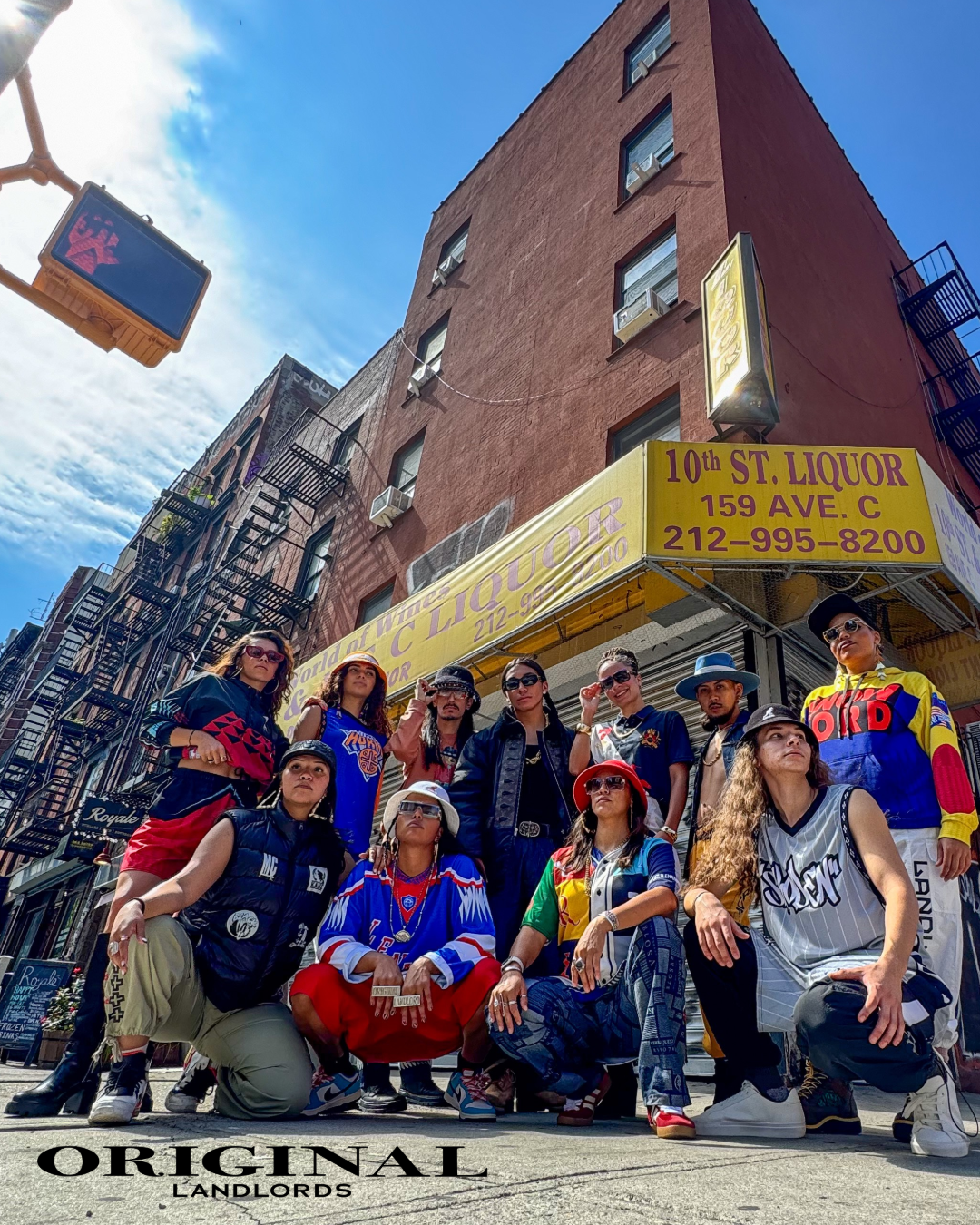
Jeremy Arviso (Diné, Hopi, Akimel O’odham, Tohono O’odham) is a multifaceted artist, designer, entrepreneur, and the founder of RVSO78 and Original Landlords.
Top photo: Jeremy Arviso. Photo by Danny Upshaw.
