Photos by Julien Defourny
In Guna Yala, an ancient civilization is being swallowed by the sea. They are reaching back centuries to survive it.
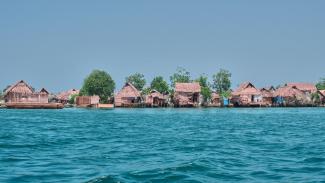
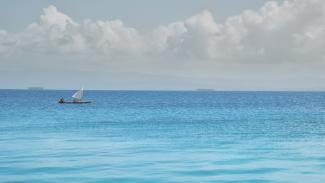
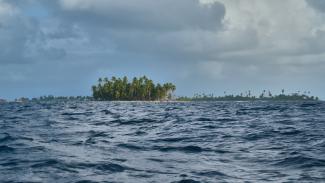
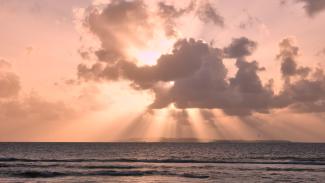
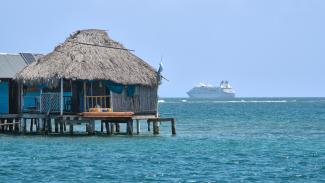
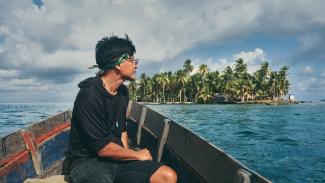
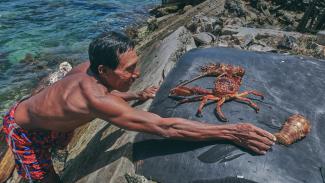
To get to Guna Yala, you have to want it. From Panama City, you drive east for two-and-a-half hours in a four-wheel drive, climbing into the cloud forest on a road that punishes bad tires, before descending to a port on the Caribbean coast. From there, a mid-sized motorboat—15 or so people packed in, Guna families and tourists alike—takes you out across open water. The waves are real, and the spray is cold. The boat pitches on the swells, and some people grip the rails. And then the islands appear.
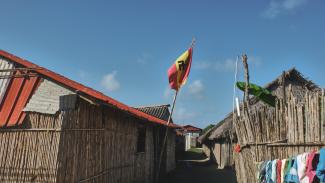
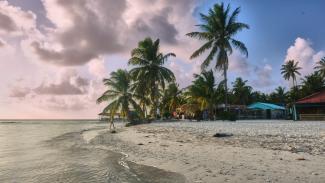
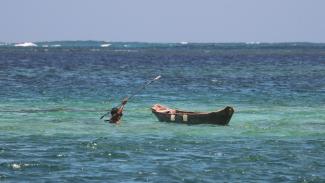
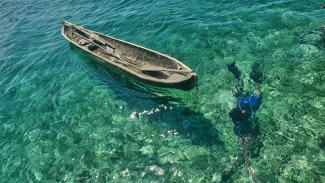
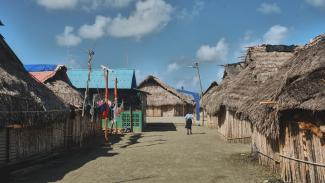
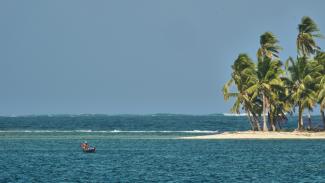
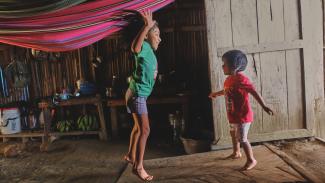
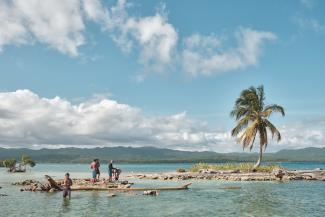
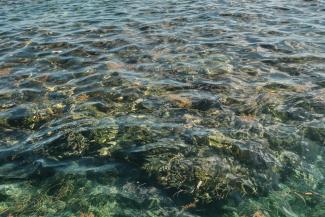
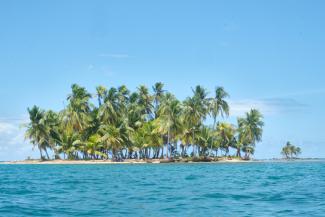
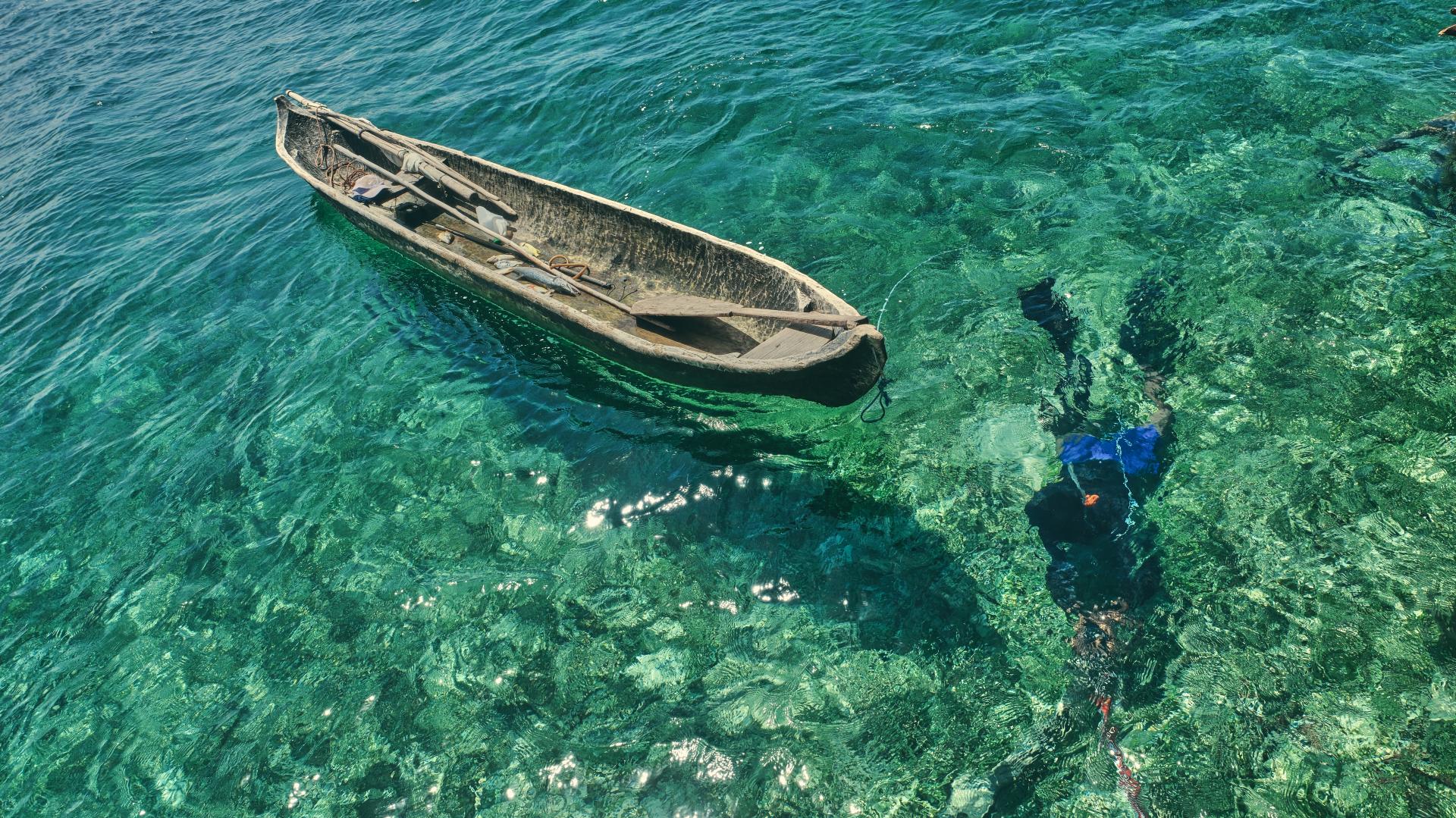
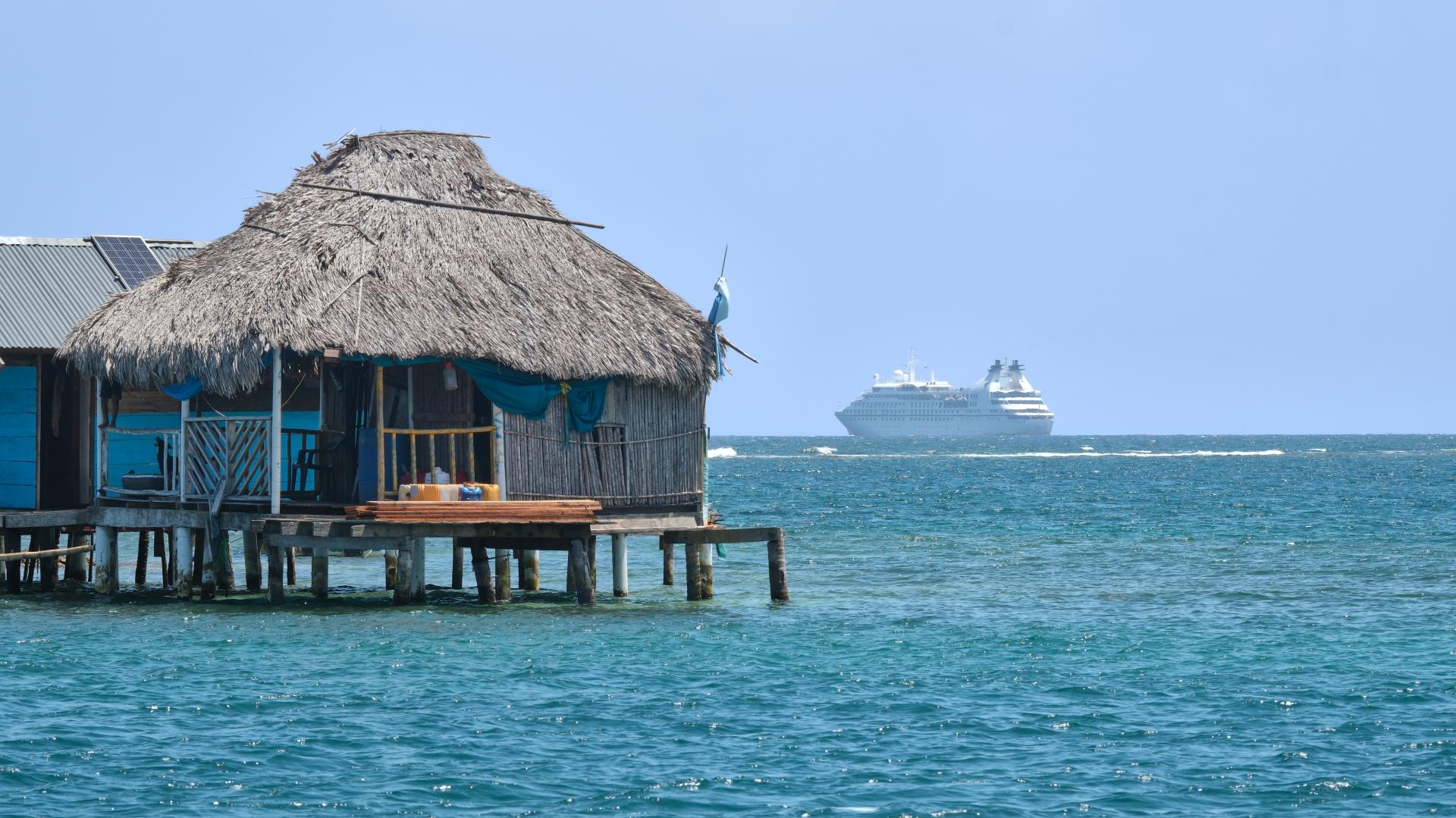
The water is extraordinary. Turquoise close to shore, deep blue at the horizon, so clear you can watch the coral beneath your hull as you pass. The archipelago stretches nearly 400 kilometers along the eastern Caribbean coast of Panama—365 islands in total, though only around 50 are inhabited. Some are barely more than a strip of white sand and a palm tree. Others hold entire communities: houses packed close, canoes tied up in rows, children running the narrow paths between them.
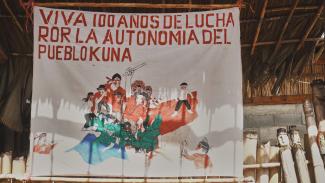
This is Guna Yala. What the Spanish once called San Blas, a name the Guna have formally set aside. These are the Guna: one of the most culturally intact Indigenous Nations in the Americas, a People who have held onto their language, their laws, their cosmology, and their way of life against 500 years of colonial pressure that erased so many others.
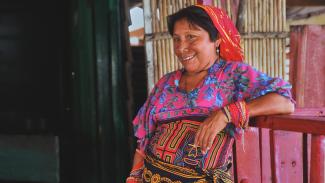
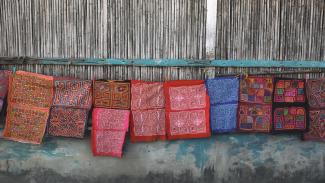
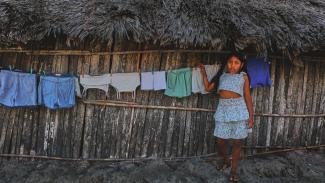
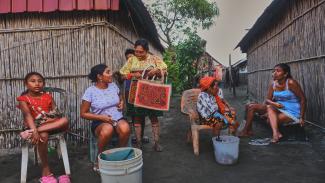
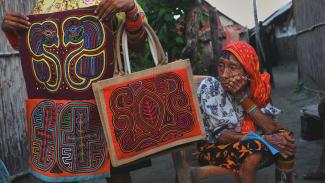
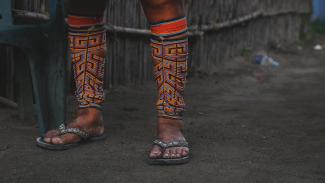
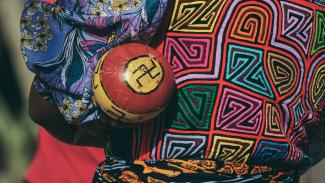
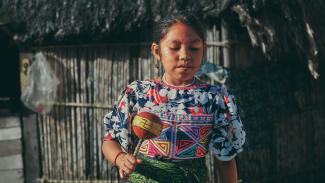
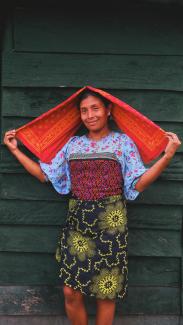
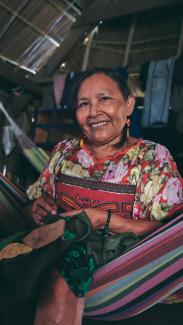
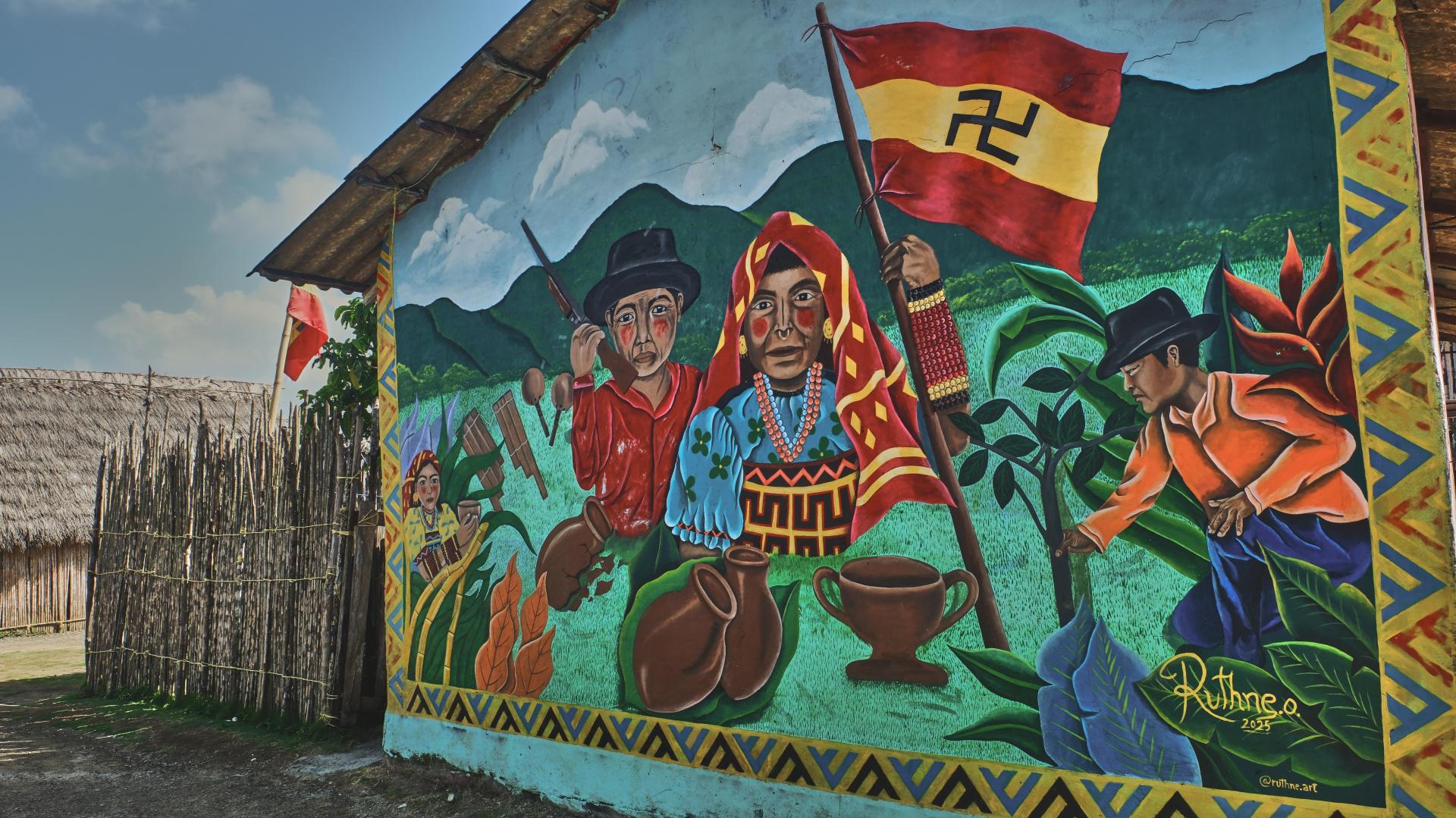
Look at the women moving through the islands, and you begin to understand how. They wear molas—blouses of layered, reverse-appliquéd fabric, hand-stitched in intricate geometric patterns that local philosopher Pedro Félix will tell you are not decorative but cosmological, drawn from the same geometry as the stars, the moon, and the sun. Their forearms and calves are wound in hundreds of beads, color stacked upon color, gold rings in their ears and noses. Each mola is unique. Each one tells a story. Grandmothers teach girls. Girls teach daughters. It is knowledge worn on the body, carried forward one generation at a time.
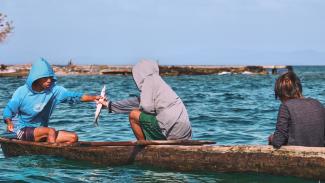
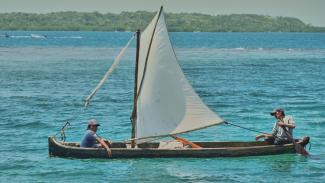
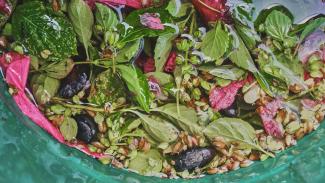
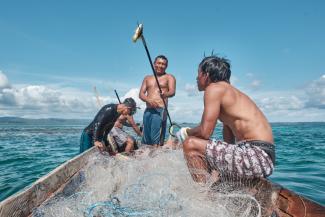
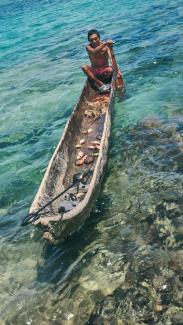
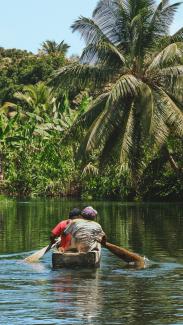
The Guna grow cacao, pineapples, coconuts, plantains, and traditional medicines on their fincas (farms on the mainland), traveling there daily in hand-carved wooden boats, the same way their grandparents did. They speak Dulegaya as a first language. Their children grow up in it.
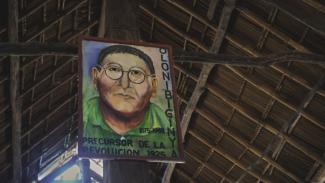
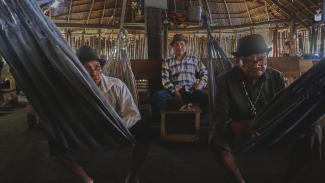
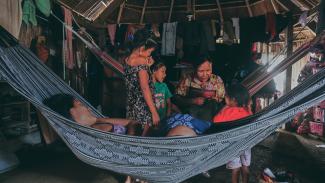
At the heart of Guna political and cultural life is the Ibeorgun Nega, the Congress House. These large, oval-shaped traditional structures are where the community gathers. Where decisions are made by consensus. Where customary law is interpreted. Where daily affairs are managed. And at the center of all of it is the hammock.
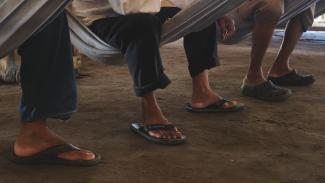
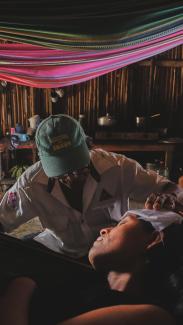
The Sailas (community leaders) conduct meetings from hammocks strung inside the Ibeorgun Nega. It is from the hammock that the ancient songs are performed, some lasting 30 minutes or more for a single chant, some hundreds of years old, carrying within their verses the history of the Guna people, their laws, their moral code, their relationship to the natural world. The hammock is where governance lives. It is where the community’s future is decided. It is also where life begins and where it ends.
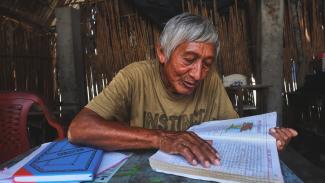
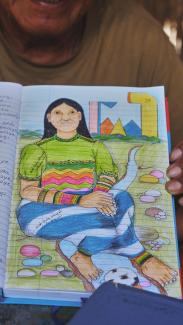
When a Guna child is born, they are placed in a hammock. When a Guna person dies, they are wrapped in a shroud and carried to the earth. Félix, who has spent decades documenting Guna cosmology in handmade books, reads from one of them: “The hammock is sacred. It represents the sacred intermediary of prayer and sustenance.” The sick recover in it, and the leaders govern from it. The songs that hold everything together are sung from within it. This will matter throughout everything that follows.
Tourists arrive by the thousands. They come for the reefs, among the most biodiverse in the Caribbean, home to species found nowhere else on earth. They come for the white sand, the coconut palms, the bioluminescence that lights the water at night. They photograph the molas. They buy the beadwork. They leave.
But the water that draws the world to Guna Yala is also the threat.
The sea is rising. According to the Smithsonian Tropical Research Institute, sea levels near the islands are now climbing at more than three times the rate recorded in the 1960s. The islands sit between half a meter and one meter above the waterline. Steve Paton, director of the Smithsonian Institution’s physical monitoring program in Panama, has stated that within 40 to 80 years, most, if not all, of the inhabited islands could be underwater. Two or three islands have already disappeared entirely.
In June 2024, 300 families from Gardi Sugdub relocated in one of the first planned climate migrations in Latin America, Mongabay reported. The Smithsonian says all 50 inhabited Guna islands may need to be vacated by 2100. The Guna have contributed almost nothing to the crisis swallowing their home.
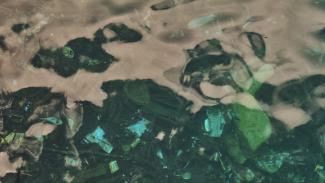
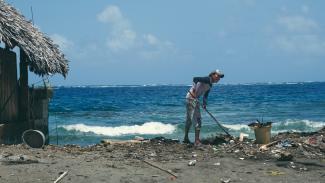
There is something else here, too—something visible that requires an honest accounting. There is garbage in these waters. Plastic bottles are floating near the shore. Wrappers litter the beach. It is real, and it is present, and it sits uncomfortably alongside the beauty.
Florina López, a Guna community leader and organizer from San Ignacio de Tupile, gives the honest answer. The Guna, she explains, built a world in which all waste was biodegradable—banana peels, fish bones, seeds, coconut husks. Everything decomposed. Nothing lasted. Then colonization came. Then tourism. Then plastic.
“Many of the things we started consuming were strange to us,” she says. “At that time, we didn’t know how to handle this waste. The most logical thing was to throw it into the sea without thinking.” She pauses. “It wasn’t little by little. It was in droves. An invasion of our territories with all those resources and materials that we have never handled. By the time we realized it, we already had all the world’s garbage in our communities.”
The plastic came with outsiders. The practice of discarding it stayed. And the Guna are the ones now trying to clean it up. They are doing what the Guna have always done: adapting. Reaching back into ancestral knowledge, into chants, stories, botanical traditions, cosmological maps that exist in no European university—and finding in that knowledge not nostalgia, but tools. Raising a new generation to carry it forward, into whatever comes next.
Daniera Brown is one of those people.
-----
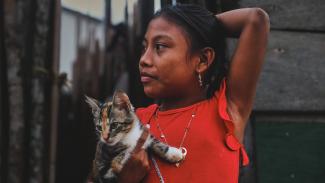
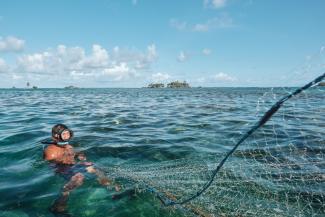
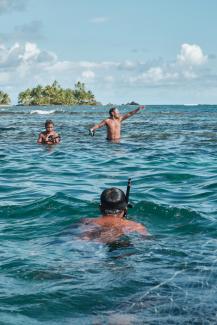
Brown is 24 years old. She speaks about the sea the way some people speak about family, with a love that doesn’t need to announce itself. She is a marine biologist, a Guna woman, and one of the first five women in her community to be certified as scuba divers. She goes down into the coral. She counts it. She watches it bleach. She documents what the warming sea is doing to the architecture her ancestors called sacred. “I have seawater in my blood,” she says. “As natural as the blood that runs through your veins.”
Brown grew up in the Guna community of Nargana. The teachers there wove the sea into everything—the lessons, the stories, the sense of who the Guna are and what they are responsible for. As a child, she didn’t have a word for what she wanted to do, only a direction. The sea. Humanity. Something given back. “Later, I gave it a name,” she says. “Marine biology.”
She was eight years old when she started volunteering. Turtle conservation. Beach cleanups. By the time she finished school, she already knew research was where she was headed. And that the questions driving her weren’t only scientific, they were personal: “How can I honor my culture? How can I give back what they’ve given me?”
The organization Maral Dayan brought Brown and four other young Guna women into a coral monitoring program and trained them to dive. They obtained their open water certifications—the first time women from the community had been formally certified. In a territory where scuba diving is prohibited for outsiders and snorkeling is restricted even for locals, the certification was not just technical. It was a declaration. She remembers the first dive with a tank. “It’s a feeling I can’t explain. It’s like everything is perfect. Like everything is all right,” she says.
Underwater, things are not all right. The study Brown participated in—counting coral height and diversity, monitoring bleaching, and mapping climate change across the reef—is not yet published. But what they found confirms what the Elders have been watching from their boats for decades: there are changes. Visible ones. The reef the Guna have guarded for generations, which their ancestors called a sacred nursery for the sheer proliferation of life within it, is under pressure.
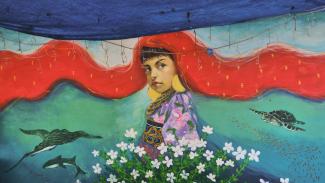
She describes how she was taught to enter the water. You speak first, to Mother Nature, to Mother Sea. “We’re the ones entering territory that doesn’t belong to us, and you always have to treat it with respect,” she says. She has dived alongside sharks, watched striped turtles move through the water. When asked about fear, she shakes her head. “Not afraid,” she says. “Respect.”
Brown moves between the Guna worldview and western science the way she moves between the surface and the deep—as if the boundary between them is a membrane, not a wall. “Science alone wasn’t enough to empower people,” she says. “One way to connect this was through the ancient reality that the people had, and how we’ve always been connected to nature.”
In schools, she tells students that sea turtles have existed since before us, that Guna ancestors considered turtles their brothers, which is why eating turtle meat is forbidden.She tells them the coral has always been sacred, a nursery teeming with life, what she calls “a kindergarten of the sea.” Not tradition in tension with science. Knowledge that got there first.
“Our ancestors said that corals are considered sacred nurseries because of the high biodiversity there. We are their primary guardians. At what point did we lose that connection?” Brown is not just asking. She is refusing to accept the loss.
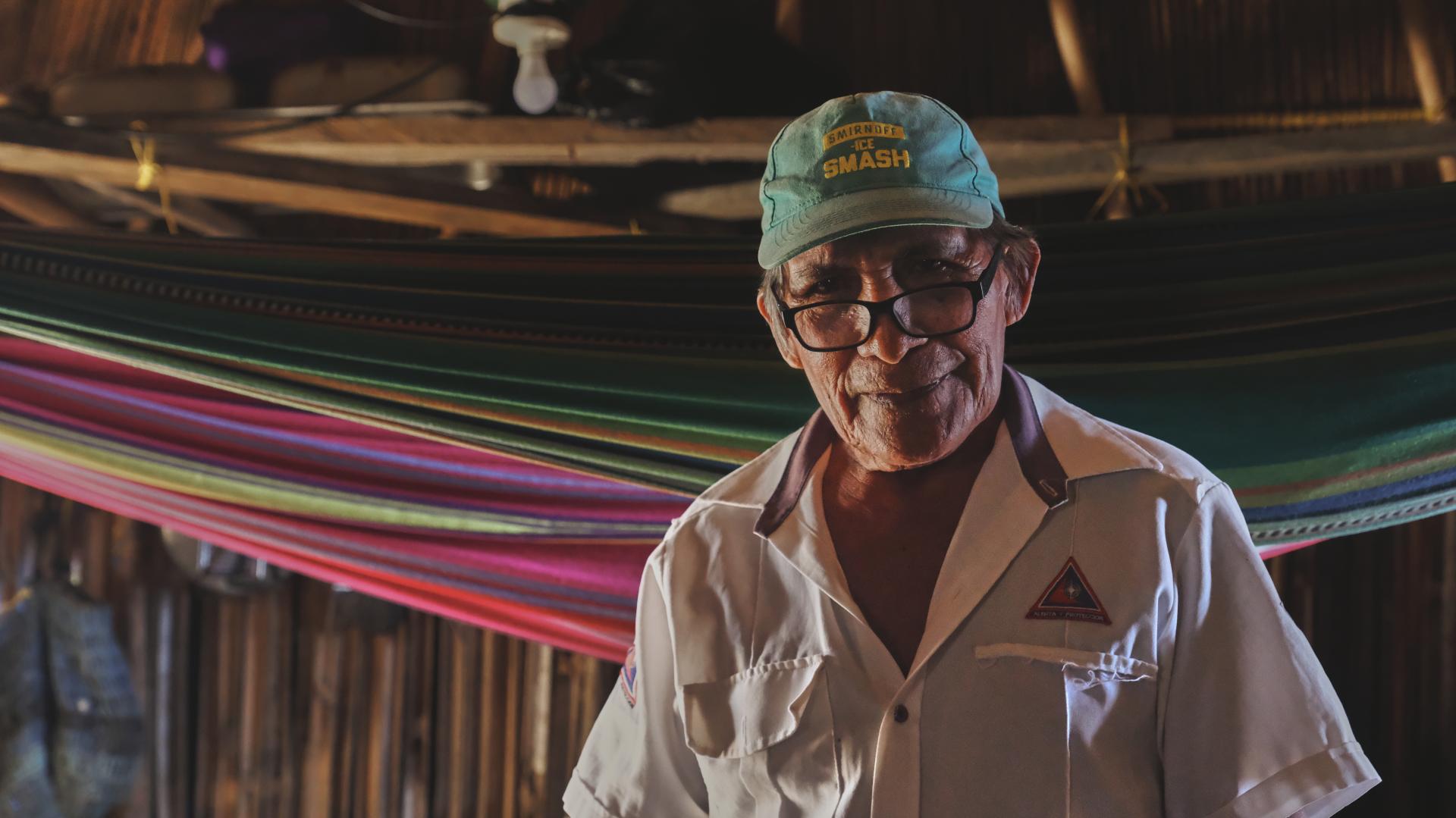
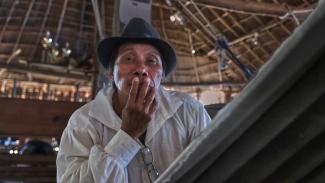
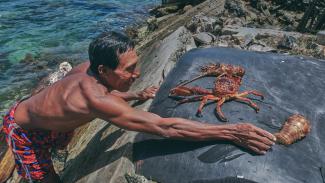
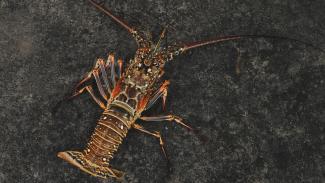
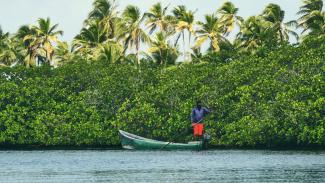
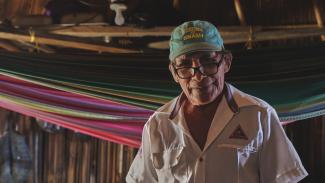
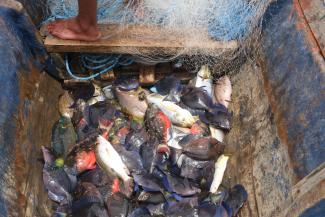
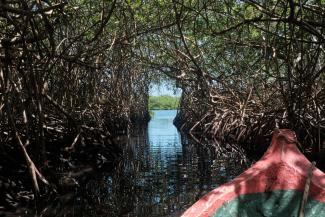
The mangroves tell the same story. Desiderio López, a 70-year-old Guna man from San Ignacio de Tupile, and Florina’s brother, spent years as a park ranger before his eyesight failed. Years in which he painted and documented the natural world around him on canvas. He remembers when the mangroves were so thick with lobster you didn’t have to go looking. “Back then, there were tons of them. We ate loads of them. Now you have to go 15, 20 meters out from the sea to get one,” he says.
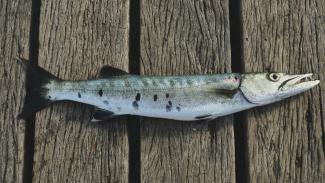
The roots that once nursed entire ecosystems have been damaged. The animals that sheltered there are gone. “Many fish have disappeared,” he says. “Fish that you don’t see anymore. Before, there were tons of sardines all over the area. Not anymore. I don’t know where they’ve gone.”
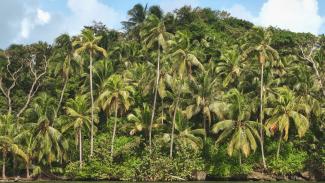
The mangroves are more than a habitat. López’s father was one of the community's great traditional medicine practitioners. He taught his son how to use the mangrove’s roots and heartwood to strengthen bones after injury, to purify the blood, to protect the spirit. “The mangroves, even though they are in saltwater—you will never see their leaves turn yellow,” López says. “If something is always green, it means it’s full of life.” His father told him that mangrove tea, prepared correctly, lengthens life. Some of that knowledge is being lost along with the trees themselves.
And the islands are shrinking. Communities once desperate for space began pulling rock from the reefs to build up and expand their islands. “The Elders started talking about not doing so much of that because it would affect us later, and we’re seeing it now,” López says. Several islands have already disappeared. There are two or three that are practically gone. Only the reefs remain.”
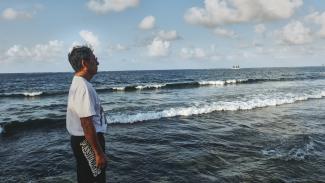
Sunday Vázquez, 73, also a community leader from San Ignacio de Tupile, who spent 33 years working for the Panamanian government, puts it simply: “When I was born, all of that was beach. There was no landfill or anything. All beach.” He remembers going out at 3:00 in the morning with his father to fish. He remembers a shoreline that stretched. “Before, everyone had a tree in the street,” he says. “Now, almost everyone is putting a ceiling on it.”
-----
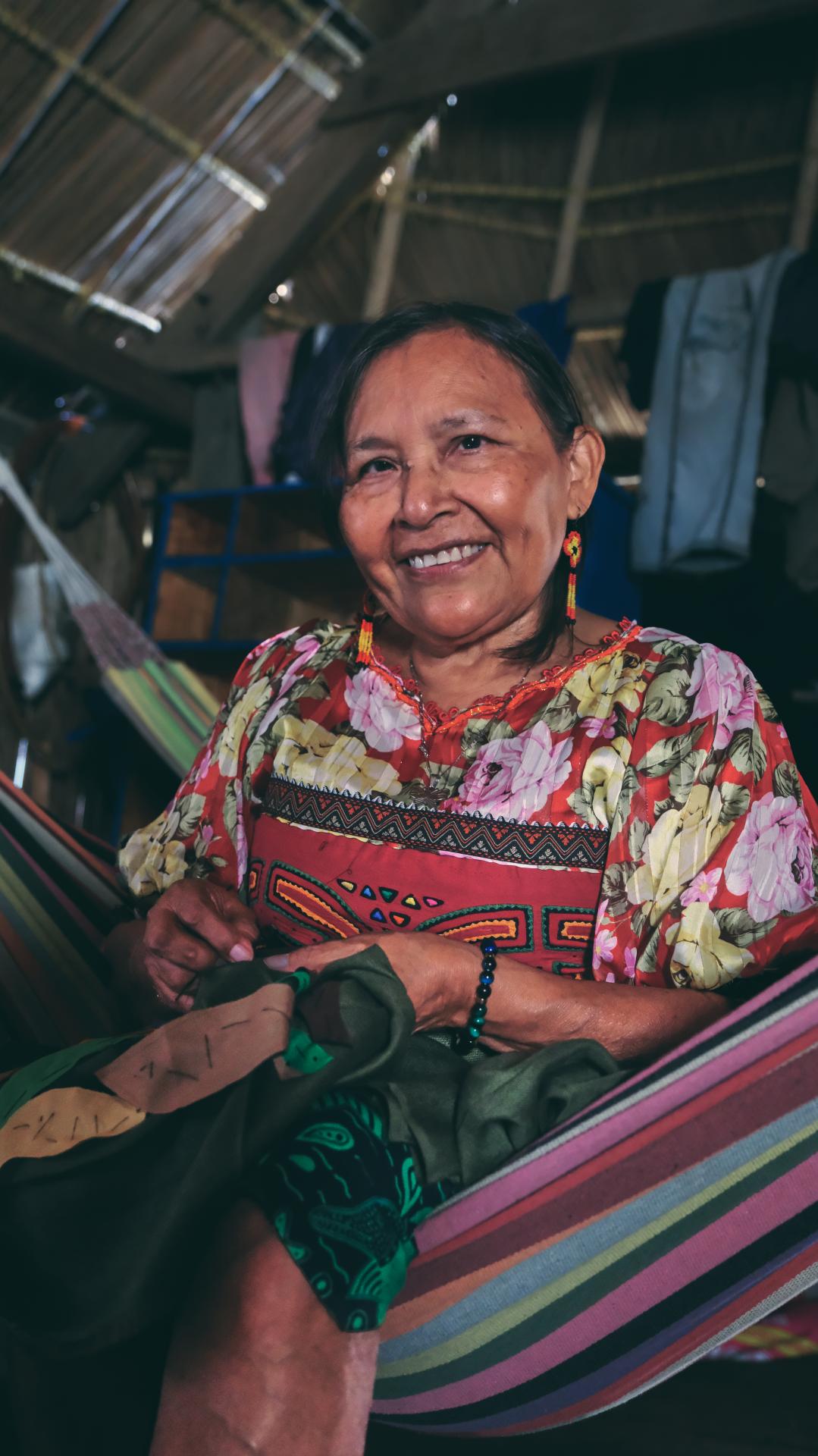
Florina López has stood in front of a lot of rooms. You can tell. She is petite, in her 60s, and has traveled internationally to speak about Guna culture, climate change, and Indigenous women’s rights. She has explained her people’s situation to those with power over it many times. She has watched them nod. She has run out of patience for performance.
She is also a seer. Her mother was a seer; her grandmother before that. From childhood, she received information in dreams and visions. Not mystical decoration, but directional knowledge. Warnings. Guidance. In Guna culture, this is not unusual. It is a form of knowing that sits alongside the practical and the scientific, woven through rather than separate from them.
López runs initiatives now from San Ignacio de Tupile. Women are trained to do weekly water quality inspections in family homes. Children in schools are learning the sacred significance of water—how it is used in ceremony, how it has always been central to Guna tradition. Last year, her organization ran a competition: whoever collected the most plastic bottles won a prize. They collected 60,000 bottles. Those bottles, mixed with sand, now form the foundations of new school classrooms rising on the island.
She is also working on something less visible, but perhaps more important: keeping alive the transmission of knowledge through women. She describes a practice so woven into daily life it barely has a name. When a Guna mother rocks her baby in a hammock, she does not sing a fixed song. She composes one, in the moment, specific to that child. She weaves into it the story of who this person will be. What they will protect. What the world around them requires. To a boy, she sings that he will be a fisherman, that he will guard the marine ecosystem. To a girl, she sings that she will tend the seeds, carry the knowledge forward. “It’s not written down,” López says. “It’s transformed each time she sings to her child. She weaves it.”
This is how knowledge survives. Not in archives. In breath and rhythm, in a mother’s voice in the dark.
The drug crisis is real, too, and López does not avoid it. Colombian fast boats move through these waters. When pursued by police or marines, they throw their cargo overboard. The sea delivers it to the shore. Cocaine. Marijuana. Communities that never handled large sums of money are suddenly awash in both product and cash. “There is corruption everywhere, and it has reached the authorities here, too,” she says.
Young people are using. Theft has increased. The community has responded with force when necessary—families found dealing have their property confiscated and are exiled for years. But the pressure on leadership is visible. “I feel that the authorities, the political side, are weakening,” López says.
Women, she says, are holding things together. They always have.
“Women are characterized by giving order, organizing, structuring, always with open arms,” López says. “We can do that in science—allow ourselves to occupy space so that curiosity isn’t lost, and identity isn’t lost. Because when we lose our identity, we lose ourselves.”
When the subject of the mountains comes up—the relocation that more communities are being forced to plan—López does not look away. “It is a decision that would have to be analyzed very carefully,” she says. She has attended the meetings. She watched the Gardi Sugdub relocation unfold over more than 10 years of negotiation, funding shortfalls, and compromises. She knows what cannot be measured in a government impact study. “There’s a slow change that will bring negative impacts, both culturally and environmentally,” she says. “It is a constant struggle.”
But the Guna have moved before. Their history is a history of movement and survival. When Spanish conquistadors arrived in the Gulf of Urabá in the early 1500s, the Guna lived in what is now northern Colombia, in the forests along the border between Antioquia and the Darién. They were pushed north, first to the jungles of Panama near the Caribbean coast, then, by the mid-1800s, down to the islands themselves, drawn by cleaner conditions, escape from disease-carrying insects, and access to trade routes.
They did not come to the sea because it was easy. They came because they had no other choice. And they built a world there anyway.
“Nothing is separated,” López says. “What happens on one side impacts others. It’s a chain reaction. We keep working. Keep defending what life is to us today. And as Indigenous women, we are always at the forefront of that fight.”
---------
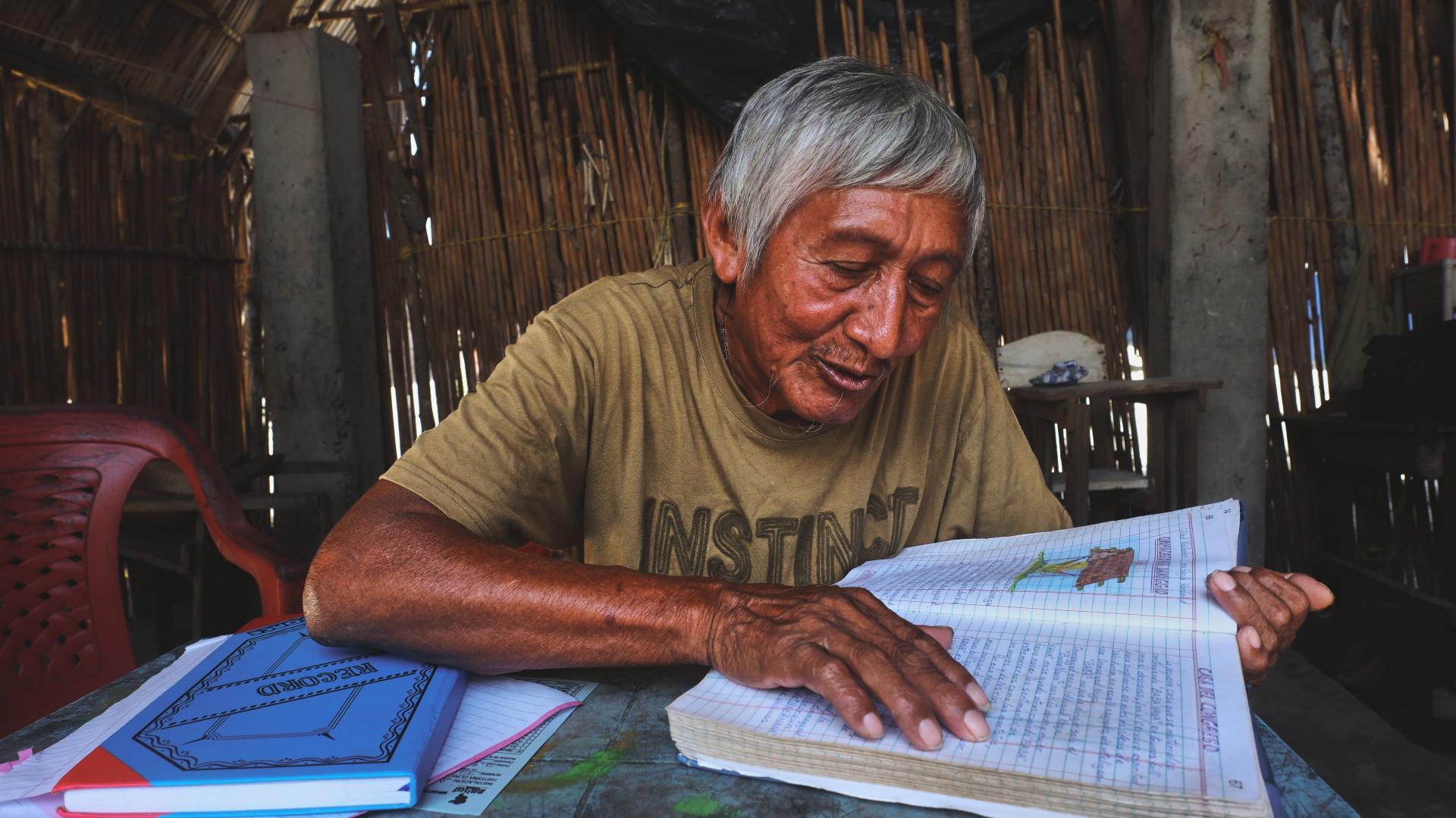
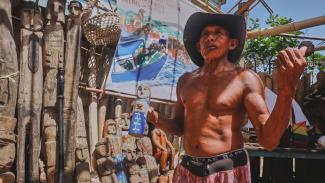
Pedro Félix emerges in the dark, a headlamp strapped to his forehead, books tucked under his arm, already talking. He is in his early 70s with shoulder-length white hair and a quickness of thought, movement, and speech that makes it hard to keep up. He has been drawing, painting, and writing for decades, filling handmade books with detailed illustrations of Guna laws, cosmological maps, botanical knowledge, ceremonial records, and spiritual traditions. Everything he has spent a lifetime learning and refusing to let disappear.
He flips through the books, pointing at illustrations, speaking in Spanish and Dulegaya at once, switching between them the way a musician changes keys—not for translation, but for precision. Some things need the language they were born in.
“‘In Arbor,’” he says—his name for his life’s work—“ideas are about cultivating the mind in the earth, nailing an epitaph of letters so that one’s life does not fade away.”
Félix is a philosopher in the oldest sense: not an academic, but someone who has given his existence to the question of what is true, how you know it, and what happens when it is forgotten. He is also a botanist, healed by plants at the age of three when he broke his leg and was taken not to a hospital, but to a traditional botanical clinic. He is an artist. And he is, above all, a man in a race against time.
“Many stories have died,” he says. “They transform the white name into legend, into mythology. But it is history. It dies with the passage of time.”
Félix has traveled to Colombia, where Guna communities still exist along the rivers, collecting oral traditions that were never written down and bringing them back to transcribe. He teaches. He writes for Congress. He argues, with the quiet fury of someone who has been making this case for decades, that the Guna do not lack history. They possess it. Written not in European archives, but in what he calls the dimensional layers of Mother Earth.
“Our history doesn’t come from Europe,” he says. “The true story of the creation of the world is written in the dimensional layers of Mother Earth and the diversity of elements that make up the universe. It is written before our eyes.”
Félix reads from one of his books, a passage about the hammock. In Guna cosmology, the hammock is not furniture. It is the arc between birth and death. The place where a mother first sings a child into the world. Where the sick recover. Where the Saila sits inside the Congress House to govern, to hear the ancient chants, to pass laws, to hold the community together in the great oval structure that is the heart of Guna civic life. Where the dead are prepared for their return to the earth.
“The hammock is sacred,” he reads. “It represents the sacred intermediary of prayer and sustenance. Mother Earth is a great plant that sustains us in her earthly womb, and the universe is an immense house sheet that shelters us. The moon, the air, the clouds, and the stars are dreams of thought.”
He looks up. He says it not as poetry, but as instruction. The way you would describe how a building holds its weight. “We are sleeping giants who have awakened,” Félix says. “Realizing that we are examples and objects of the white man’s greed.”
The trees come up. Deforestation. Mining. The stripping of what Félix understands as the Earth's skeletal structure itself. His voice changes register.
“The trees are the ones that dance and flirt with the wind. While there are trees, everything is going to be like this. If one starts cutting down trees, there will be desolation. Now Mother Earth is boneless, as if she were an invertebrate,” he says.
He tells a story—one he loves, you can feel it—about a Guna philosopher named Rafael Harry who once faced down a government official who wanted to build an oil factory on Guna land. The official argued the Guna didn’t use their territory. Had it for nothing. And Harry answered, point by point: If you want water, where do you go? To the river—that’s my water. If you want meat, where do you go? To the forest—that’s my market. And if you want to save for your future generations? My bank is the trees in December,” Félix says, landing the phrase with care. “So that those who come tomorrow will see what was saved.”
There was no oil factory.
Félix laughs. Satisfied. He picks up another book.
-----
Saila leader Vázquez does not speak in grand terms. He speaks in memory.
“We didn’t come from the islands,” he says. “We came from the hills. Before. Now we’re thinking of going back to the mountains because what we’re seeing is coming.”
He goes quiet for a moment.
“You’re going to be sad when you leave the sea. You’re going to be sad.”
He says it the way a person says something they have been turning over for a long time. He is not only talking about others.
-----
The sea is rising. The scientists say 40 to 80 years. The Guna have been here for centuries. They came from the mountains once before, driven by conquistadors and conflict and disease, building a new world on the water. Now the water is rising to meet them. “We are mountain and sea,” Brown says, when asked how she holds all of this.
She goes down into the coral, she counts what is left, and comes back up. She tells the students that the turtle is their ancestor, and the coral is a kindergarten of life, and the sea is a relative, not a resource. That the old knowledge and the new knowledge are the same knowledge, just spoken in different languages. She holds her open water certification and her ancestral knowledge with equal weight.
“My inner child is proud of me,” she says. “For knowing that I have managed to be a woman in science, and an Indigenous woman in science.” She pauses. “It’s not a competition. It’s a balance that we need now.”
The hammock sways. The sea moves. Somewhere out in the dark water, the coral holds.
--Brandi Morin (Cree/Iroquois/French) is an award-winning journalist reporting on human rights issues from an Indigenous perspective.