
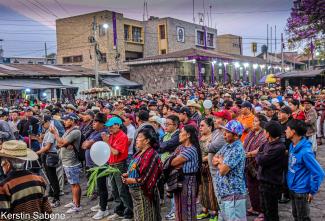
In Santiago Atitlán, a Tz’utujil town located on the southern shore of Lake Atitlán, Guatemala, there are two mayors. One operates from the municipal building; he assumed office through the political party system and answers to the State’s ordinary laws. The other does not appear on any ballot. He is the Cabecera del Pueblo (Head of the Town)—the community’s highest ancestral Indigenous authority. He is chosen from among the principales (individuals who have served their community for decades), with the participation of the town’s assembly and the cofradía (religious brotherhood) system. The Cabecera del Pueblo is responsible for upholding local norms and leading the municipality’s significant ceremonies. To an unknowing visitor, this second mayor might go unnoticed. But to the community, he represents an institution that has survived three centuries of colonialism and the 200-year-old republic, the Liberal dictatorships of the late 19th and early 20th centuries, military dictatorships from 1954 to 1985, and the more recent genocide committed by state forces between 1978 and 1986.
This institution is known as the sistema de cargos (cargo system). It is simultaneously a structure of self-governance, a school for political training, and a way of understanding and exercising power from within the community. Its logic is simple, but demanding: in the cargo system, one does not rise by accumulating wealth or votes, but by serving the community. Members ascend step by step up a ladder of responsibilities—almost always without remuneration—because service is both a duty and an honor. Positions generally last for one year before rotating, ensuring that authority circulates and no one becomes entrenched in power. Those who fulfill their responsibilities earn the prestige, respect, and trust of their people—assets that will become a legacy for future generations.
In Santiago Atitlán, young men begin as alguaciles (Aj Ch’ami’ in Tz’utujil), serving as messengers and aides who summon meetings and assist senior authorities with assigned tasks. Over the years, they may join the cofradías, taking responsibility for the care of patron saints and the organization of festivals—events where the civic and the spiritual intertwine. Those who complete this journey become principales and eventually Elders, possessing the moral authority to offer counsel and resolve community conflicts. From among these principales emerges the alcalde Indígena, or Cabecera del Pueblo. It is, in essence, a school of exemplary living; no one reaches the top without having started at the bottom. In other words, political and representative leadership is learned and forged by sweeping the town square, carrying the saint, and listening to the Elders.
Though the roots of this hierarchy are pre-Hispanic, the structure we see today was shaped during the colonial era, when surviving Maya communities reorganized their political and religious hierarchies despite Spanish rule. The result is a hybrid model that has endured to the present day. But this persistence has come at a high price. During the Guatemalan internal armed conflict (1960–1996), specifically in the 1980s and 1990s, several Indigenous mayors of Santiago Atitlán were assassinated, and the traditional structure was severely damaged. Remarkably, in recent decades, the community has revitalized its traditional offices, adapting to new challenges—a process mirrored across the Guatemalan central highlands and the Altiplano, ranging from the reactivation of Indigenous mayoralties to the renowned “48 Cantones” of Totonicapán department.
Santiago Atitlán is no exception. Cultural Survival, through its consultancy on self-governance, has engaged in dialogue with Indigenous partners and leaders around the world about which forms of self-governance have endured over time, and why. The responses, gathered via focus groups held between March and May 2026, reveal a striking map showing that across different continents, names, and landscapes, the same grammar of self-governance practiced on the shores of Lake Atitlán emerges.
In Mesoamerica, the Guna Yala territory in Panama was cited as a key reference point. Comprising 52 communities, each village elects its own sagla (leader), with most of them converging at a general congress to make collective decisions. The Guna, it was explained, resolved one of self-governance’s most complex dilemmas—financial dependence on the State—by generating their own revenue through self-managed tourism. In Mexico, one participant described her village’s cabildo (council) and comisariado de bienes comunales (communal land commission)—roles that are rotational, mostly unpaid, and short-term. She explained that this design hinders corruption and capture by external interests, as no one holds office long enough to be bought off. She also mentioned the mayordomías—sister institutions to the Guatemalan cofradías—which still divide the territory into neighborhoods; urban boundaries that no longer appear on official maps, but remain alive in the memory and self-governance practices of the communities.
In South America, discussions revealed that Indigenous organizations in the Colombian Amazon successfully secured State recognition for the first Indigenous territorial entities, entrusting them with the administration of their own lands, including certain reserves. In Ecuador, decades of community leadership have emphasized that strengthening these systems “springs from the heart of the communities” and entails safeguarding the language, defending the territory, and instilling in children the sense of pride that sustains the community. In Chile, the focus was on reconstruction: the Mapuche people assert the autonomy of each lof (grassroots community) by rebuilding their own governance structures, even without constitutional recognition.
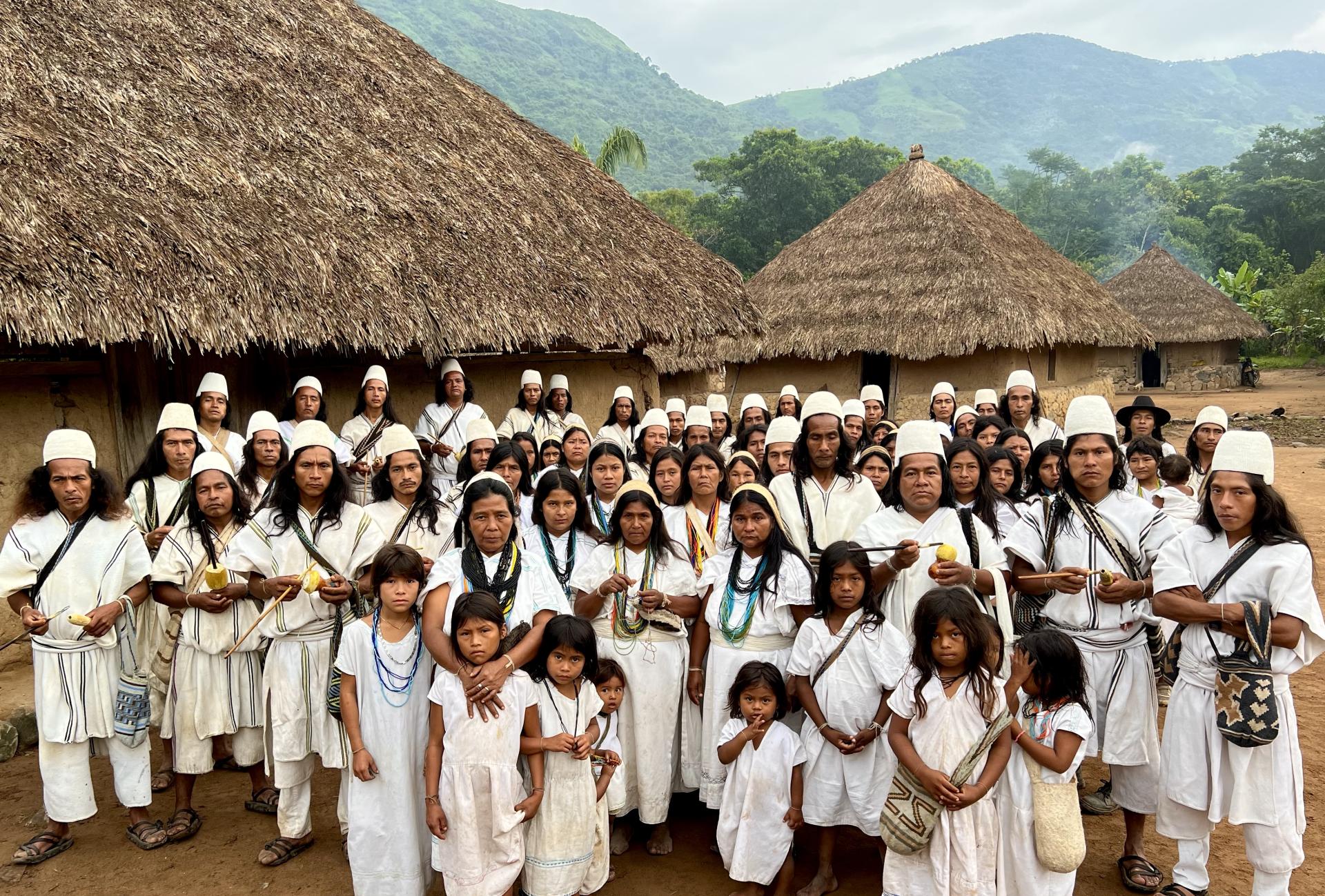
Seykún community members in Colombia. Photo by Joshua Dautoff.
Brazil contributed a lesson to the dialogue that was striking in its clarity: without land, there is no self-governance. It was explained that Peoples living on State-demarcated lands can exercise and defend their own governance, whereas those still awaiting demarcation—sometimes for 20 years or more—govern in a state of extreme vulnerability, exposed daily to mining, dispossession, and death. The highlighted examples of remarkable persistence: the Xingu territory, where diverse Peoples with their own organizational structures coexist, and the more than 100 Peoples living in voluntary isolation who, without asking for permission, have kept their systems of self-governance—among the most autonomous on the planet—intact.
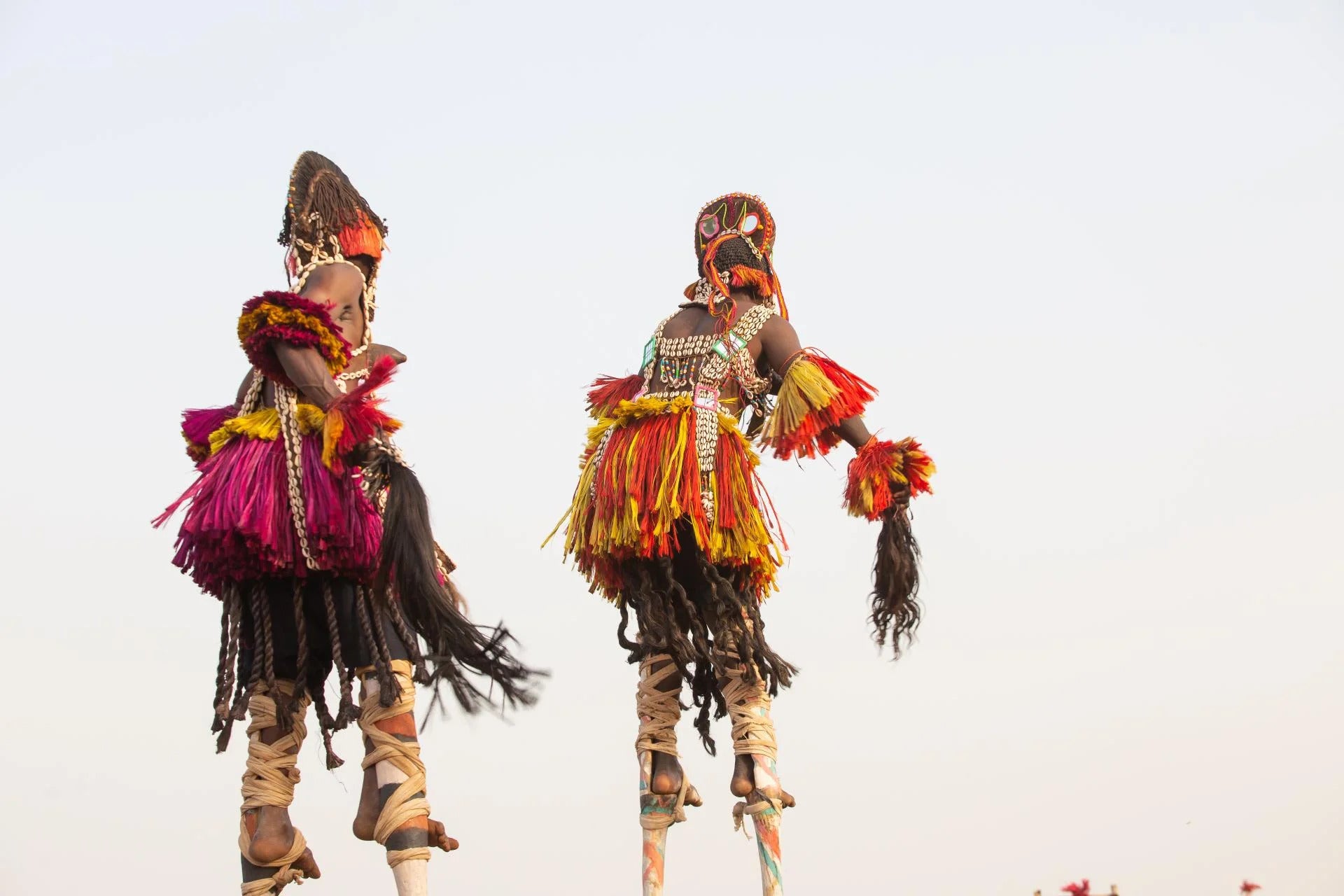
Dogon cultural festival, Mali. Photo by Georges Dougon (Dougon).
Across the Atlantic, Mali possesses an architecture of authority that a Tz’utujil person would instantly recognize: every family has a head, every village has its authorities, and rising above disputes is the hogon—the supreme mediator whose word is considered the final authority. Important matters are deliberated in the togu na (House of the Word), and the ceremonial calendar structures political life. When a wedding is celebrated, or a conflict arises, the community turns first to traditional authority and only later to the State. Among the Kel Tamasheq in the north, there are communities in which women exercise supreme leadership and serve as custodians of the cosmology. From Namibia and South Africa, other voices described the contrast between Peoples like the Nama, who possess recognized traditional councils of authority, and the San, whose authorities largely lack State recognition. This distinction carries significant implications, for without recognition of authority or self-governance, there is no recognition of land rights, either.
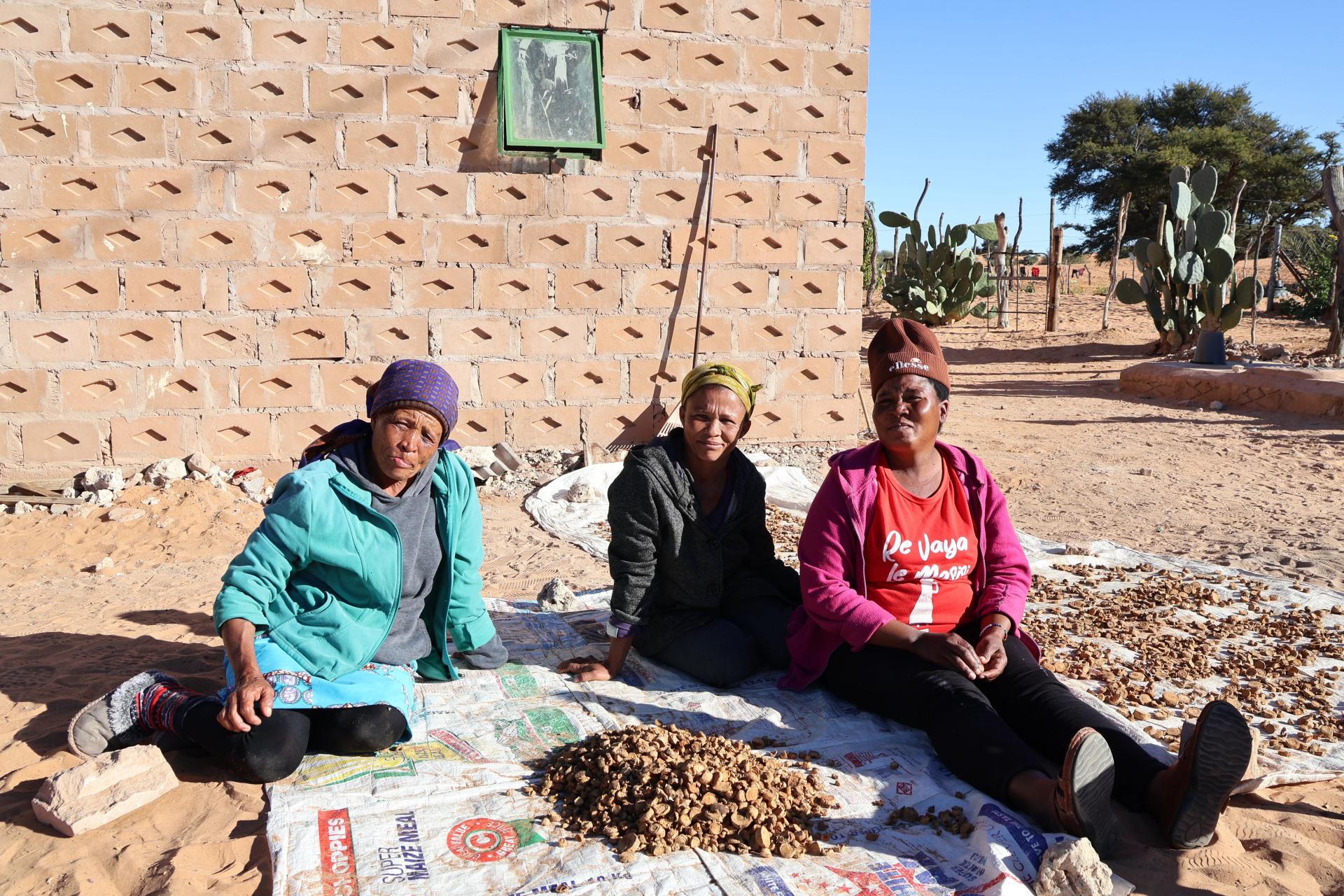
Nama people in Namibia recognize traditional councils of authority. Photo by Nichodimas Cooper.
In Asia, home to the majority of the world’s Indigenous Peoples, this pattern repeats with particular intensity. Nepal has legally recognized only 59 Peoples, and its 2015 Constitution promised autonomous zones that have yet to materialize. Still, the systems function. The Tharu elect a barghar in each village to resolve problems and make community decisions, while the Thakali administer justice through the mukhiya system, deliberating democratically before consulting the chief. This collective voice guides the community, often without regard for government dictates. Their central warning aligned with the Brazilian position: self-determination is inextricably linked to the land, and those displaced from their territory lose the very possibility of self-governance, of creating and recreating their own forms of government.
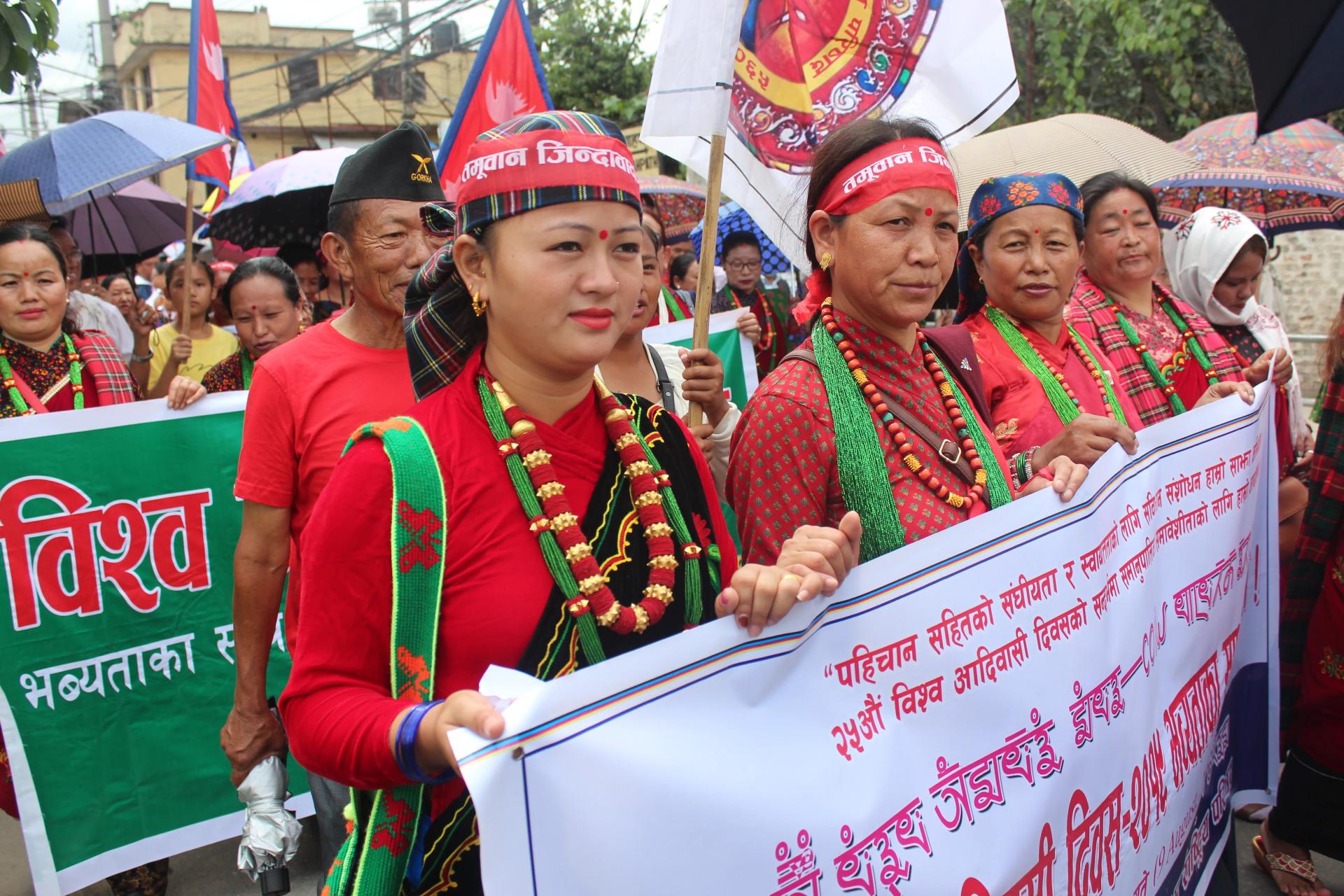
March in Nepal, where 60 Indigenous Peoples are officially recognized. Photo by Dev Kumar Sunuwar (Sunuwar).
North America introduced the most complex scenario to the dialogue: Peoples governed by structures they did not choose. Several participants from the United States and Canada described Tribal councils shaped by the State, while noting their sustained efforts to reclaim their own traditional systems. Examples include Canadian First Nations that supplement the imposed structure with a traditional council and a council of matriarchs for decision-making; communities that maintain a “big house” as a ceremonial heart; councils of Elders working alongside youth programs; and a conviction voiced by many that reclaiming self-governance requires unlearning colonial concepts of power and restoring women to the status they held in matrilineal societies.
These experiences of governance reveal not so much differences as variations on a common theme. Everywhere, self-governance is rooted in service rather than power; a position of leadership exists to serve, not for personal gratification. In all these contexts, Indigenous authority is exercised through collective deliberation. Elders embody memory and counsel, while the spiritual dimension permeates political life, with no attempt to separate the two. Everywhere, too, the land appears as the condition of possibility, because the territory is not a resource to be managed, but the very body of the community. Differences arise from the outside, sustained by nation States through the degree of recognition each grants, the access to funding they permit, the pressure imposed by extractive economies, or the criminalization faced by ancestral authorities defending their territories.
International bodies are finally reaching the same conclusion as Indigenous Peoples. UN reports document that Indigenous governance systems often manage services for their communities more effectively than external agents, and that where Indigenous Nations govern themselves, indicators such as education and employment actually improve. The UN Declaration on the Rights of Indigenous Peoples, which will mark its 20th anniversary in 2027, recognizes the rights to self-determination and to maintain one’s own governing institutions. The challenge, according to those consulted in the regions where Cultural Survival operates, is not proving that Indigenous self-governance works, but rather getting nation States to stop sabotaging it.
The former UN Special Rapporteur on the Rights of Indigenous Peoples, Victoria Tauli-Corpuz (Kankanaey Igorot), in her 2018 report on self-government, explained that long before colonization and the rise of nation States, Indigenous Peoples around the world had developed complex forms of self-governance—systems that regulated relationships among themselves, with their neighbors, and with the natural world, while incorporating their worldviews, values, and unique understandings of authority. Colonizers dismissed these systems as inferior and attempted to eradicate them; today, post-colonial States often continue that same effort. Yet, Indigenous forms of self-government endure.
The work of the Indigenous mayor of Santiago Atitlán stands as proof of the continued vitality of Indigenous self-governance. These systems have survived for centuries because they predate the colonial era and possess roots far deeper than the nation States that seek to stifle them by every possible means. They endure because they meet a daily need within their communities: a form of governance in which authority is earned through service, decisions are made collectively, and the territory is not owned, but cared for. Each year on the shores of Lake Atitlán, with the quiet, deliberate gesture of a young Tz’utujil man accepting his first leadership role, a millennia-old institution begins its cycle anew.
--Irma A. Velásquez Nimatuj (Maya K’iche’) is a journalist, activist, and social anthropologist.
Top photo: People gathered in Santiago Atitlán, Guatemala, for a public assembly. Photo by Kerstin Sabene.
