By Anonymous Journalism Fellow from Indonesia
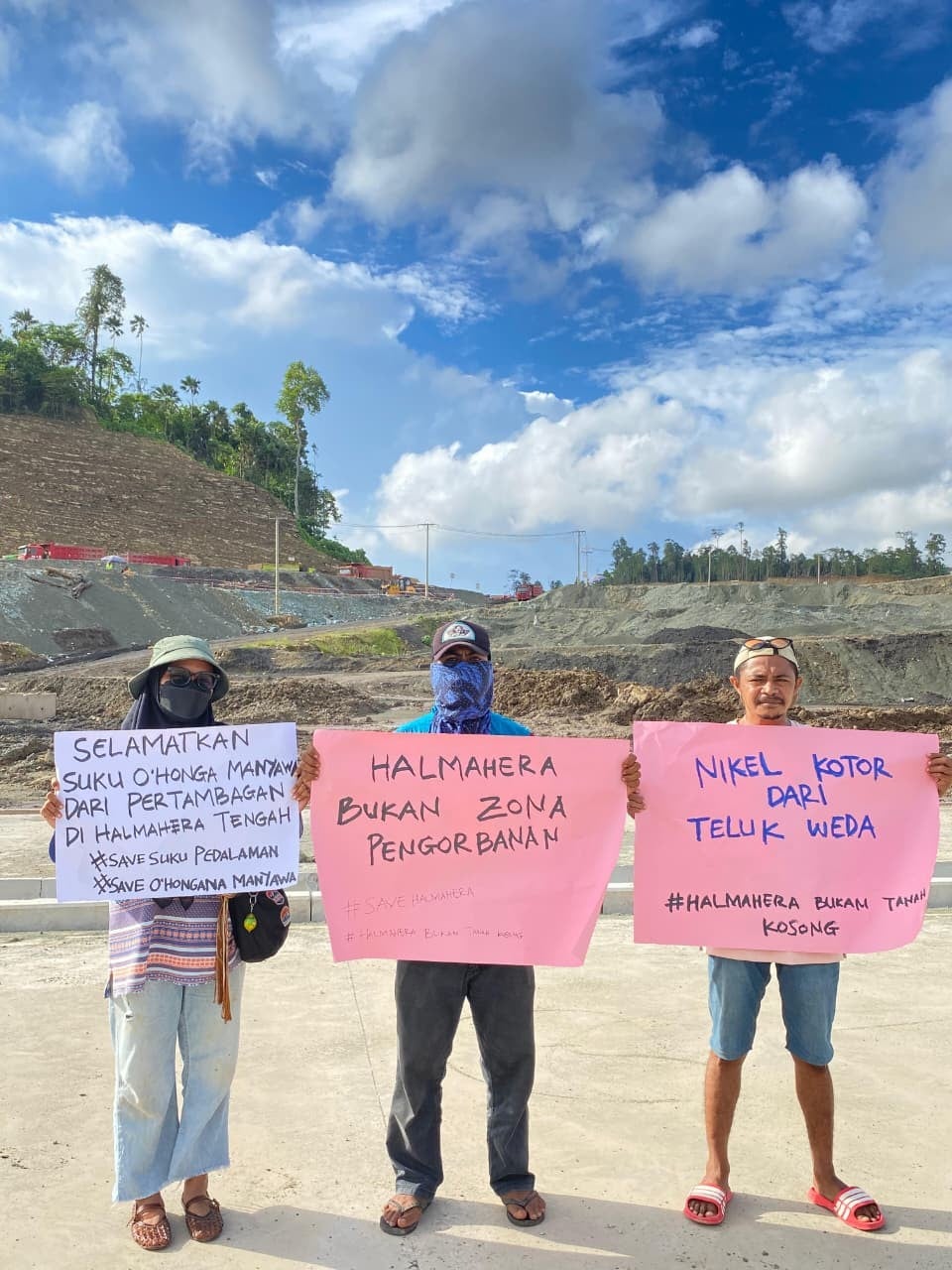
On May 28 and 29, 2026, in commemoration of Indonesia’s Anti-Mining Day, a coalition of local residents and environmental activists staged silent demonstrations across several strategic locations in Weda Bay, North Maluku. The protesters called for an immediate halt to the rapid and aggressive expansion of the nickel industry in the region.
Carrying placards, residents and activists gathered at key sites stretching from the karst peaks of Sagea Village to the coastal areas of Lelilef and Gemaf. Their actions directly targeted major industrial infrastructure, including transport routes connecting PT Indonesia Weda Bay Industrial Park and PT Tekindo, as well as the prominent Tsingshan Tower.
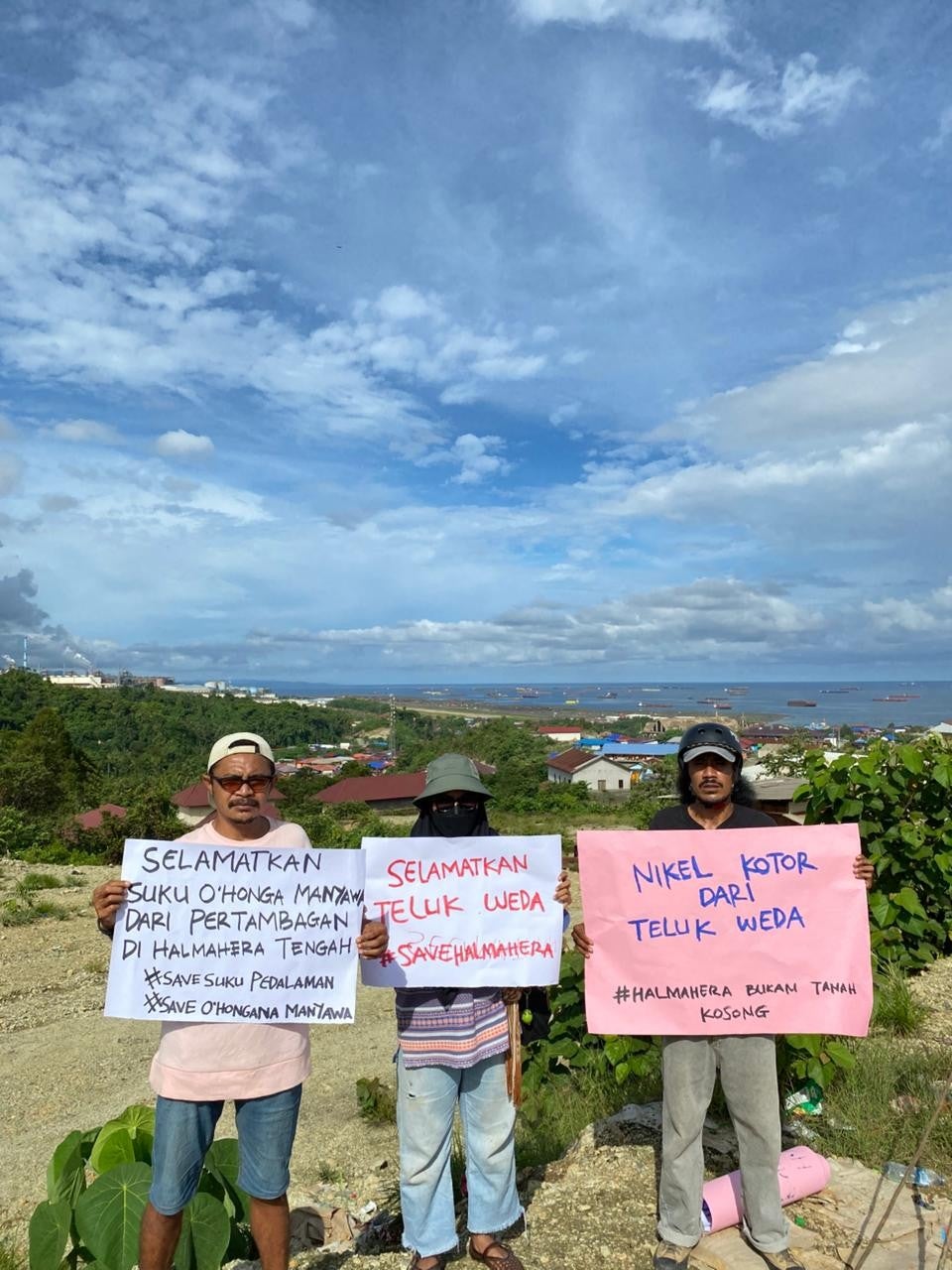
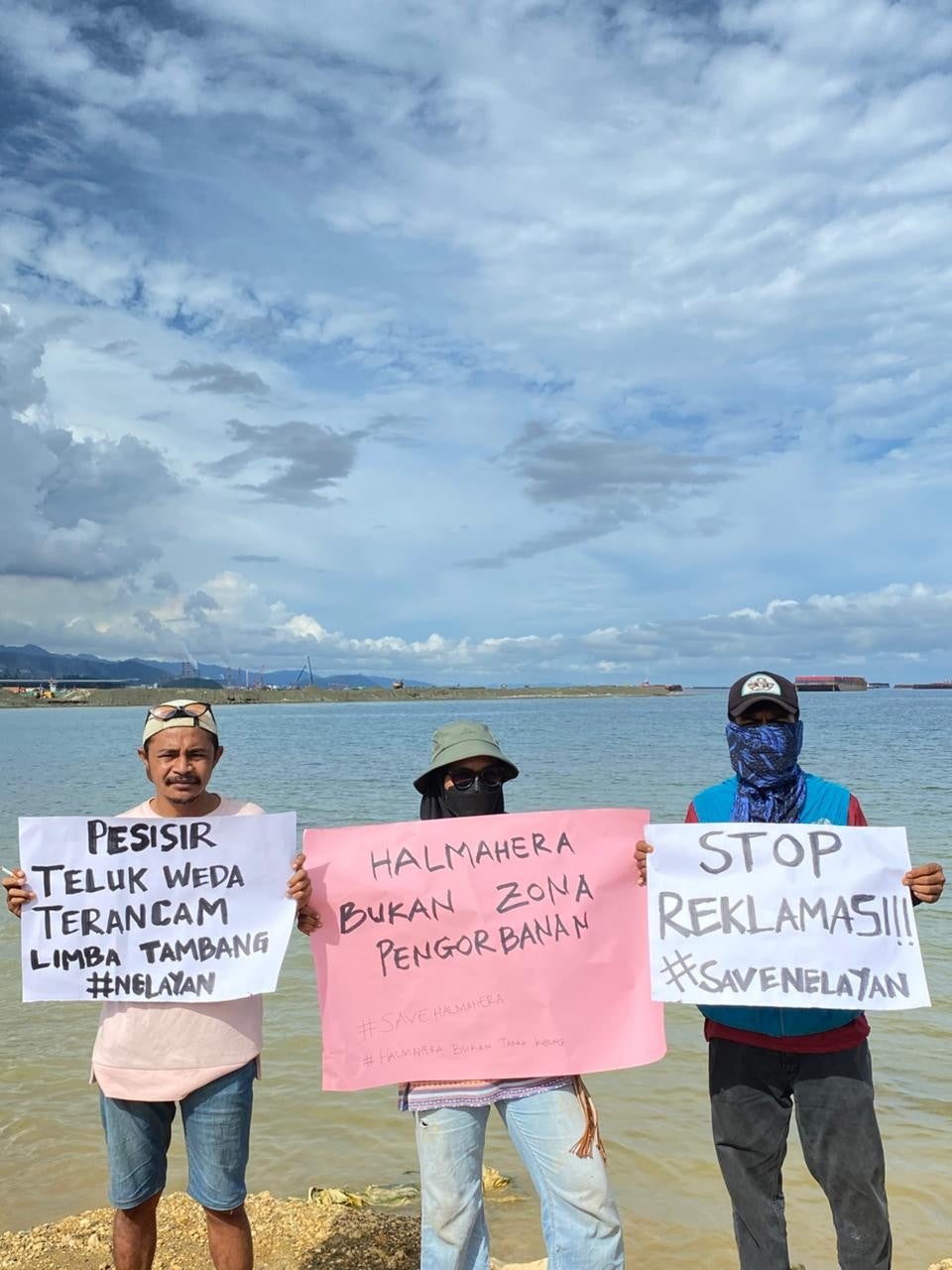
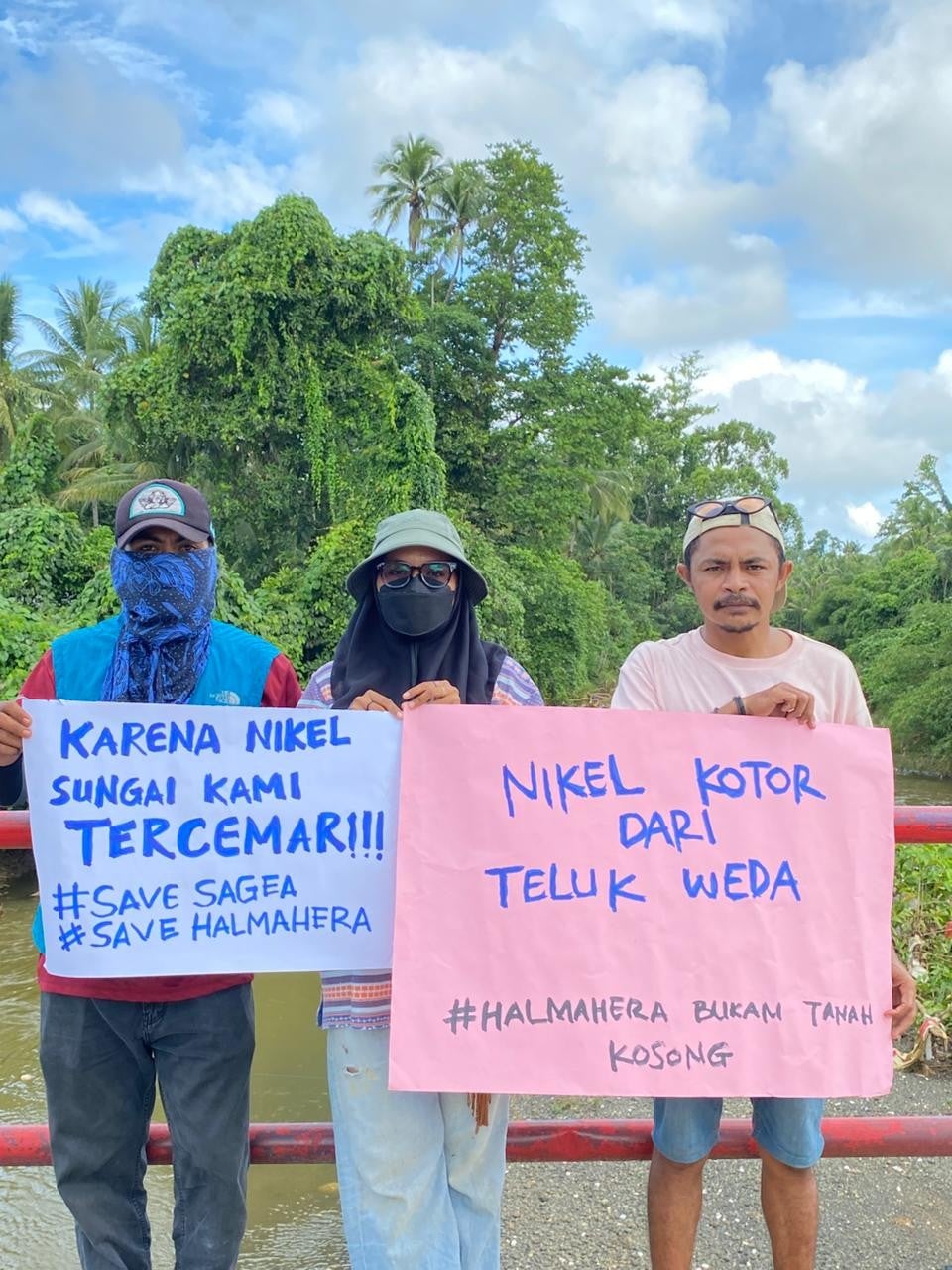
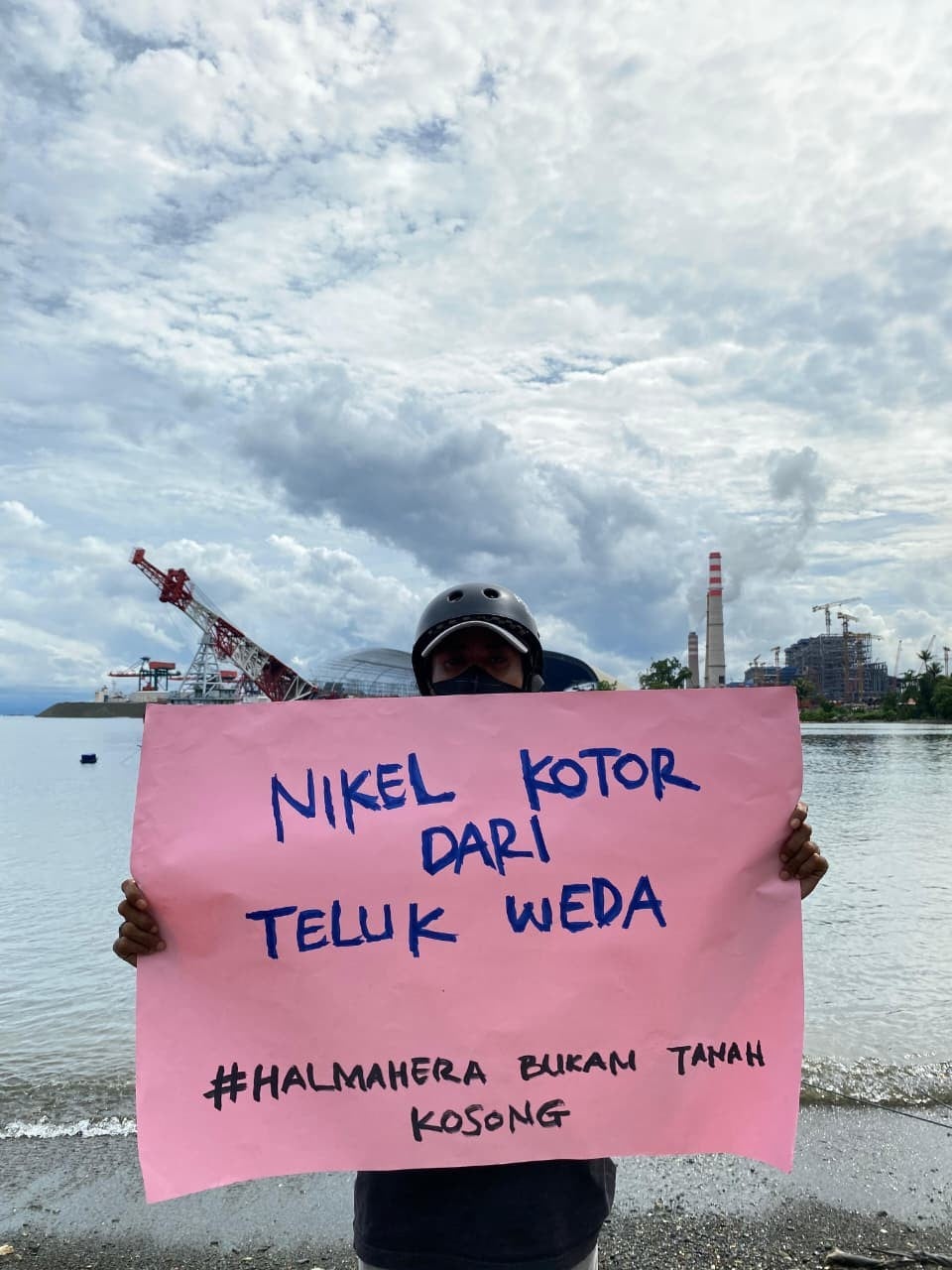
The messages displayed during the demonstrations highlighted the severe local costs of the global green energy transition. Placards carried urgent appeals such as "Save the O’Hongana Manyawa Tribe from Mining in Central Halmahera,” “Halmahera is not a sacrifice zone,” “Dirty nickel from Weda Bay,” “Weda Bay is not a sacrifice zone for the global battery and electric vehicle industry,” and “The Weda Bay coast is threatened by mining waste—stop reclamation, save the fishermen.”
The silent protests involved Save Sagea activists and residents of Lelilef Woebulen. Demonstrators gathered at Kawinet Peak in Sagea Village near the nickel mining operations of PT Mining Abadi Indonesia, a contractor for PT Zhong Hai Rare Metal Mining Indonesia. They also held actions along the coast of Lelilef Village, in Gemaf Village, at the Ake Kobe River bridge, Lokulamo’s Two-Finger Hill, and along the main road connecting the industrial zones.
Beginning at the Sagea karst peak and moving toward the Weda Bay coast, residents and Save Sagea activists strongly opposed industrial expansion, which they say has caused widespread deforestation, river and marine pollution, the loss of fishing grounds, and direct threats to the living spaces of the Indigenous O’Hongana Manyawa Peoples.
Environmental Toll on Local Livelihoods
Activists argue that the global push for a clean energy transition is being built on the destruction of local ecosystems. They say the rapid expansion of extractive mining operations has triggered extensive environmental degradation across Central Halmahera.
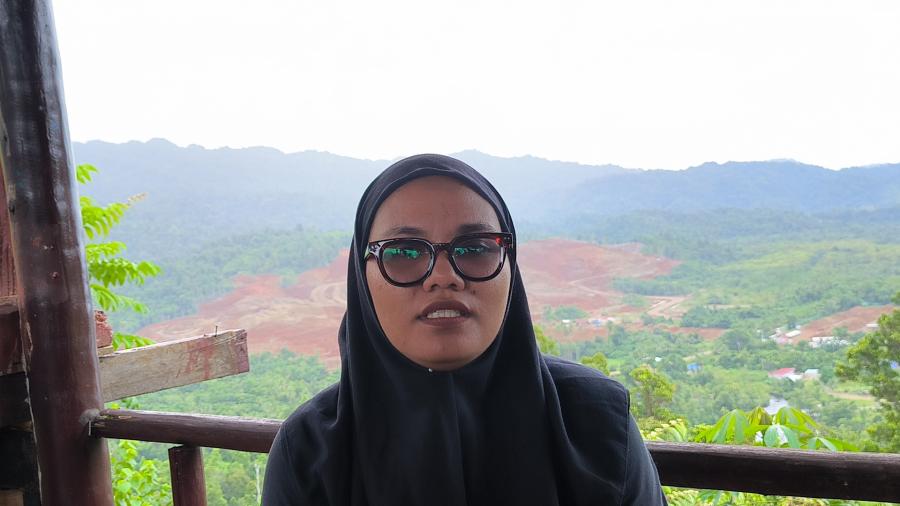
Rifya Rusdi, a Save Sagea activist, founder of the Halmahera Coastal Women’s School, and resident of Sagea, said the energy transition must not be built on environmental destruction or the sacrifice of local communities. For this reason, she said, residents firmly reject further industrial expansion in the region.
Critical ecological and cultural sites, including the Sagea Karst, Boki Moruru Cave, and Yonelo Lake, have long been integral to the lives of Sagea and Kiya villagers. These areas now face severe degradation and growing threats from expanding nickel and limestone mining operations.
Speaking as a member of the Sagea Kiya community, Rifya said she and other Save Sagea activists continue to raise their voices because they see their village, rich in tourism potential and essential to local livelihoods, being threatened with erasure. Forests and mountains are being cleared and leveled for mining expansion, leaving residents to question how their communities are expected to survive under a development model justified in the name of energy transition.
Industrial Growth and Social Crisis
In recent years, Central Halmahera, particularly the Weda Bay region, has become one of the largest centers of nickel production in Indonesia and the world. This industrial boom has transformed the landscape, replacing forests, farms, rivers, coasts, and fishing areas with processing smelters, captive coal-fired power plants, haul roads, jetties, and other infrastructure that support the industrial zone.
The PT Industrial Park continues to expand through large-scale coastal reclamation, deforestation, smelter construction, and the operation of captive power plants. As a result, coastal areas that once sustained fishermen have been converted into industrial logistics corridors, with heavy traffic from ore carriers and coal barges.
This shift has caused serious ecological and social impacts in Weda Bay. A sea that once supported local livelihoods has increasingly been repurposed for industrial use.
Companies operating around the Sagea watershed and Central Halmahera are heavily dominated by nickel and limestone mining interests. These include PT Mining Abadi Indonesia, PT Zhong Hai Rare Metal Mining Indonesia, PT Weda Bay Nickel, PT Halmahera Sukses Mineral (formerly PT Harus Sukses Mineral), PT Tekindo Energi, PT Dharma Rosadi Internasional, and PT Karunia Sagea Mineral, which holds a limestone production permit.
A similar protest near the Tsingshan Tower office within the Weda Bay nickel industrial estate held strong symbolic significance. The tower, rising above the industrial area, was described by activists as a symbol of the capital's power over Halmahera’s extractive economy.
Rifya said that from this central hub, policies that “subjugate” the region through the nickel industry are designed and executed. She said residents’ living spaces are being dictated by industrial interests, while the future of local communities is gambled away for the benefit of the global supply chain.
Weda Bay Is Not a Sacrifice Zone
According to Rifya, shipping activities and coastal reclamation have narrowed fishing grounds, increased sedimentation, and made conditions at sea more dangerous. The water has become increasingly murky, fish catches have declined, and fishermen are forced to travel farther from shore, even as industrial traffic intensifies.
She said the damage is no longer a distant threat but a daily reality. Communities now face industrial dust, corrosion-damaged roofs, polluted water, mud floods, the loss of farms, damaged rivers, and wells or boreholes that are no longer safe for consumption.
Residents also report growing public health concerns, including respiratory illnesses and exposure to hazardous industrial substances such as mercury and arsenic. Rivers flowing into Weda Bay, including the Ake Kobe River, where one of the protests took place, are also under serious pressure. Upstream deforestation, sedimentation, and mining activities have degraded water quality and disrupted rivers that communities rely on for water and food security.
During the demonstrations, participants also expressed solidarity with the O’Hongana Manyawa People, whose lands and ancestral forests continue to be eroded by extractive industrial expansion.
For activists, the crisis in Central Halmahera is not merely about natural resource exploitation: it is an aggressive process of displacement. Land is reduced to a commodity, forests are treated as industrial assets, rivers are turned into channels for waste, and coastal areas are converted into logistics infrastructure.
In this process, Indigenous Peoples and local communities are left in the most vulnerable positions. They lose land, are pushed into cheap labor, or face criminalization when defending their territories. The nickel boom has also contributed to social tensions in Weda Bay villages, including shrinking living spaces and the erosion of residents’ control over their own land.
At the same time, the government and corporations continue to promote the narrative of clean energy and a “green” economy. Electric vehicles are marketed as part of a sustainable future, while communities near mining sites face pollution, health crises, environmental destruction, and the loss of livelihoods.
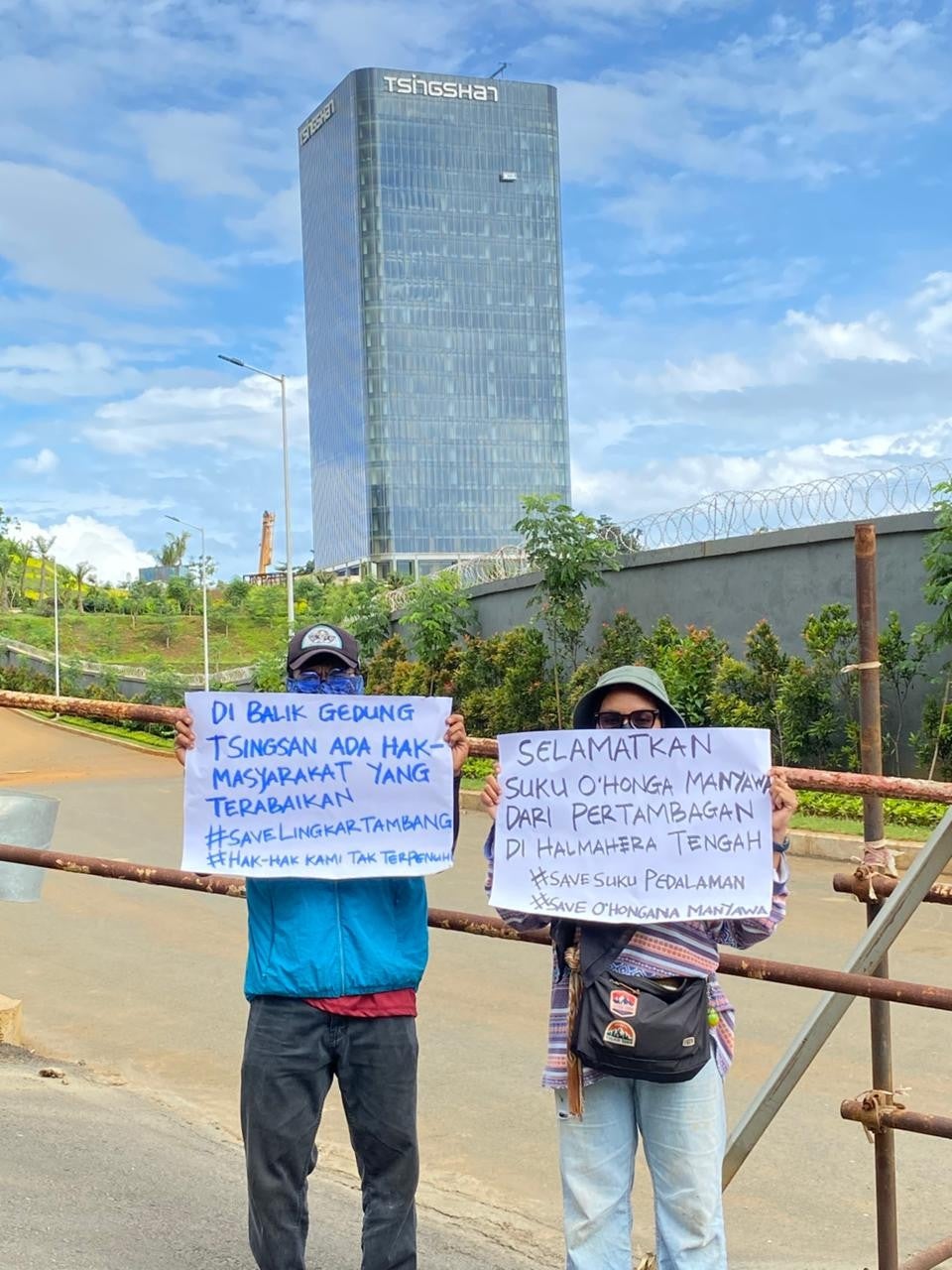
Rifya emphasized that there is nothing truly green about an industry built on deforestation, marine pollution, land grabbing, and the destruction of Indigenous living spaces. She described nickel from the region as “dirty nickel,” produced through ecological destruction, the theft of living spaces, human rights violations, polluted seas, damaged rivers, and deforested lands.
“We refuse to let Weda Bay become a sacrifice zone for the demands of the global electric vehicle battery industry,” Rifya stated, saying that residents completely reject any future built on the destruction of the living spaces of coastal communities, farmers, women, fishermen, and Indigenous Peoples in Central Halmahera.
--The writer is a journalist covering Indigenous Peoples of the Indonesian Archipelago, specifically the Maluku Islands, and a 2026 Cultural Survival Indigenous Journalism Fellow. She is a journalist and human rights defender based in Indonesia who has pioneered some initiatives for women's empowerment and youth counseling. She has over two decades of experience in media advocacy for women, children, and Indigenous communities, documenting the violation of Indigenous Peoples' rights to land and access to customary forests by the extractive industries. In this fellowship, she will amplify the voices of Indigenous communities, primarily focusing on the environmental impacts of mining through investigative articles and visual reports on the disruption of local economies and the degradation of Indigenous land and territories caused by mining expansion.