By Kuela Kiema (Dcui Bushman)
The Kalahari Bushmen are Indigenous to southern Africa, where they lived for time immemorial, depending on hunting various species of wild animals and gathering plant roots and fruits. Today, the San are found in southern African countries, including Angola, Botswana, Namibia, South Africa, Zambia, and Zimbabwe.
The culture and livelihoods of the Kalahari Bushmen, however, have been disrupted through the introduction of nature conservation policies necessitated by modern social and economic development. The Dcui and Dxana Bushmen also suffered ethnic discrimination from the Bantu-speaking and people of European descent who migrated to southern Africa in later years. The Kalahari Bushmen also lost access to their land and resources.
In 1961, the ancestral land of the Kalahari Bushmen, Dcui and Dxana in Botswana, was declared a Central Kalahari Game Reserve (CKGR) by the British Colonial Administration. The park was established so that the Dcui and Dxana Bushmen would continue to live and hunt in the land of their ancestors. However, in 1986, the independent Botswana government resolved to relocate the Dcui and Dxana Bushmen from their spiritual land to pave the way for nature conservation and tourism development. The government eventually relocated them in 1997. The Dcui and Dxana Bushmen filed a court case against forced relocation from their forefathers’ land. In December 2006, the Court ruled in favor of Dcui and Dxana Bushmen.
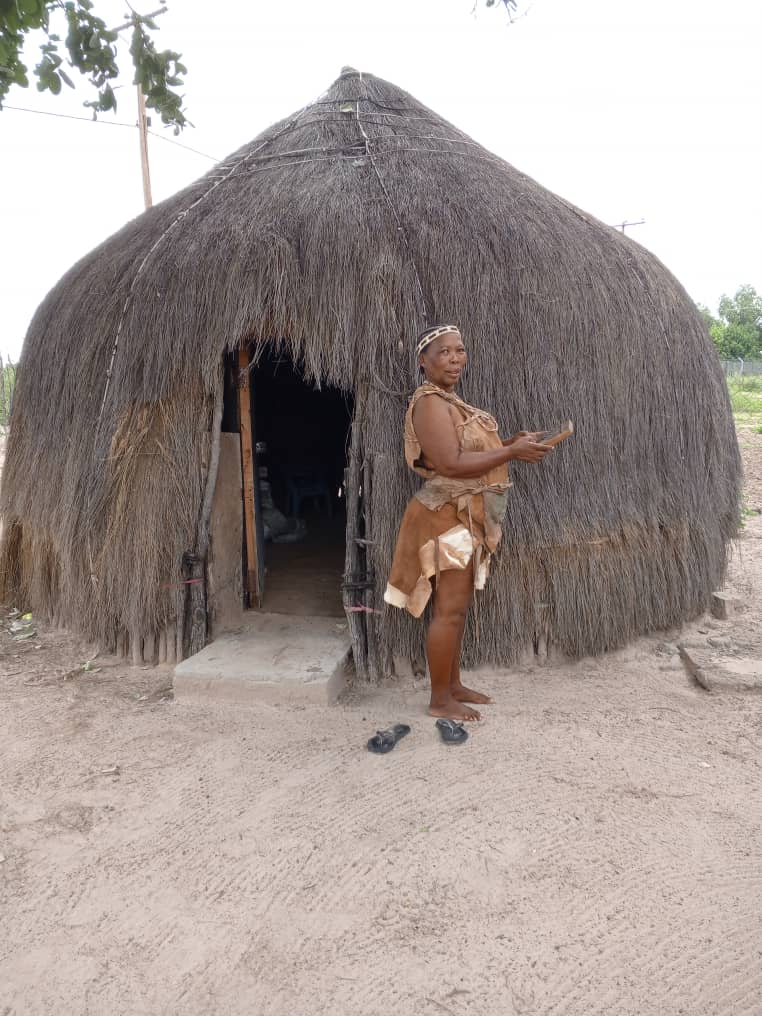
Some of the Dcui and Dxana Bushmen have since resettled in their tribal territories, whilst others have chosen to remain in sedentary settlements outside the Game Reserve. However, forced relocation has disrupted the cultures and livelihoods of the Indigenous San people.
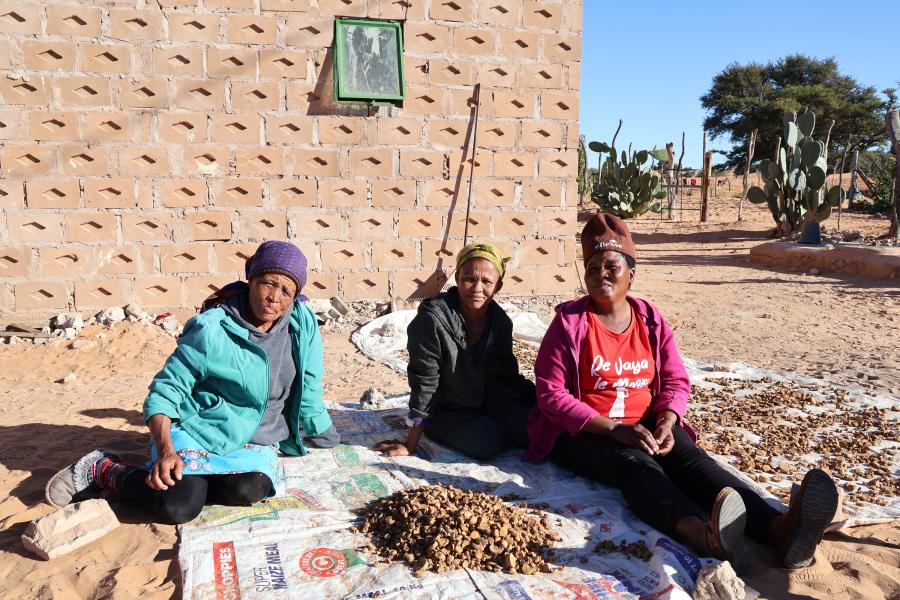
The Dcui and Dxana Bushmen now live in abject poverty, depending entirely on government handouts. This is because of their relocation far away from their sources of livelihood, the wild animals and plant resources. Although public education is free to all children in Botswana, many drop out of school, and the rest fail to attain better grades for further education. This leads to high unemployment among the Bushmen youth.
In the Kalahari Desert, the Bushmen had their unique forms of entertainment. They had their famous religious dance, the trance dance for healing both spiritual and physical ailments. There were also entertainment dances, storytelling, and instrumental music for leisure. Their musical instruments included the mouth bow, bull-roarer, segaba, deengu, and many more.
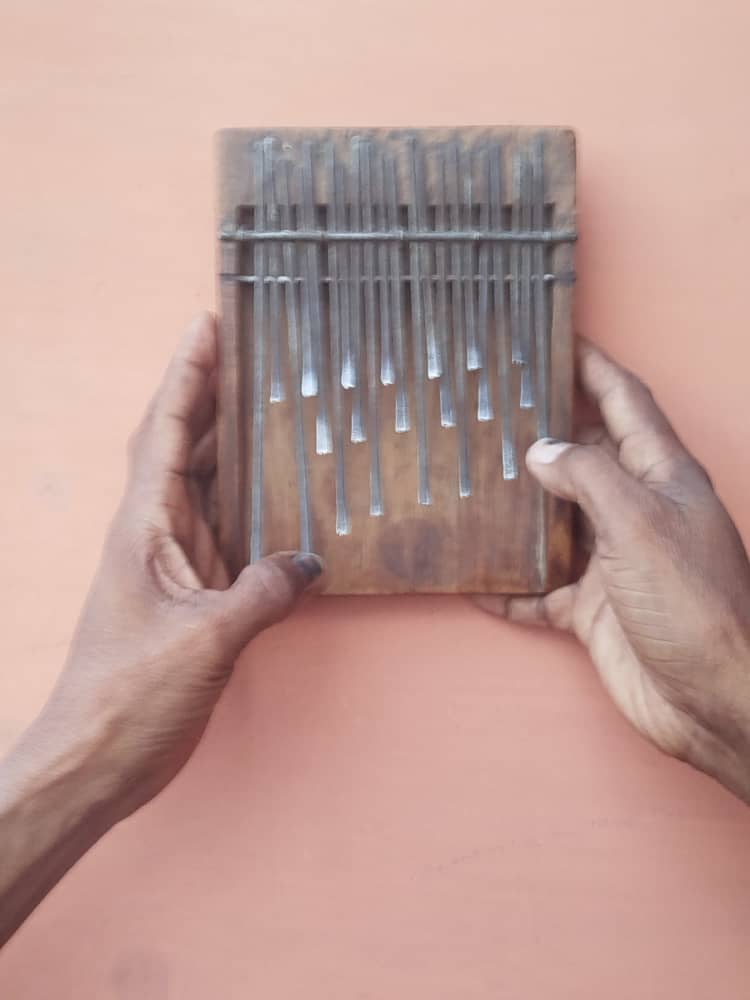
The Dcui and Dxana Bushmen have three versions of deengu, known as thump piano, each tuned for different traditional music genres. Cgoocee is for traditional spiritual tunes, innate for entertainment tunes, whereas bubu is generally good for rumba-related songs. The invention of the deengu bubu by the Kalahari Bushmen was influenced by modern music and musical instruments.
The future of the cultural heritage of the San is at stake because of the creeping in of modern cultures. The objective of our project, "Production and Documentation of Deengu Music and Musical Instruments" supported by Cultural Survival's Keepers of the Earth Fund, is to preserve the Indigenous music and musical instruments of the San Peoples of the Kalahari.
The San musicians would compose and play love songs on the deengu to express their feelings. They would whistle-sing alongside the deengu about ongoing love affairs, breakups, and experiences encountered in relationships. Soft spiritual tunes would be played by medicine men who chanted and meditated. The music was therapeutic, connecting the medicine men to the spirit world. Some band members would accompany the deengu melody by singing softly, and gently clapping their hands. Songs about animal behaviors, hunting, and gathering activities would be expressed through instrumental music. Caricaturing a vulture lingering over carcasses or a hyena sniffing out animal scent under the shrubs would be demonstrated through the medium of music.
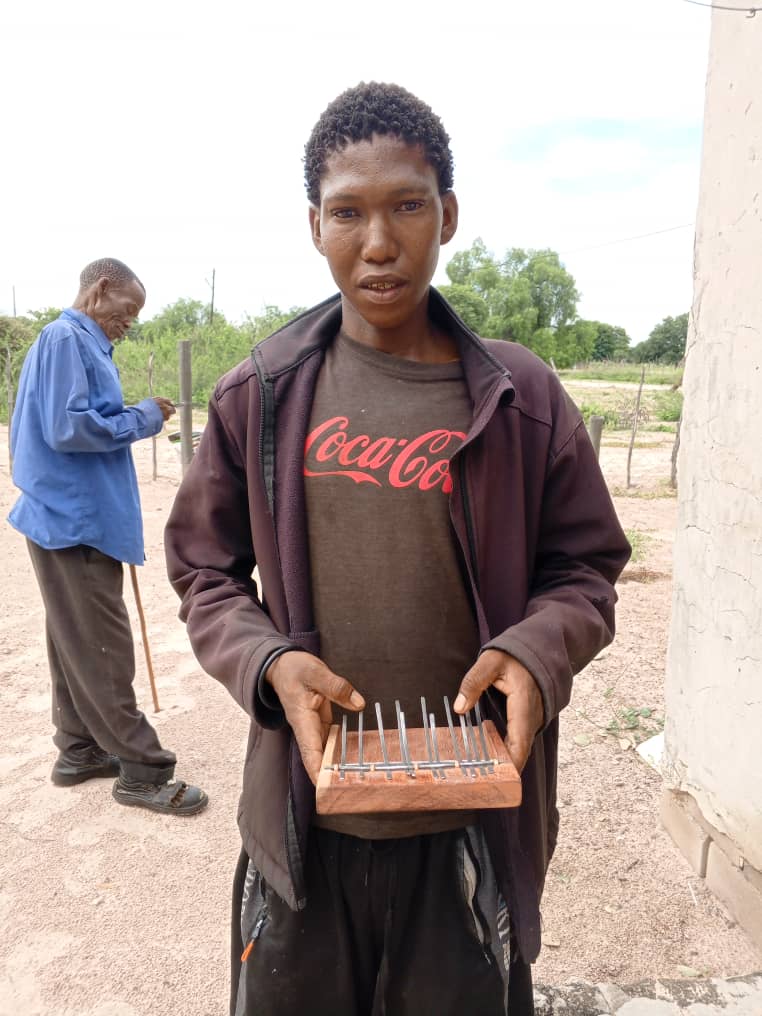
The deengu playing is at the verge of disappearing if no action is taken to safeguard, promote, develop, and inculcate their utilization among San youth in particular. Inter alia, the following three factors pose a serious threat to the existence of the San traditional instrument and instrumental music.
Firstly, the introduction of contemporary music as a source of artistic expression and entertainment for San youth who spend most of their leisure time at pubs and nightclubs. They are attracted in large numbers to the music played from loudspeakers there. They prefer playing modern musical instruments such as guitars and keyboards.
Secondly, the rapid disappearance of Indigenous Knowledge or skills of manufacturing traditional musical instruments. The death of all Dcui and Dxana Elders, who are the only possessors of the knowledge of manufacturing instruments, will result in the extinction of the traditional musical instrument.
Thirdly, rapid social and economic changes are taking place in sedentary villages. The Dcui and Dxana Bushmen no longer practice their traditional cultures and access natural resources. The norms and values were transferred from one generation to the next through folktales, storytelling, and music. Such Indigenous Knowledge systems of the San people are slowly dying out.
Saikota Self Development Trust, in partnership with Cultural Survival-Keepers of the Earth Fund, is implementing the project to revive, develop, and preserve the traditional music and musical instruments of the Kalahari San.
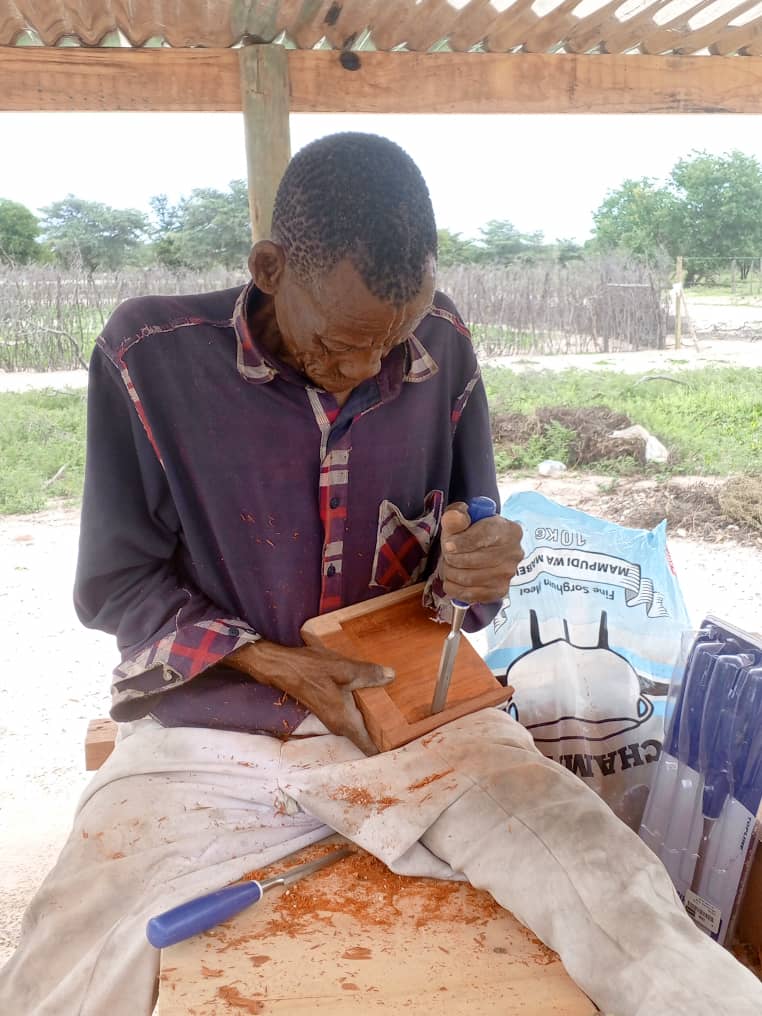
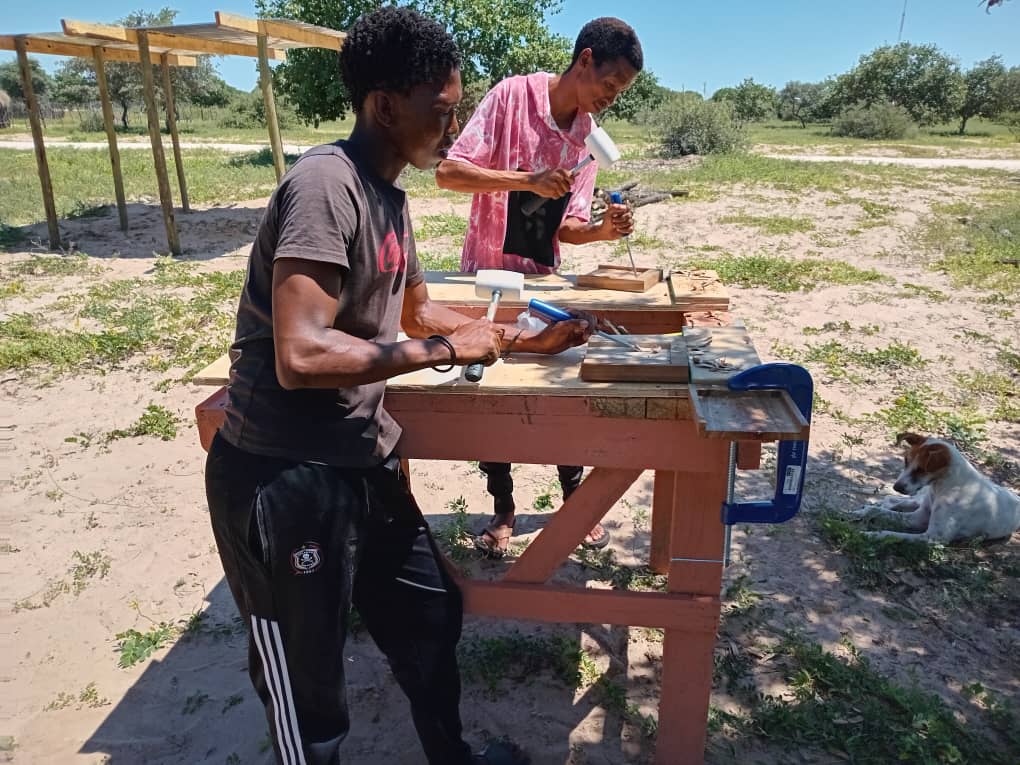
A workshop or shelter has been erected in a plot recently allocated to Saikota Self Development Trust by the Ghanzi Land Board. The plot will be developed into a fully-fledged San Culture and Education Centre. The plot will serve as the centre for the production and marketing of Bushmen artifacts. The land will be developed as an arena for traditional entertainment for the Dcui and Dxana youth.
The project aims to raise awareness among the community about the importance of safeguard the Indigenous Knowledge systems. The Trust will enlist the support of the Dcui and Dxana Chiefs, political leadership, Village Development Committee (VDC), and the Elders in safeguarding the cultural heritage of the Dcui and Dxana Bushmen.
To achieve this objective, the youth will be taught how to manufacture traditional musical instruments. The San youth’s response to this initiative is remarkable, as they have demonstrated enthusiasm to learn and manufacture the instrument. The elderly have been engaged to transfer the Indigenous Knowledge of manufacturing the instrument to safeguard Indigenous Knowledge systems.
Another key component of the project is for the San youth to play the instrument. The San Elders will be engaged to transfer the skills of performing Indigenous music on the instruments. The beat or pulse of Indigenous music is different and more complex than that of contemporary music. The San youth find it difficult to tap complex beats and rhythmic patterns of their ancestors’ music.
The project will document the Indigenous music of the Dcui and Dxana Bushmen to preserve it. The music will be notated in Tonic Sol-fa, a syllabic system using the syllables Do-Re-Me-Fa-So-La-Ti-Do, shortened to d-r-m-f-s-l-t-d. A ten-song booklet will be produced as a guide for those who would like to learn to play the instrument, such as schools and other institutions.
The last and most vital component of the project is income generation and the sustainability of the project through commodification of cultural heritages. A market outlet will be opened where instruments will be displayed and sold to the public. The product with the booklet will be marketed to local curio shops and tourism outlets. Schools where music is taught as part of the school syllabus will be approached to purchase the instrument. Individual customers will be targeted to buy the instrument. Lessons on how to play the instrument will be offered to the customers free of charges
The long-term impact is to build a sense of cultural identity and self-determination among the San youth. Ethnic pride among the San is instilled through their involvement in the production and commodification of their own traditional musical instrument. The use of traditional musical instruments by other ethnic groups and public institutions will lead to appreciation and acknowledgment of cultural diversity in Botswana by such groups.
--Kuela Kiema (Dcui Bushman) is from the Central Kalahari Game Reserve, Botswana. He is a traditional San instrumental musician and singer. Kuela Kiema is the Founder and Chairman of Saikota Self Development Trust, an organisation he founded to embark on social and economic development of his people, the Bushmen of the Kalahari.
In 2026, Cultural Survival supported the Saikota Self Development Trust through the Keepers of the Earth Fund.