By Angel Ferreira (Payayá, CS Intern)
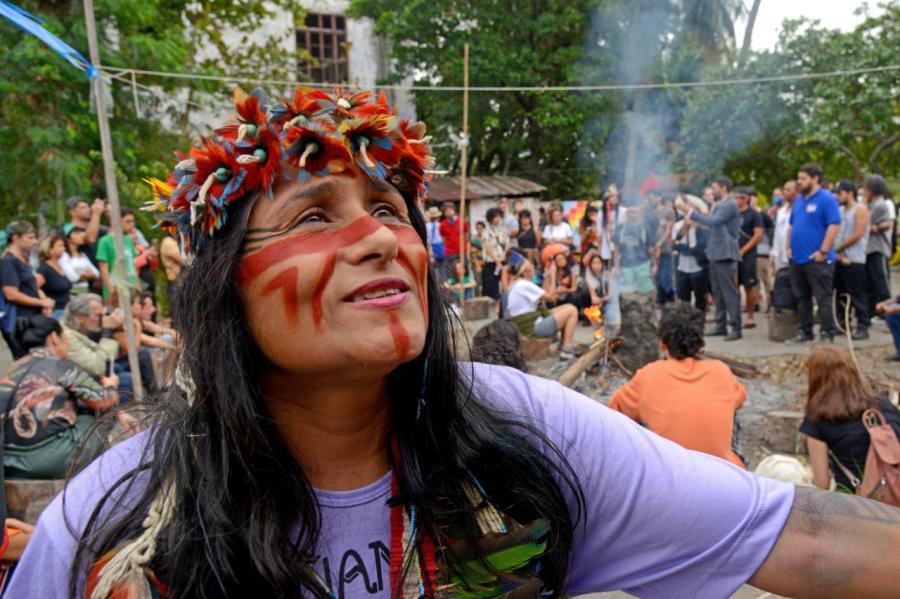
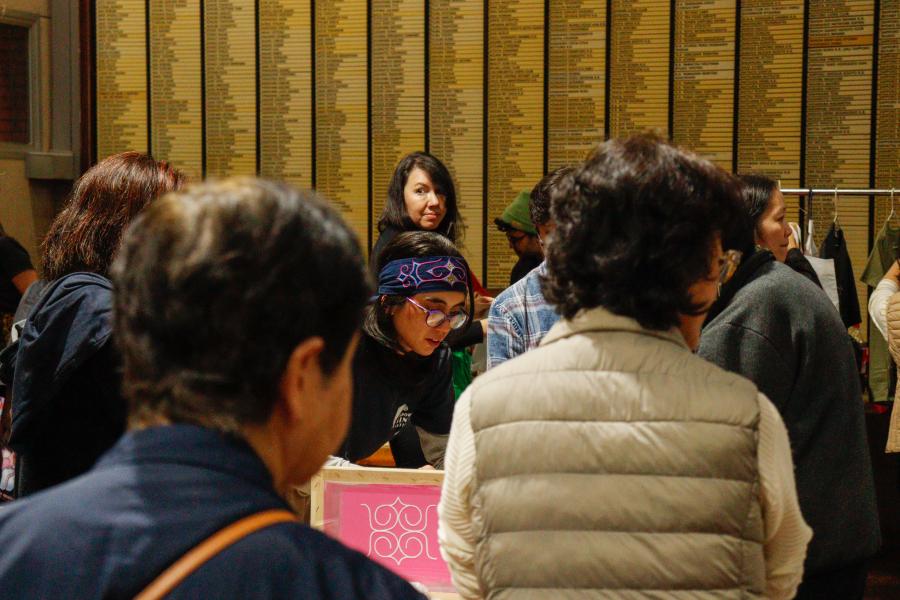
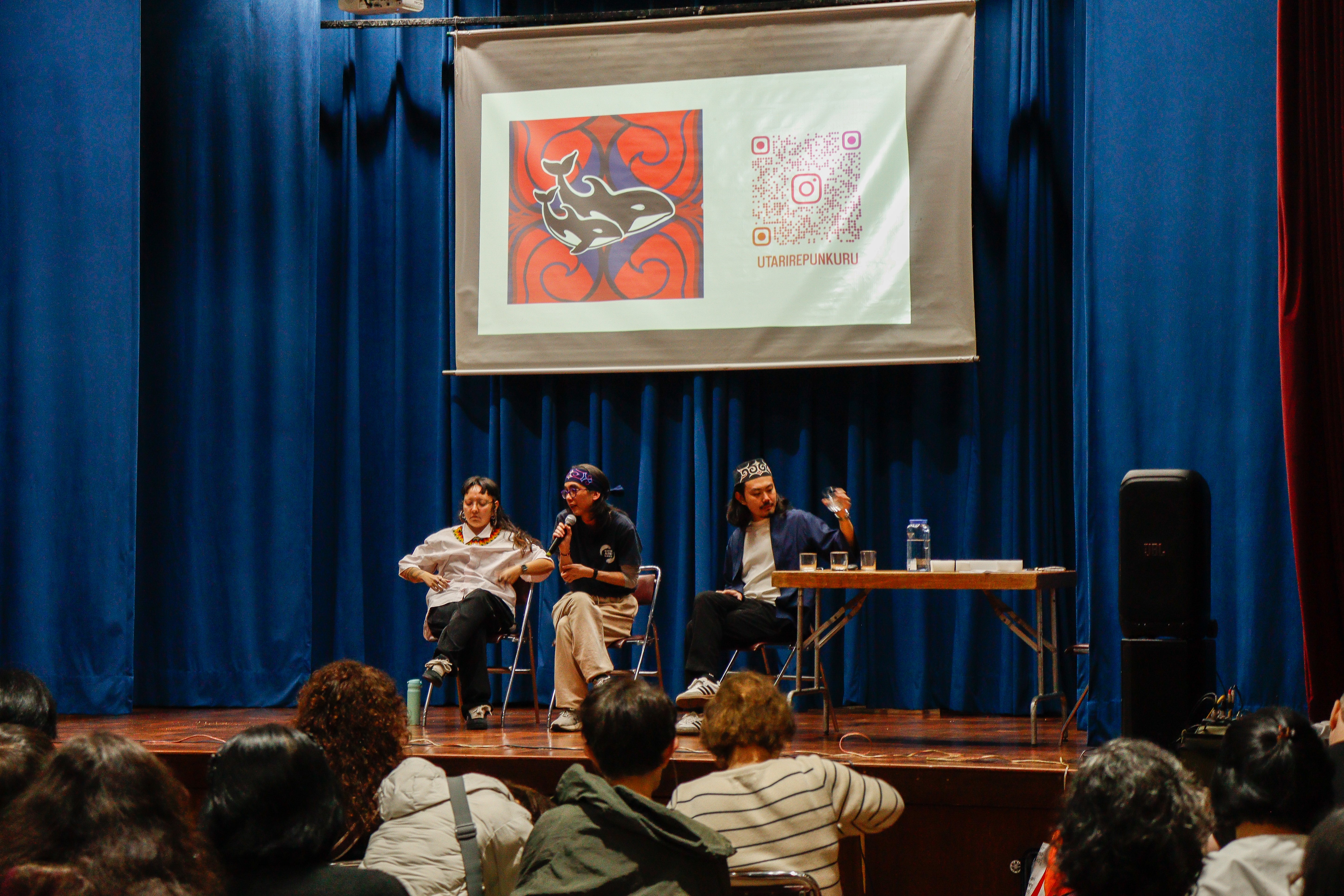
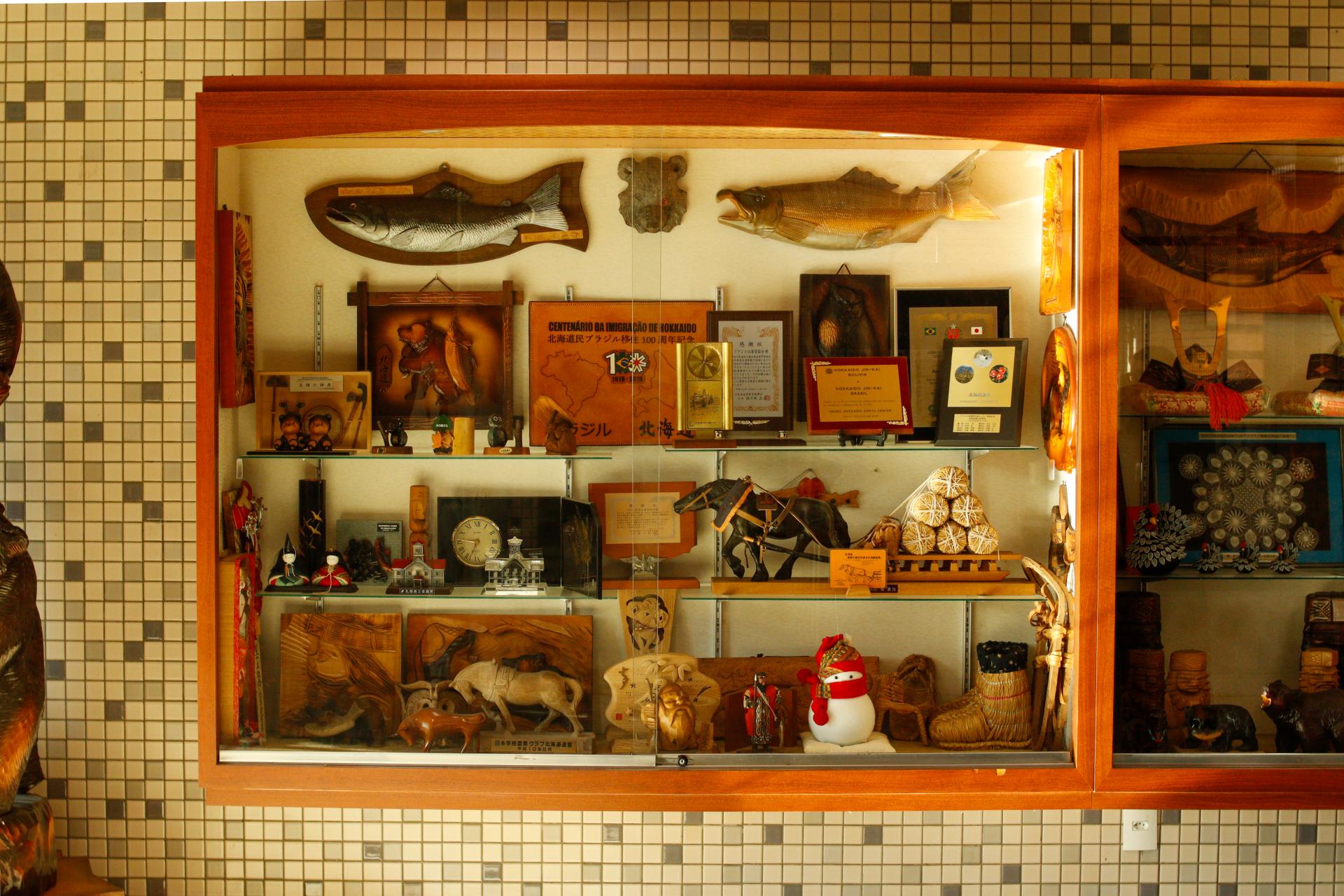
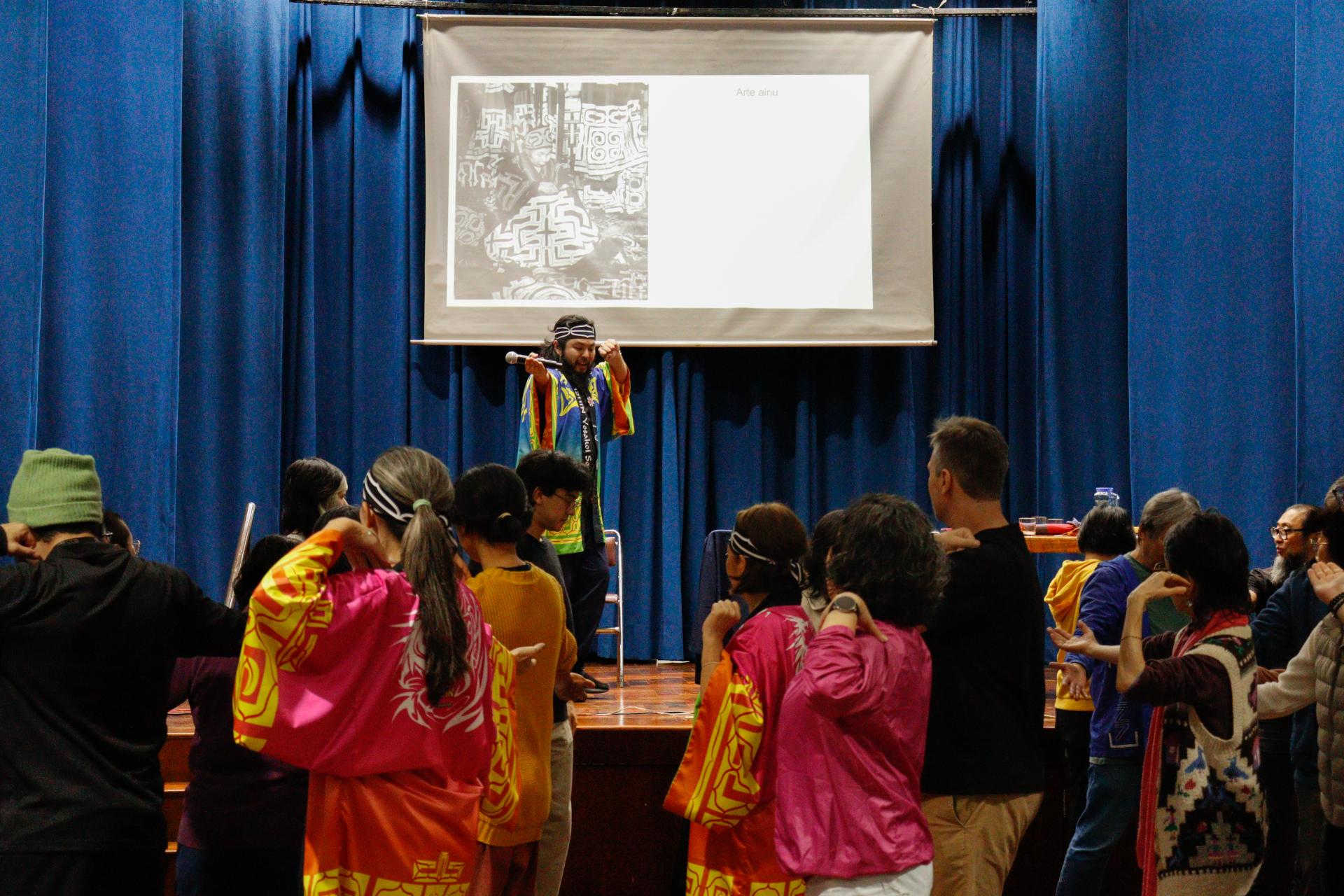
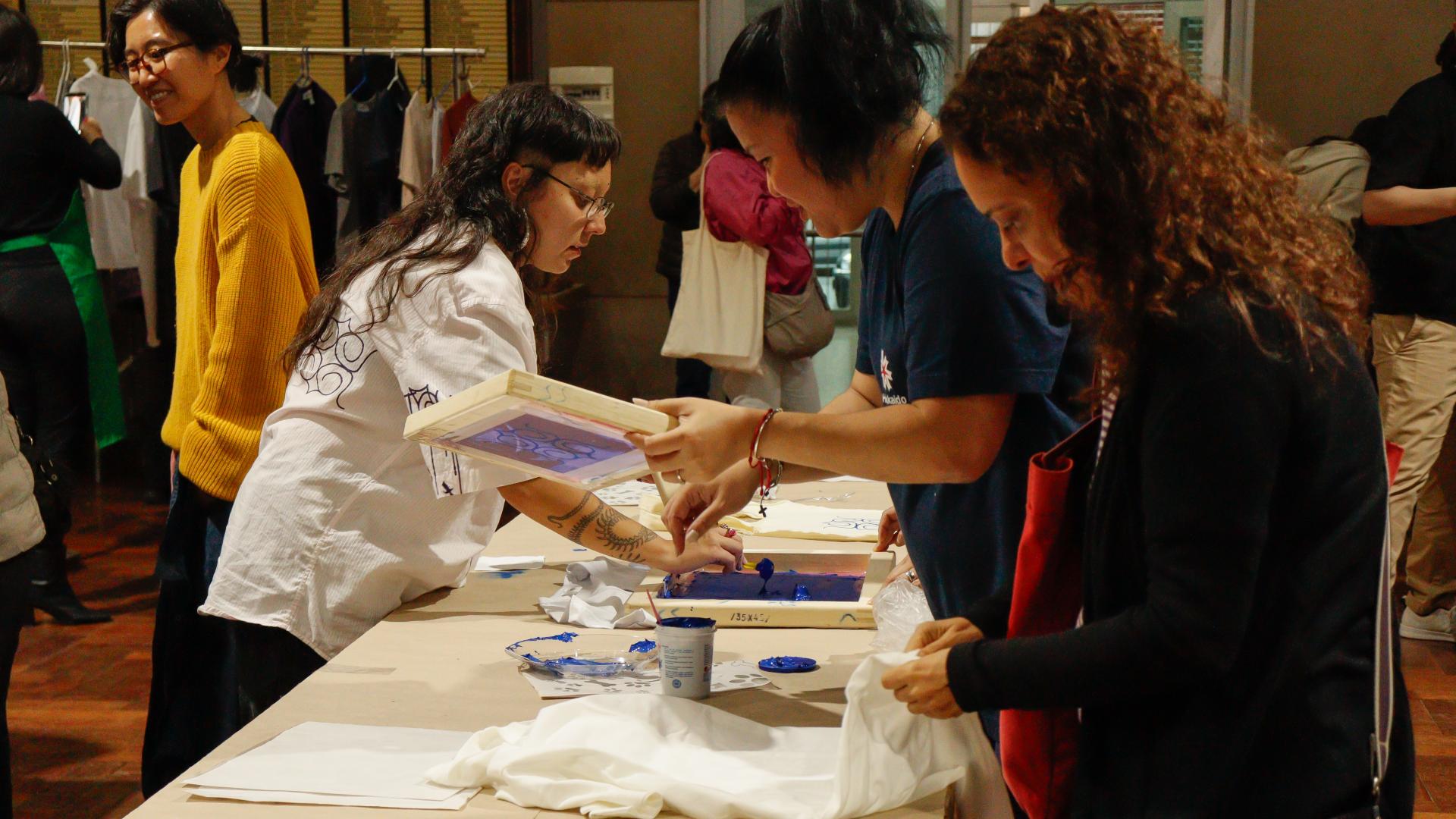
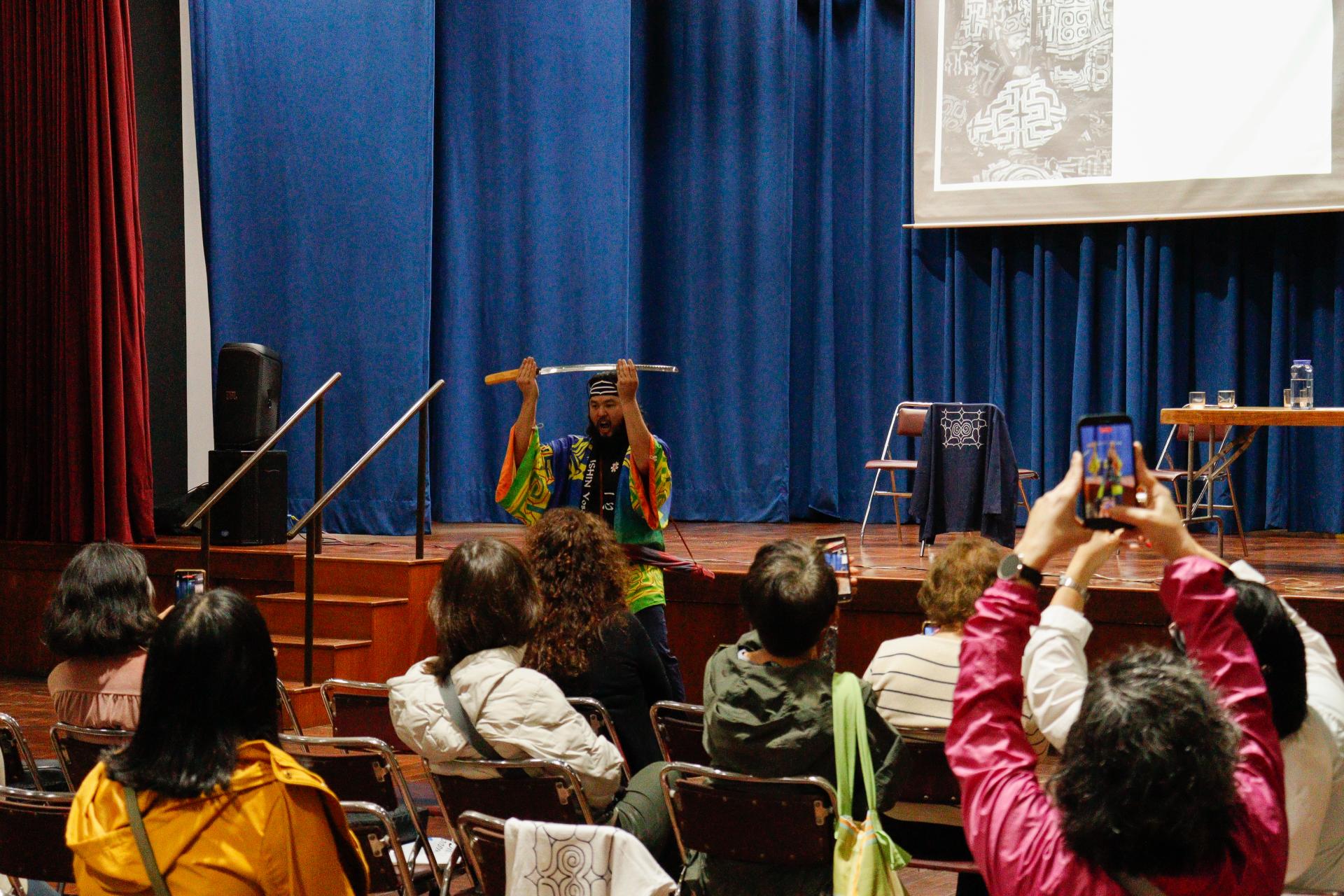
On June 27, 2026, the Hokkaido Association hosted an event in São Paulo, Brazil, dedicated to Ainu culture. The program featured a panel discussion with Allan Yzumizawa (Ainu), Gabriela Ichii (Ainu), and Umeno Morita (Ainu), followed by a traditional Ainu pattern painting workshop on textiles and garments, as well as a performance of traditional Ainu dance.
During the panel discussion "Ainu and Ainu-Renpukuru: Indigenous People of Hokkaido," speakers Yzumizawa, Ichii, and Morita reflected on their heritage. They shared the vibrant beauty of Ainu culture, the ongoing impact of colonization, and their diaspora journey to Brazil. Key topics throughout their talks included traditional dress, culinary customs, spirituality, and living heritage.
Allan Yzumizawa (Ainu) is a researcher, artist, and communicator, born and raised in the rural countryside of Mairinque, in the state of São Paulo, Brazil. He graciously granted us the privilege of an interview.
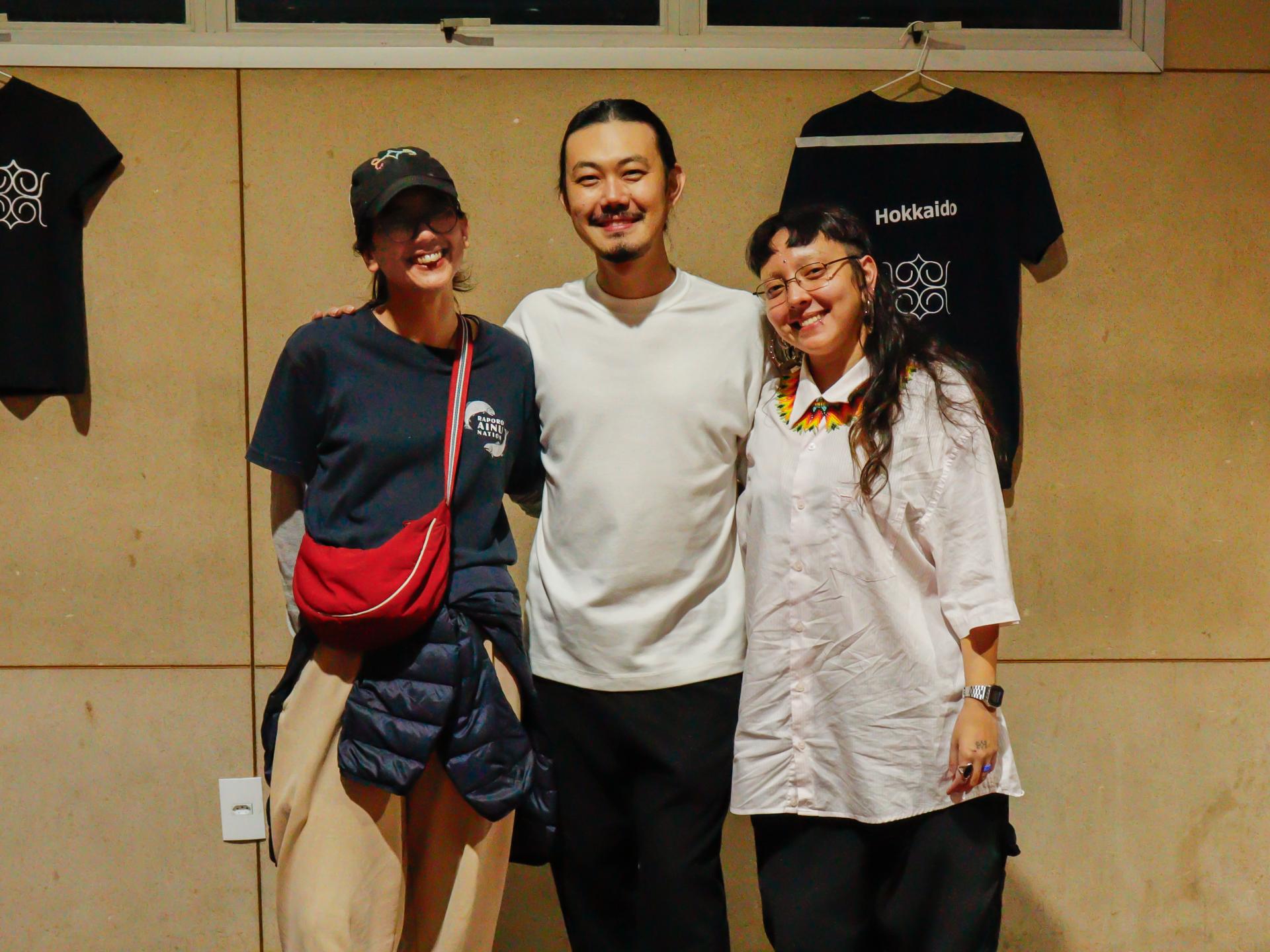
Umeno Morita, Allan Yzumizawa, and Gabriela Ichii
Cultural Survival: In Brazil, the Nikkei (Japanese-Brazilian) community is often viewed as a monolithic block by the rest of society. As an Ainu person, what is it like for you to navigate this space? In what ways do you feel your experience diverges or differs from that of the majority of Japanese-Brazilians?
Allan Yzumizawa: During my subjective self-construction, as an individual born and raised in Brazilian territory, I desperately wanted to avoid being seen by others as "Japanese." For me, that was a necessary adaptive tool for my own survival in society. Thus, I turned to Brazilian cultural elements to support this identity: I played and competed in soccer from ages 5 to 19, immersed myself in popular music, cuisine, and many other aspects that brought me closer to everyday Brazil. Since I had little contact with the Nikkei community, most of my friends and social environment were Brazilian, which created a certain distance from an attachment to that identity.
However, when I first visited a village in the Piaçaguera Indigenous Territory on the southern coast of São Paulo, I was welcomed with such affection and warmth that they called me parente (relative). It is a feeling that is very difficult to describe, but from that point onward, something began to take root within me.
The discovery of my Ainu ancestry came very recently, with the help of Umê and Professor Yoshida. When I shared this with my family, some understood immediately; others still cannot directly grasp what it means. I think it is even a bit confusing for me, but this revelation provides answers to that feeling I had with the parentes of Pindorama.
Since the debate surrounding Ainu identity was never discussed in my family (it took four generations of immigrants for this conversation to surface), all of us were, in a way, "Japanized" over time. Even so, growing up in the rural interior of the state of São Paulo brought us closer to the land and to caipira culture, which became an effective foundation as important as our ancestral heritage.
Caipira culture is much more than an accent or a cuisine. It is a set of habits and a way of life born of encounters among Indigenous, Portuguese, and, in many regions, African peoples across the interior of São Paulo, Minas Gerais, Goiás, Mato Grosso do Sul, and northern Paraná. Many sociologists state that caipira culture is not an ethnic identity, but rather one that remains organically open to absorbing influences from other cultures.
For me, growing up in this context, caipira culture served as a third way between "being Japanese" and "being an urban Brazilian." While Nikkei identity is often associated with urban centers such as São Paulo and northern Paraná cities, the caipira universe is essentially rural and countryside-based. In the past, the term Brasil-bokê (burajirubokê) was a derogatory term used to refer to this "countryside Japanese" who lived off the land.
As a result, Japanese-Brazilian identity has never been homogeneous, and these distinctions have always operated in practice whenever we encounter discrimination. But I question: who are the Brasil-bokê? Japanese immigration is often viewed as a unified, pure identity, but among the immigrants who came to Brazil, there was certainly a contingent of Indigenous Peoples from Japan. Could this term not simply be a sophisticated update to perpetuate this discrimination in Brazil?
CS: How did the story of your Ainu ancestry reach you? Was it a subject that was always openly discussed at home, or was it a later process of self-discovery and re-appropriation?
AY: In 2018, I took a trip with my grandparents to the coast of Piauí, to a community in Cajueiro da Praia. There, I met Seu Tibira, a man who leads the ancestral fish trap (curral) fishing passed down from his grandfather. It is a subsistence practice that only his family is permitted to conduct, and for me, it was an honor to accompany them even as a "foreigner." At first, we boarded a boat, and when the tide went out, we navigated about three kilometers into the sea, reaching a structure of stakes driven into the ocean floor. The trap holds the fish, and with a net, we gathered them into the boat. Some were cleaned on the spot, while others were taken whole and distributed to family homes. Nothing was sold.
I watched that ritual daily, imagining all the Indigenous ancestry they carried. On one specific day, Seu Tibira presented me with a camuri (snook), which I brought back to my grandmother. At the house, as she prepared the fish, we talked about family matters, and she recalled how much her father loved to fish. She began telling me that my great-great-grandmother, who lived in Ezo (now Hokkaido Island), was a healer and midwife. One day, she had delivered a fox's cub because the fox had transformed into a human to trick her. There were many stories about bears, how they would come near the house and be spotted while the family was planting potatoes. I truly believe that Seu Tibira’s camuri was responsible for bringing those early tidings of our ancestry.
Years later, when Professor Yoshida from Hokkaido University (who advised Umê) came to Brazil, he asked about my family’s history. I told him the town they came from, mentioned the tattoo my great-grandfather had that no one could explain, and shared my great-great-grandmother's healing stories. He was both enchanted and intrigued. Upon returning to Japan, he drove to their hometown, and using documents I provided, discovered that my great-great-grandfather and great-great-grandmother were born in kotans (villages). So much oral history was lost with the passing of the elders, who did not pass it down to younger generations. I believe it carries traumatic memory, and it is difficult to know what they felt having to cross the ocean due to the dire conditions they faced.
CS: Ainu culture has a profound connection to Hokkaido and the spirits of nature (Kamuy). How do you cultivate or redefine this spirituality and connection while living in Brazil?
AY: The word Ainu means person, but we ask: what is a person, really? Is it merely a human being? The search for Ainu identity (if such a singular thing exists) involves a search to understand oneself as a person: who I am and how I exist for and with the world, for the plants, the buildings, the animals, the spirits. In my case, by coincidence (or not), the discovery of my ancestry coincided with learning from and spending much more time with the parentes of Pindorama. I began studying Tupi-Guarani (nhandewa rupi) with Luã Apyká from the Tabaçu Reko Ypy village, and from then on, I learned a great deal about Tupi cosmogony.
We have so much to learn from the Indigenous peoples here. Although my family is Catholic, they have always engaged with spirituality, such as how to protect oneself from bad spirits and how to invite good ones. I remember going as a child to the local faith healer (benzedeira) near my house because, being so young, I would absorb negative energies. We always used herbs and plants to heal everything from insect bites to colds and high blood pressure.
I grew up in Mairinque, in the interior of São Paulo, living in a rural area. Day by day, walking through the woods, I connected with my ancestry. Trees and the land are entities that teach us a great deal (perhaps even more than books). I am fond of wild rosemary (alecrim do campo), for instance; I feel a deep intimacy and affection for it. I like to think of it as a plant specific to my region, with unique scents and healing properties. I work with it through teas, tinctures, or simply keep it as an amulet, as it possesses a very strong spirit. The same happened when I went to Paraíba, to Tabajara territory, and encountered alecrim caboclo. It is an enchanting, potent plant. They all teach me and nurture my spiritual relationship.
Deep down, we are like plants: we have to adapt to new soil to thrive. When that happens, something powerful occurs: the emergence of a fruit that is fundamentally the same, yet carries different flavors, shapes, and colors. The erasure of Ainu culture by the Japanese state was very thorough, even here. Thus, we have not yet had enough time to build structural foundations for our group; the plant is still adapting, but I believe the fruits will come soon.
CS: How do you see the relationship between being an Indigenous person from Japan and living in a country like Brazil, which has its own history of Indigenous peoples and colonization? Is there a sense of identification with the struggles of Brazilian Indigenous Peoples?
AY: Since I was a teenager, I have held deep respect and admiration for Brazilian Indigenous cultures. On the few trips I made within Brazil, I was always warmly received in villages and viewed as a parente.
Recognizing myself as Ainu brings even greater responsibility and motivation to support historical reparation movements for the peoples here. Although our immediate demands differ from those of many groups, such as territorial demarcation, reclaiming our presence against agricultural, ethnic, and economic monoculture supports and validates our existence here. Brazil is a territory of heterogeneous "persons" (plants, animals, humans), and sustaining this distinct identity enriches this space for learning and building toward bem viver (living well).
This recognition as a parente in Brazilian villages is not mere courtesy; it is a profound realization that a harmony exists among ways of life that resist hegemonic logic. The Indigenous peoples of Brazil and the Ainu share, at their roots, a worldview that does not separate nature from culture, one that understands the land as a living body and practices a spirituality embodied in daily life, fishing, gathering, farming, and ritual.
CS: Do you or your family maintain contact with Ainu communities in Japan or other members of the diaspora? What is that support network like?
AY: I have never been to Japan. My parents and almost all my aunts and uncles went there strictly as dekassegui, exploited factory workers. Even though the money they saved was essential to providing a life here and to allowing me to graduate from university (I am the first in my family to earn a degree), I refuse to go to Japan to be exploited, culturally, economically, or as a laborer.
I believe the government owes our families reparations to reconnect us with our relatives. I do not know if I still have living relatives there, but I would love to visit some of the kotans where my ancestors lived. At the same time, we are very open to receiving them here. My grandmother, who still maintains her farm in the interior of São Paulo, was very happy about this recognition and often tells me that her home will always be open to our people.
CS: What does it mean for you today to affirm yourself as Ainu in Brazil? What message or legacy do you consider most important to pass on to future generations?
AY: The first word that comes to mind is insistence. Sometimes I like to be stubborn; I refuse to accept defeat, and I choose to swim against the current. Affirming oneself as Ainu in Brazil carries that quality between the lines, as it means positioning oneself against the imperialist currents of both Japan and Brazil. It means feeling indignant that the migration of peoples from the island, understood as Japan, is an incomplete story that can no longer remain silenced. Care must be taken so that our voices do not become so loud as to be inaudible or misunderstood. That patience is challenging, but necessary.
Claiming Ainu identity without structural support, relying solely on my utaris (relatives), is difficult, but I believe this movement can lay a foundation for future generations. And future generations are not bound to linear time; the next generation could be my older cousin or my aunts and uncles, who have not yet had the opportunity to recognize themselves.
My uncle, for instance, loves fishing and barbecuing, traditions deeply tied to our people. He thrives outside urban environments. My fondest memories center around the fire, cooking animals and vegetables. My aunt possesses a deeply developed spirituality. I do not believe these traits are mere coincidence. When they discovered our Ainu ancestry, they were excited. Even my grandmother began reflecting more on her preferences, her identity, and her way of life.
Having the privilege and the responsibility of this self-recognition motivates me to create space so that others may have this same opportunity in their lifetimes. It is as if they are finding a piece of themselves that was torn away in the recent past. That is my hope for the future.
All photos by Guilherme Paes.