By Djalma Ramalho (Aranã Caboclo, CS Staff)
In the Jequitinhonha Valley, Indigenous Peoples, Quilombola communities, and traditional communities in Brazil are calling for the Jequitinhonha River to be recognized as a living being and a subject of rights. Amid the advance of lithium mining and the contradictions of the so-called green energy transition, the proposal seeks to inscribe into Brazilian law an ancestral conception of justice grounded in the interdependence among waters, territories, human beings, other-than-human, and more-than-human beings. If approved and sanctioned, Bill No. 5609/2026 could make the Jequitinhonha the first river in Brazil to be recognized as a subject of rights under state law.
Jequitinhonha: Promises and Contradictions
Brazil’s decision in 2022 to loosen restrictions on lithium exports, under heavy international pressure, set off a mining rush in the semi‑arid region of Minas Gerais. Technical Note (No. 01/2024), “Mining Processes in Jequitinhonha and Mucuri,” produced by the Observatory of the Valleys and Semi‑arid Minas Gerais research group, reports that as of February 2024, there were 8,820 mining applications in the Jequitinhonha and Mucuri river basins. Of these, 1,377 concerned lithium and covered 18,000 square kilometers. Between 2022 and 2024, the number of applications surged by 562%, reflecting the arrival of major corporations and the promise of profitability.
These figures mirror the reality described by local communities of the Jequitinhonha Valley, who say that the promise of clean energy has brought dust, incessant noise, and illness. Open‑pit blasting takes place 24 hours a day, damaging houses and people’s health. In 2025, Luiz, a local resident (whose name has been changed to protect his safety), told Cáritas, “The promised development has brought us cracked houses, dust, and disease.” Dust has already caused deaths from pneumonia. Villagers say the mining company has divided the community and restricted access to water: households receive 1,000‑liter tanks filled only once a month, while the company holds a license from Brazil’s National Water and Basic Sanitation Agency to draw heavily on the river. “Water that once flowed free now comes by truck. The stream dried up for the first time in 2025, and families rely on cisterns provided by the company itself,” says Altair (not his actual name), from the Piauí Poço Dantas community. While Sigma Lithium touts zero tailings to the world, the waste facilities lie less than a kilometer from homes and the school, exposing children to noise and insecurity.
Indigenous communities have warned that the lithium rush has increased interest in their traditional territories. Pressure on ancestral lands has led to moral defamation and digital and physical persecution of leaders. Latin America is the most lethal region in the world for defenders of human rights and nature; for every defender killed, hundreds are persecuted, silenced, or criminalized. Technical reports and mining licenses are approved at a strikingly slower pace than the demarcation of Indigenous territories in the region. My own People, the Aranã Caboclo, have been fighting for more than 20 years to complete the official demarcation of our lands. Community critiques have also been echoed on the international stage.
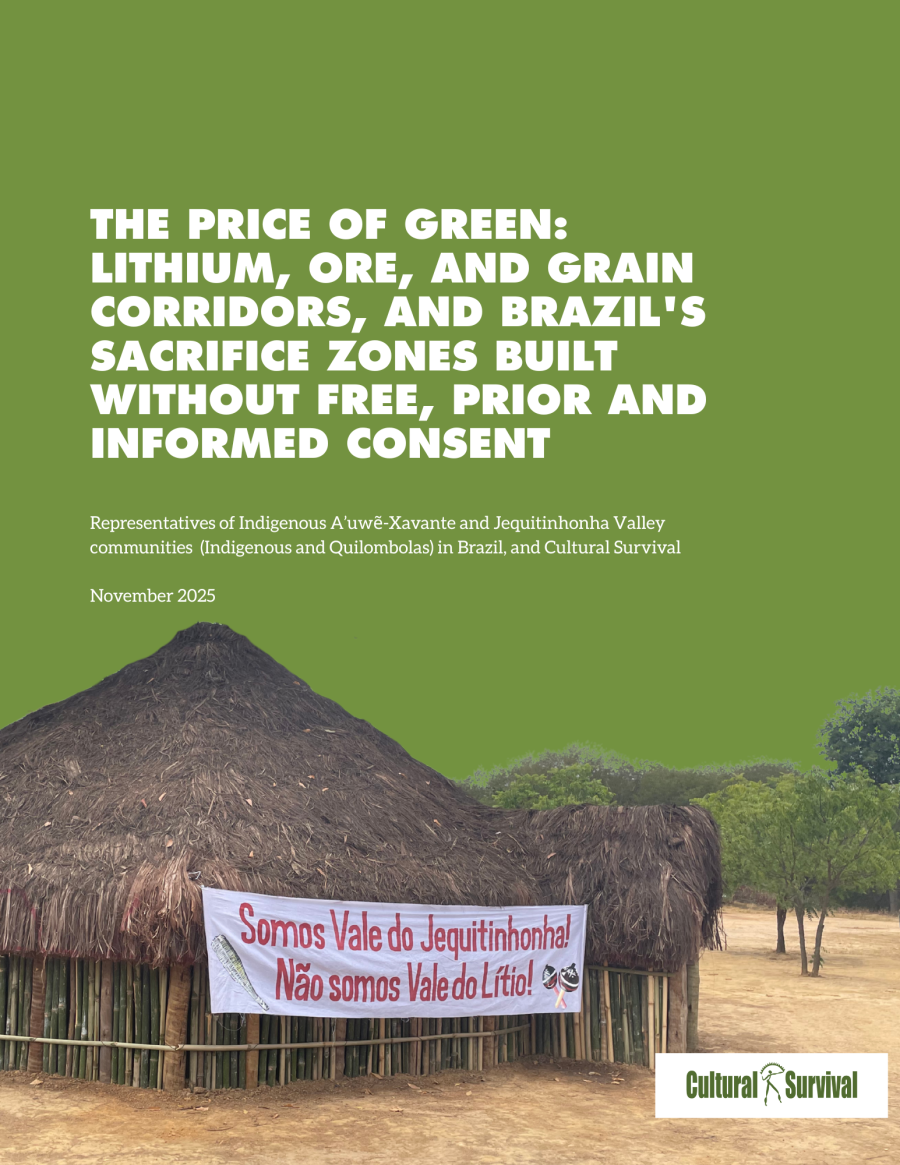
In November 2025, Cultural Survival, together with the A’uwẽ Xavante, Aranã Caboclo, Pankararu, and Pataxó Peoples and the Mutuco and Córrego do Narciso Quilombo communities from the Jequitinhonha Valley, released “The Price of Green.” The report denounces the National Bank for Economic and Social Development (BNDES) for allocating R$486 million ($96 million USD) from the Climate Fund, created to finance climate mitigation, to lithium mining projects advancing without the Free, Prior and Informed Consent (FPIC) of more than 248 communities. It also notes that Sigma Lithium operates in an area with 130 cataloged springs and that its activities are expected to generate 195.6 hectares of mining waste while disregarding cumulative impacts and the FPIC requirement established under Brazilian constitutional provisions and international law. Djalma Ramalho Gonçalves (Aranã Caboclo), who co-authored the report and is a member of one of the affected Indigenous communities, warns that territories are being invaded and turned into “sacrifice zones.” “Our lands are being invaded, our futures threatened, and our rights systematically violated in the name of so-called progress. We oppose a predatory model that violates life and destroys Mother Earth,” he says.
Ancestral Water and Indigenous Cosmologies
For Indigenous Peoples, water is more than a resource; it is ancestral, it is kin. This understanding arises from a cosmology that does not separate humans from other beings. Colonialism and capitalism are founded on the principles of dominating nature, legitimizing industrialization, and extractivism. By contrast, Indigenous cosmologies value interdependence with the living world, and all beings are regarded as relatives. Instead of “dominion over,” Indigenous ethics call for responsibility toward the land and its inhabitants.
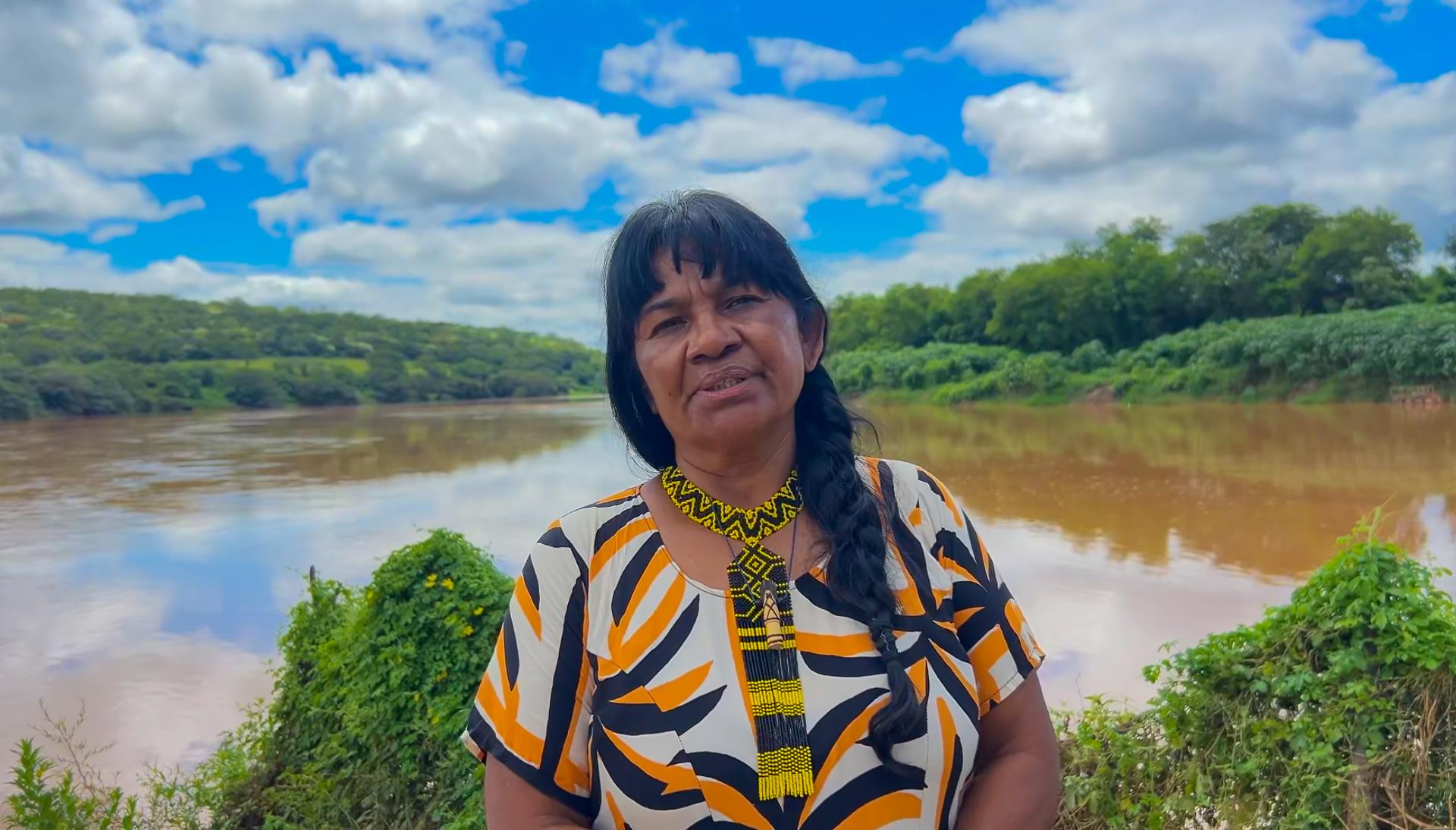
Cleonice Pankararu, a leader of Cinta Vermelha-Jundiba, an Indigenous community formed by Pankararu and Pataxó Peoples. Photo by Djalma Ramalho.
Toá Kanynã Cleonice Pankararu (Pankararu) of the Cinta Vermelha‑Jundiba village in Araçuaí, Minas Gerais, illustrates the deep connection between rivers and Peoples. “I live in a small Indigenous community, the Cinta Vermelha‑Jundiba village, formed by two Peoples: Pankararu and Pataxó. I live in a territory where, on one side, flows the Jequitinhonha River, and on the other, the Araçuaí River. These rivers meet here and flow on to the Atlantic Ocean in Bahia. For us, rivers are territories. They promote life and provide food. The river, for us, is a being, a subject of rights, because all of us sustain life through it. We need to keep our waterways, our territory alive, because the rivers are a sacred part of the existence of all of us, the Indigenous Peoples of the Jequitinhonha Valley,” she says.
A 2024 UNDP analysis titled “Hope for an equitable future: Multi‑species justice” observes that Indigenous Peoples safeguard about 80% of the planet’s remaining biodiversity because they have always recognized mutual dependence between humans and other life forms. The same analysis notes that countries such as Ecuador, Brazil, and Bolivia are incorporating rights of nature into their laws and constitutions. In Minas Gerais, communities call the Chapada do Lagoão (Big Lake Plateau) “mother” because it shelters hundreds of springs that feed the Jequitinhonha; protecting the Chapada do Lagoão means ensuring the continuity of life and culture. The Aranã Caboclo, my People, have also reaffirmed our kinship with the ancestral waters of the Jequitinhonha. The Jequitinhonha River is made of the blood, tears, and sweat of our ancestors. We are the Jequitinhonha River.
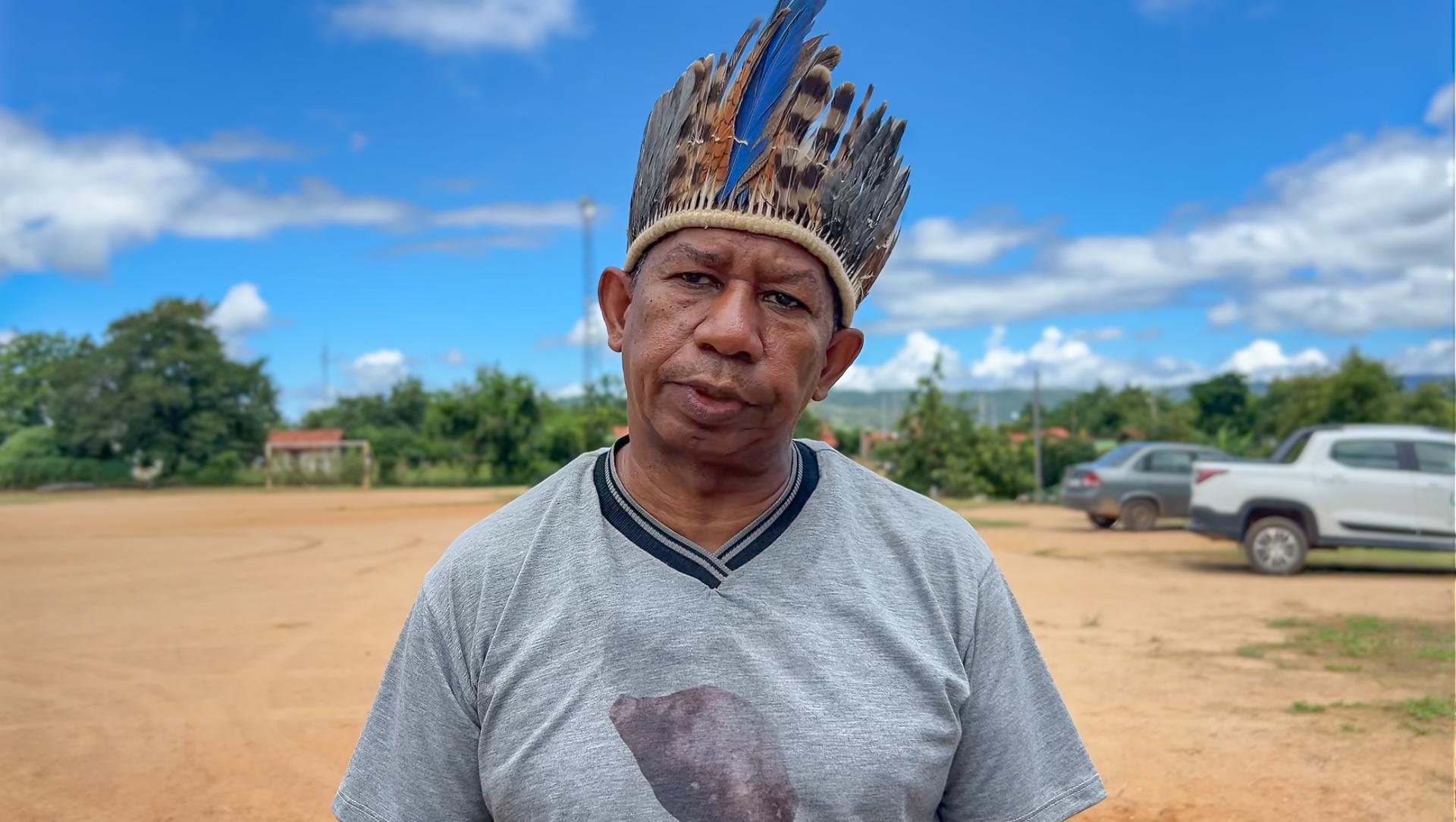
Osmar Aranã Caboclo, a leader of the Aranã Caboclo people from Araçuaí, Minas Gerais. Photo by Djalma Ramalho.
Osmar Aranã Caboclo, a leader of the Aranã Caboclo People of Araçuaí, Minas Gerais, underscores the urgency of protecting the Jequitinhonha River. “Protecting the river is very important to us because it is where the water we drink comes from. We are the river. But the river is drying up, and we are very sad to see it drying up without our participation in the decisions and actions to help the river. The river is suffering. There are people destroying it. That is why it is very important to protect the river. Protecting the river is protecting the water; it is protecting the life of our People.”
Rights of Nature, Inter-Species Commitments, and Climate Justice
The concept of the rights of nature is relatively new in Brazilian law, but it draws on ancestral knowledge systems that affirm the interconnection among humans, animals, plants, waters, minerals, territories, and more-than-human beings. Recognizing nature as a subject of rights requires a profound transformation in science, law, and public policy, since existing legal norms were largely built on anthropocentric and Eurocentric foundations. For Indigenous and Quilombola communities, however, such rights have never been an abstract legal innovation: they are part of lived cosmologies, territorial responsibilities, and ways of relating to the world. From this perspective, the crisis lies not in Indigenous and Quilombola knowledge systems, but in colonial legal and scientific regimes that reduced nature to property, resource, and commodity.
In Brazil, this struggle has begun to take legal form through municipal laws adopted in recent years. In 2023 and 2024, local legislation recognized the Laje and Mosquito Rivers as legal persons, showing that the rights of nature are moving from ethical and cosmological claims into concrete legal frameworks. At the federal level, Indigenous congresswoman Célia Xakriabá (Xakriabá) introduced, in 2023, a proposed constitutional amendment on the Rights of Nature. The amendment recognizes the ancestral and historical relationship of Indigenous Peoples and traditional communities with the preservation of nature, ensuring the continuity of these relationships as a right connected to their ways of life. It also affirms that all beings, human and non-human, have the right to a balanced environment. At a public hearing of the Amazon Commission on June 4, 2024, Xakriabá defended the inclusion of “planetary dignity” in the Constitution and criticized the Eurocentric worldview that transformed nature into an object of exploitation during the Industrial Revolution.
Internationally, rights of nature have already been recognized in constitutions, legislation, and court decisions. Ecuador’s 2008 Constitution recognizes that Pachamama has the right to exist, persist, and regenerate her vital cycles, and that anyone may demand the enforcement of these rights. In Colombia, Constitutional Court judgment T-622/16 declared the Atrato River a subject of rights and ordered its protection in partnership with riverside communities. In New Zealand, the 2017 law recognizing the Whanganui River as a legal person reflects Māori cosmology, often summarized in the phrase, “I am the river, and the river is me.” These precedents show that environmental justice can incorporate Indigenous, relational, and pluriversal ontologies into legal systems.
This legal movement also intersects with a broader redefinition of climate justice. Increasingly, climate justice is being expanded to include the rights of more-than-human beings and inter-species relationships. The UNDP argues that future decisions must consider the interests of both humans and non-humans, and that Indigenous Peoples already practice this interdependence, preserving biodiversity and demonstrating how rights of nature can guide climate policy. Cultural Survival Executive Director Aimee Roberson (Choctaw and Chickasaw) has underscored the urgency of centering Indigenous wisdom, warning that humanity stands at a crossroads: either continue on a path of destruction or choose stewardship rooted in balance and respect. Indigenous Peoples, she argues, hold knowledge essential to sustainable solutions, but need autonomy, self-governance, and the right to steward their territories.
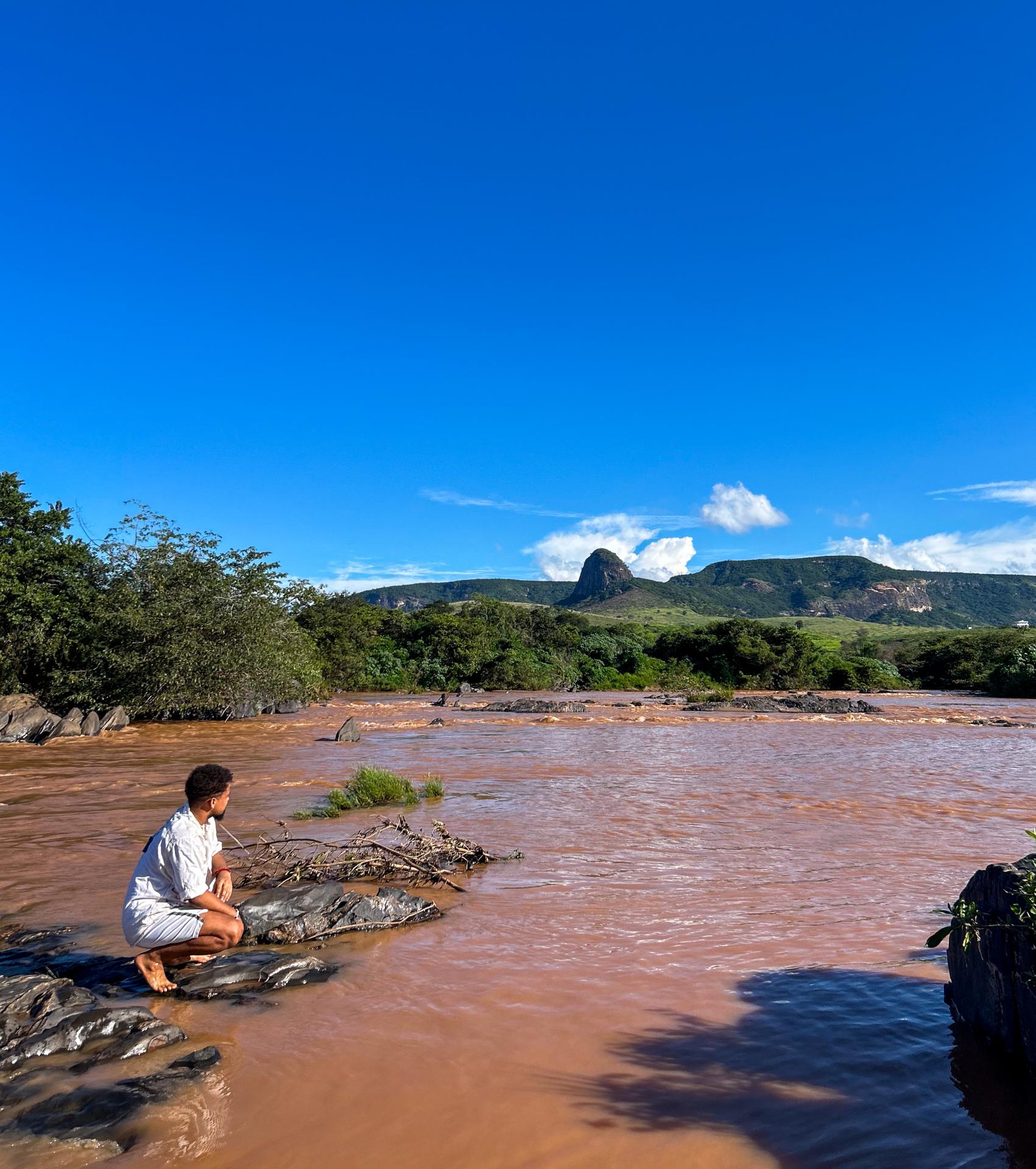
Djalma looks out over the landscape and waters of the Jequitinhonha River. Photo by Djalma Ramalho.
Our current climate crisis has emerged from systems that granted colonial and capitalist powers dominion over nature. Overcoming this crisis requires recognizing that all beings are relatives and that caring for the land, water, and territories is a shared responsibility. Although Indigenous Peoples are globally recognized as guardians of biodiversity, climate justice funds are still rarely managed by Indigenous Peoples themselves. This contradiction appears clearly in the case of BNDES allocating R$486 million from the Climate Fund without the Free, Prior and Informed Consent of affected communities. As Alicia Moncada (Wayúu), Cultural Survival’s Director of Advocacy and Communications, has noted, Indigenous Peoples are on the frontlines of the climate crisis, yet remain excluded from funding and decision-making. Climate justice, therefore, requires reparations and direct investment in Indigenous-led solutions.
In the Jequitinhonha Valley, the struggle to recognize the river as a subject of rights is a way of inscribing these cosmologies into law and politics. It shifts the debate away from an energy transition narrowly focused on batteries, extraction, and global consumption toward a transition grounded in inter-species commitments, territorial responsibility, and reparation for colonial injustices. Human life depends on the life of other beings. Therefore, dignity cannot remain an exclusively human privilege. It must be extended to waters, forests, mountains, animals, plants, and all beings that sustain the web of life.
The socio-environmental conflicts in the Jequitinhonha Valley do not occur in isolation; they echo across the continent. In March 2026, the Rapporteur on Economic, Social, Cultural and Environmental Rights of the Inter-American Commission on Human Rights (IACHR) issued an alert on the need to guarantee the human right to water in the Americas. The communiqué noted that contamination and water scarcity caused by mining and illegal gold mining threaten Indigenous and riverside communities. These alerts reinforce the urgency of protecting rivers as subjects of rights. By recognizing that water degradation and contamination by heavy metals violate fundamental human rights, the IACHR and the Brazilian Federal Public Prosecutor’s Office strengthen the political and legal legitimacy of the mobilization in the Jequitinhonha Valley.
The intersection between human rights and rights of nature gives this struggle a broader force: protecting the river as a living being also guarantees people’s right to clean water, health, culture, memory, and territorial continuity. In this sense, the local campaign to recognize the Jequitinhonha River as a subject of rights becomes part of a continental agenda for water justice, climate reparation, and accountability for extractivism.
Mobilization in Jequitinhonha: Popular Petition and Legislative Process
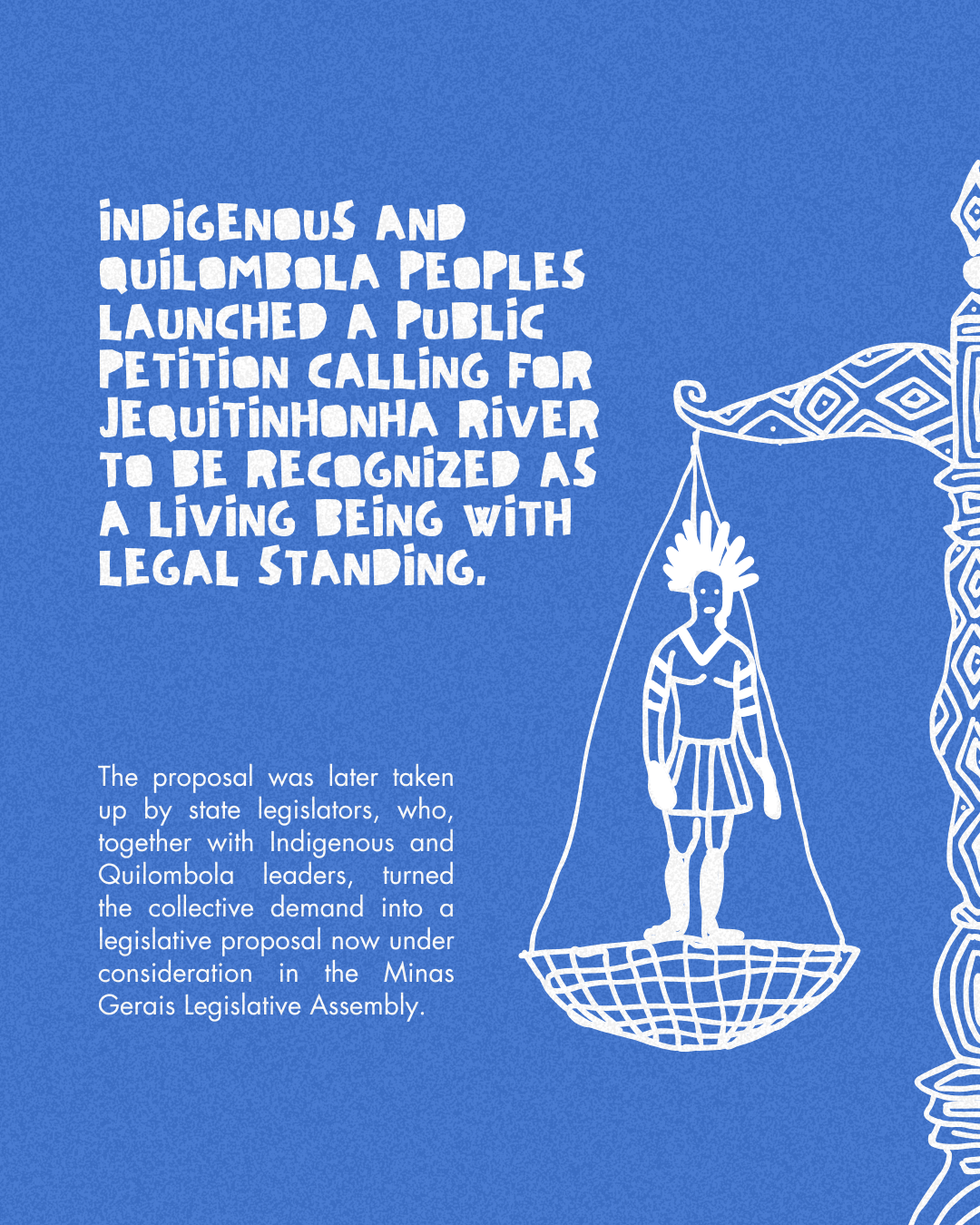
The proposal to recognize the Jequitinhonha as a legal person was born from the pains and hopes of the territory. In 2025, the International Dialogue of Indigenous and Quilombola Communities Affected by Lithium Mining brought together local leaders and organizations such as Cultural Survival to articulate critiques of the energy transition and propose alternatives based on Indigenous and Quilombola knowledge ecologies. During the Water Pilgrimage on World Water Day 2026, Indigenous and Quilombola communities of the Jequitinhonha Valley launched a petition calling for the river to be recognized as a living being. Drafted with support from jurists and social movements, the petition transforms diffuse demands into a legislative agenda.
A 2024 report by Cultural Survival amplifies this mobilization. It notes that Quilombola communities such as São Benedito do Giral and Córrego Narciso do Meio, as well as the Aranã Caboclo, Pataxó, and Pankararú Peoples, are fighting the invasion of lithium mining on their ancestral lands. Beyond the lack of basic public policies, the communities denounce that companies use promises of jobs and development to gain trust, reproducing old tactics that divide residents and portray them as obstacles to progress. The piece recalls that on February 1, 2023, the Council of the Lagoão Environmental Protection Area authorized Sigma Lithium to conduct research without the communities’ Free, Prior and Informed Consent. The communities appealed to the Federal Public Prosecutor’s Office, which annulled the decision for violating ILO Convention 169.
For the leaders interviewed, the energy transition will only be just if the state recognizes and respects the rights of traditional communities. In this context, the campaign to recognize the river as a legal person combines faith and politics, incorporating pilgrimages, assemblies, solidarity networks, and engagement with legislators. “I am here in Barra do Pontal, where the Araçuaí River meets the Jequitinhonha. I advocate for the Jequitinhonha River to be recognized as a subject of rights. The Jequitinhonha is fundamental to the culture and identity of our Peoples. On its banks began part of our history. It was also through the river that Indigenous Peoples managed to protect their territories from invasions during the colonial period. Moreover, the Jequitinhonha quenches our people’s thirst. Today we are witnessing various processes of destruction that have a direct impact on our river. That is why I am here defending recognition of the Jequitinhonha as a subject of rights, so that we can secure the future of the next generations,” Lauanda Lopes, a doctoral student in history from Araçuaí, Minas Gerais, said in a statement.
Through territorial assemblies, exchanges of knowledge, and political actions, communities have been strengthening a collective agenda to defend the river that gives its name to the territory. Considered sacred by the Aranã Caboclo, Pataxó, and Pankararu Peoples, the Jequitinhonha was placed at the center of mobilization when, in early 2026, a petition to Save the Jequitinhonha was launched. In the manifesto, Indigenous Peoples, Quilombolas, traditional communities, researchers, and artists demand that the river be recognized as a subject of rights. They affirm that the Jequitinhonha is a living ancestor that structures territories, cultures, economies, and spiritualities, and they denounce the extractivist logic of the lithium rush that has exhausted the land and contaminated the waters. By proposing to break with the colonial ideology that reduces nature to a resource, the petition argues that granting the river legal rights, such as the rights to exist, to regenerate, and to maintain its ecological cycles, is a measure of climate adaptation and socio‑environmental justice.
In the first weeks, the campaign spread across social networks and gained support from organizations such as the Instituto Janelas do Jequitinhonha, Cultural Survival, and independent media platforms. Popular pressure reached the Legislative Assembly of Minas Gerais, which began to consider Bill No. 5609/2026, a legislative proposal that seeks to recognize the Jequitinhonha River as a subject of rights and to establish its fundamental rights. This initiative is part of a national movement that has already led to the recognition of other rivers. In Guajará‑Mirim, Rondônia, Municipal Law No. 2,579/2023 declared the Laje River (Komi Memen) a living entity with legal standing. The municipal law notes that the river is a source of food and water security for Indigenous Peoples and interdependent human communities and confers rights such as maintaining its natural flow, being nourished by its riparian forest, existing with adequate physico‑chemical conditions, and interacting with human beings through spiritual practices, leisure, and fishing.
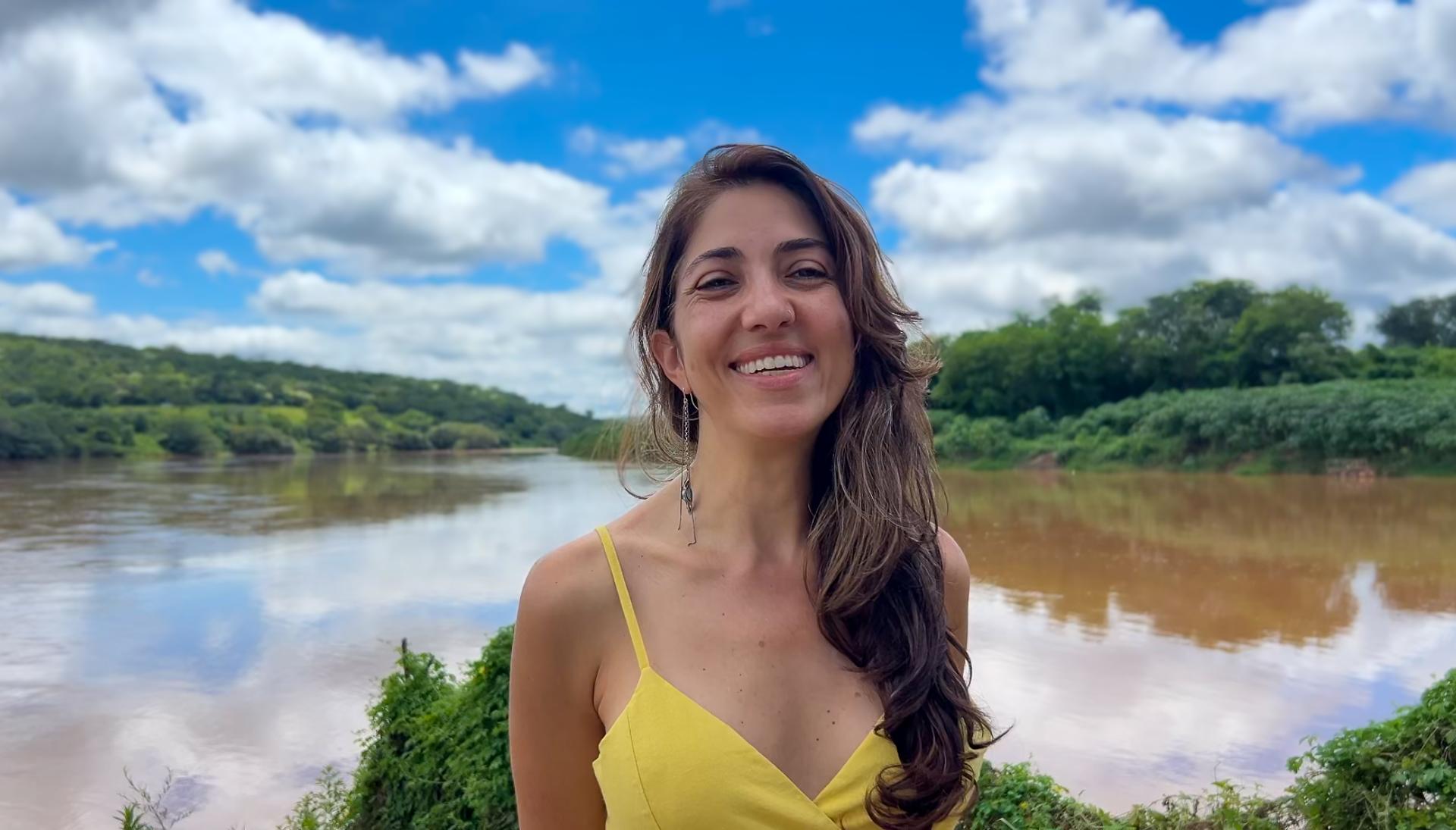
Fabiana Leme, a lawyer who contributed to drafting the bill proposing the recognition of the Jequitinhonha River as a subject of rights. Photo by Djalma Ramalho.
Fabiana Leme, an attorney and member of the team that drafted the law recognizing the rights of Komi Memen, says, “It is entirely possible, and indeed desirable, to recognize the rights of nature, of its elements and of the beings that make up this web of life. In Brazil, we have worked mainly at the municipal level, because a national recognition of the rights of nature, such as has already occurred in other Latin American countries, does not yet seem the most immediate path. We therefore begin with local recognitions, which have worked very well. The aim of these laws is to create practical instruments to guarantee the rights of nature. It is not just a matter of declaring that a river, a mountain range, or a mountain has rights, but of building concrete mechanisms of protection: guardianship councils, spaces for social participation, and forms of permanent monitoring of these territories. In Brazil, the first recognition of a river as a subject of rights was that of the Rio Laje, Komi Memen, in Rondônia, developed in dialogue with Indigenous and traditional communities. After that recognition, we made other advances, such as the recognition of Pico do Itambé here in Minas Gerais, in the Espinhaço range.”
These experiences show that it is possible to move, in Brazil and in the world, toward a new legal, ethical, and political relationship with nature. Recognizing rivers, mountain ranges, and other elements of nature as subjects of rights is a way to provide real protection, with community participation and public responsibility. It is within this horizon that the struggle to recognize the Jequitinhonha as a subject of rights also fits.
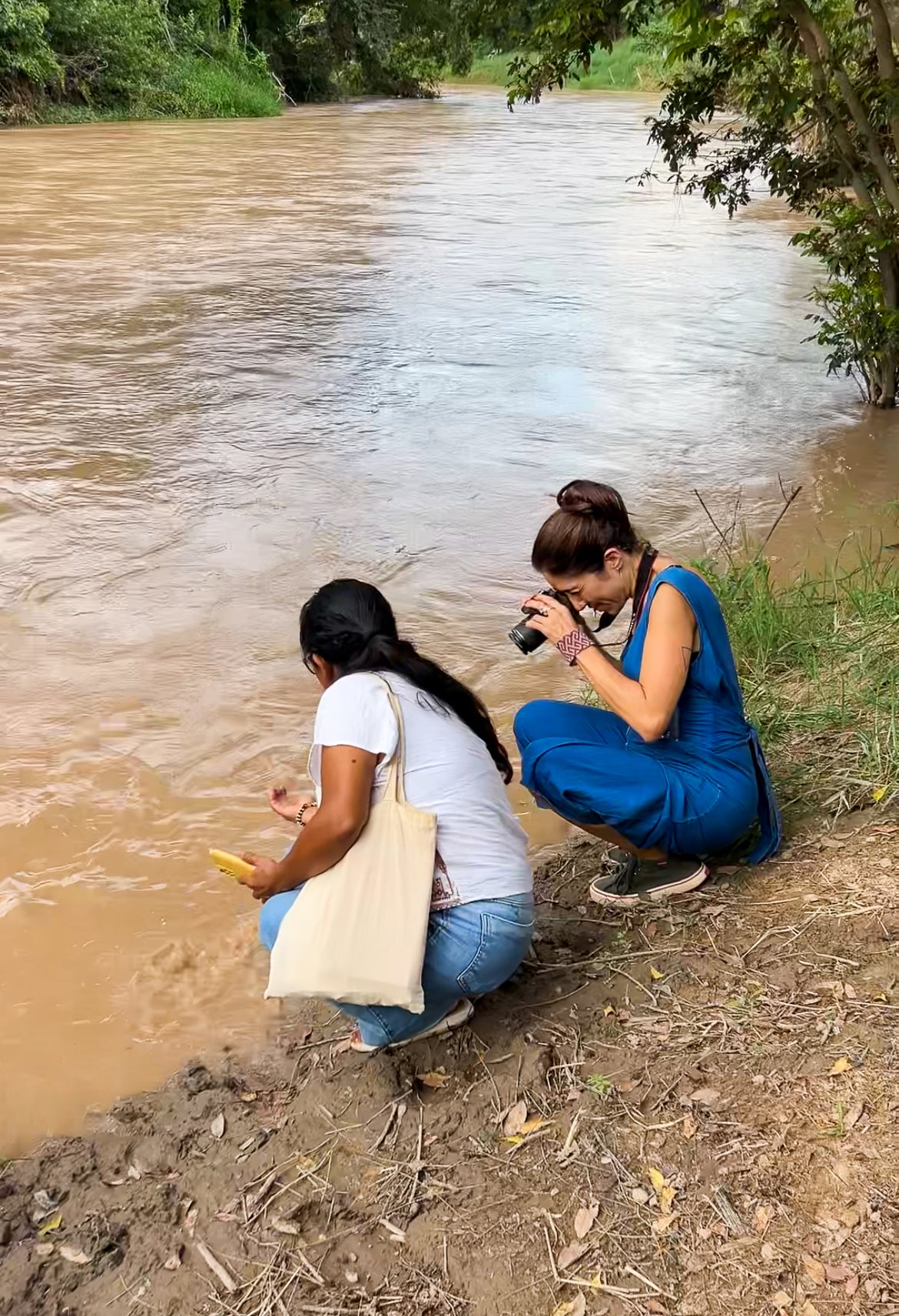
Fabiana Leme and Cleonice Pankararu-Pataxó analyze the water of the Piauí Stream.
Challenges and Horizons of Resistance
The recognition of the Jequitinhonha River as a subject of rights faces both legal and political obstacles. To move forward, Bill No. 5609/2026 must pass through the Committees on Constitution and Justice and on the Environment. This process will require strategic lobbying with state deputies, as well as broader campaign efforts to engage, sensitize, and mobilize society, including electoral constituencies, in order to increase pressure on decision-makers. It will also be necessary to establish a multi‑species governance that appoints human representatives to act on behalf of the river and to ensure that decisions respect the interests of communities and ecosystems, as provided in Bill No. 5609/2026.
At the same time, the debate offers an opportunity to rethink the foundations of law and development. On the one hand, mining processes have imposed a production arrangement oriented toward the expropriation of commons, turning minerals, forests, people, waters, plants, and animals into commodities. On the other hand, recognizing the river as a subject of rights points to a different paradigm in which territories are conceived through reciprocity and interdependence. The proposal connects to global movements advocating the criminalization of ecocide and the institutionalization of rights of nature at various levels.
If approved and enacted, the Jequitinhonha could become the first river in Brazil recognized as a legal person by a state law. The proposal builds on existing municipal precedents, such as the Komi Memen and Mosquito River in northern Minas Gerais, but shifts the dispute to an unprecedented institutional scale in the country: state legislation.
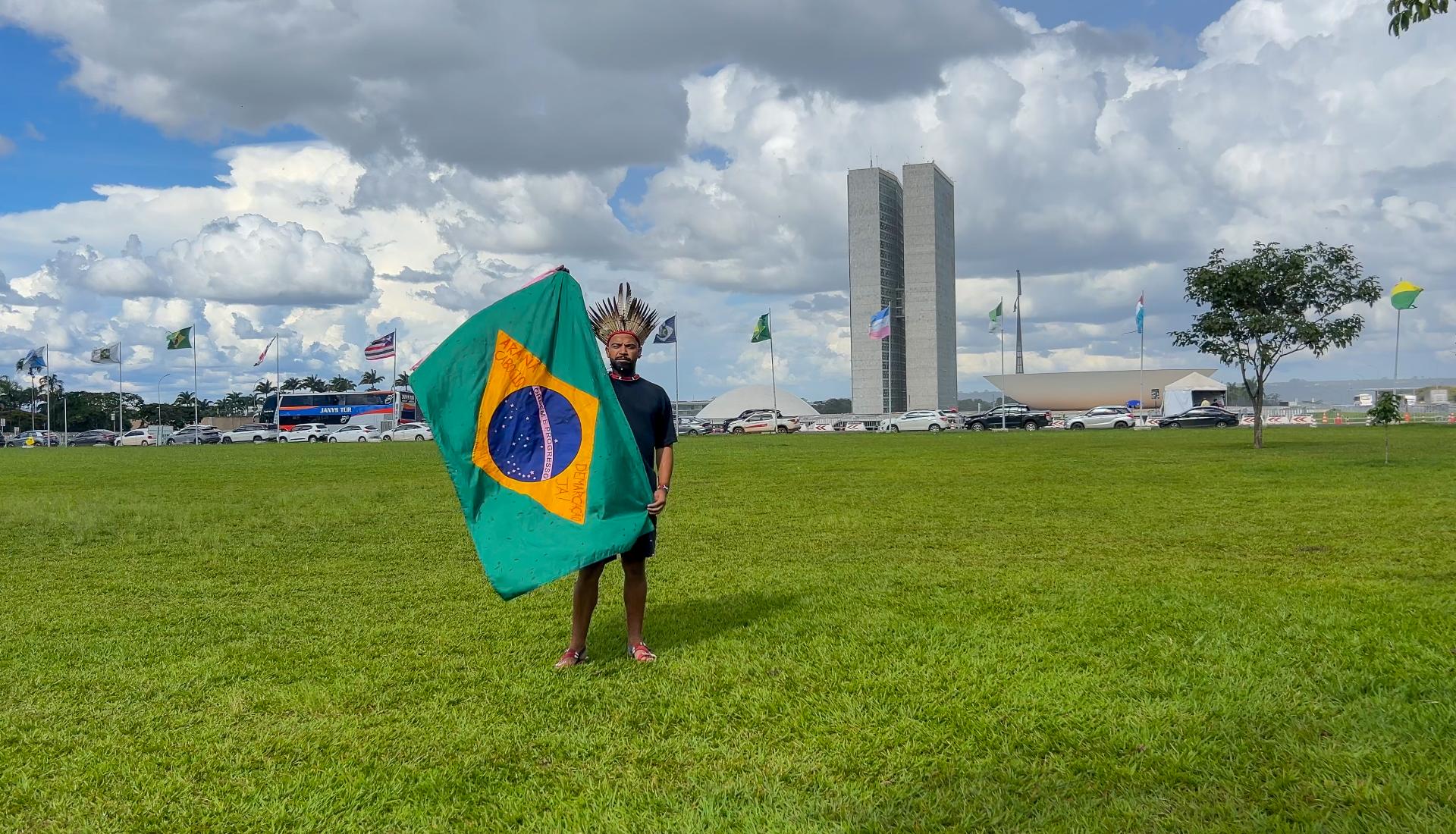
Djalma holds a Brazilian flag bearing the message “Povo Aranã Caboclo: Demarcação Já” (“Aranã Caboclo People: Land Demarcation Now”) in front of the National Congress in Brasília. Photo by Djalma Ramalho.
Final Considerations: A Jequitinhonha Pluriverse
The struggle to recognize the Jequitinhonha River as a subject of rights is a historical response by Indigenous, Quilombola, and traditional communities to a development model that for centuries has treated rivers, plateaus, springs, mountains, and human bodies as available zones for expropriation. In the context of the lithium rush, this claim shifts the center of the debate: the questions can no longer be only how much ore will be exported, how many jobs will be created, or how much tax revenue the state will collect, but who pays the ecological, territorial, health, cultural, and spiritual costs for this economy. Recognizing the Jequitinhonha as a living being means affirming that the river is not natural infrastructure at the service of mining interests, but a relational entity; an ancestral presence that sustains territories, memories, food, spiritualities, ways of life, and possible futures.
In this sense, protecting the Jequitinhonha also means protecting its family of waters—its tributaries, its springs, its mother plateaus, its confluences, its banks, and the Peoples who exist with it. The proposal to grant the river legal standing points to a deeper climate policy, capable of transcending the speciesist, colonialist, and capitalistic logic that reduces nature to a resource. By turning the river into a legal person, the communities of the Valley are not only asking for reparations. They are offering the country another grammar of justice: a water, territorial, and interspecies-based justice in which non‑human life also matters, and in which the future will not be measured by the speed of extraction, but by the collective capacity to keep the cycles of water, land, and Peoples alive.
The fight for the Jequitinhonha as a living being goes beyond environmental advocacy: it is about building a pluriverse, a universe that recognizes the coexistence of multiple worlds. For the communities of the Jequitinhonha Valley, the river is an ancestor, a relative, and a source of life. The energy transition cannot repeat colonial ideologies that subordinate territories to global consumption. By integrating rights of nature, climate justice, and interspecies commitments, Indigenous and Quilombola voices point toward a future in which dignity is not the privilege of a few but a condition shared among humans and all beings who inhabit the Earth. We do not cultivate the land; it is the land that cultivates us.
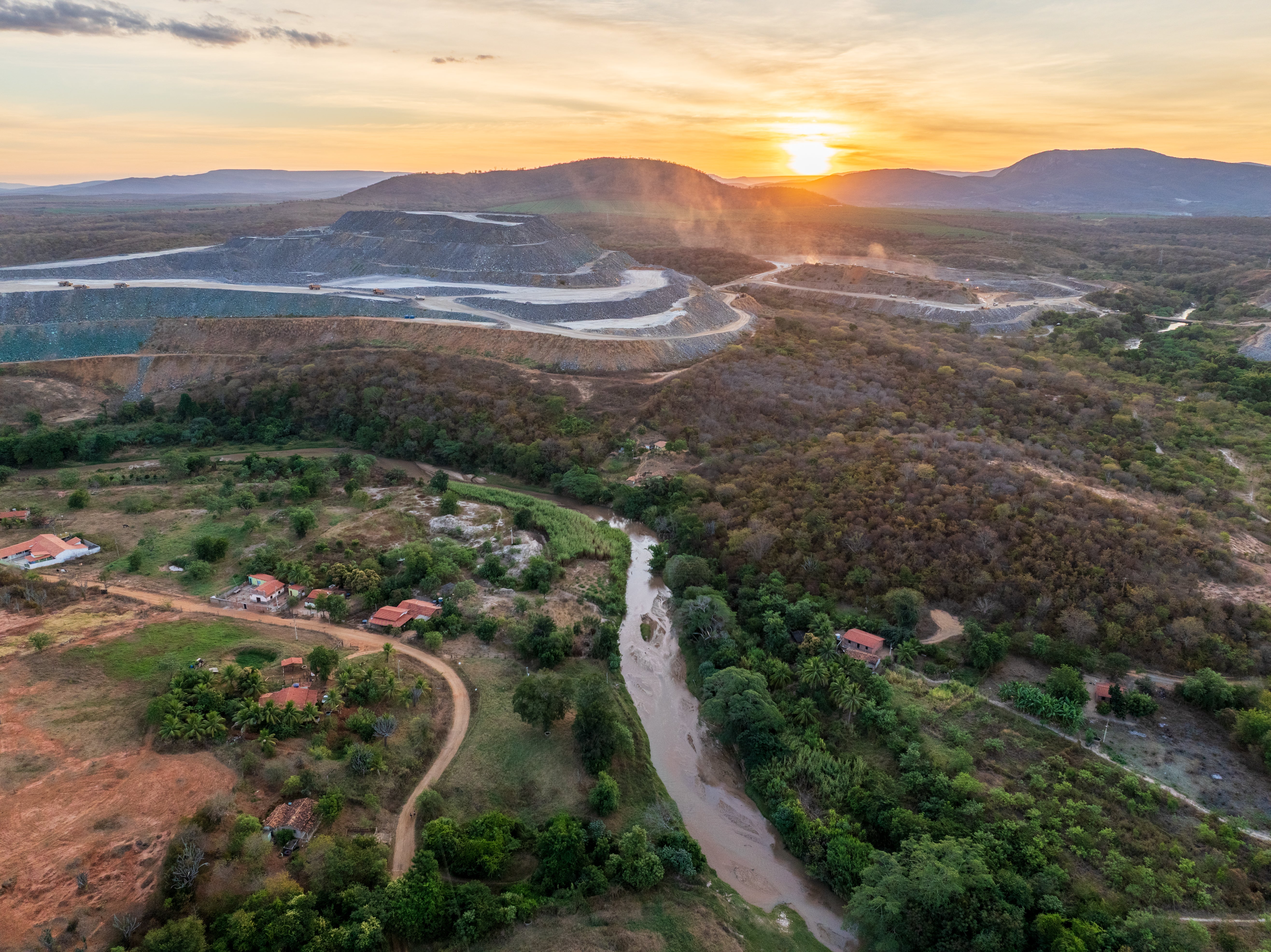
Top photo: View of Sigma Lithium’s tailings wall, located very close to the Piauí Poço Dantas Indigenous community. The community’s preschool can also be seen in the image. The Piauí Stream, part of the Jequitinhonha River family, runs between the community and the tailings structure before flowing into the Jequitinhonha River. Photo by Jamie Malcolm-Brown.