By Angel Yraê Ferreira (Payayá, CS Intern)
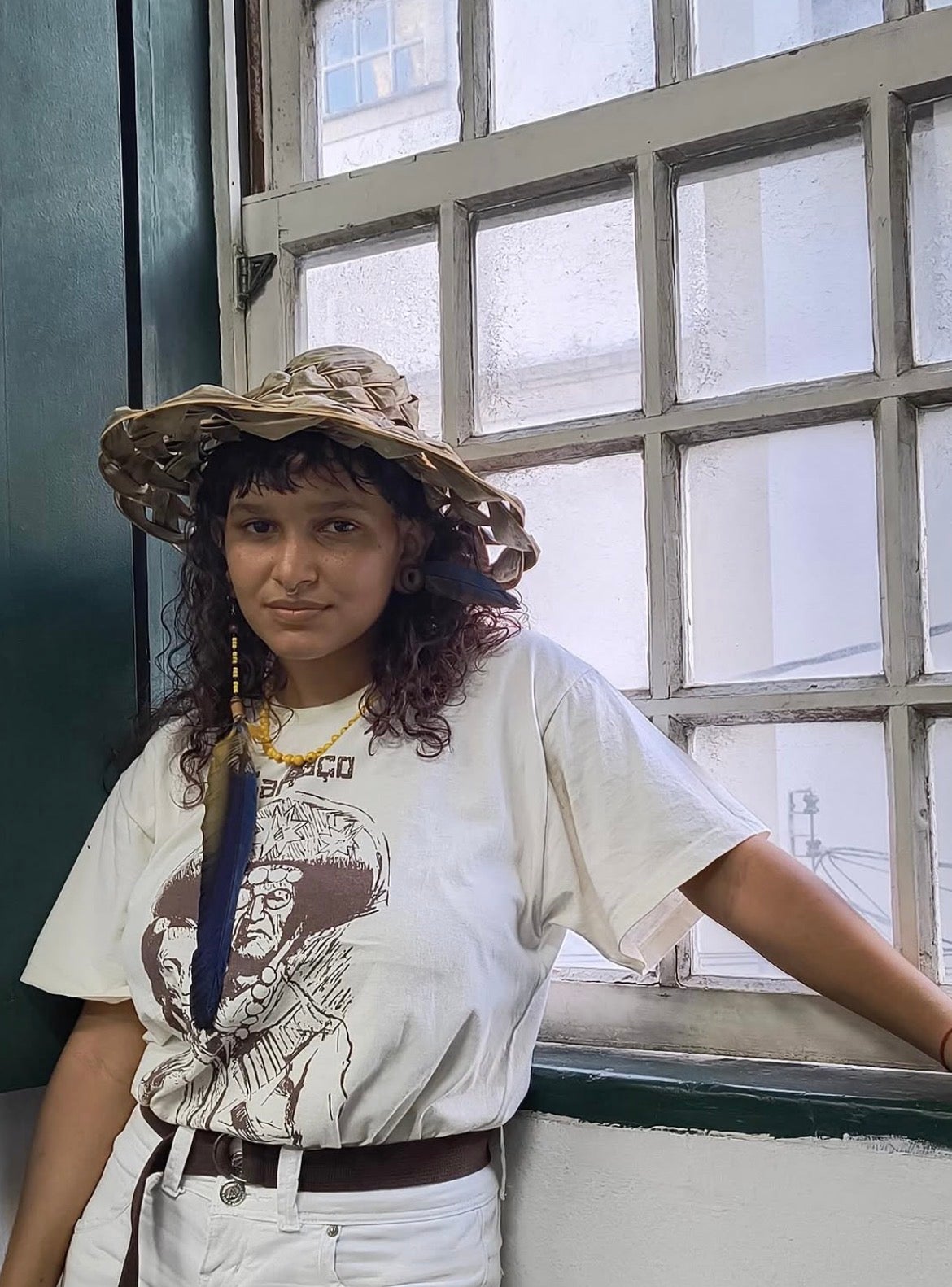
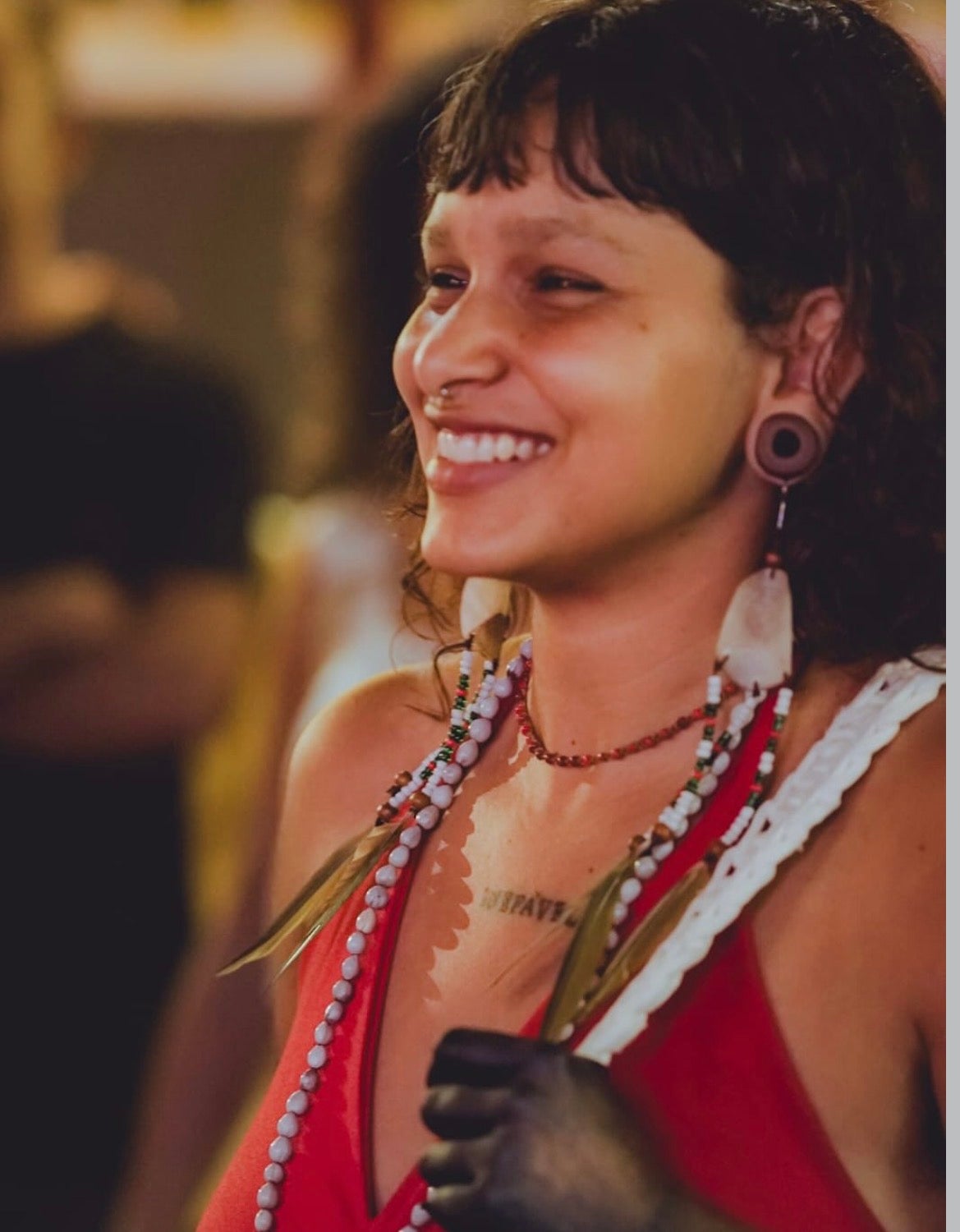
Mainstream 2SLGBTQ+ narratives often belong to bustling metropolitan centers, leaving those in the quiet expanses of the countryside to navigate their realities in isolation. It is against this backdrop of rural solitude that Yala (Payayá), a 25-year-old born in Pontalinda, in the countryside of São Paulo, Brazil, has forged a resilient path. As an interdisciplinary creator working with traditional crafts, audiovisual production, and ancestral graphisms, and as a producer for the landmark Indigenous anime "O Canto da Lua" (The Moon's Song), Yala uses storytelling to bridge generations. Refusing to fragment their identity to fit into spaces that demand the erasure of either their Indigeneity or their queerness, Yala’s work reclaims a space of total belonging. For them, true resistance is found not in urban spectacles, but in the everyday acts of survival: gathering with relatives to sing the toré, protecting the land, and reminding their community that diverse identities are not a threat to ancestral paths, but a beautiful detail of who they are. Cultural Survival recently spoke with Yala.
Cultural Survival: What does it mean to you to live Pride from an Indigenous identity, and how does it differ from more visible or urban 2SLGBTQ+ narratives?
Yala: For me, growing up in the countryside and always living in the interior, feeling pride in being 2SLGBTQ+ wasn't always easy. The references I sought out always came from the outside, never from people in my daily life. Finding references to 2SLGBTQ+ Indigenous people was even harder, so I often felt like people looked at me as if I were someone inherently wrong, something bizarre. Being Indigenous and 2SLGBTQ+ constantly intersect; sometimes you face prejudice for being Indigenous, other times for being 2SLGBTQ+. Over time, I learned to take pride in who I am and where I come from, but for a long time, and sometimes even today, being 2SLGBTQ+ in the interior is a very lonely process.
CS: Pride is often talked about as visibility, but visibility can also bring risk. How do you balance the desire to be seen with the need to protect yourself and your community?
Y: I think the desire to be seen, for me, is more about being seen for who I truly am by my own community rather than by outsiders. There is still a lot of prejudice against 2SLGBTQ+ people and Indigenous communities, and it often feels easier to hide who we are to protect ourselves, ensuring it doesn't end up bringing harm to our community either. However, I believe that hiding isn't the way. Instead, it’s about showing that we exist beyond the prejudice and the pejorative comments, and that we can also contribute positively to our community.
CS: What aspects of your culture, language, spirituality, or territory have helped you understand your gender identity or sexual orientation in a deeper way?
Y: It wasn't something direct within my culture that made me better understand my gender identity and sexual orientation, but rather the act of finding other people from my own people who are also 2SLGBTQ+. Being able to share and exchange experiences with them definitely gave me a stronger sense of belonging.
CS: What colonial ideas do you think still influence the way some communities understand gender, sexuality, or diversity?
Y: For a very long time, trans, lesbian, gay, and bisexual people were viewed as profane and wrong, as if we weren't capable of taking on positions of responsibility within our community and culture. The issue of tasks divided by gender binaries is also something that has directly affected me.
CS: When you hear the phrase “this didn’t exist before in our cultures,” how would you respond from your experience or from the memory of your Peoples?
Y: Coloniality distorted our histories to the point where some people think there is only one right way to exist, heavily impregnated by the ideas of the colonizer. If you have never seen this in our cultures before, it’s perhaps because it was simply too dangerous for 2SLGBTQ+ Indigenous individuals to truly show themselves, as was the case with Tibira, the first recorded Indigenous 2SLGBTQ+ person killed by homophobia in Brazil.
CS: What wounds are caused by having to choose between belonging to your Indigenous community and belonging to the 2SLGBTQ+ community? Is it possible to inhabit both without fragmenting yourself?
Y: I don't think these are things that can be separated within me; they are two elements that flow together in my being. However, there have been moments where I had to fragment myself to fit into certain spaces, choosing which identity was more appropriate to be shown there. It is something I do not like doing. I don't like annulling one part of myself to be another. I want to be embraced in my entirety.
CS: What does Indigenous 2SLGBTQ+ resistance look like beyond marches, flags, and institutional spaces?
Y: 2SLGBTQ+ Indigenous resistance also manifests in everyday life: when we meet with other relatives like us to practice our culture, such as singing the toré, performing a ritual prayer, studying our ancestral language together, taking care of the land, and talking and exchanging our life experiences.
CS: What role do Indigenous languages play in naming identities, affections, and bodies that often do not fit into Western categories like “gay,” “lesbian,” “trans,” or “queer”?
Y: Indigenous languages are incredibly important in naming our identities because the terms we know—lesbian, gay, queer—came from other countries and other cultures, and we often adopt them just to be able to communicate in the world we live in today. But having a name for your identity in an ancestral language feels very grounding; we feel much more represented.
CS: What would you say to organizations, media, or allies who want to support 2SLGBTQ+ Indigenous people, but sometimes end up using their stories in a tokenistic or extractive way?
Y: We need to go much further than mere visibility; we need to be seen in our entirety as vital pieces of our cultures. As a group living on the margins, we need this visibility to not just end with itself.
CS: Imagining a truly free future, what would an Indigenous community look like where 2SLGBTQ+ people are not only accepted, but recognized as bearers of knowledge, leadership, and healing?
Y: I believe it would be a place where our gender identity and sexual orientation would be respected and not viewed as a threat. It would be a place where these wouldn't be framed as an impediment to exercising our gifts and ancestral paths, but simply as a detail of our identity.