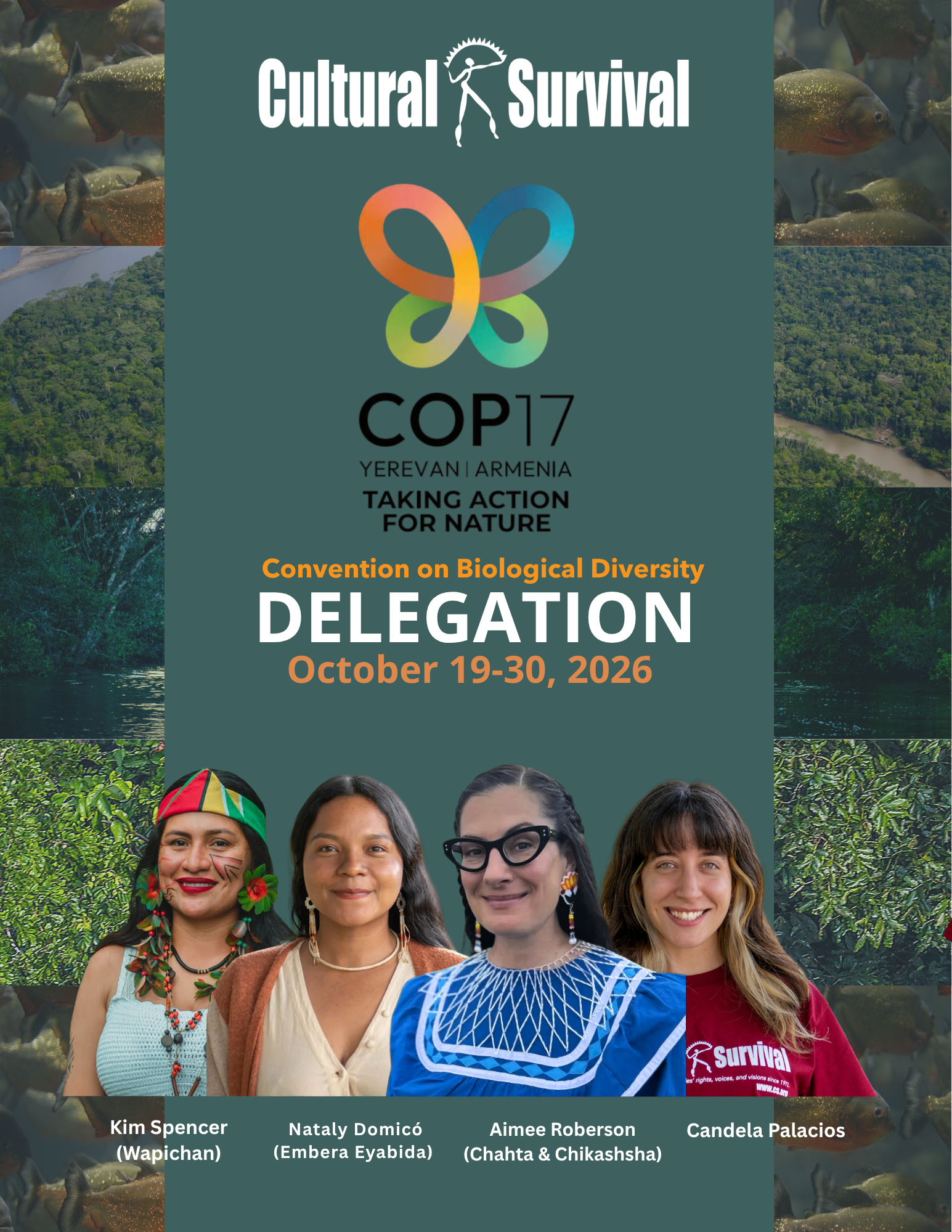
From October 19 to October 30, 2026, the United Nations Convention on Biological Diversity (CBD) Conference of the Parties (COP17) is happening in Yerevan, Armenia.
The event will be held in conjunction with the 12th meeting of the Parties to the Cartagena Protocol on Biosafety (CP-MOP-12) and the 6th meeting of the Parties to the Nagoya Protocol on Access and Benefit-sharing (NP-MOP-6). COP 17 will mark the first global review of collective progress towards the implementation of the Kunming-Montreal Global Biodiversity Framework (KMGBF). The meeting will bring together government representatives from the 196 countries that are Parties to the Convention, representatives of UN bodies, industry representatives, and observer groups, especially Indigenous Peoples, women, youth, and other rights holders.
Indigenous representation is essential in moving world leaders to take immediate action to protect biodiversity, and that is why members of our team will be attending the International Indigenous Forum on Biodiversity - IIFB (Indigenous Caucus) and joining other Indigenous and allied leaders in pushing policymakers for urgent and holistic responses to protect Nature. Proactive efforts to center, resource, and respect Indigenous rights, leadership, and stewardship must be prioritized in all layers of decision-making as we collectively engage to safeguard biodiversity.
Cultural Survival's in-person delegation includes: Aimee Roberson (Chahta/Chikashsha), Executive Director; Nataly Domicó Murillo (Embera Eyabida), Keepers of the Earth Fund Program Assistant; Candela Palacios, Executive Assistant; and former CS Youth Fellow Kim Spencer (Wapichana), conservationist, educator, and senior ranger from Guayana.
Our main messages and recommendations to CBD Parties:
-
Implementation of the Kunming-Montreal Global Biodiversity Framework must move from consultation to recognition: Indigenous Peoples are rights-holders, not stakeholders, and their decision-making, Free, Prior and Informed Consent (FPIC), and rights must be at the center of biodiversity and conservation action.
-
Indigenous-led conservation is an essential part of Target 3 (conserving 30% of land, waters and seas by 2030). Conservation measures must never cause dispossession or rights violations, and must recognize Indigenous Peoples’ rights to their lands, territories, waters and natural resources, and protect their traditional knowledge, innovations and practices from misuse and commercialization.
-
Direct, long-term funding must be provided to Indigenous Peoples and Indigenous-led organizations to support their self-determined priorities, and all biodiversity investments must be subject to rights safeguards, transparency and accountability.
-
The Subsidiary Body on Article 8J must institutionalize the good practices developed by its Working Group, with two co-chairs (one from the Parties, one nominated by the Indigenous Caucus) and the seven sociocultural regions.
“The cosmovisions, lifeways, and cultures of Indigenous Peoples emerge from our relationships to Mother Earth and include a deep sense of responsibility to care for the ecosystems we all depend on. However, our ability to steward ecosystems and biodiversity depends on maintaining our ancestral and self-determined lifeways, ceremonies, and economies, and relies on uninterrupted access to our lands, waters, and territories. Clearly, upholding the rights of Indigenous Peoples to self-determination and governance of our territories is critical to a future of mutual flourishing for the diversity of life on Mother Earth,” says Aimee Roberson.
Our delegation will host and participate in panel discussions and side events to share the work of our community partners in relation to Indigenous-led biodiversity conservation, meet with State delegations to share our recommendations on the Convention on Biological Diversity to place Indigenous rights at the center of the parties' discussions and decisions, and follow the discussions and communicate the agreements of the International Indigenous Forum on Biodiversity (IIFB), sharing developments with our audience on our platforms.
Follow us on Facebook, Instagram, LinkedIn, and TikTok as we share Indigenous voices from the ground and report on key actions and takeaways from COP17.
Join us at these events!
Monday, October 19, 2026, 10:00 AM to 11:30 AM Yerevan time
From False Solutions to Transformative Change: Defending Territories, Protecting Forests, Advancing Justice
Location: Main Stage, Green Zone
The Kunming-Montreal Global Biodiversity Framework (KMGBF) acknowledges the important roles and contributions of Indigenous peoples, local communities, and Afro-descendant peoples as custodians of biodiversity, while recognizing gender equality and human rights as key principles for its implementation. This session will explore women-led real solutions for biodiversity protection, presenting preliminary findings of a Gender-Just Real Solutions Map developed with organizations from Africa, Latin America and the Caribbean, and Southeast Asia. Through an evidence-based dialogue, the panel will showcase community practices, initiatives and transformative alternatives that advance ecosystem protection, uphold traditional knowledge and community rights, and promote human rights-based and gender-responsive approaches to addressing biodiversity loss. Community leaders and civil society experts will share experiences of the threats and pressures facing forests and communities across the Global South, including false solutions and extractivist projects, while highlighting transformative responses, grassroots strategies, and legal actions undertaken to defend territories, forests and communities, particularly the rights and leadership of women and youth.
Speakers:
- Valentina Figuera Martínez, Global Forest Coalition (GFC)
- Aimee Roberson (Chahta / Chikashsha), Executive Director, Cultural Survival
- Rysul Hasan, BELA
- Nazeli Vardanyan, Armenian Forests
- Tehmine Yenokyan, Green Armenia
Organizer: Global Forest Coalition
Thursday, October 22, 10:00 - 11:30 AM Yerevan time
Gobernanza Indígena en la Protección de la Biodiversidad/Indigenous Governance in Biodiversity Protection
Location: Blue Zone | IIFB/FIIB Action Zone
The panelists bring extensive experience in Indigenous governance, biodiversity conservation, and the defense of territories. Drawing on their diverse experiences and organizational processes, they have championed strategies and actions that place the ancestral knowledge, practices, and unique governance systems of Indigenous Peoples at the forefront. Indigenous knowledge systems have been fundamental to the care and conservation of nature. The panel aims to highlight the role that Indigenous organizational structures and governance systems have played in the administration, protection, and conservation of their territories. It also seeks to showcase how these forms of organization—rooted in ancestral knowledge—have yielded concrete, tangible results in biodiversity conservation.
Speakers:
- Jesús Amadeo Martínez, Foro Indígena del Abya Yala
- José Gudiño, La Red de Jóvenes Indígenas de Latinoamérica y el Caribe
- Amado Ramos, El Consorcio TICCA, and Organización Los Pasos del Jaguar de El Salvador.
- Nataly Domicó Murillo (Embera Eyabida), Keepers of the Earth Fund Program Assistant (Moderator)
Organizers: Cultural Survival, Foro Indígena del Abya Yala (FIAY), la Red de Jóvenes Indígenas de Latinoamérica y El Caribe, and el Consorcio TICCA
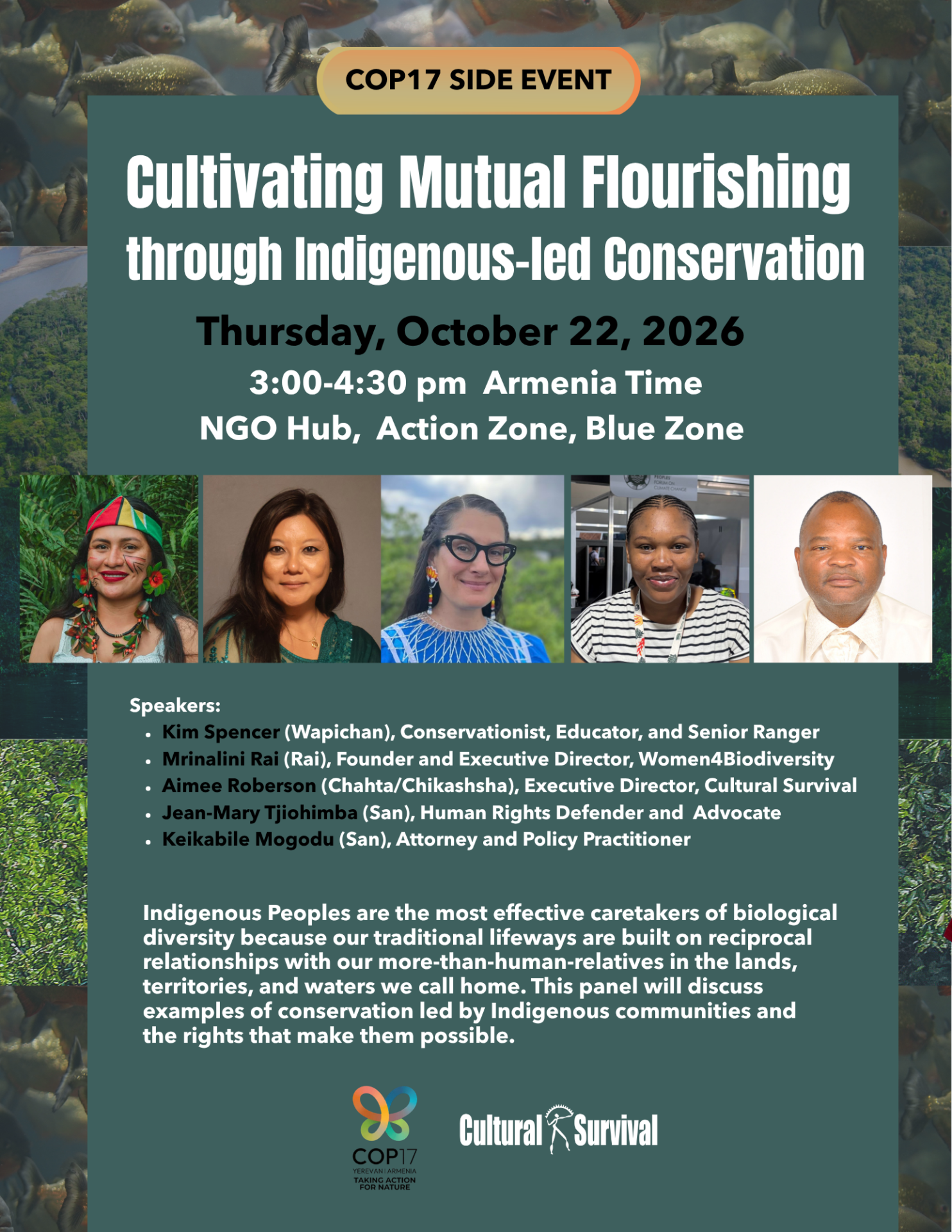
Thursday, October 22, 2026, 3:00-4:30 pm, Yerevan time
Cultivating Mutual Flourishing through Indigenous-led Conservation
Location: NGO Hub of the Action Zone of the Blue Zone
Indigenous Peoples are the most effective caretakers of biological diversity because our traditional lifeways are built on reciprocal relationships with our more-than-human-relatives in the lands, territories, and waters we call home. Our knowledge systems are intertwined with the natural laws of Mother Earth, sustained over millennia and rooted in our cosmovisions, values, languages, and cultures.
This panel will discuss examples of conservation led by Indigenous communities and the rights that make them possible. Panelists will share holistic approaches to caring for the diversity of life so that it thrives for many generations to come while underscoring the critical need for recognition of Indigenous Peoples as rights holders, not stakeholders. We will illustrate why, in implementing global commitments such as the Kunming-Montreal Global Biodiversity Framework, the most effective and enduring conservation efforts are those that center Indigenous self-determination, territories, and inherent rights.
Speakers:
-
Aimee Roberson (Chahta / Chikashsha), Executive Director, Cultural Survival
-
Mrinalini Rai (Rai), Founder and Executive Director, Women4Biodiversity
-
Kim Spencer (Wapichan), Conservationist, Educator, and Senior Ranger
-
Jean-Mary Tjiohimba (San), human rights defender and advocate
-
Keikabile Mogodu (San), Attorney and Policy Practitioner