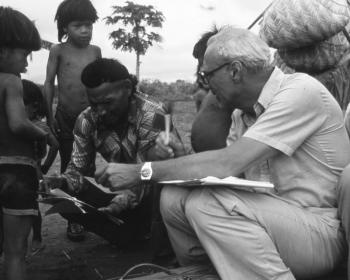


On June 21, 2012 at 3:30pm EST, Cultural Survival's Deputy Executive Director, Mark Camp, will be on CO-OP Radio Vancouver, 102.7 to speak about "Our Voices on the Air: Reaching New Audiences through Indigenous Radio" conference. "Our Voices on the Air" an initiative with the Recovering Voices Initiative at the Smithsonian Institution to facilitate endangered language revitalization by producing a conference on radio programming in Indigenous languages.

Listen here:
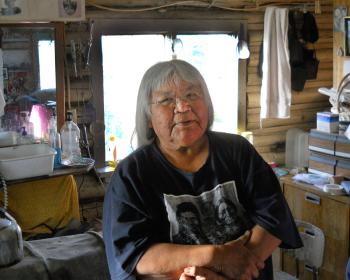
 

Participants from Cambodia, Russia, Thailand, the United States, and Uruguay gathered at 2 UN Plaza last week during the final week of the United Nations Forum on Indigenous Issues in New York City for Cultural Survival’s workshop "Indigenous Language Survival and Revitalization: Film, Radio, Web, and Growing Speakers from the Grassroots.” Hosted by Cultural Survival’s Endangered Languages Program with staff from Cultural Survival's Community Radio Program, and the Smithsonian Institution’s Film and Video Center (FVC) of the National Museum of the

Cultural Survival’s Endangered Languages Program and Makepeace Productions are teaming up once again, with support from the National Endowment for the Arts’ ARTWORKS program and the Center for Independent documentary, to develop enhancements for the OurMotherTongues.org companion website to the award-winning documentary Âs Nutayuneân—We Still Live Here. The film

On Tuesday, May 15, 2012, at the 11th session of the UN Permanent Forum on Indigenous Issues in New York, Cultural Survival, Living Tongues Institute, National Museum of the American Indian Film and Video Center, and Underrepresented Nations and Peoples Organization (UNPO) Montagnyard Youth Project are organizing a side-event on language revitalization tools. Join us.

On May 4, 2012, United Nations Special Rapporteur on the Rights of Indigenous Peoples, James Anaya, concluded his official twelve-day visit to the United States. This is the first time a UN Special Rapporteur on the Rights of Indigenous Peoples has visited the United States to investigate human rights abuses of Indigenous Peoples. In the statement below released on May 4, 2012, he urged the United States to strengthen federal and state measures to address the significant issues affecting Native American, Alaska Native and Hawaiian peoples throughout in the country. Mr.

“Our language is the number one source of our soul, our pride, our being, our strength and our identity.”-- Indigenous Language Instructor, Cultural Survival Quarterly, 2010

Languages are vanishing

Language experts believe that 90% of the world’s estimated 6,000 languages could disappear entirely by the end of this century. Indigenous Peoples face myriad socio-economic pressures and discriminatory policies forcing youth and adults alike to replace tribal languages with the dominant languages of the larger societies in which they live.

The United Nations Special Rapporteur on the Rights of Indigenous Peoples, Professor James Anaya, will carry out an official visit to the United States of America from April 23 to May 4, 2012. He will examine the human rights situation of Native Americans, Alaska Natives, and Native Hawaiians (estimated population of 2.7 million). His visit consists of meetings and consultations with federal and state government officials, as well as with Indigenous nations and their representatives in the Southwest, Midwest, Alaska, Pacific Northwest and Washington, D.C.

Subscribe to United States