
Indigenous Peoples, our other-than-human relatives, and grassland ecosystems have lived together in harmony and mutual flourishing for thousands of years. Grasslands evolved through interconnected social-ecological processes and knowledge systems enacted by Indigenous Peoples in close relationships with Mother Earth.
The Central Grasslands of Turtle Island encompass thousands of diverse Native Nations and three nation states. They support people, plants, animals, soil, waterways, and much more in a collectively orchestrated grand symphony of life, with each being, flow, and entity playing its part. Bison, prairie dogs, and plants, among other relatives, share our grasslands and play important roles in Indigenous spirituality and subsistence. Indigenous Peoples understand our roles in these ecosystems through our lifeways, languages, cultures, and ceremonies, which teach us how to care for our relatives and the grasslands that support us all. Rarámuri scholar Enrique Salmón named this sacred reciprocity “kincentric ecology,” an example being the “three sisters:” maize, beans, and squash. Indigenous Peoples have planted them together since time immemorial across much of Turtle Island. Indigenous people in the south of Turtle Island domesticated maize from the wild teosinte grass and shared it across Abya Yala. When planted together, the sisters support, nourish, and protect each other, living together in harmony as they—and the people who planted them—grow and thrive. In return, Indigenous Peoples honor the three sisters and other life forms we depend on through prayer and ceremony, which are integrated into planting, harvesting, sharing, and feasting.
Over the past 500 years, western society, prioritizing profit over people, has pushed grasslands beyond their limits. It did not value what Indigenous communities understood about the complex relationships within these ecosystems and the consequences of ignoring this knowledge. Western colonial settlers led a genocide against Indigenous Peoples through food system decimation, land theft, treaty violations, forced assimilation, and child abduction. The colonial legacy continues today through land conversion, including the overexploitation of our sister maize, extractivism, dams flooding Native land, environmental pollution harming food supplies, and institutional oppression that prevents societal change. The genocide of Indigenous Peoples is an unfathomable crime, and the removal of our ecological wisdom and thousands of years of experience from the land negatively impacts all of Turtle Island.
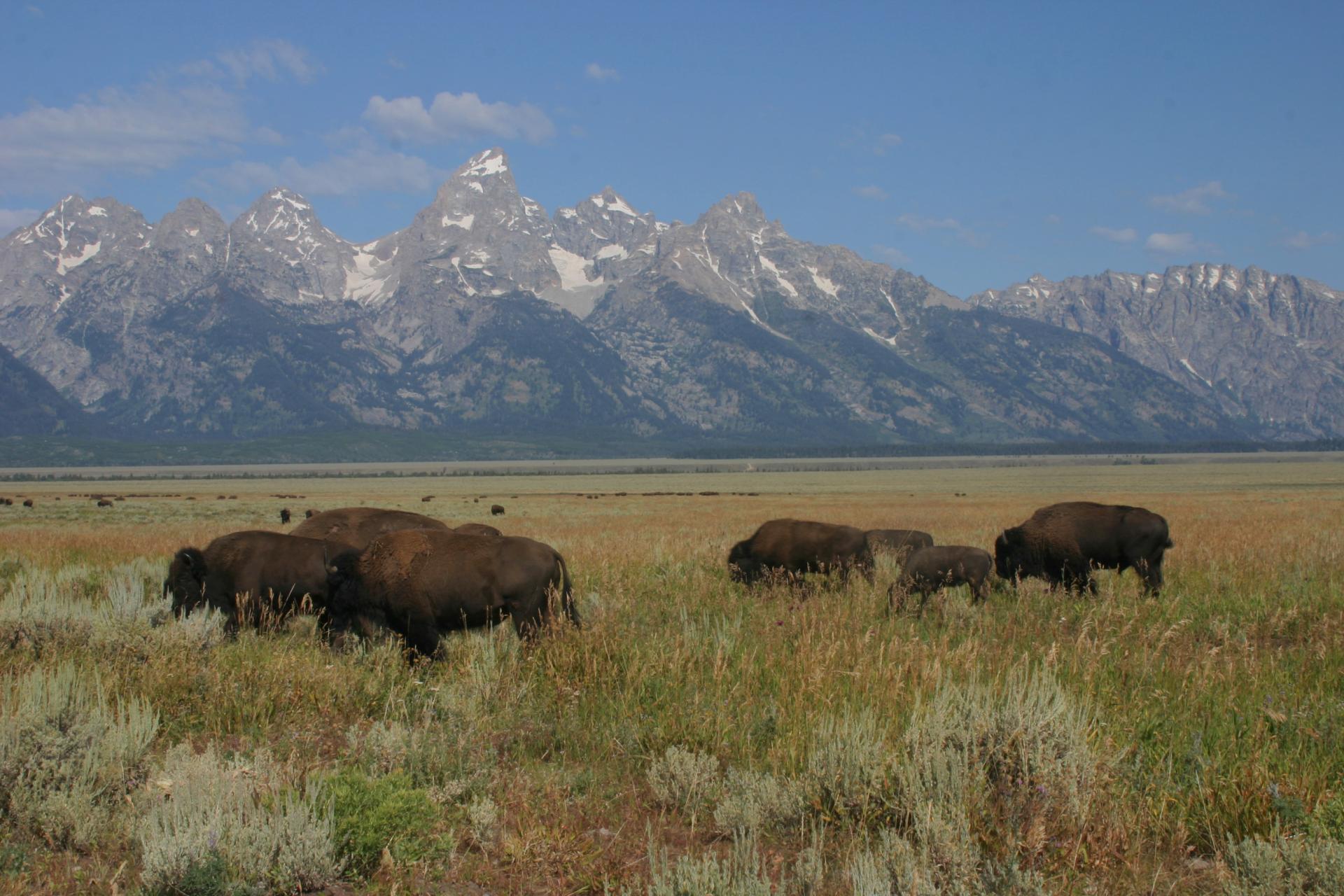
Bison in Grand Teton National Park, Wyoming. Photo by Christian Artuso.
When Native communities were removed from our homelands, our social-ecological relationships were disrupted and the health of grassland communities was degraded. Land development continues to disrupt processes that support soil and water cycles and wildlife habitat. Industrial agriculture, including overexploitation of our sister maize, pollutes the soil with overuse of pesticides and fertilizers while depleting the soil of nutrients, threatening human health and food production. Overgrazing of domestic animals reduces plant cover and compacts the soil, thereby decreasing water infiltration and increasing the risk of erosion, which harms both water and soil health. The elimination of fire disturbance foments the spread of woody plants that alter water and soil dynamics. Climate change compounds these impacts on grasslands, altering temperature and precipitation patterns. Western conservation efforts aim to mitigate impacts, but few focus on supporting the Indigenous Peoples, communities, and knowledge systems essential to addressing today’s global challenges.
Despite the massive disruptions, grasslands still provide for us. Indigenous communities, with our land-based languages, cultures, food systems, and spiritualities, persevere and embody the social-ecological relationships needed for the health of grasslands and ecosystems. Many of our ancestors hid seeds in the seams of their clothing when they were forcibly removed from our homelands, carrying medicinal plants and the seeds of future food for their descendants, with which we are still in relationship today. When colonial governments banned our traditions, our ancestors conducted sacred ceremonies in secret, honoring our responsibilities to live in balance and harmony with Mother Earth. Despite this ongoing violence, Indigenous Peoples of the grasslands have continued to share culture, languages, and traditions and worked to preserve our traditional ways of knowing that have always nurtured our prairies.
Grasslands cannot heal without Indigenous Peoples and their knowledge, just as plants cannot persist without the intricate relationships with the soil and its microorganisms. Indigenous Peoples have always known that we humans depend on other life forms and ecosystems for nourishment and survival. These systems, beings, flows, and entities in turn, rely on humans to create the conditions for life to flourish. Only in the past few decades has western science recognized that the kincentric relationships that Indigenous Peoples have with wildlife and plants are the basis of conservation and restoration. Western researchers are now recognizing that people and ecosystems are inseparable, understanding that the world operates through interconnected and reciprocal processes that function in social-ecological systems, a western term reflective of how Indigenous Peoples have always understood Mother Earth.
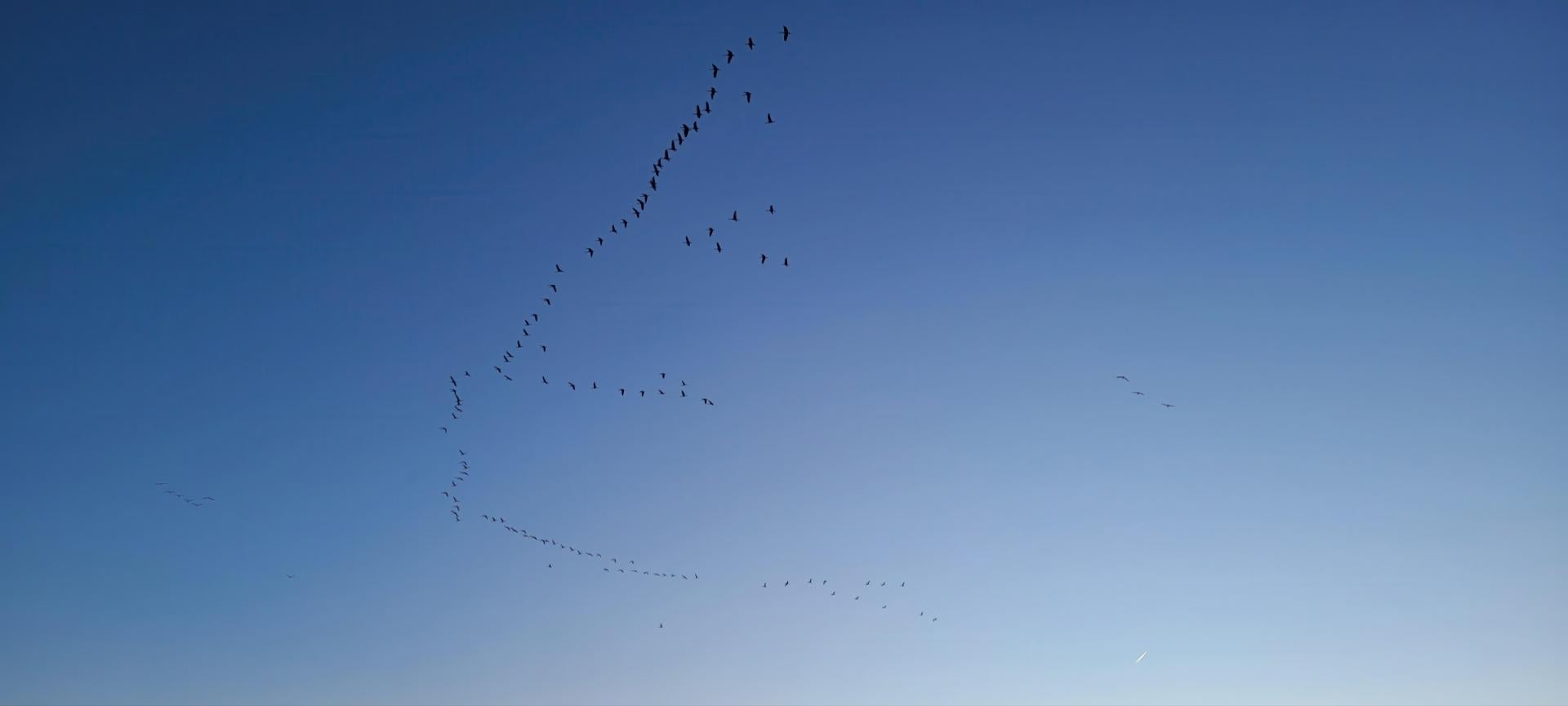
Crane migration across the Great Plains. Photo by Joseph Gazing Wolf.
As we confront the legacy of colonialism, Indigenous Peoples are advancing perspectives that have long been ignored, excluded, and appropriated in western society. We are ensuring that we are not only included in the conversation but also acknowledged for our strength in solving global social and environmental crises.
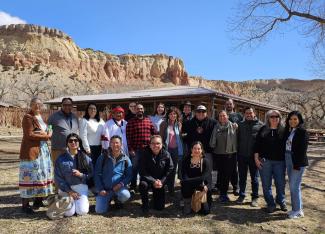
The Indigenous Kinship Circle is a cross-boundary community of practice for Indigenous Peoples and allies to advance the well being of our communities across the Central Grasslands of Turtle Island. We aim to strengthen capacities, share perspectives, find support, learn from one another, elevate Indigenous voices, collaborate on projects, and advance Indigenous priorities and leadership in western environmental conservation and science sectors, which have largely excluded Indigenous people. The connections form the basis for guidance we share with the broader conservation community to conserve the Central Grasslands as we create bridges with western environmental science and conservation groups to build understanding, respect, and inclusion of Indigenous perspectives.
The Indigenous Kinship Circle emerged from the Central Grasslands Roadmap, a multi-Nation and sector collective to increase conservation of North America’s Central Grasslands, which span 500 million acres across Indigenous lands, Canada, the United States, and Mexico. Indigenous participants of the inaugural Central Grasslands Roadmap Summit in 2020 joined with allies to form the Indigenous Kinship Circle. While still connected to the Central Grasslands Roadmap, our group has expanded and functions independently, advancing the diverse priorities of Indigenous communities in grasslands. We are conserving grasslands while supporting Indigenous perspectives and needs, elevating Indigenous voices, and restoring lands to Indigenous caretaking.
The Indigenous Kinship Circle informs and engages Indigenous grassland leaders and organizations. Over the past three years, we organized visits with Indigenous communities in their homelands in southern Turtle Island (Mexico) to learn from their perspectives. We also hosted an in-person retreat bringing together Indigenous people and allies from across Turtle Island to share experiences, knowledge, and plan for the future. Through personal communication and presentations, we have raised awareness about the Central Grasslands and the Indigenous Kinship Circle and conducted equitable engagement to support Indigenous people who want to participate in the gatherings and activities of the Central Grasslands Roadmap. As we grow, our intent is to rekindle connections, build resilience, and strengthen our cross-boundary kinship circle among Indigenous people and allies to advance the well being of our communities across the Central Grasslands.
Authors from the Indigenous Kinship Circle include Aimee Roberson (Choctaw and Chickasaw), Katia Carranza, Cheyenne Ironman (Dakota), Joseph Gazing Wolf (Hunkpapa Lakota), Donna van de Velde (Lakota and Métis), and Francisco Muñoz-Arriola. Learn more about the Indigenous Kinship Circle at indigenouskinshipcircle.com.
Top photo: An Indigenous Kinship Circle gathering at Ghost Ranch in New Mexico. Photo courtesy of Indigenous Kinship Circle.