Public unveiling of the White Pine Gathering Circle monument design featuring the Wampanoag Singers and Dancers
MEDIA CONTACT: Steven Peters | Lead Designer, SmokeSygnals | steven@smokesygnals.com | 774-219-9747

Public unveiling of the White Pine Gathering Circle monument design featuring the Wampanoag Singers and Dancers
MEDIA CONTACT: Steven Peters | Lead Designer, SmokeSygnals | steven@smokesygnals.com | 774-219-9747
By Ekraj Chaudhary, Manager, Radio Gurubaba 89.7
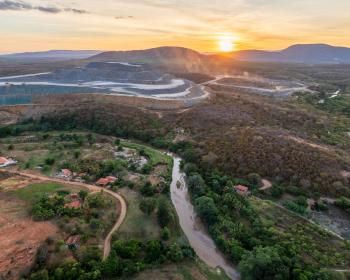
Every year, as monsoon clouds gather over western Nepal, the Babai River begins to rise. For many lowland villages in Bardiya, this once meant fear and uncertainty. Today, the response is different: it is calm, organized, and deeply rooted in community action.
September 13, 2026, marks 19 years since the United Nations General Assembly adopted the UN Declaration on the Rights of Indigenous Peoples (UNDRIP).
By Cesar Gomez (Maya Pocomam, CS Staff)
Freedom of expression is an inherent right for everyone, free from censorship or prior authorization—principles enshrined in both international and Inter-American human rights systems. However, for the Indigenous Peoples in Guatemala, this right has historically been subject to constant violation, alongside the denial of other fundamental rights.
By Mara Moldovan (CS Intern)
For centuries, the Crimean Tatars have lived on the Black Sea peninsula of Crimea, where their language, traditions, and history are closely tied to the land.
But since Russia’s occupation of Crimea in 2014, many Crimean Tatars have been forced into exile or now live under occupation. Their situation raises a question that Europe still struggles to answer: what does it mean for an Indigenous People to defend identity, continuity, and political belonging when access to their homeland is disrupted by occupation and war?

Land Acknowledgement
We acknowledge that we are headquartered on Massachusett land, in Cambridge, MA, and we thank the past, current, and future Indigenous stewards of this territory.