
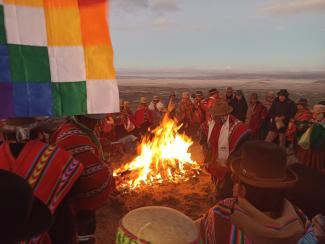
When the COVID-19 pandemic reached the cold, high-altitude territories of the Pukina Nation in Bolivia, the conventional healthcare system collapsed. The nearest health center was left without a doctor. The closest hospital was hours away. The Pukina Peoples did what their ancestors had done for centuries: they turned to their plants, their traditional healers, and the strength of their community organization.
This is not merely a story about medicine. It is a story about how a Nation, which for decades lived under imposed structures that fragmented its ancestral ayllu (community) system, rediscovered itself and protected its people from a pandemic. The Marka Cololo Copacabana Antaquilla is the ancestral territory of the Pukina Nation, located about 300 kilometers northwest of La Paz, in the Apolobamba National Integrated Management Natural Area. The elevation ranges from 3,858 to 5,580 meters above sea level, from cold valleys up to the high puna (highland plains), where the air is thin and the mountains touch the sky.
The Pukina Nation comprises four markas (regions)—Agua Blanca, Cololo, Antaquilla, and Puyo Puyo—and 10 ayllus, home to approximately 2,000 people. But the number is not what matters most; rather, it is the fact that this Peoples has decided to reconstitute themselves, reclaim their own organic structure, and once again walk with a distinct identity of their own. The ayllus first organized to demand recognition of their Communal Land of Origin in 1999. In 2001, they obtained their legal status and ethnic certification, and eventually secured land titles for two land blocks totaling nearly 40,000 hectares. In 2012, they approved their first Plan de Vida (Life Plan), called Sumanu, a Pukina word meaning “a state of integral existence, living a holistic life among ayllus and markas.” Though the majority of Pukina people today speak Aymara and/or Quechua, their native language is currently undergoing a process of revitalization; in 2023, they established the Pukina Language and Culture Institute.
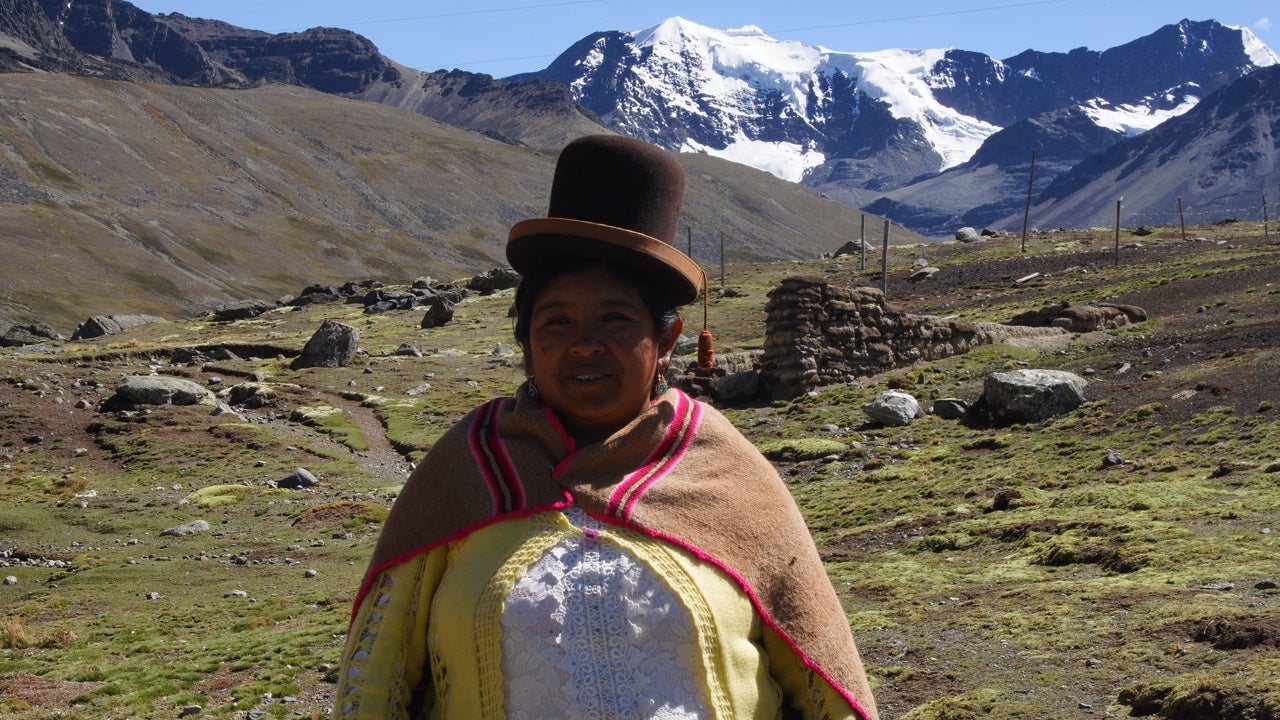
Bernardina Quispe.
The Pukina have a three-level hierarchical organizational structure: the Pukina Nation, headed by its highest authority, the Jilir Apu Mallku; the markas, each led by the Mallkus de Marka; and the ayllus, led by the Irpiri Mallku. Strategic decisions are made during the tantachawi (assembly), which is held four times a year on a rotating basis across the various markas. Additionally, the authorities from each marka and ayllu meet on a monthly basis.
The Plants that Sustained a Nation During the Pandemic
During the COVID-19 pandemic, the markas’ traditional healers—yatiris, midwives, and herbalists—took charge of caring for their people. Through interviews with traditional healers, field surveys, and workshops conducted across the four markas, 93 medicinal plants were used to treat various ailments, with 16 native species employed specifically to combat the coronavirus. The traditional healers prepared mates (herbal infusions), decoctions, and steam inhalations. They blended various plants, sometimes adding honey or urine, and provided clear instructions to the sick on how to treat themselves. The most widely used plants belong to the Asteraceae family, known for its properties in relieving fever, coughs, and pulmonary ailments.
Juan Pablo Tito Kuno, a traditional healer from Agua Blanca, treated 70 people with COVID-19 symptoms with a blend of 12 different plants. “First, I test to ensure the medicine is effective; only then do I administer it to people. Since I consistently take my plant-based remedies, I never fell ill with COVID,” he recounted in 2021. Delfina Casilla, a traditional healer from Nube Pampa, treats susto (shock) and tends to the ánimo (spiritual strength). “Simply by looking at people’s faces and listening to my heart, I know what is ailing them. What we eat and drink gives us energy; it makes us happy and strengthens us—both in energy and spirit. That is why plants are so vital: they heal both the body and the spirit. We must maintain balance,” she says.
Traditional healers in the Pukina Nation face various challenges. The knowledge of Elders is at risk of being lost. Midwife Justiniano Mayhua, for one, learned everything through practice but never found anyone to whom he could teach; he has since passed away. According to the traditional healers themselves, many young people no longer place much importance on medicinal plants and prefer to visit conventional doctors. Carmen Mamani, a healer from Agua Blanca, says, “Young people don’t attach much importance to medicinal plants; they go to the doctor. But because of this disease, some are now willing to learn and have shown interest.”
Manuela Mendoza, another midwife, expresses a common wish: “It would be good if they gave us a certificate so that we could be recognized as traditional healers of the marka. That way, we could go to other places to provide training,” she says. There is also a shortage of financial resources. Guillermo Saturnino Mayta, who treated over 1,000 people during the pandemic before dying in an accident, dreamed of having a small laboratory to produce plant-based medicines in larger quantities. “That way,” he used to say, “we could cure many more people.”
The Pukina Nation does not wait for outside aid; they organize from within. They constructed the Sumanu Life Plan (2023–2032) as a roadmap to guide the management of their territory, the strengthening of their culture, and the care of their people. This plan seeks to revitalize traditional medicine, bolster the capacities of traditional healers, and ensure that their knowledge is passed down to future generations.
With funding from Cultural Survival’s Keepers of the Earth Fund, they have already carried out a project to document and preserve traditional medical knowledge in the context of the pandemic. This initiative involved conducting interviews, undertaking field excursions with traditional healers, collecting plant specimens, and holding participatory workshops. And they produced a book—from which we have drawn this story—so that this knowledge would not be lost.
As the authorities of Agua Blanca said in 2021: “We want to reclaim our ancestral knowledge. We healed ourselves using our plants because we had no medicines, and doctors were unwilling to treat us. We were also afraid to go to the doctor. We know how vital our medicinal plants are, and we realize that the younger generation no longer recognizes them. That is why we want training sessions to be held—so that our traditional healers can teach us—and why we want to create a book of the Marka’s medicinal plants, ensuring our knowledge is never lost.”
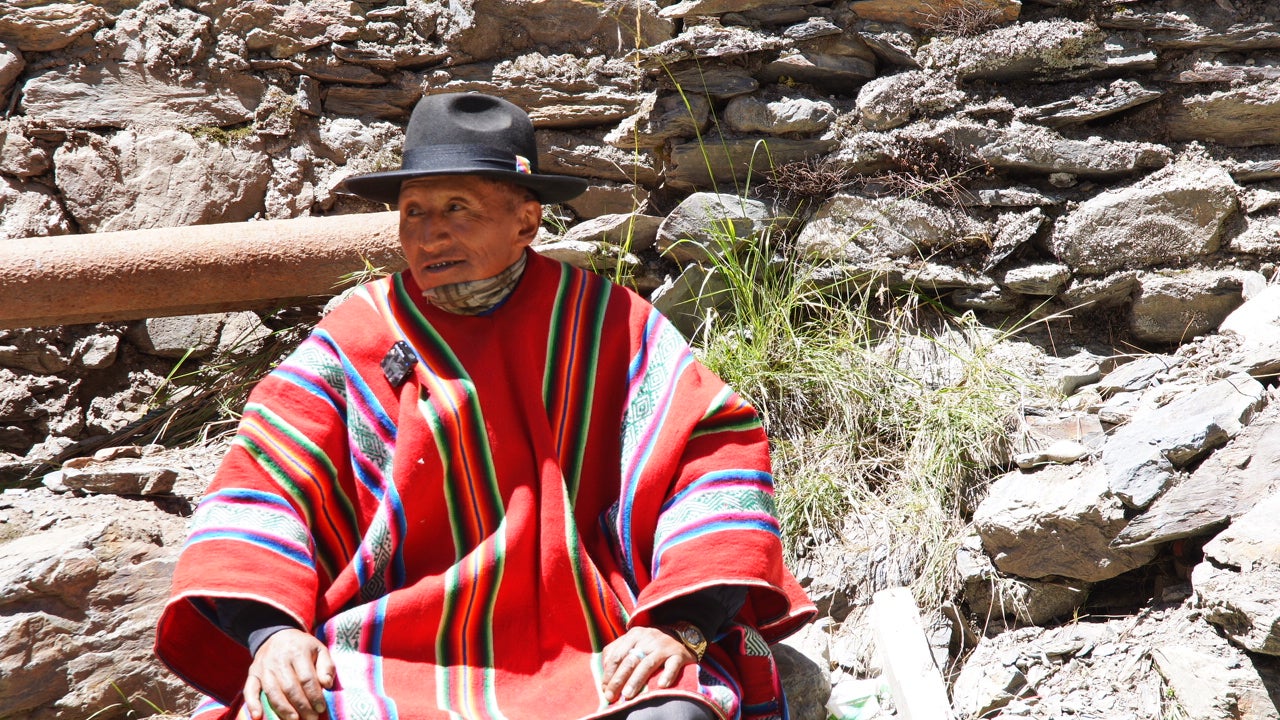
Don Pablo Tito Kuno.
Indigenous Traditional Knowledge is medicine. When the pandemic struck, the Pukina knew exactly where to find the medicines: on the hillsides, near the high-altitude wetlands, among the rocks close to the snow-capped peaks. The plants were close at hand, as they always have been. The Pukina also did not act in isolation. They acted as a marka—as ayllus, as a Nation. Their authorities coordinated efforts, committees organized logistics, and traditional healers worked side by side with their neighbors. Writing and documenting was an act of resistance: by recording the names of the plants, taking photographs, and documenting preparation methods, the Pukina ensured that when a traditional healer passes away, the knowledge does not die with them. Traditional healers also conducted workshops in schools for children and youth to disseminate knowledge to the next generations so that it is not lost.
The reconstitution of the Marka Cololo Copacabana Antaquilla is not finished. It is a path under constant construction, sustained by the participation of the ayllus, the commitment of traditional authorities, and the collective will to remain the Pukina Nation. For Indigenous Peoples, the message is clear: the knowledge of their ancestors is not merely a relic of the past. It is a living, powerful resource for confronting the challenges of the present.
This article is based on “Medicina tradicional de la Marka Cololo Copacabana Antaquilla Nación Pukina frente al COVID-19 y otras enfermedades (Traditional Medicine of the Marka Cololo Copacabana Antaquilla Pukina Nation Against COVID-19 and Other Diseases” (2026).
Top Photo:Community gathering of the Pukina Nation members.
All photos courtesy of Marka Cololo Copacabana Antaquilla.