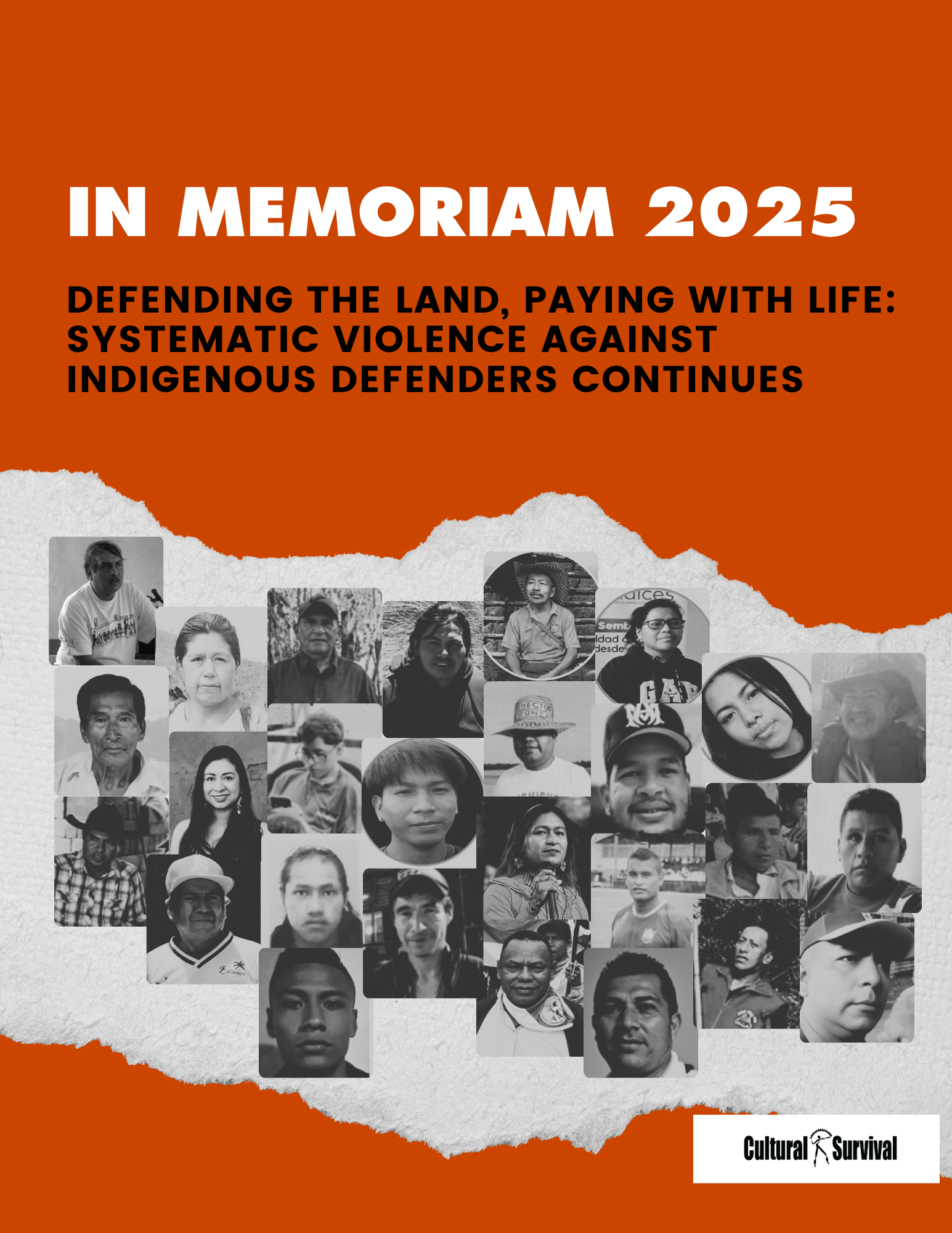
On March 10, 2026, Cultural Survival announced the release of its annual "In Memoriam" report, documenting the harrowing murders of 46 Indigenous land and rights defenders across Latin America in 2025. The report underscores the persistent and systemic crisis facing Indigenous Peoples, who are disproportionately targeted for their essential work in stewarding and protecting vital ecosystems and territories.
Latin America remains the world's most dangerous region for land defense, accounting for 82% of global cases of attacks on environmental defenders. Indigenous protectors face a double threat: defending rights and the environment, and being Indigenous, with 33% of all murdered defenders in 2024 being Indigenous. The “In Memoriam” highlights that the vast majority of attacks—over 95%—are rooted in the defense of lands and territories from extractive industries.
Key Points Highlighted:
-
Sectors of Conflict: Mining ranks first among the sectors with the highest number of murders, followed by logging and agribusiness. These industries frequently encroach upon Indigenous territories due to their wealth of natural resources.
-
Impunity Reigns: The killings as the "tip of the iceberg." In some Latin American countries, the overall impunity rate can be 90% or higher, a figure that is often surpassed when it comes to crimes against Indigenous defenders, as authorities tend not to conduct thorough investigations.
-
Emerging Trends: The report highlights worrying new patterns, including the targeting of Indigenous defenders involved in international advocacy and a pattern of false accusations—such as terrorism—used to criminalize their land defense work.
-
Case Spotlights: The report includes profiles of murdered defenders across the region, including the murder of Vicente Fernandes Vilhalva (Guaraní-Kaiowá) in Brazil by agricultural militias following a territorial reclamation, the assassination of Francisco Marupa (Leco) in Bolivia for his opposition to illegal mining in Madidi National Park, and multiple killings in Colombia—the country with the highest number of murders globally—such as traditional doctor Jose Albeiro Liz Muchicon (Nasa) and youth leader James Tomás Guanga Quelal (Awá).
"The loss of 46 Indigenous defenders in a single year is a profound tragedy that affects us all," stated Alicia Moncada (Wayuu), Cultural Survival Director of Advocacy and Communications. "These individuals were the protectors of our planet, holding invaluable knowledge about how to safeguard our ecosystems. Their murders are not isolated incidents but a systemic crisis intended to intimidate and close civic space. We publish this report to honor their lives, their work, and what they stood for. Cultural Survival is committed to uplifting Indigenous voices and continuing our work for justice alongside the affected communities."
Cultural Survival compiled these cases from media reports, communities, and partner organizations, with the goal of making all names and legacies of defenders known, regardless of media coverage, and to work for justice for those affected. When we receive cases from partner communities that have not yet been published, we ensure that it is safe to publish them, always with the community's consent.
The report calls on national governments and the international community to take decisive action to uphold the existing legal frameworks, such as the Escazú Agreement, to ensure the effective protection of human rights and land defenders and to combat the pervasive impunity that enables these crimes.