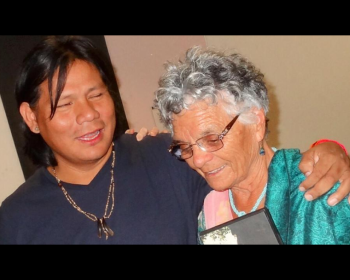
In December, Brazil’s Indian Agency (Fundação Nacional do Índio) approved delimitation of the 146,000 hectare Wedezé Indigenous Reserve in the state of Mato Grosso. Occupied by the Xavante people since the mid-1800s, the area was illegally sold to private interests in the 1950s and to accommodate its new owners the Indigenous residents were resettled elsewhere in the 1970s. The reserve includes the site of the historical village São Domingos, where Cultural Survival’s founder David Maybury-Lewis did ethnographic research in the 1950s.
In another turn in the ongoing law suit over construction of the Belo Monte dam in Brazil, a district federal court ruled on November 9th that Indigenous Peoples who oppose construction of the dam on the Xingu river do not have the right to Free Prior and Informed Consent on the project because it is not located on their traditional territory. This decision contradicts the Brazilian Constitution as well as Convention 169 of the International Labor Organization and the UN Declaration on the Rights of Indigenous Peoples, both of which Brazil has endorsed.
On October 17, 2011, a Brazilian federal judge ruled that the controversial Belo Monte Dam licenses are illegal and should be revoked since the Brazilian government did not hold proper consultations with Indigenous communities that would be affected by the project.
A Brazilian judge brought construction of the Belo Monte Dam project to a halt last week as he ruled in favor of environmental activists to protect fish species and the Indigenous people who depend on them for food and livelihoods.
In April of 2001, Global Response launched a campaign to stop the construction of the Belo Monte Dam on the Xingu River in Brazil. Now, ten years later, after major international protest, the dam has received it's final approval and will soon begin construction.
The on-again-off-again Belo Monte dam has been halted once again by a judge in Brazil after being the go-ahead by Brazil's president last year. The gigantic dam would flood some 190 square miles of rainforest and displace multiple Indigenous communities, who have been protesting the dam for years. The judge's ruling cited environmental concerns rather than the human rights issues, but if the ruling holds (previous injunctions have been overturned), it will still benefit the Indigenous Peoples of the area.
We, indigenous peoples Juruna, Xipaya, Arara of the Volta Grande, Kuruaia and Xicrin of the region of Altamira, Guajajara, Gavião, Krikati, Awa Guajá, Kayapo of Mato Grosso and Pará, Tembé, Aikeora, Suruí, Xavante, Karintiana, Puruborá, Kassupá, Wajãpi, Karajá, Apurinã, Makuxi, Nawa of Acre, Mura from Amazonas, Tupaiu, Borari, Tapuia, Arapiuns, Pataxó, Tupiniquim, Javaé, Kaingang, Xucuru, Marubu, Maiuruna and Mundukuru from the states of Amazonas and Pará and from the other states of the Amazon region and Brazil, farmers and riverine peoples
* Brazil agency OKs start-up of huge dam in Amazon
* Consortium has go-ahead to clear forest, start site
SAO PAULO, Jan 26 (Reuters) - Brazil's environment agency approved on Wednesday the start-up of the Belo Monte power dam, a controversial $17 billion project in the Amazon that has drawn criticism from native Indians and conservationists.
The agency, Ibama, issued licenses to the consortium in charge of Belo Monte to start the construction site and to clear 238.1 hectares (588 acres) of forest land, about the size of Monaco.
On November 15th the Ingaricó, Macuxi, Patamona, Taurepang and Wapichana Indigenous Peoples of Raposa Serra do Sol, Brazil finally received a favorable decision from the Inter-American Commission on Human Rights. Commission found that the government’s treatment of Indigenous Peoples in Raposa may violate human rights is now in the final stage of reviewing the case and will soon issue a concluding report.