By Cristina Verán
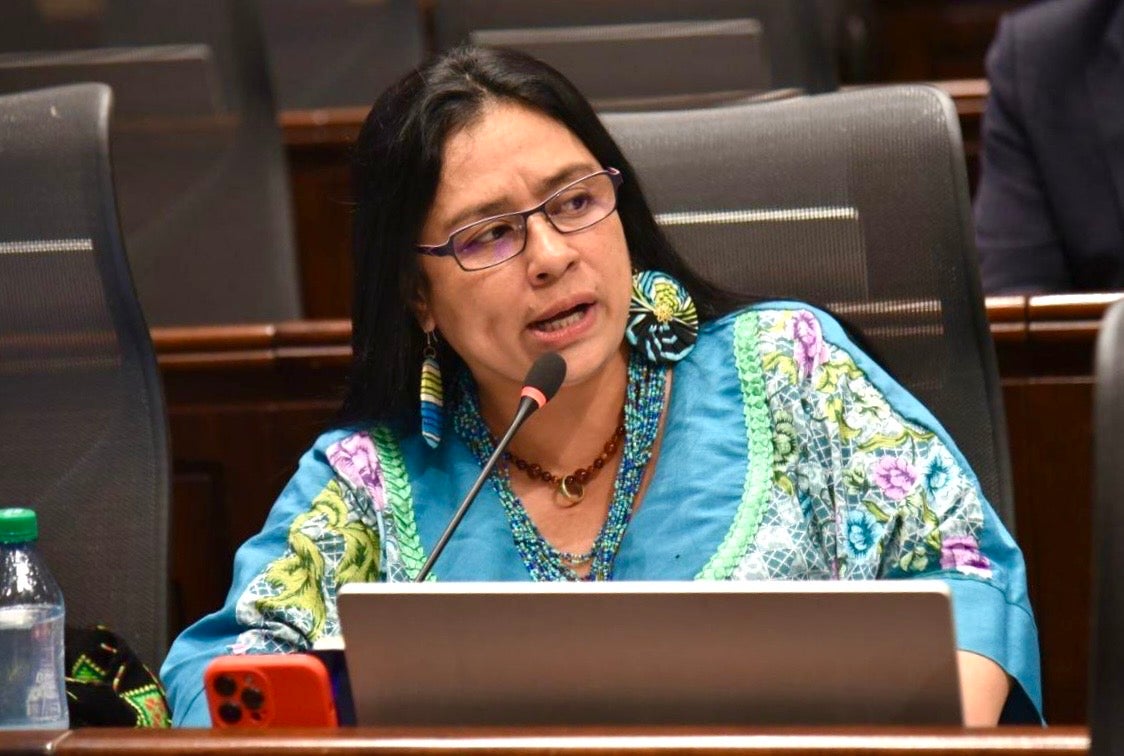
Karmen Ramírez Boscán (Wayuu) came of age during an era rife with political violence, extractive industry invasions, and the systemic marginalization that has long impacted Indigenous Peoples in Colombia. From this, she emerged as a prominent advocate for Indigenous rights, women’s issues, and environmental protection, serving as a bridge between national and global conversations on these themes. Today, she serves her country as a member of Congress, charged with representing the rights and interests of Colombian citizens (of every background) living abroad, at a time when some host countries are far less welcoming of migrants, Indigenous and otherwise.
In conversation with Cristina Verán, Ramírez Boscán, a former Cultural Survival Board Member, reflects not only on the roots of her political calling but also her own personal story of transnational existence, embodying a feminism shaped far less by western assertions thereof, but rather, the values and lived experiences of Indigenous women around the world.
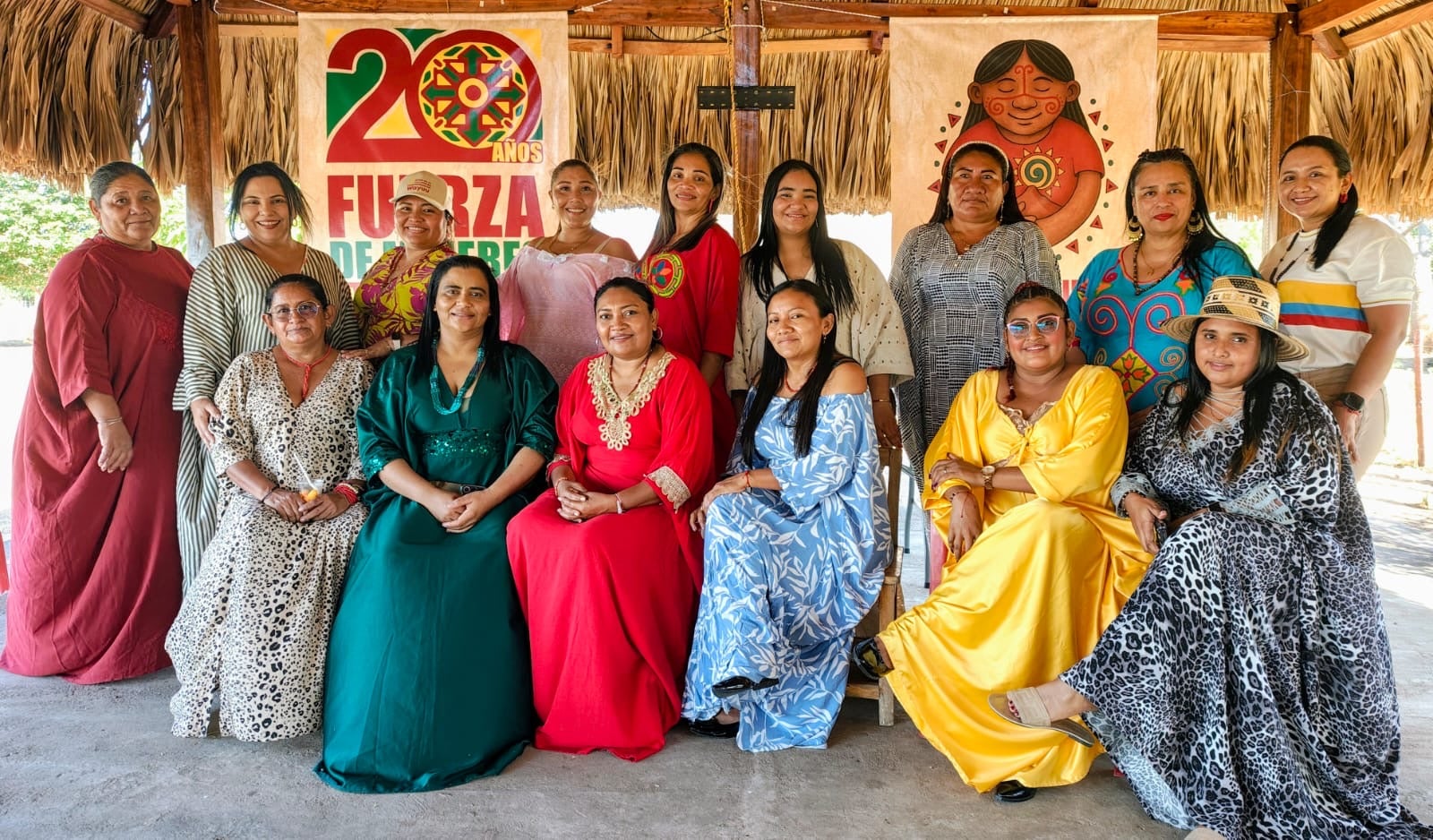
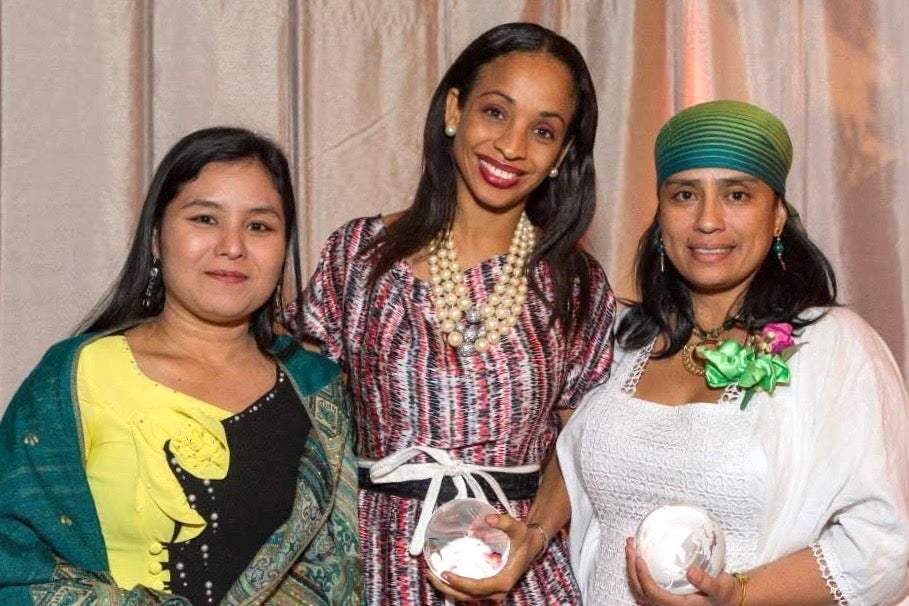
With Fuerza de Mujeres Wayuu. Photo by Miguel Iván Ramírez Boscán.
Cristina Verán: As an Indigenous woman in a leadership position, charged with serving not just your community but your country, how do you understand your own identity—as both Wayuu and Colombian?
Karmen Ramírez Boscán: For me, being Wayuu means to live in several worlds at-once, in relation to not only our land, our ancestors, and community, but with the world beyond as well. It’s not something apart from my nationality or my political life. As for being Colombian, this speaks to being in connection with the State, one which has often excluded Indigenous Peoples, even while obliging us to be a part of it. So these identities overlap, not as contradictions but as sources of strength, especially when engaging with political issues.
CV: Did you come from a family that was directly involved in politics, in some way or other? Who or what do you credit for influencing your political views and values?
KRB: They were involved, yes, but not in parties that revolve around the “political machine,” so to speak. Politics was always present in our everyday lives; something expressed in conversations about injustice, the defense of our territories, and also through community leadership, with some managing to be elected to local office. It is the dreams of Wayuu People—for survival, autonomy, protecting the land and our culture, and living without hunger and fear—that have shaped my political consciousness.
CV: In the tumultuous decades leading up to now, how did your community endure the upheavals and political violence of your country’s narco era?
KRB: En la Guajira—home to Wayuu People—we did not really have the presence of the State in our territories. Indigenous communities then were caught between armed actors and illegal economies, and it was indeed very violent. This was not always visible in terms of direct confrontations, but it was present in things like forced displacements, the killing of our leaders, and an overall sense of fear that surrounded us. Injustice was normalized.
In my book "Desde El Desierto: Notas Sobre Paramilitares y Violencia En Territorio Wayuu de La Media Guajira" (From the Desert: Notes on Paramilitaries and Violence in Wayuu Territory of the Middle Guajira) in 2007, I named 400 Wayuu people who were killed or disappeared by armed actors, and shared how that situation impacted how my generation viewed the State.
CV: What issue or causa compelled you to action, at the community and national levels?
KRB: There was more than just one single moment that motivated me to speak out and get involved, but, first and foremost, the deaths of 27 of my relatives were very significant in that regard—my grandfather Franco Boscán, my uncles, cousins, etc., all murdered by paramilitary forces, by the army, and by guerrillas. I wanted justice for them, and I also wanted truth, so that we could prevent this kind of situation from repeating itself. I began to see that collective action could transform all the fear and rage we were feeling, and I became more involved and determined to fight against such injustices.
CV: At what point did you become more aware and interested about things happening beyond Colombia?
KRB: My activism here led to getting invitations to meetings and events at the international level, and, from there and then, I began to understand that everything we, as Wayuu, had experienced could be linked to the struggles of other Indigenous Peoples, everywhere in the world.
At one point, I was selected for a year-long United Nations fellowship opportunity in Geneva, at the Office of the High Commissioner for Human Rights, which gave me the chance to study the UN system from within. I became very much involved, for example, in working group discussions at the time around the United Nations Declaration on the Rights of Indigenous Peoples (UNDRIP). I then spent six months as a fellow with the Inter-American Institution of Human Rights in Costa Rica and was invited, after that, to study in Ilulisat, Greenland, followed by the Institute for Women’s Rights at the University of Toronto. Then the University of Bern in Switzerland invited me to be part of a special program there about the anthropology of mining.
Throughout these experiences, I learned how to be part of cross-border coalitions. Meeting, for the first time, other Indigenous Peoples from lands so far away from my own was also deeply emotional for me. We’d share many stories and find many issues in common with one another, underscored by the lack of rights we had in our respective territories, no matter where we were from in the world. Most importantly, those encounters made me understand that we gain power when we fight together.
CV: As you were learning directly from and about other Indigenous Peoples, what, in turn, did you want them to learn from you?
KRB: Well, I often found myself in the position of having to explain to others—international institutions, nation states, other Indigenous Peoples, and so on—the realities of my Wayuu people. From this, I began to see myself as a bridge to connect our respective experiences and struggles.
CV: Please share a particular situation or issue that you first began to comprehend in this linked way.
KRB: The extraction and protection of natural resources is something that became very important to me. For example, the biggest open coal mine in Colombia (and one of the largest in the world), El Cerrejón, was located in my territory and had been causing so many issues, extractivism and militarization. This kind of scenario, I learned, was not uncommon to other Indigenous communities.
CV: Your role in Congress is to serve the interests of Colombian citizens, of all backgrounds, living outside of Colombia. What responsibilities does this entail, and is there anything new that you—as an Indigenous woman or otherwise—bring to it?
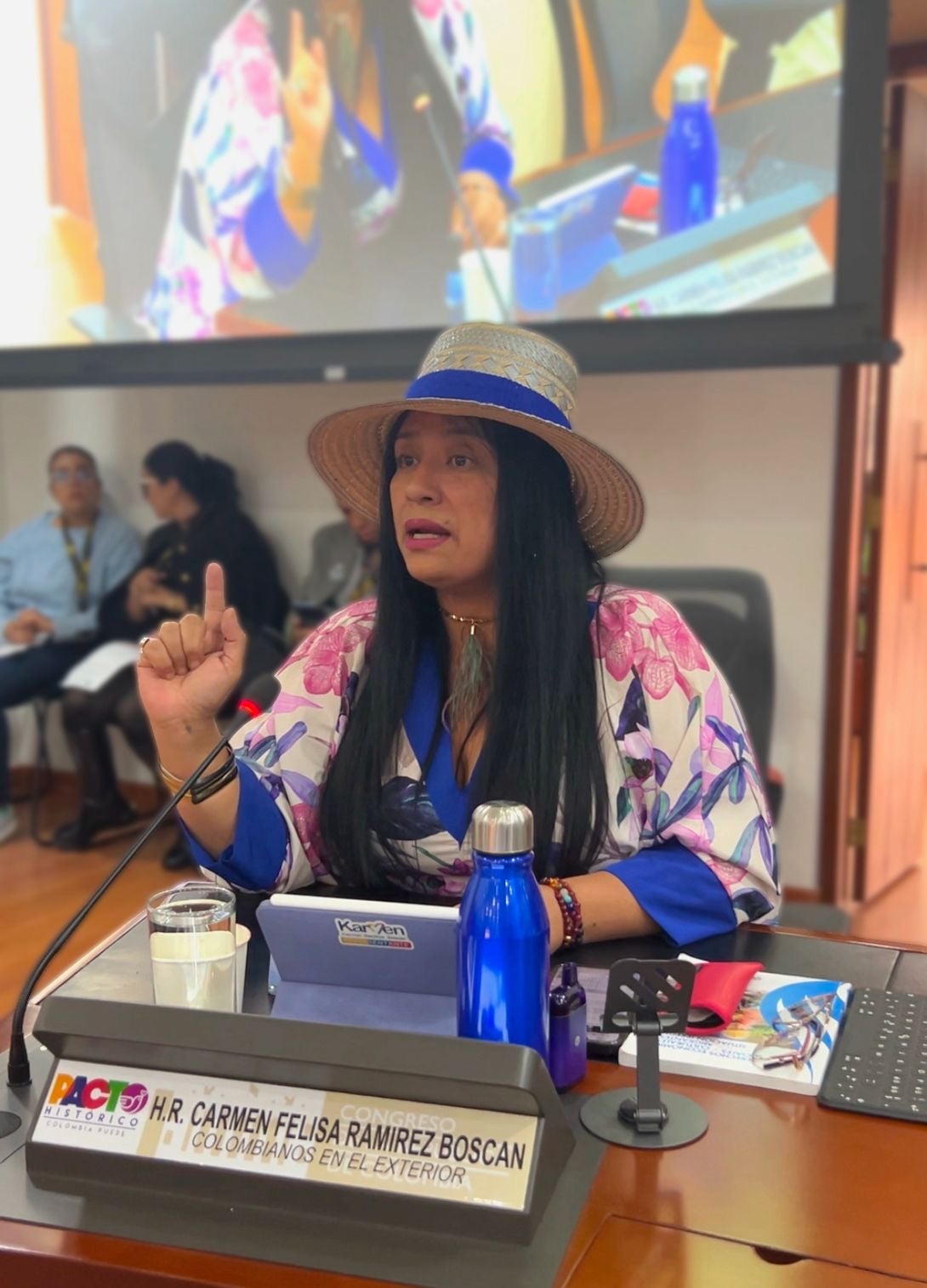
KRB: I should explain, first, that this kind of representation is a right Colombians have per a special circumscription in our country’s Constitution of 1991. I’m entrusted with seeing to the needs of “La Colombianidad”—the people(s) of Colombia—living outside of this nation’s territory and yet still belonging to the nation. This includes those who have been abroad for many years, while retaining their Colombian nationality, and also those who are migrating elsewhere today. My responsibilities include things like strengthening connections between them and our Colombian institutions, especially with things like consular services, special protections, family reunification, and political participation.
Until I stepped into this position, it had always been occupied by those from this country’s political right wing, and represented more so the elites than others. My focus has been to strengthen representation and inclusion for all Colombians.
CV: Is it known how many of your constituents identify as Indigenous? If so, which communities appear to have the largest number of members outside of Colombia at this time?
KRB: About 10 million Colombian citizens live outside of Colombia now, but as yet, there are no official numbers as to how many of these identify as Indigenous. While our national census does ask for ethnicity and to what community one belongs, our migration registry does not capture such information with regard to those residing elsewhere. We need better data to enable us to make better policies, and so getting this information is one of my fights in Congress now.
CV: As to the question of identity, have you found those living abroad to be more likely or less likely to identify as Indigenous than they might otherwise be when in Colombia?
KRB: Identity, for Colombians, can shift when one moves outside of the country. For some, it becomes easier to simply be “Colombian” once they’re abroad, having to deal with racism and things like that. Their priority, first and foremost, is focused on securing financial stability. For others, though, living abroad can actually create new spaces for reclaiming their Indigenous identity—one that may not have been asserted back home.
I, myself, have always had a very close relation with my community, grounded in my identity as Wayuu, and I remain like this wherever I may be.
CV: What initially led to your big move from South America to Europe?
KRB: Back in 2009, I received death threats for my activism here in Colombia, and so I left and came to Switzerland, where I made my life and created a family; the story of so many women who migrate. My life today, in-practice, is transnational, and so I am a resident of and taxpayer in both Switzerland and Colombia.
CV: Prior to becoming a member of Congress, had you been involved in Colombia’s electoral politics at all?
KRB: No, I never worked in government before this. But then, the governments before this one— before Presidente Petro—had always been repressive against and exclusionary toward Indigenous Colombians, not respecting our rights. My work has always been “political” in the broad sense, though, as a human rights defender focusing on Indigenous rights and fighting for environmental justice in our communities.
CV: Your role requires travel for you to engage directly with constituents in other countries. Where is this diaspora most concentrated, and which areas are priorities for you to meet with in-person?
KRB: Our largest diaspora communities abroad are in the United States, Spain, Venezuela, and Chile. While I do travel quite a bit, yes, there just isn’t a budget for me to go everywhere in the world that Colombians live—places like, say, Australia, where there is a large Colombian community as well. They deserve to have the presence of their representative, too, but I have to rely a lot on technology to reach and communicate with much of my constituency. It can be very challenging.
Time is also a real challenge for this job, as I have to be present for Congress here in Bogotá every week from February to June, then again from July to December. When I do go back to Switzerland, the trip can take as much as 12 hours each way, flying via Spain, the Netherlands, or Germany to Zurich, then from Zurich, I need to take a train to get home, where I can stay for only 2 or 3 days at a time.
CV: Given the United States’ recent military intervention in Venezuela and threats of future interventions elsewhere in the region, meanwhile targeting anyone of Latin American origins living in the U.S. (regardless of immigration and/or citizenship status) by so-called ICE raids, what special concerns do these things bring for you with regard to their impacts on Colombians?
KRB: We have information that about 34,000 Colombians in the US have faced persecution thus far; very racist and absolutely discriminatory. I’m deeply concerned, not only about this but about any situation, anywhere, that normalizes aggression, militarization, persecution, etc., imposed by a government like that of the U.S. The geopolitical costs will be very high.
CV: The territorial homelands of the Wayuu Peoples are not entirely within Colombia, meanwhile. How do your People navigate this bisection?
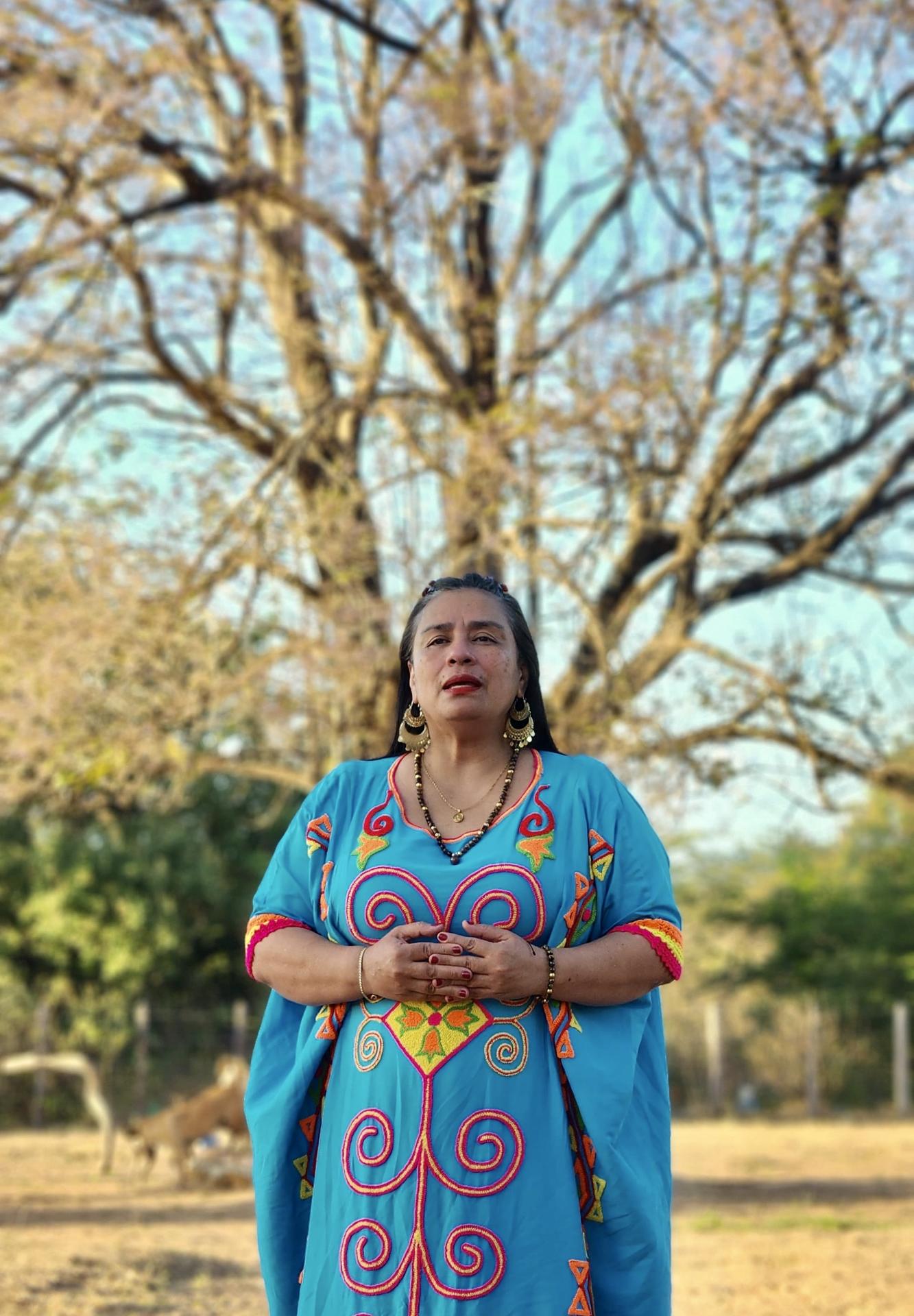
KRB: We are a bi-national people, and our territories are divided between Colombia and Venezuela. This means that some are citizens of one country and some of the other—one cannot be a citizen of both. The Wayuu People want to get recognition for all that existed, territorially, before these country borders were created.
CV: Finally—and most relevantly to this as Women’s History Month—you very clearly and proudly identify as a feminist. What does that term mean to you, as an Indigenous woman, and in what way does your feminism relate (or not relate) to that of the mainstream western women’s movement?
KRB: My feminist understandings began, I would say, when I was a little girl in Colombia. In my own Wayuu community—which is very patriarchal, yet also matrilineal—I saw that men were typically treated better than women, and that women had far more responsibilities than they did. This was an issue for me, although I didn’t know then that such feelings amounted to what I now understand as “feminist”.
I haven’t always felt embraced within broader feminist movements, which I believe have failed to listen to and, therefore, fully respect our views. The idea of an Indigenous feminism is what most resonates for me, very proudly and very deeply, and such discussions must come from inside, not outside, our communities. We have been finding our way in this, toward making feminism overall something that reflects all of our collective realities, which, for Indigenous women, are not the same as those experienced by women in the middle of Europe.
When Indigenous feminists fight for Mother Earth, we’re fighting for the biggest “woman” of all, who gave birth to the whole of humanity.
--Cristina Verán is an international Indigenous Peoples-focused researcher, educator, advocacy strategist, network weaver, editor, and mediamaker. She was a founding member of the United Nations Indigenous Media Network and the Indigenous Language Caucus. As Adjunct Faculty at New York University's Tisch School of the Arts, she brings emphasis to the global histories, expressions, and socio-political impacts of Indigenous contemporary visual and performing arts, design, and popular culture(s).
All photos courtesy of Karmen Ramírez Boscán.