By Vandna Tete, Project Coordinator
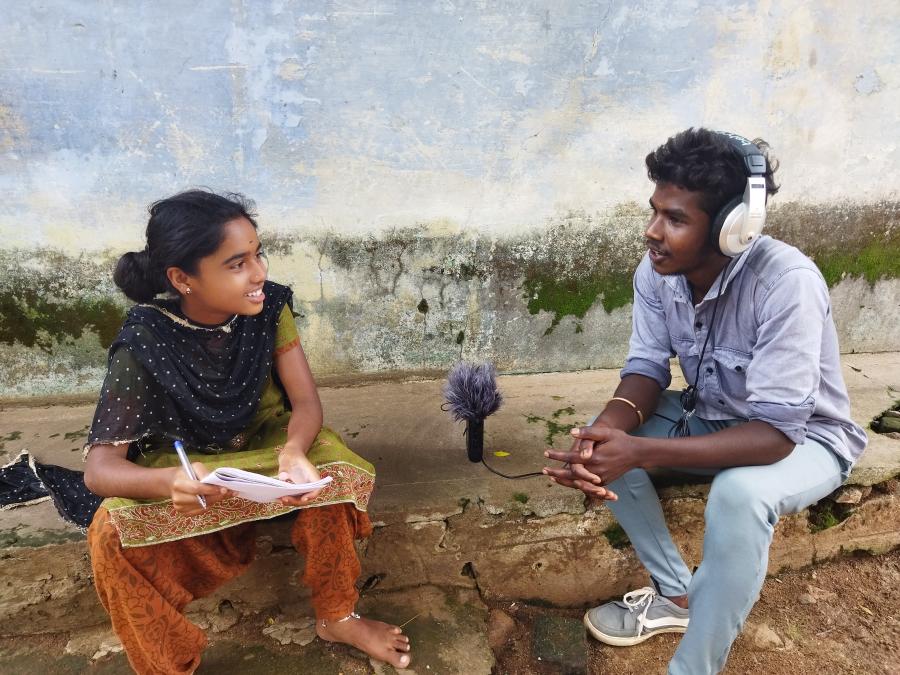
In the dense, forest-clad hills of Netarhat, Jharkhand, in the eastern part of India, where the red earth is as much a source of identity as a target for industrial extraction, a new sound is cutting through the silence of the valleys. It is not the roar of machines used in mining or the crash of falling trees, but the steady, rhythmic broadcast of the Asur language radio programs traveling from village to village.
Asur Adivasi Mobile Radio (AAMR), an innovative community media initiative, has become a crucial lifeline for the Asur community. Through its work informing, educating, and inspiring communities, it is striving to protect its land, culture, and future from the growing threats of mining and displacement.
For the Asur People, one of India’s marginalized Indigenous Tribes, the initiative marks a turning point in their struggle for survival by raising awareness about mining through radio and community leadership. This initiative has turned local markets and digital spaces into platforms for resistance against the development aggression and for cultural pride.
“Through activities of AAMR, we learned that our voices can reach beyond our villages,” said Asinta Asur (Asur), an AAMR leader from Jobhipat. “The radio has given us strength and a platform to speak about our land, our forests, and our rights.”
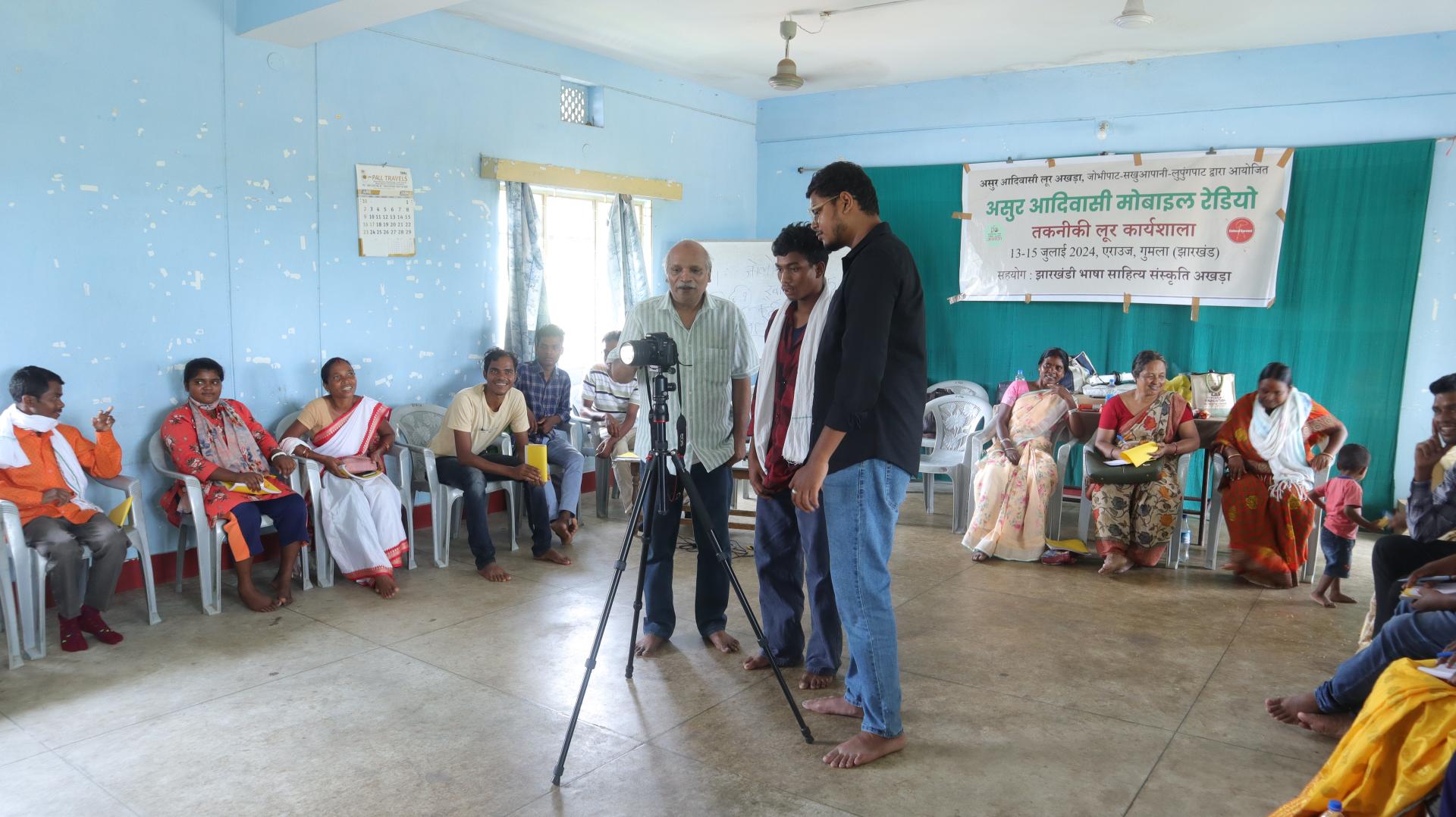
The project aimed to address three problems: the constant threat of mining and deforestation that erodes traditional land rights, the high rates of youth migration and human trafficking, and the lack of a stable platform to document the endangered Asur language. By integrating technical training with lessons on constitutional rights, the initiative has empowered a new generation of land defenders with the tools of modern communication.
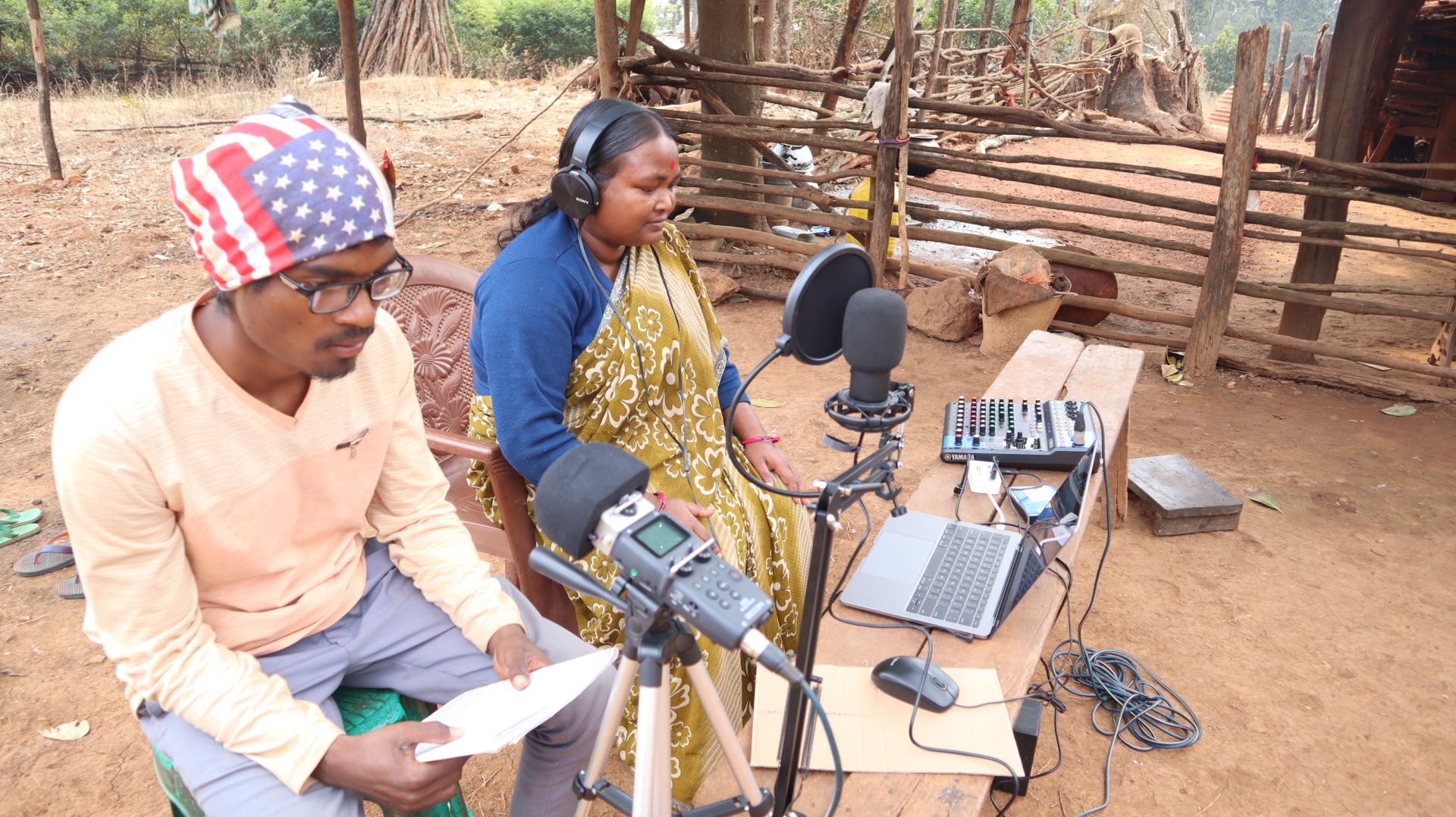
Vivek Asur (Asur), a trainee and youth broadcaster from Sakhuapani, commented, “Earlier I was hesitant, but after this training, I can now record and broadcast radio programs myself. I feel proud that our Asur language is being heard in the markets and even online.”
Our radio has also become a place for learning about legal rights and giving diverse actors a space for their voices. For Barnabas Toppo, an AAMR volunteer from Lupungpat, this learning was eye-opening. “This was the first time I understood how mining is connected to our rights in the Constitution. I feel more confident to speak up in the village council,” Toppo said. Sushma Asur (Asur), a well-known community leader from Sakhuapani, added, “The Radio gave us courage to stand together against mining. Now we women can speak in the meetings; [it’s] not just the men [who] can participate and speak.”
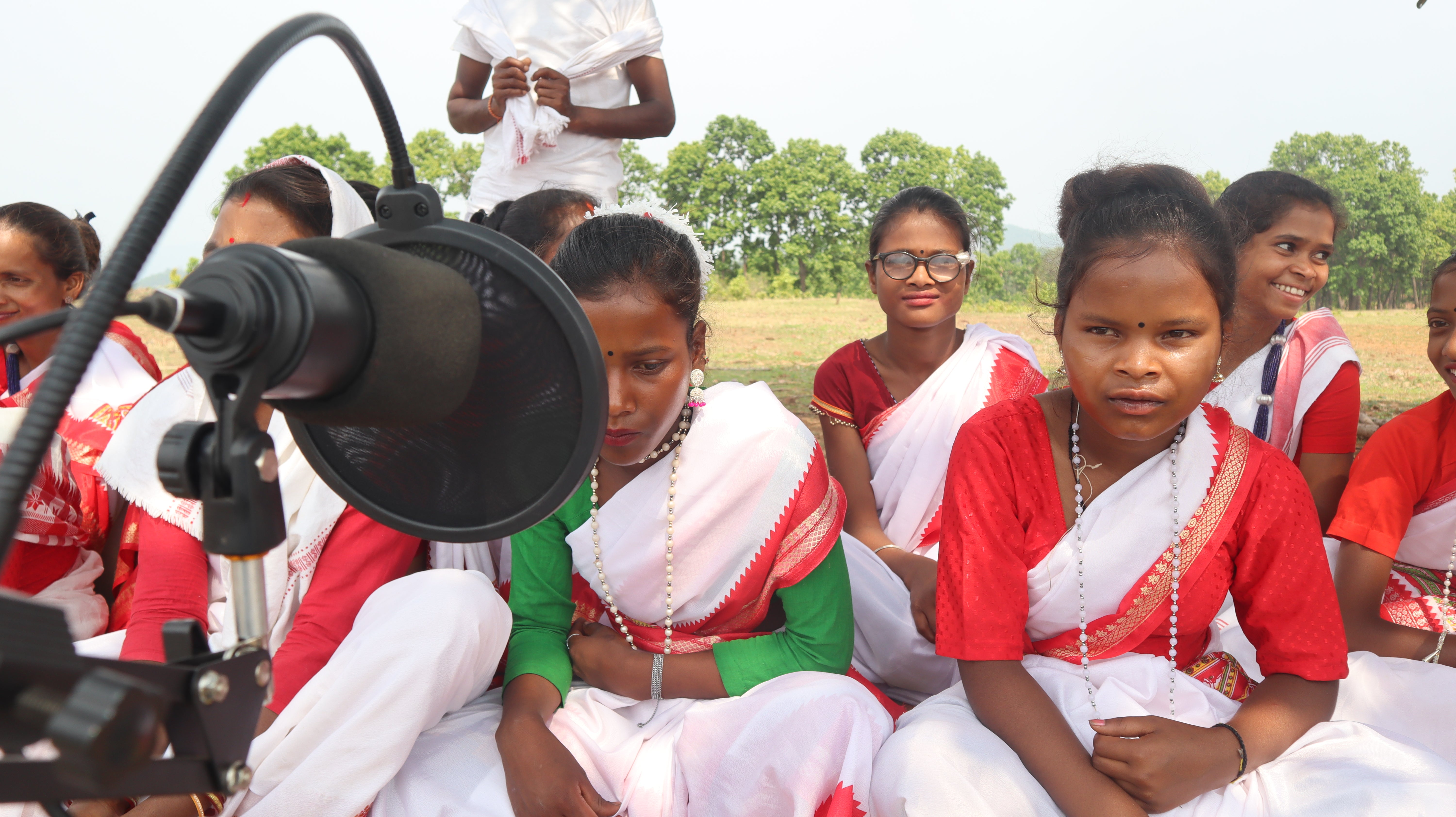
Beyond politics and helping to protect land, Asur Adivasi Mobile Radio helps preserve a culture that many believe is on the verge of extinction. When traditional Indigenous songs are played over market speakers, they bridge the gap between Elders who hold the knowledge and the youth who must carry it forward. “When I hear the songs of our ancestors on the radio, I feel that our traditions are alive again. The young people are learning what we had almost forgotten,” said Ajay Asur (Asur), an Elder from Sakhuapani.
For young people, the radio offers a creative alternative to the dangerous, exploitative work in local mines. Bhikha Asur (Asur), a volunteer from Jobhipat, described how the project changed his perspective. “Working with the radio saved me from going to the mines for daily wage work. Now I am using my energy to create programs for our community.” The same feeling was shared by Shradhanand Kerkett of Lupungpat, who said that while he once thought about leaving home for work, he now feels his place is “here...serving my community.”
The project’s success has even caught the attention of mainstream media and state institutions: All India Radio and Ranchi Doordarshan invited the AAMR team to share their radio programs. This was the first time that songs in Asur and stories of the Asur People were broadcast on national public media platforms.
Despite these successes, our organization continuously faces financial instability, which often forces volunteers to return to daily wage work to survive. Nonetheless, the Asur community remains committed and strong. For Elders like Ropani Asur (Asur), just hearing the radio is a promise that the culture will continue. “For years I was worried that our language would disappear. Hearing the radio in Asur makes me feel our grandchildren will remember who we are,” she said.
As the Asur People continue to face challenges due to increasing industrialization and threats to displacement, Asur Adivasi Mobile Radio shows the strength of media led by Indigenous Peoples. Melan Asur (Asur), an Elder from Jobhipat, explained how important the station is: “Radio is our lifeline to organize and unite our Asur community. Every day we face violence from the state and from dikus (outsiders). Mining, deforestation, displacement, and human trafficking are tearing our lives apart. With deep gratitude, we thank Cultural Survival for standing with us and supporting our Asur Adibasi Mobile Radio—our voice of resistance and survival.