By Cristina Verán
From her roots in the forest village of Waranghushi to the bustling streets of Mumbai, a young MC named Mahi G (Mahadev Koli) has emerged as one of India’s most compelling voices in hip-hop. What began as politically charged poetry transformed into potent rap epistles delivered in an audacious signature cadence to amplify urgent themes—the struggles of rural farmers, the protection of ancestral mountains, honoring India’s transgender hijra community, and paying tribute to anti-caste activist Dr. B.R. Ambedkar, for some examples.
Mahi G resists the mainstream pop-rap push to chart her own course as a “conscious” rapper committed to creative resistance, while collaborating with other notable artists who share her commitment to fomenting social change steeped in esteem for their cultures and communities. Cristina Verán recently spoke with the artist in Mumbai about her hip-hop awakenings, and what else informs both the music she makes and the hope she brings to Tribal peoples everywhere.
*NOTE: In India, the terms Tribal (in English) and Adivasi (in Hindi) are used, rather than Indigenous.
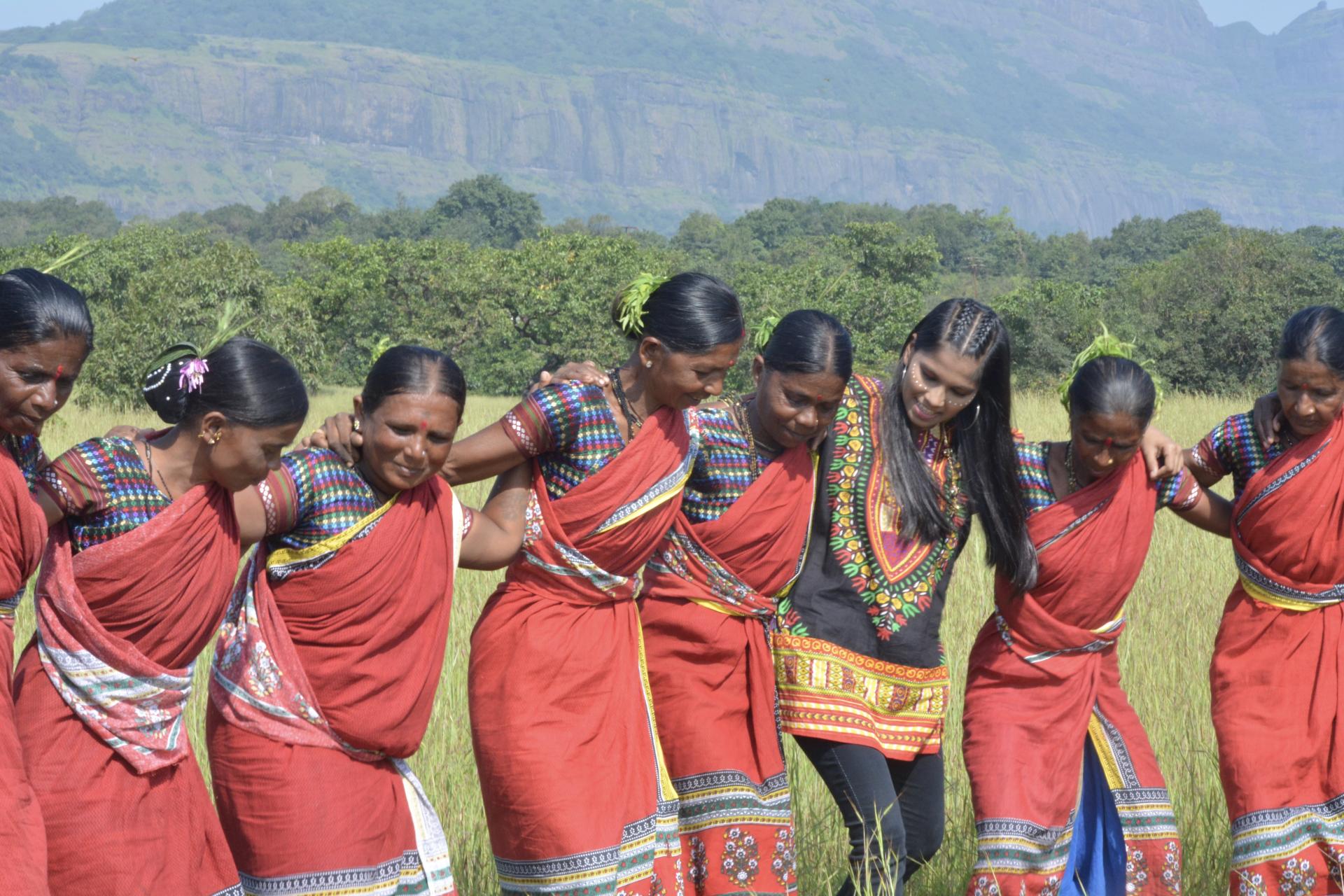
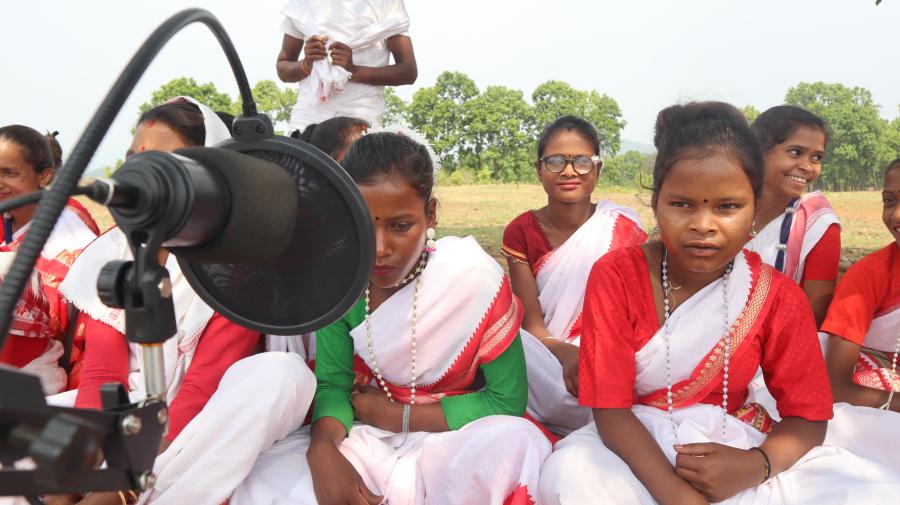
Mahi G performing the Kambad dance with other Tribal Women during the shoot for the “Jungle Cha Raja” song’s video. Photo courtesy of RFM Studios.
Cristina Verán: How did you come to see hip-hop as a realm that, through the poetry of rap, could give voice to your activism?
Mahi G: While I was studying at university—I’m an engineer, by the way—I’d begin thinking and writing poems about issues of concern happening in different parts of the world, in places like Korea, or France, or Russia, for example. I wanted to talk about something happening here—the Kisan farmer protests—but I didn’t think my poetry had the kind of aggressive voice that something like this required as a response.
I also thought, if I just write it as a poem, few people would read or hear it. My own friends, like most young people around me, were much more interested in listening to what rappers, rather than poets, had to say. At that time, in India, a movie featuring rappers, called Gully Boy, was very popular, and there was also a hip-hop reality TV show called Hustle. I started to realize that rap could be the poetic medium where I could really express my feelings, with the right kind of aggression, about the issue, in a way that could make young people not only take interest in it, but perhaps even try to think about some solution for it as well.
CV: Rappers, as such, tend to come by their craft and build audiences as part of a community beyond themselves. How did you begin to craft an identity for yourself and connect with your peers from the scene?
MG: I started as this poet who just liked to experiment with how to write rhymes—not a rapper who goes out to the cyphers (circles where hip-hoppers gather to perform), interacting with the hip hop community. I eventually became confident enough to try rapping, too, and as my real name is Madhura Ghane, I decided to use Mahi G for my rap name.
I hadn’t listened to a lot of rap music before (from India or from the U.S.); that’s not my flex. I was more into the poetry of rural poets. Recently, though, friends have suggested I start listening to artists like Kendrick Lamar and Doechii.
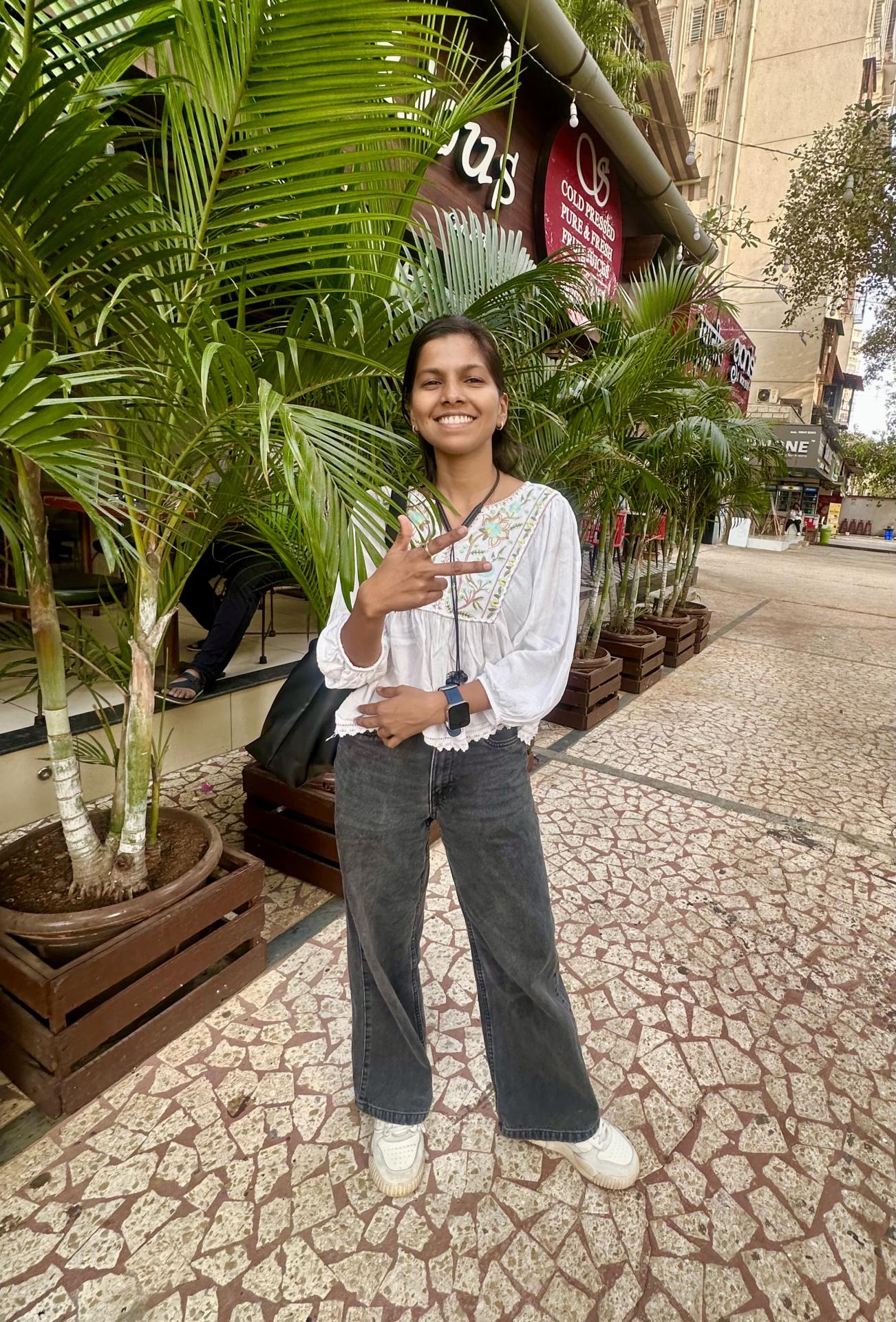
Mahi G in the Varsovia Beach neighborhood of Mumbai. Photo by Cristina Verán.
CV: Tell us about your first forays into poetry that’s meant to be rapped—and how you began to seek out and connect with others with similar concerns.
MG: Well, the very first serious rap song that I wrote was about the Kisan farmers' protest that was happening in Delhi at the time. The Indian government had tried to push this new bill on farmers, but the farmers themselves were against it. They came out to protest with their tractors in front of the Parliament, shouting, “We don't want this, please take it back!” In response, the government chose to attack them with tear gas and water cannons, constructing barriers, those kinds of things.
I thought there must be lots of rappers in India who, like me, wanted to talk about important issues, and so I started searching for artists making socially and politically-themed conscious music.
CV: Was Mumbai a good place for that?
MG: In this city, you’ll find what we’d call the more underground, proper street rappers. On YouTube, for example, I saw a rap video about Tribal People called “Warli Revolt,” by this well-known conscious hip-hop group in Mumbai called Swadesi. Not only did they blend their raps about social issues with a message of hope, but they also collaborated directly with folk music artists from the Warli tribe to make their songs.
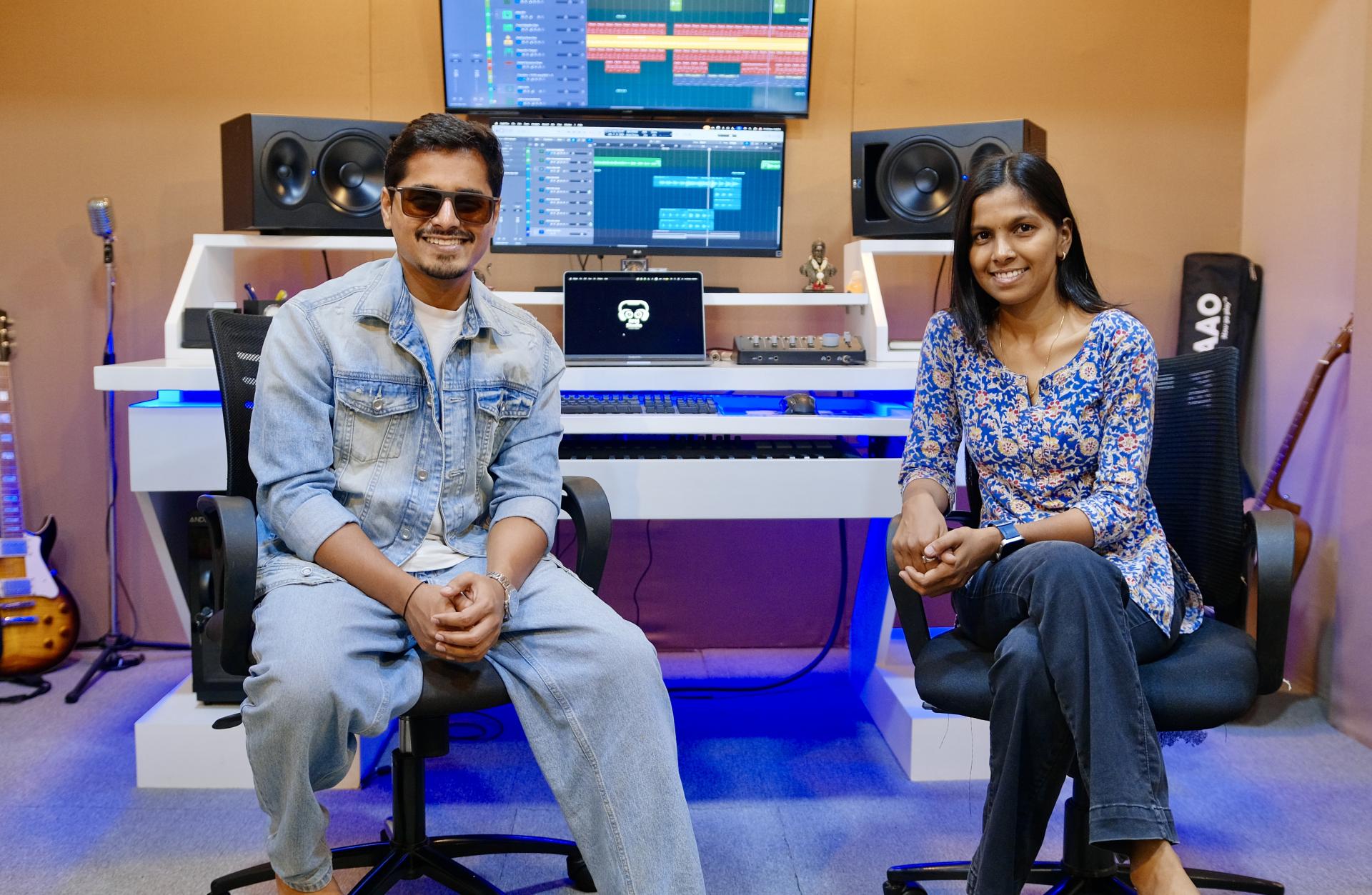
Mahi G in the studio with her mentor, producer, and collaborator, Rapboss. Photo by RFM Studios.
CV: Your main collaborator thus far has been the renowned rap artist and producer Rapboss. How did you first connect, and what part has he played in your musical journey?
MG: I was looking for a producer who could help me to make my own music, someone with the same kind of ideas. That’s how I found Rapboss, an MC who raps in my language and is also a producer. He comes from a farming family and is very concerned about farmers’ issues, as well. Here in Maharashtra, when serious things happen—major droughts, for example—there have been many farmer suicides. Rapboss dared to speak about such things in his song “Sanga Sheti Karu Kashi,” and so I wrote to tell him I’d written several raps about that as well, and was looking to make music to record them over. He has his own studio in the city of Pune, and he invited me to come down and record songs together there with him. From that day, he became my mentor and launched my first song under his production company, Rapboss Film and Music Studios (aka RFM Studios). Now we’re friends and continue to make music together.
CV: You mention that he raps in your language—Marathi, yes? Is that the Mahadev Koli Tribal language?
MG: Marathi is actually the regional language of Maharashtra state, used by Tribal Peoples and non-Tribals also. Some Adivasis have a completely different, separate language from the larger regional ones surrounding them, but in our case, we speak Marathi—our own tribal dialect of it, which is what I choose to rap in (along with Hindi sometimes, and a few lines in English here and there).
CV: Have you linked with Tribal hip-hop artists from other parts of India thus far?
MG: I have performed for some Foundation and NGO events that support Tribal peoples; some local events, but I haven’t had the opportunity to share my music on stage or recording with other Adivasi rappers—in the festivals they have in the far north east of India, for example. I hope to one day, though. Here in Maharashtra, I learned about this whole community of rappers in the nearby Aarey Forest—a place where many leopards and other big animals live, just a few hours outside of the city—and I asked a friend from there to introduce me to them.
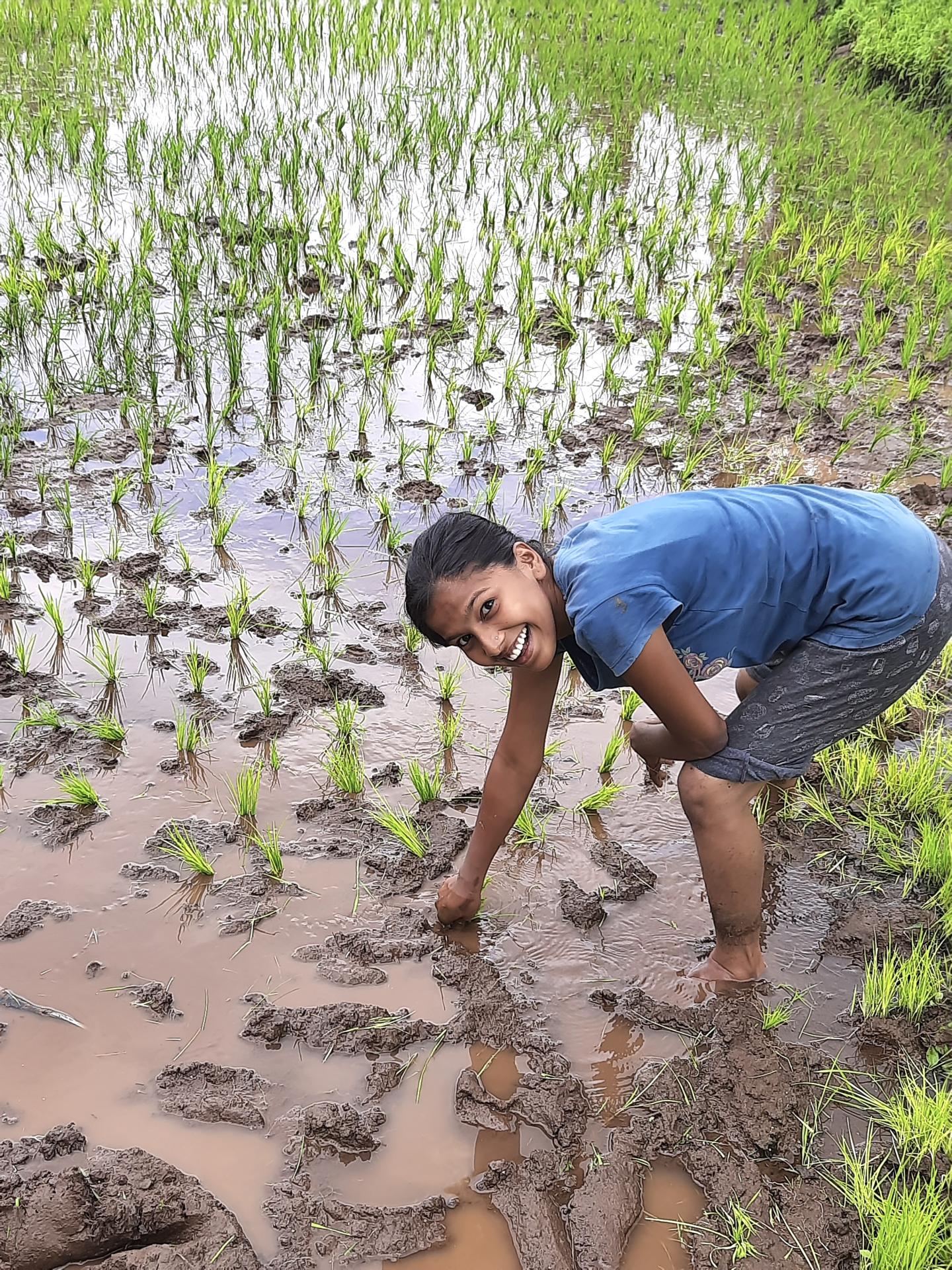
Mahi G farming rice in her community of Warangushi.
CV: Tell us about your first recording endeavor and what impact it’s had.
MG: The first song and video I chose to officially release was one about my own people, “Jungle Cha Raja: King of Jungle.” It tells the story of a Tribal person who is protecting the jungle, the land, the forest, and the water. In addition to rapping in it, I joined with other Tribal women to perform what we call the kambad dance. This video became really famous, and so then I, as an artist, also became widely known. From then on, because of the social themes of my music, people have come to see me as a “conscious” rapper. In India overall, more value is placed on the commercial rappers and their pop-rap style, though.
CV: You also offered your voice to an important public campaign last year. Please share a bit about how this came about.
MG: I got a call one day from Greenpeace India, saying they found me on social media and wanted to make a song about this major heatwave happening at the time. It was majorly affecting so many people, from street vendors to construction workers to farmers, and so on. So RFM Studios and I worked together to make a full song about this, writing lyrics, producing the music, and making a video for it. We focused on the plight of workers, how the extreme temperatures affected those at the brick kiln, the timber yard, Elder workers, and women who had to work while their small children played there next to them on the sand in the heat. “Heatwave” was made the official 2025 World Environment Day song.
CV: Where is your community geographically, in relation to Mumbai, and how did your journey take you from there to this massive city of now more than 22 million people?
MG: I was born in Kalyan, a town near Mumbai, but my grandparents (and therefore my roots) are from the village of Waranghushi, about three to four hours away, in the mountainous Ahmednagar (renamed Ahilyanagar) district of Maharashtra. That is the place where our hearts remain. My father eventually left the community and moved near Mumbai for a new job as a bus conductor, and then he brought us all here. Otherwise, I’d have stayed in our community only.
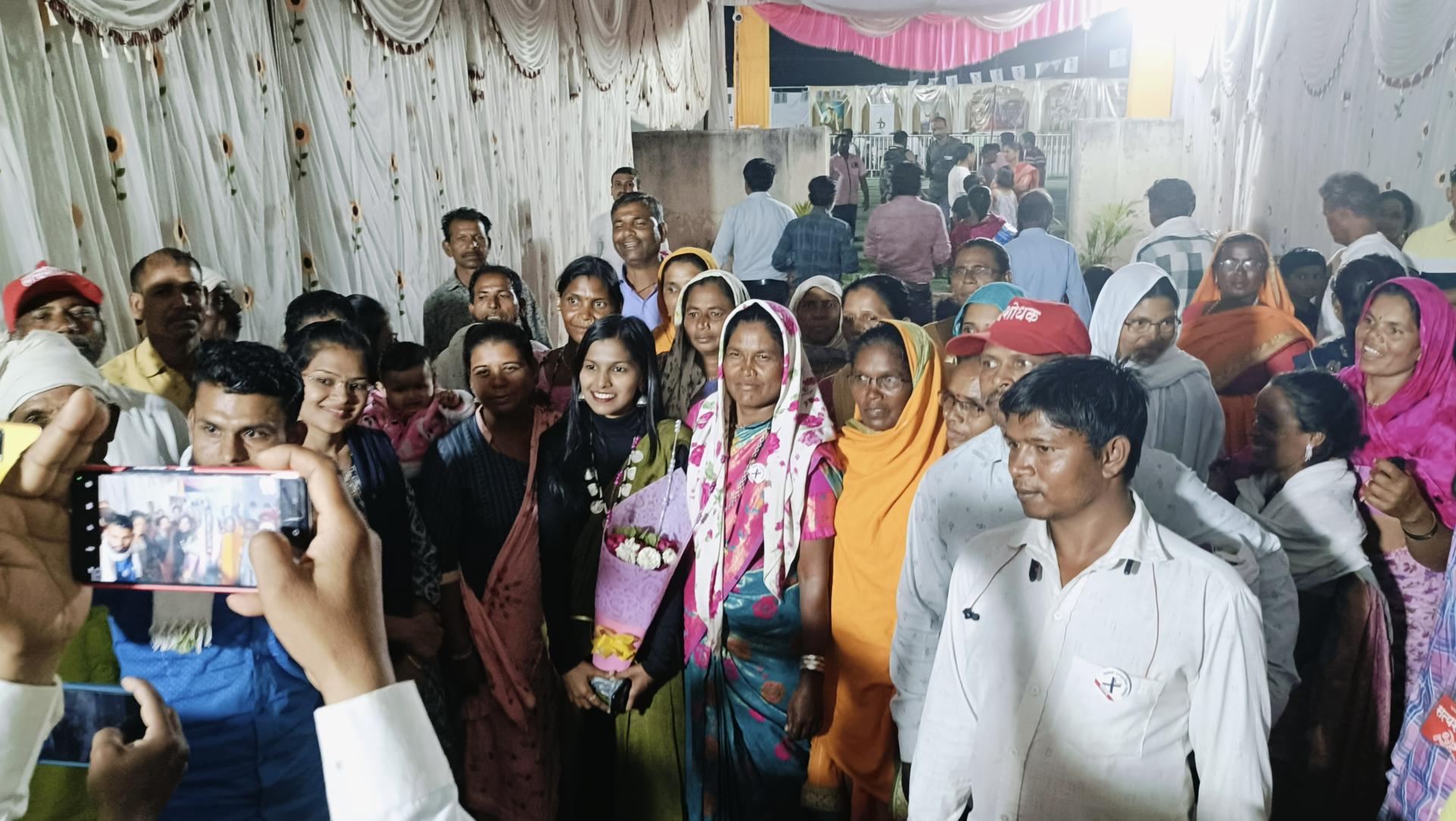
An honoring ceremony by the THAKAR Tribe, at Vidrohi Sahitya Sammelan.
CV: What kinds of opportunities came to you after that—either despite or because of your Tribal identity?
MG: Well, being in Mumbai gave me access to a great many things. For one, there are reservations for Tribal Peoples. I should explain that a “reservation” here in India isn’t like a land reserve. Rather, it means something—a job, an educational opportunity, etc.—that is reserved for us. Through this system, we now have access to opportunities that our ancestors did not.
For example, a reservation in education guarantees that in a university, if there are 100 seats available in total, perhaps six or seven will be designated for us. Even so, some of these can remain vacant for some time, with institutions claiming that no qualified Tribal People had applied for them. There must be greater awareness among our communities outside of the big cities, in the more remote parts of India, to help Tribal Peoples to understand what is required so they, too, can access such opportunities.
CV: Going back to the music, how does your own family and community feel about yours—were they familiar with rap, with the hip-hop sound, before it became your form of expression?
MG: Folks in my community, and especially my family, are really happy about what I’m doing. They didn’t really know much about this stuff before, but they really like what I rap about and understand why I’ve chosen this path.
CV: What kind of Mahadev Koli musical traditions were you raised among?
MG: We have a tradition in my community called the bohada, where we dance and celebrate seven or eight days of festival, wearing wooden masks to represent our gods and goddesses, many idols, and nature-related things. These masks are quite large and very heavy, and we wear them to dance, carrying sticks and tree branches. We have our own musical instruments that we use to play songs and dance to as well. There’s an instrument played by the Warli Tribe, also called the tarpa—a long wind instrument carved from a gourd—that many Adivasi songs in Maharashtra include, and I may use in one of my songs in the future.
There is also the dance known as kambad (kambbdavna—which, as I mentioned before, was featured in my first music video—a traditional leisure dance of the Thakar Tribal community that is performed to rhythms played on the percussion instrument, covered in leather, known as the Thakar dhol.
CV: What else should readers understand about the spiritual foundations of this, and for your People overall?
MG: To understand my community’s way of being, our beliefs, it’s important to know that we pray to a special tree that grows on our lands and gives us not only its fruits but also the oxygen we breathe. It’s a very deep connection for us. For every family, one specific tree is given to it. Ghane people—my family name is Ghane—worship a tree called umbar, which represents our goddess. We can never cut this tree; we must protect it always. With each family therefore committed to protecting and not cutting down its own designated tree, in this way, we directly and collectively protect the jungle and its biodiversity.
CV: Speaking of the jungle, how is your own relationship to it impacted by living mostly in the urban jungle of Mumbai? Have you spent some extended periods there in recent years?
MG: When the pandemic first hit, we all packed our bags and left Mumbai to return to Waranghushi to stay for the next seven or eight months—mainly because my grandparents lived there. Everywhere else in Maharashtra state was locked down, but around my village and these more rural areas, we were still able to roam here and there, enjoying a kind of freedom. Each day we’d cook our food in the jungle, and climb the mountains to pick fruits. Because of this disconnection from the city, we were so fortunate to be isolated from COVID 19, with access to free oxygen and free water.
During that time, I was at that age where we, as young people, leave behind the chaos of youth and start developing our minds in a more mature way. I started to think about a lot of things, like: What is our identity? Where did we come from? And I started to write about what I was feeling, what it means to be a Tribal person for me.
CV: In India, Tribal (also, Scheduled Tribe) is the official term used by the State. Is this a name, a category, that you fully embrace?
MG: For me, “Tribal” is a positive term, and how my community identifies. I’m clear about who I am, and while it’s true that many in India who are designated as such face discrimination, I feel as though people see and accept me, like “Mahi G is representing her community, representing her Tribal People with her music”—and that's a great thing.
--Cristina Verán is an international Indigenous Peoples-focused researcher, educator, advocacy strategist, network weaver, editor, and mediamaker. She was a founding member of the United Nations Indigenous Media Network and the Indigenous Language Caucus. As Adjunct Faculty at New York University's Tisch School of the Arts, she brings emphasis to the global histories, expressions, and socio-political impacts of Indigenous contemporary visual and performing arts, design, and popular culture(s).
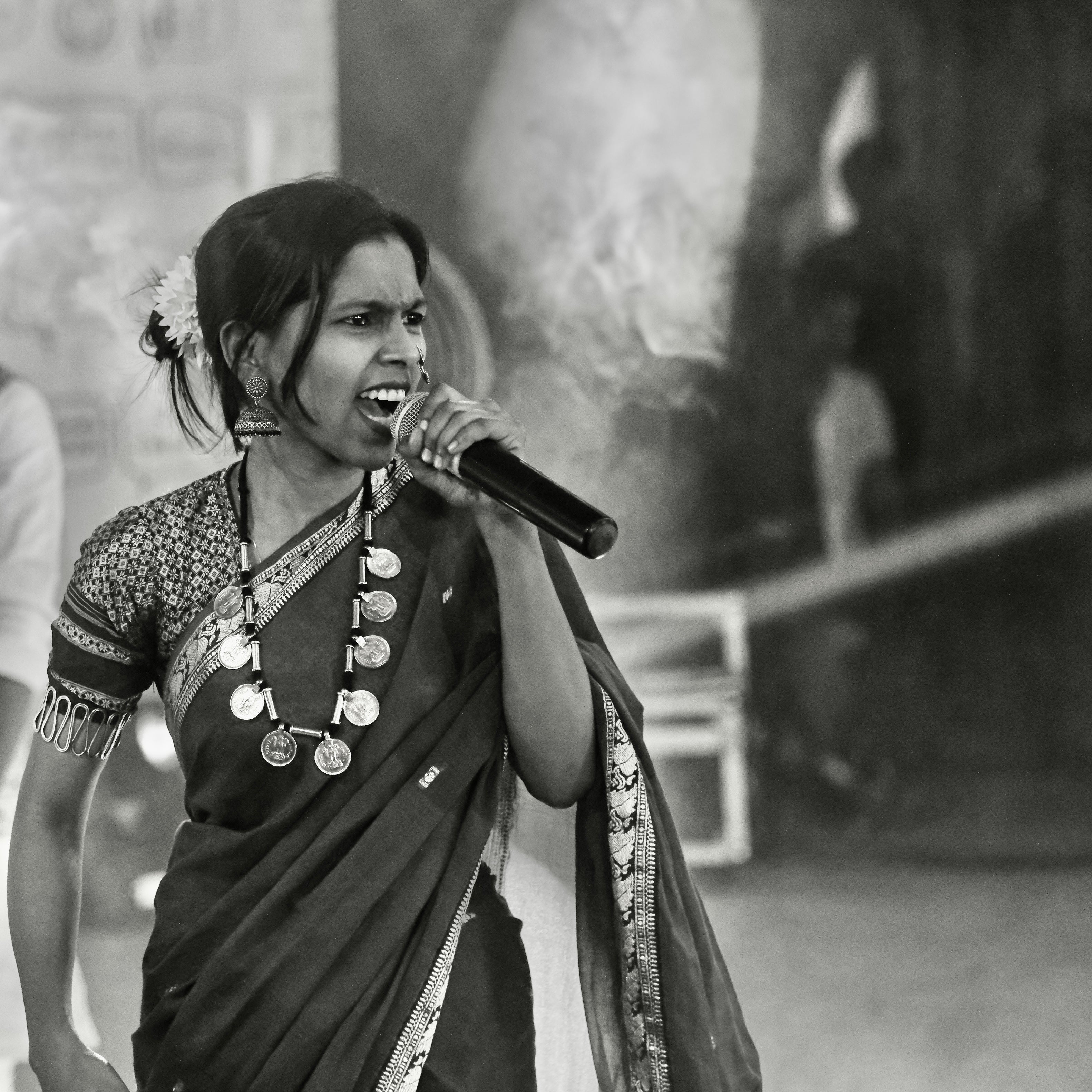
Top photo: Performing at the REDEF festival, produced by the Digital Empowerment Foundation and held in Sundarban, India. Photograph by Mouhamed Moustapha.