Tia Alexi Roberts (Narragansett, Personal CS
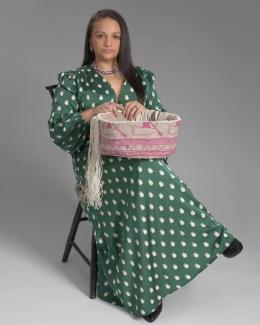
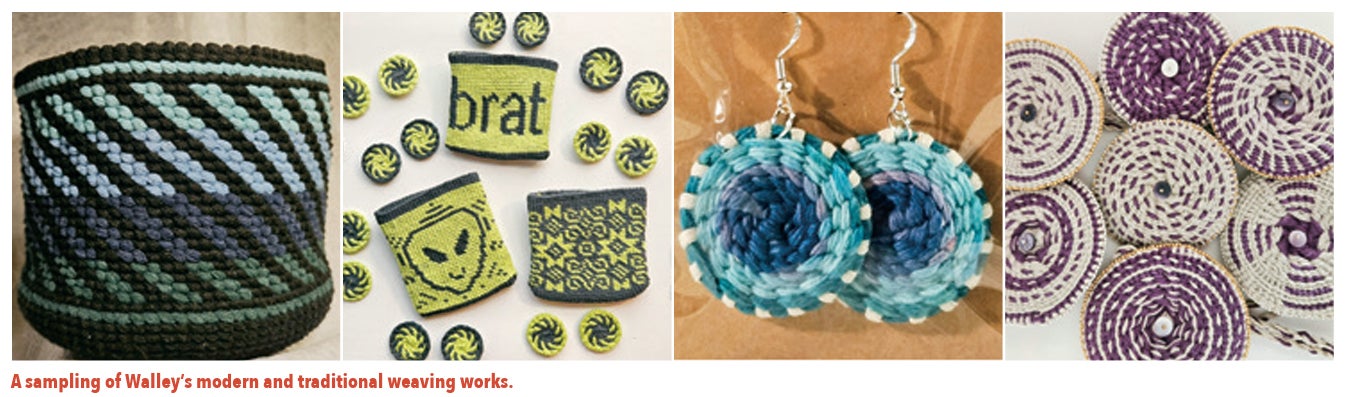
“Si comparto un par de aretes tejidos, lo hago porque son una pieza de nuestra cultura tan antigua como el tiempo. Quiero hacer algo que muestre la cultura una y otra vez, aunque sea algo tan sencillo como un llavero tejido”, dice Brittney Peauwe Wunnepog Walley (Nipmuc), artista y artesana del Bazar de Cultural Survival que elabora piezas tejidas y arte para vestir. El tejido Nipmuc es tanto una forma de arte como un registro vivo de la historia. Arraigado en su cultura Nipmuc y en las enseñanzas de su padre y su comunidad, el trabajo de Walley prioriza la educación, la continuidad cultural y las futuras generaciones. Su arte ha sido presentado en varios museos del noreste de Estados Unidos y de otras regiones.
Walley aprendió por primera vez el tejido al estilo de los bosques del noreste con Kerry Helme (Mashpee Wampanoag). “El tipo de tejido que hago es una forma suave de entramado, que es diferente de muchas de las cestas de astillas de madera existentes que las personas de mi Tribu han hecho en el pasado”, explica. “Un material central en mis piezas más antiguas es el cordón de cáñamo. Ahora estoy usando mucho cordón de algodón. Trato de ser responsable con la Tierra y de usar materiales vegetales tanto como sea posible”.
Además del tejido, Walley participa en la defensa de los derechos Indígenas como Representante Anti-Mascotas para los Nipmuc de Chaubunagungamaug y Hassanamisco. Trabaja para apoyar iniciativas de estudios Indígenas y también es miembro de la junta directiva de Mass Humanities, así como colaboradora en campañas por el Día de los Pueblos Indígenas. Obtuvo una maestría en la Universidad de Massachusetts, Boston, en Estudios Críticos de Comunidades Étnicas, con una especialización en arqueología histórica.“Siempre me ha atraído la idea de hacer lo correcto, pero comencé oficialmente mi activismo contra las mascotas en 2020. Esto me llevó a integrarme en grupos que trabajan en múltiples proyectos de ley estatales centrados en los pueblos Indígenas. Se trata de la autorrepresentación; de la capacidad de contar tu propia historia y compartir tus propias imágenes sobre lo que crees que mejor te representa, no algo que ha sido impuesto sobre ti por una fuerza externa”, afirma.
Walley practica otra forma de defensa Indígena al proyectar hacia el futuro las tradiciones Nipmuc a través de su arte. “Seguir tejiendo es muy importante para nuestra sostenibilidad cultural”, dice. “Ya ha habido un aumento de tejedoras y tejedores Nipmuc, y he podido compartir mis conocimientos con ellos. Hace unos años, mi jefe dijo que yo era la única tejedora de cestería Nipmuc, y eso no fue una buena sensación. No quiero ser la única”. Para asegurarse de no ser la única —o la última—, Walley ha organizado talleres de tejido en su comunidad y con comunidades intertribales. “Ha sido un placer enseñar y, de esa manera, llevar realmente mi presente hacia el futuro. Exactamente hace siete generaciones, mi bisabuela de quinta o sexta generación tejía partes de sillas. Yo solo me veo como una gota en el océano”.
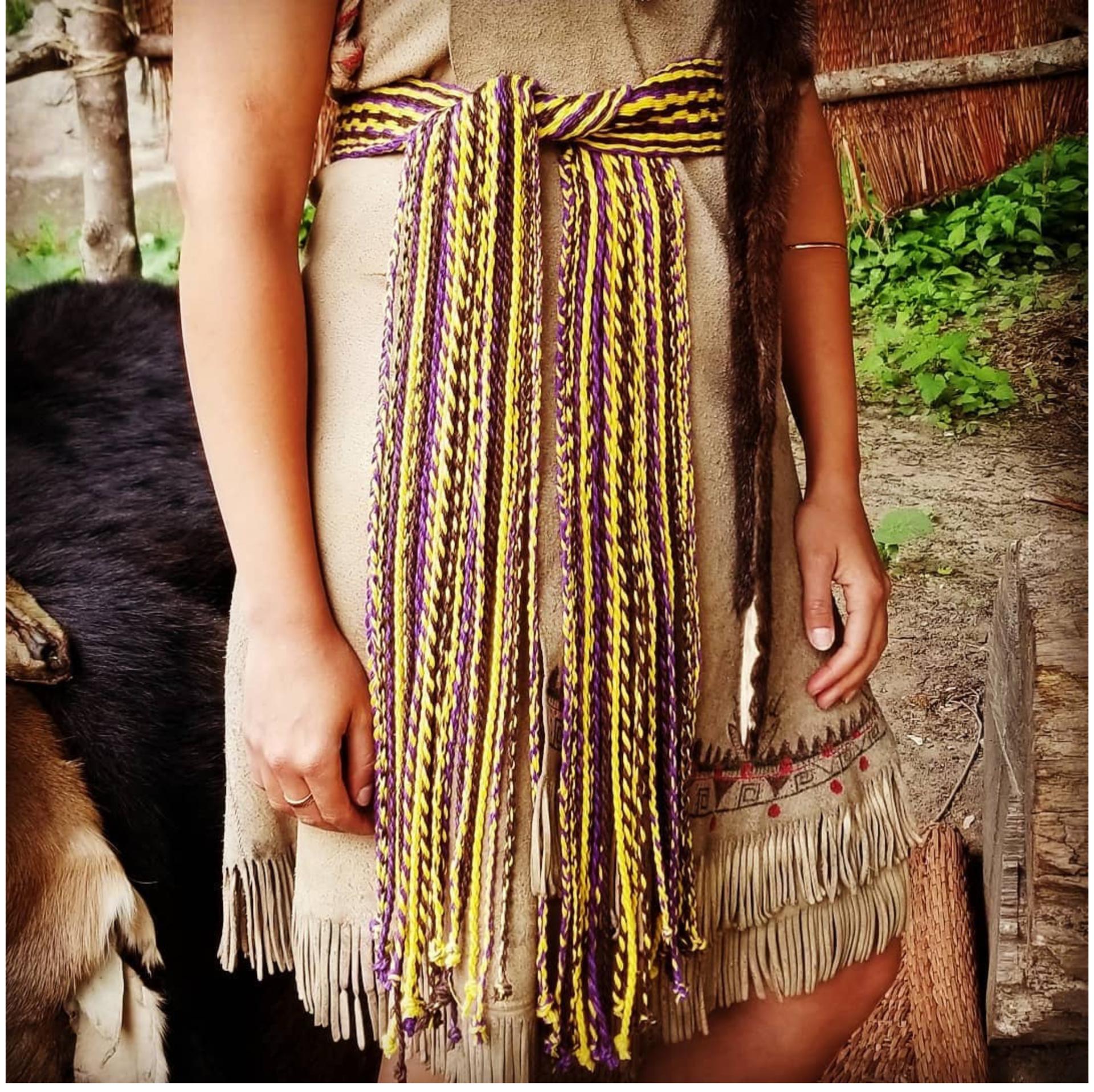
Más allá de la labor fundamental de fortalecer las tradiciones culturales de su pueblo, el tejido de Walley es una forma de contar historias. “Un patrón en una canasta puede contar una historia y representar algo que ha sucedido. Cuando estoy en la posición adecuada para leer las canastas, puedo mirarlas y entenderlas como si fueran un texto. A veces puede ser muy literal, pero el acto de tejer también puede ser un punto de referencia para hablar de historias”, dice. “Estoy haciendo lo mejor que puedo para representarme a mí misma y a la cultura… pensando en cómo podemos recuperar este poder de representarnos, hablar por nosotros mismos y compartir nuestras propias historias. Como artista nativa, puedo conectar con otros pueblos Indígenas en un nivel mucho más profundo. He aprendido que existe una cantidad infinita de talento y creatividad”.
Debido a los limitados espacios que apoyan el talento y la creatividad Indígena, Walley valora la oportunidad que brindan los Bazares: “No se trata solo de comprar, sino de cuidar y de hablar sobre ello. El boca a boca es muy poderoso. Si vas a algo como un Bazar, puedes compartir esa experiencia. Tal vez conozcas a alguien, recojas una tarjeta de presentación, hagas una conexión y experimentes una hermosa danza que te conmueva. Hay infinitas oportunidades de crear un vínculo”.
Todas las fotografías son cortesía de Brittney Walley.
Ven al Bazar de Cultural Survival: del 24 al 26 de julio en Tiverton (Rhode Island) y del 1 al 2 de agosto en Providence (Rhode Island).bazaar.cs.org