En el Valle de Jequitinhonha, en el corazón de Minas Gerais, Brasil, las comunidades Indígenas y quilombolas han vivido por generaciones en armonía con un ecosistema único. Hoy, ese territorio se ha convertido en el epicentro de la fiebre del litio, el mineral que alimenta las baterías de los autos eléctricos que conducen la transición energética global. La empresa que explota la mayor parte del litio en este Valle, celebrada en los mercados internacionales como pionera de la minería “verde”, opera allí sin haber obtenido el Consentimiento Libre, Previo e Informado de las comunidades afectadas.
Los Pueblos Indígenas no han contribuido a la crisis climática global y aún así, son afectados por sus impactos de manera desproporcionada. Lo que sucede en las tierras y territorios comunitarios, la afectación a los seres que allí viven, la alteración a la pervivencia de la identidad cultural y la continuidad del diálogo de generación en generación, impacta directamente sobre las comunidades, su cosmovisión y filosofía de vida, atentando severamente contra los Pueblos Indígenas y sus derechos.
La sostenida brecha entre lo reconocido y lo aplicado
Desde distintas regiones y latitudes del mundo, los Pueblos Indígenas denuncian constantemente cómo los Estados y empresas vulneran sistemáticamente sus derechos en pos de la instalación de un modelo extractivista neocolonial que avanza sin respetar su autodeterminación, sus sistemas de gobernanza comunitaria y de gestión territorial.
El patrón es tan extendido que el Grupo de Trabajo sobre Empresas y Derechos Humanos de Naciones Unidas formuló una convocatoria abierta para realizar contribuciones sobre el Consentimiento Libre, Previo e Informado de los Pueblos Indígenas (CLPI), reconociendo la existencia de una brecha constante entre lo escrito en la norma y el cumplimiento efectivo del CLPI por parte de los Estados y las empresas.
Los testimonios que en Cultural Survival se han recogido y presentado ante el Grupo de Trabajo de Naciones Unidas cuentan una historia que se repite: reuniones informativas presentadas como consultas, documentos técnicos incomprensibles entregados días antes de una firma, presiones económicas sobre comunidades empobrecidas, y la promesa de que el desarrollo traerá beneficios. Lo que llega, en cambio, es la contaminación de los ríos, la fragmentación del territorio y comunidades, y la criminalización de quienes defienden sus derechos.
El proyecto hidroeléctrico Chan-75, desarrollado por la empresa AES Panamá y avalado por el Estado panameño, constituye uno de los ejemplos más ilustrativos. El proyecto fue impulsado sobre territorios del Pueblo Ngäbe sin garantizar estándares mínimos de participación, información adecuada o protección territorial. Los testimonios son contundentes: las reuniones promovidas por el Estado fueron sesiones informativas limitadas, sin oportunidad de diálogo, sin traducción a la lengua materna, que provocaron divisiones internas y que se centraron exclusivamente en supuestos beneficios, omitiendo información esencial sobre los impactos ambientales, socioculturales y espirituales que implicaría la construcción de la represa.
En Argentina, sigue siendo moneda corriente el desarrollo de Audiencias Públicas como mecanismo garante de los derechos Indígenas, cuando esta figura es una herramienta de participación ciudadana del derecho ambiental, con una naturaleza jurídica diametralmente opuesta a la consulta y CLPI. Lo más grave aún, los efectos jurídicos de las Audiencias no son vinculantes y pueden desestimarse, por lo que resultan en meros trámites administrativos.
Un factor que agrava todos estos casos es la inseguridad territorial y los desplazamientos forzados frente al avance de proyectos extractivos, la instalación de grandes industrias y los centros de datos detrás de la nueva era de la IA. En muchos casos, las comunidades Indígenas no cuentan con una demarcación clara de su territorio que sea reconocida oficialmente por el Estado. Esta falta de titulación legal contribuye a que se les niegue y desconozca su derecho al CLPI o a que no se las reconozca como comunidades y territorios afectados, tratando así de agilizar y falsear los procesos con el objetivo de otorgar las licencias a las empresas.
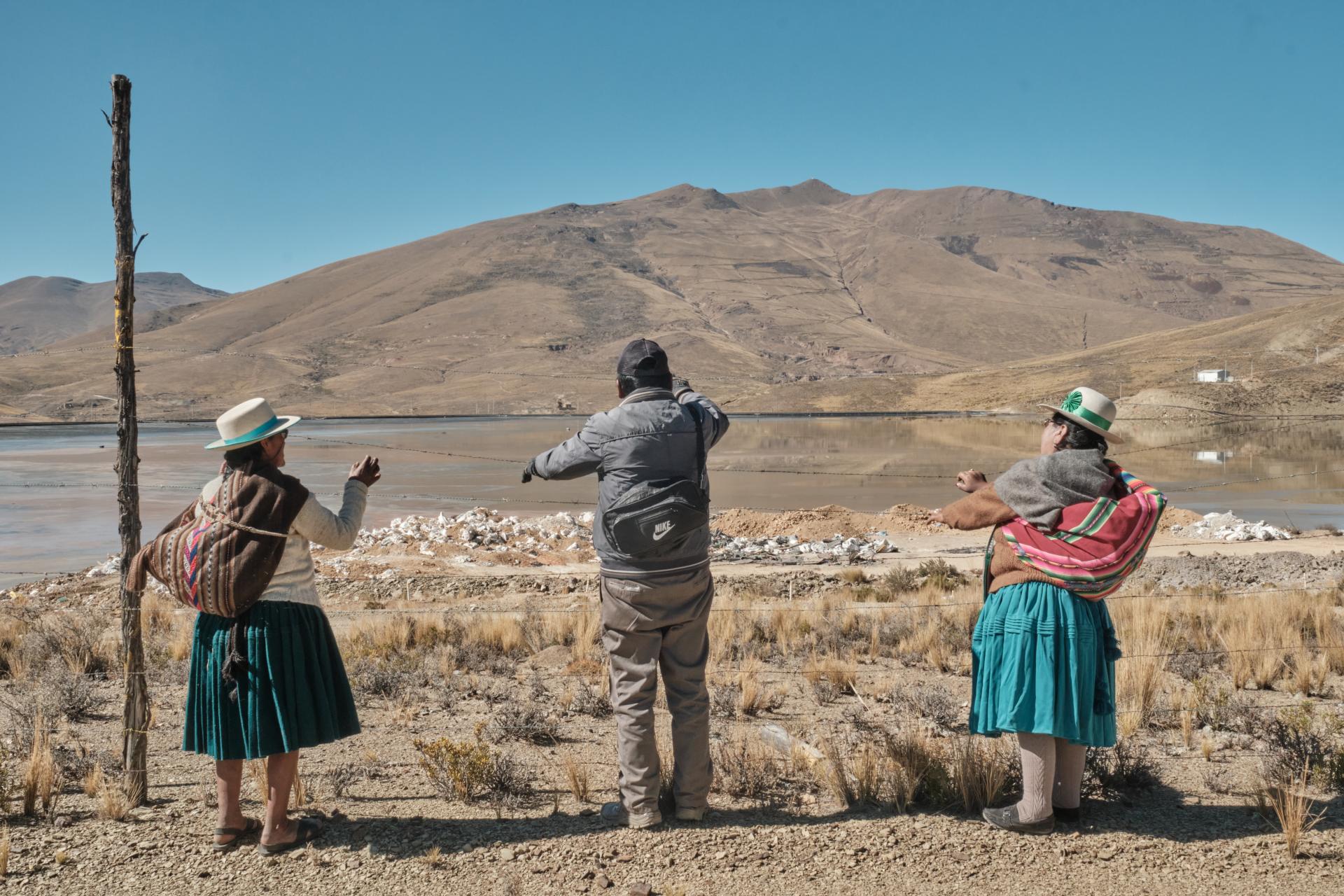
Miembros de la comunidad de Queyaqueyani, en Bolivia, observando una avalancha de productos químicos provenientes de la mina Bolívar. Durante la estación seca, el líquido tóxico se seca y se convierte en polvo. Fotografía de Julien Defourny.
Las distintas caras de un mismo incumplimiento
Para el derecho internacional de los derechos humanos, el Estado es el principal responsable de la promoción, respeto y garantía del cumplimiento de los derechos Indígenas. Sin embargo, quienes consecuentemente transgreden estos derechos porque los tergiversan, instrumentalizan (tokenizan), manipulan y/o burlan, son los Estados. Y ello se debe a que, o bien no adoptan la legislación correspondiente para proteger y garantizar los derechos, o a que no aplican la normativa, o inclusive, a que son los propios Estados los que violan las normas.
En el Gran Chaco boliviano, frente al avance de la frontera petrolera en manos de empresas estatales y privadas sobre reservas naturales protegidas por ley, desde hace años las comunidades se organizan en defensa del Parque Nacional Aguaragüe y denuncian públicamente que esta avanzada se ha dado en contra de lo establecido por la Constitución Política del Estado sobre protección de áreas naturales, manipulando el proceso de consulta de las comunidades y sin garantizar un verdadero diálogo consensuado con los Pueblos Indígenas de la región chaqueña. Pese a ello, Bolivia habilitó la actividad de exploración y explotación de hidrocarburos en más de un 70 % de la extensión del Parque Nacional Aguaragüe, territorio ancestral para el Pueblo Guaraní y sus comunidades que allí habitan.
Las empresas deben respetar los derechos Indígenas, y los Estados también. No obstante, ni los Estados ni las empresas cumplen con sus responsabilidades: el Estado incumple con su deber jurídico de reconocer y aplicar el derecho al CLPI, y las empresas aprovechan el incumplimiento de éste en lugar de participar en la búsqueda de soluciones que garanticen los derechos a la participación y al consentimiento de los Pueblos Indígenas y sus comunidades.
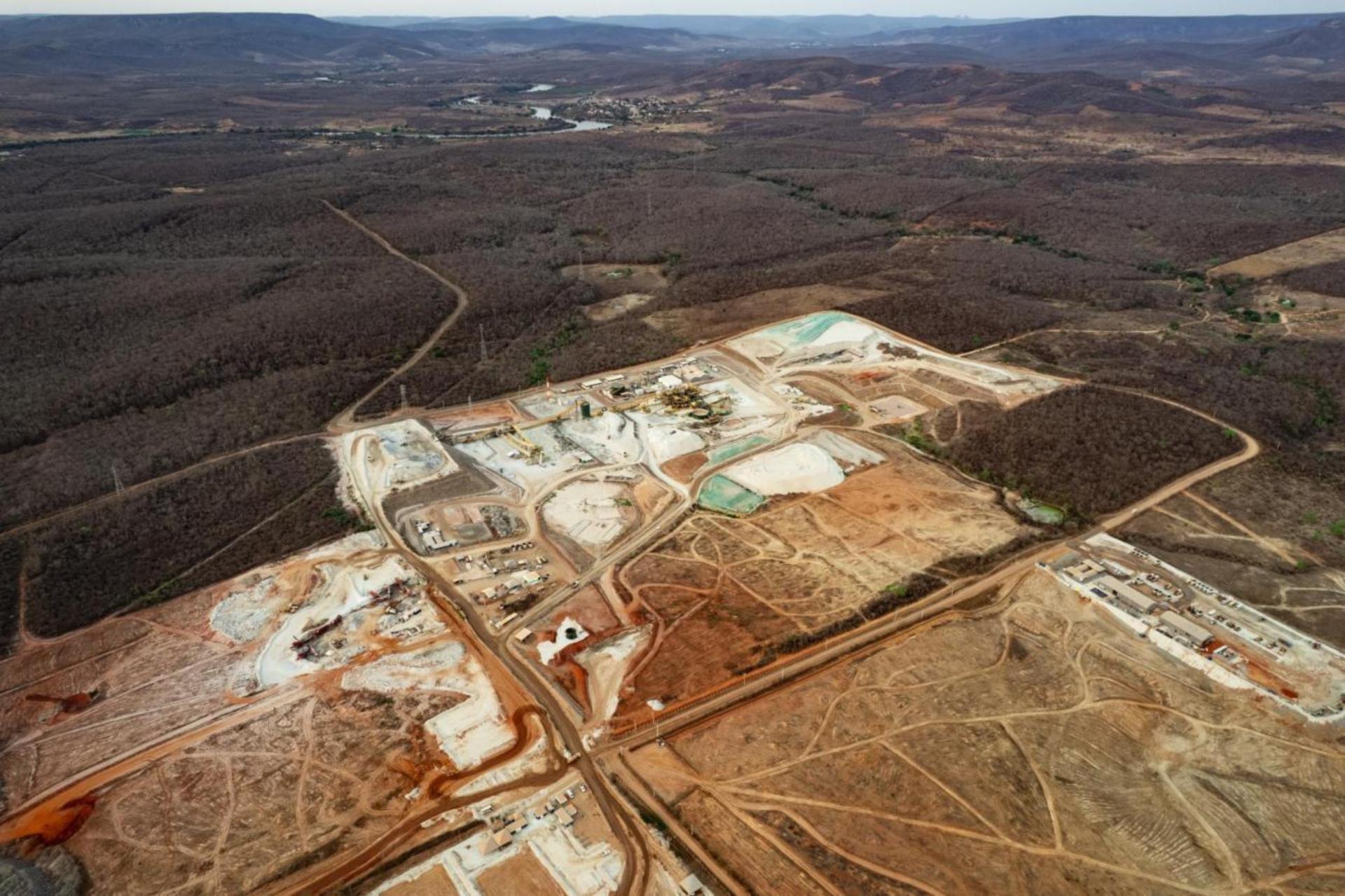
El sitio minero de Sigma Lithium en el Valle de Jequitinhonha, Brasil. Foto de Rebeca Binda.
Llamado a la acción y toma de conciencia
Sostener una agenda de inversión “verde” que persiga, hostigue, criminalice y ponga en riesgo la vida de las personas Indígenas defensoras del territorio y la vida, es inviable. Una transición energética no puede ser justa si la misma significa el desplazamiento forzado de las comunidades y familias de sus territorios, provocando una ruptura directa a la pervivencia de sus culturas, identidades y cosmovisiones.
Los Estados y las empresas deben comprometerse a respetar y cumplir con las normas y recomendaciones sobre los derechos de los Pueblos Indígenas. Es imperativo que los Estados asuman su responsabilidad de investigar las violaciones al CLPI, de diseñar mecanismos de denuncia efectivos, así como también de adoptar los recursos legales más eficientes para ello. Deben esforzarse en crear sistemas de monitoreo, evaluación y verificación del CLPI, bajo los criterios establecidos por los más altos estándares en materia de derechos de los Pueblos Indígenas.
Sin una efectiva protección y demarcación territorial, no se puede garantizar la gobernanza y pleno desarrollo de los Pueblos Indígenas en base a sus preferencias y en respeto a sus identidades culturales y cosmovisión. Proyectos de desarrollo a costa de la autodeterminación de los Pueblos Indígenas, de la transgresión a los derechos de los seres humanos, del ambiente y de todos los seres que allí viven, no pueden ser promovidos por las empresas, ni respaldados por los Estados.