For Immediate Release
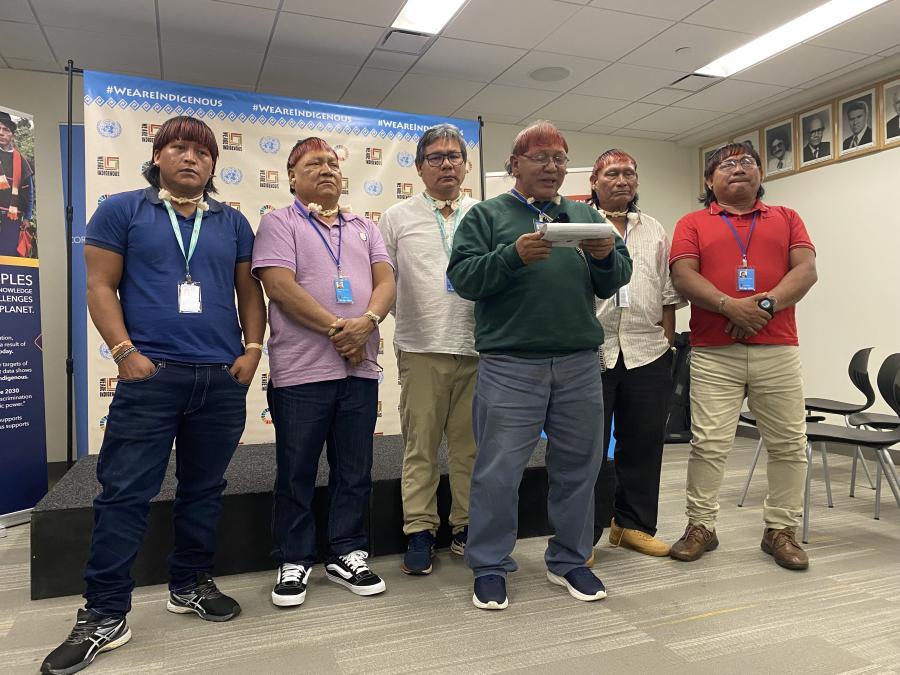
A'uwẽ-Xavante leaders travel 9,000 kilometers from the Brazilian Cerrado to the United Nations in Geneva to ask the question behind the "green" energy boom: who pays for the world's clean transition?
GENEVA, Switzerland (July 9, 2026) — Among the A'uwẽ-Xavante people of Brazil, dreams are not metaphors. They are how knowledge travels: Elders receive songs, ceremonies, and guidance for their communities while they sleep. To dream, the Xavante say, they need their territory whole.
Now, a federal railway known as Ferrovia de Integração do Centro-Oeste (FICO) is set to cut through it.
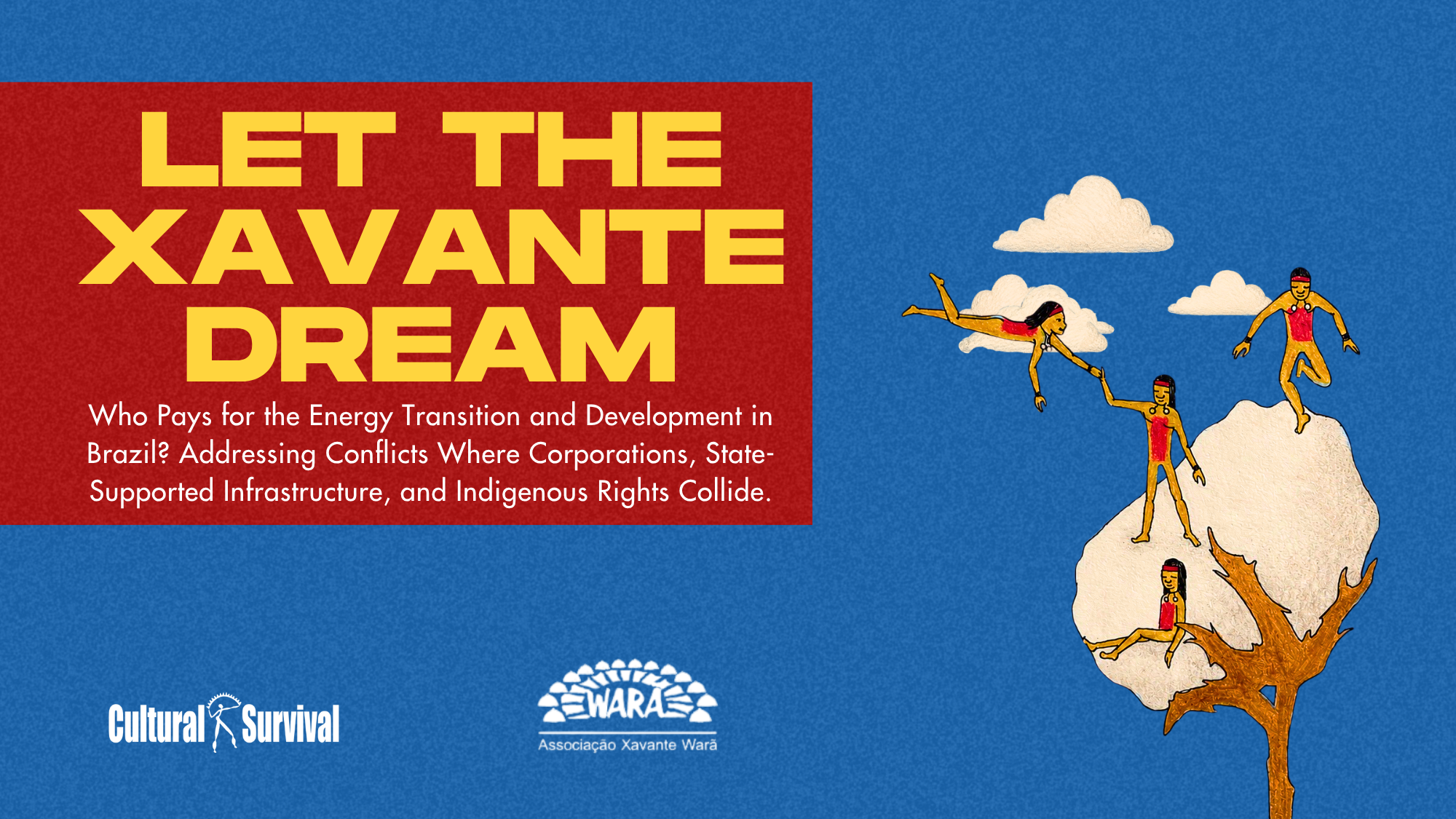
From July 13 to 17, A'uwẽ-Xavante and Xikrin leaders will bring that warning to the 19th session of the UN Expert Mechanism on the Rights of Indigenous Peoples (EMRIP), where they will launch the international campaign "Let the A'uwẽ-Xavante Keep Dreaming" and confront a paradox at the heart of global climate policy: infrastructure and mining projects sold as climate solutions are advancing over Indigenous territories without Indigenous consent.
A Railway Called "Green," A Territory Called Home
The Ferrovia de Integração do Centro-Oeste (FICO) is promoted as low-carbon logistics for Brazil's agribusiness exports. For the A'uwẽ-Xavante, it is something else entirely: a project advancing without genuine Free, Prior and Informed Consent (FPIC), threatening the sacred places, waters, and food systems that sustain their ceremonial life.
For the A'uwẽ-Xavante, the territory is the living world that holds their food, their rituals, their memory, and their capacity to dream. Fragmenting the territory, leaders warn, would fragment the people.
Their delegation arrives in Geneva with documented concerns: fragmented consultation practices, pressure on communities, and a State presenting a project as "development" that risks deepening a long history of violations against the Xavante, a Peoples who survived removals and epidemics in the twentieth century and returned to their lands to rebuild.
From the Cerrado to the Jequitinhonha: the Pattern Repeats
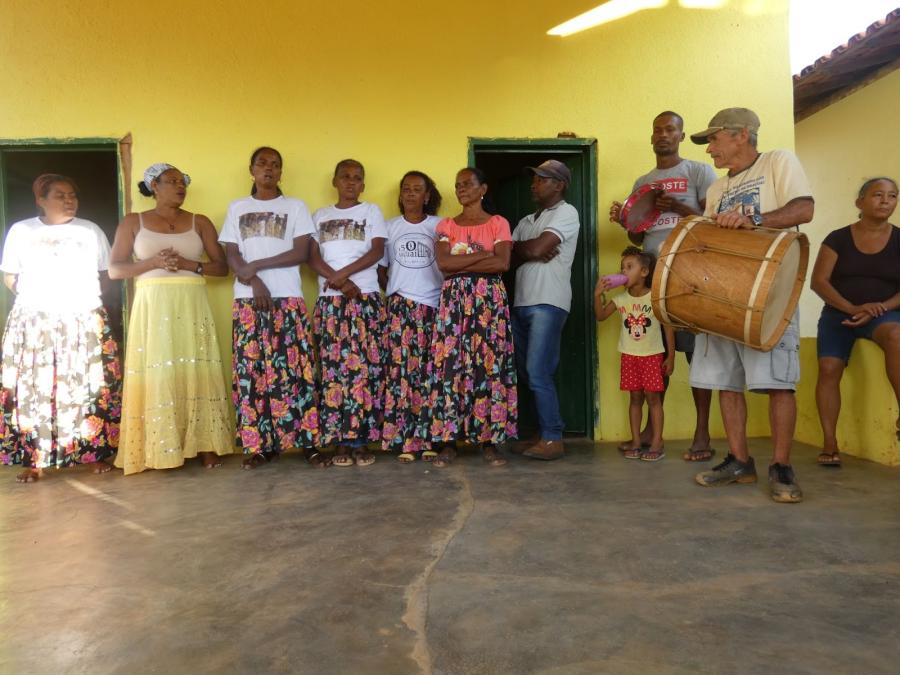
The delegation's message extends beyond one railway. In the Jequitinhonha Valley, lithium mining for the global battery supply chain is pressing into the territories of the Aranã Caboclo, Pankararu, and Pataxó Peoples and Quilombola communities. There, the Jequitinhonha River is not a resource; it is a relative. When its basin becomes a sacrifice zone for "clean" energy, an entire way of life is placed at risk.
The question the delegation puts before States, corporations, banks, and investors is simple: there is no just transition built on unjust ground. No climate solution can rest on the violation of Indigenous rights, the hollowing-out of FPIC, or the conversion of living rivers and forests into sacrifice zones.
Join Us in Geneva
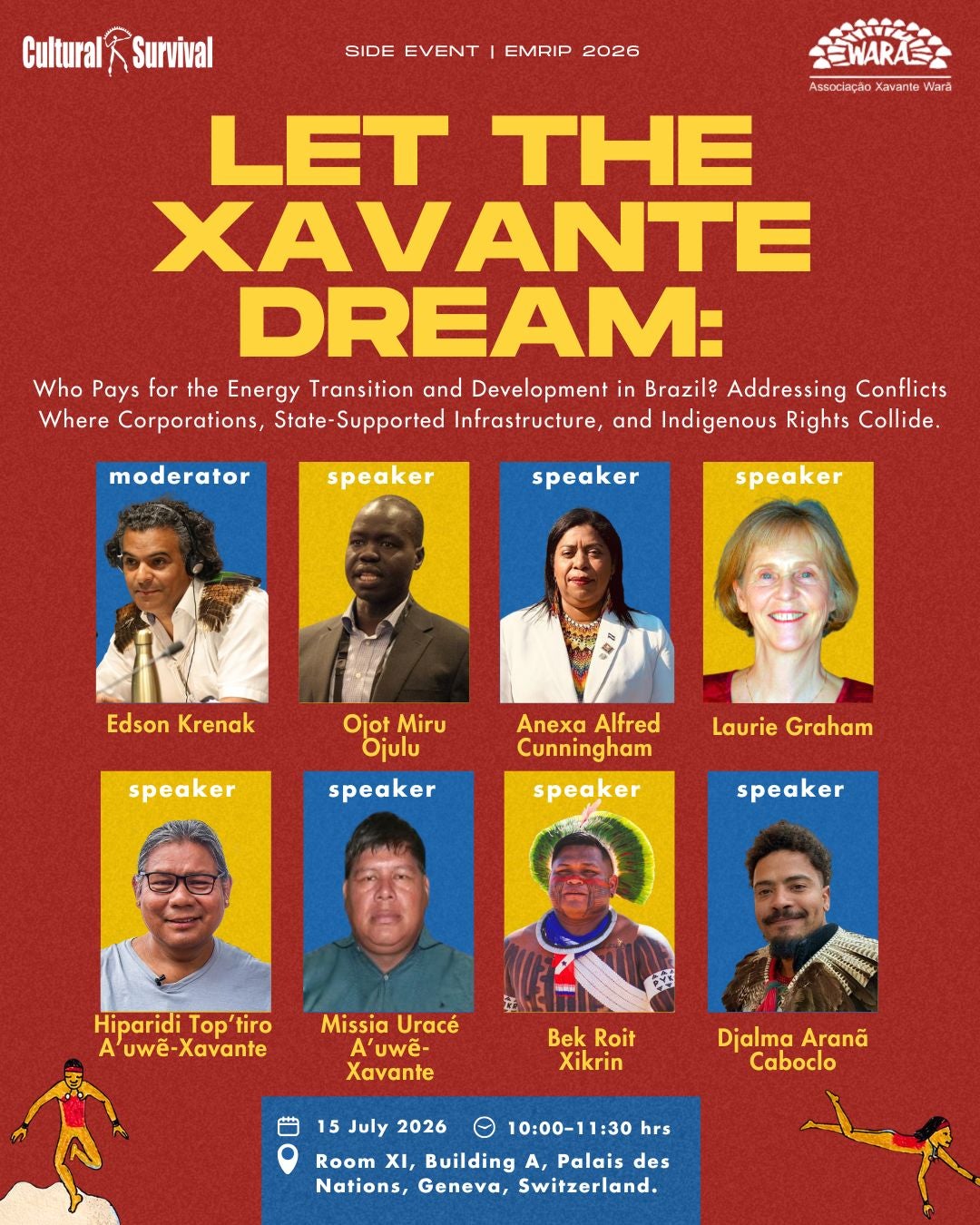
Side event: "Let the Xavante Dream: Who Pays for the Energy Transition and Development in Brazil? Addressing Conflicts Where Corporations, State-Supported Infrastructure, and Indigenous Rights Collide"
When: Wednesday, July 15, 2026, 10:00 a.m.
Where: Room XI, Building A, Palais des Nations, Geneva
The event will feature Indigenous leaders, human rights defenders, and international experts, and will mark the official launch of the advocacy brief "Let the A'uwẽ-Xavante Keep Dreaming," developed in partnership with A'uwẽ-Xavante leadership and combining litigation, international advocacy, and a global solidarity campaign.
Interviews available in Portuguese, Xavante (with interpretation), Spanish, and English before, during, and after the session.
The Voices Arriving in Geneva
Hiparadi Dzutsi Wa Top Tiro (Xavante), chief of Abelhinha Village in the Sangradouro Indigenous Territory, coordinator of the Rede Cerrado, and founder of the Associação Xavante Warã and the Mobilização dos Povos Indígenas do Cerrado (MOPIC). A lifelong defender of the Cerrado, the world's most biodiverse savanna and Brazil's forgotten frontline.
Missia Ihiwe Urace (Xavante), leader of the Areões Peoples from the Mutum community, Areões Indigenous Territory, and Secretary of Sports and Leisure for the municipality of Nazaré, Mato Grosso.
Bekroiti Xikrin (Xikrin), youth leader, teacher, and researcher. Manager of the Komrê Xikrín Indigenous Association, master's student in Languages and Literature, and advisor to the Ação Saberes Indígenas na Escola initiative, carrying Indigenous knowledge into Brazil's schools.
The delegation is accompanied by Cultural Survival staff Edson Krenak (Krenak), Brazil Program Manager; Djalma Ramalho (Aranã Caboclo), Brazil Special Projects Associate; and Thais Soares Pellosi, Executive Assistant.
About EMRIP
The Expert Mechanism on the Rights of Indigenous Peoples is a subsidiary body of the UN Human Rights Council, established in 2007 to provide expertise on Indigenous Peoples' rights and to assist Member States in achieving the goals of the UN Declaration on the Rights of Indigenous Peoples (UNDRIP).
About Cultural Survival
Cultural Survival (CS) is an Indigenous-led NGO and U.S.-registered non-profit that advocates for Indigenous Peoples' rights and supports Indigenous communities’ self-determination, cultures, and political resilience since 1972. For over 53 years, Cultural Survival has partnered with Indigenous communities to advance Indigenous Peoples' rights and cultures worldwide. CS envisions a future that respects and honors Indigenous Peoples' inherent rights and dynamic cultures, deeply and richly interwoven in lands, languages, spiritual traditions, and artistic expression, rooted in self-determination and self-governance. The core of Cultural Survival’s efforts rests on the principles of supporting, amplifying efforts, and raising awareness of self-determination for Indigenous communities. To learn more, visit www.cs.org
Media Contact:
Agnes Portalewska, Senior Communications Manager, agnes@cs.org