
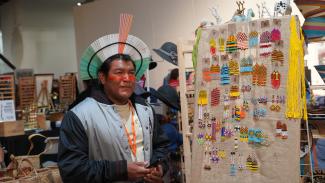
“Mi camino como artista se ha construido a partir de experiencias vividas, identidad y un compromiso con aquello que represento. Cada paso que doy lleva consigo no solo aprendizaje, sino también la responsabilidad de expresar historias, culturas y luchas que a menudo no son escuchadas”, dice Bepbere Pat-i Kayapó (mebêngôkre kayapó), del Territorio Indígena en el sur de Pará, Brasil. Kayapó forma parte de la Asociación Indígena Pykôre, un colectivo de artistas integrado principalmente por mujeres. Él entiende su práctica artística como algo profundamente entrelazado con la memoria cultural y la identidad; una forma de resistencia que sirve como una salvaguarda vital para la historia y el futuro de su pueblo.
El camino creativo de Kayapó, que comenzó observando e imitando a otras personas, pronto se convirtió en un compromiso profundo con su pueblo. Su trabajo trasciende la mera estética: “porta identidad, tiene propósito y habla directamente tanto a quienes lo comprenden como a quienes necesitan conocer esta realidad”, afirma.
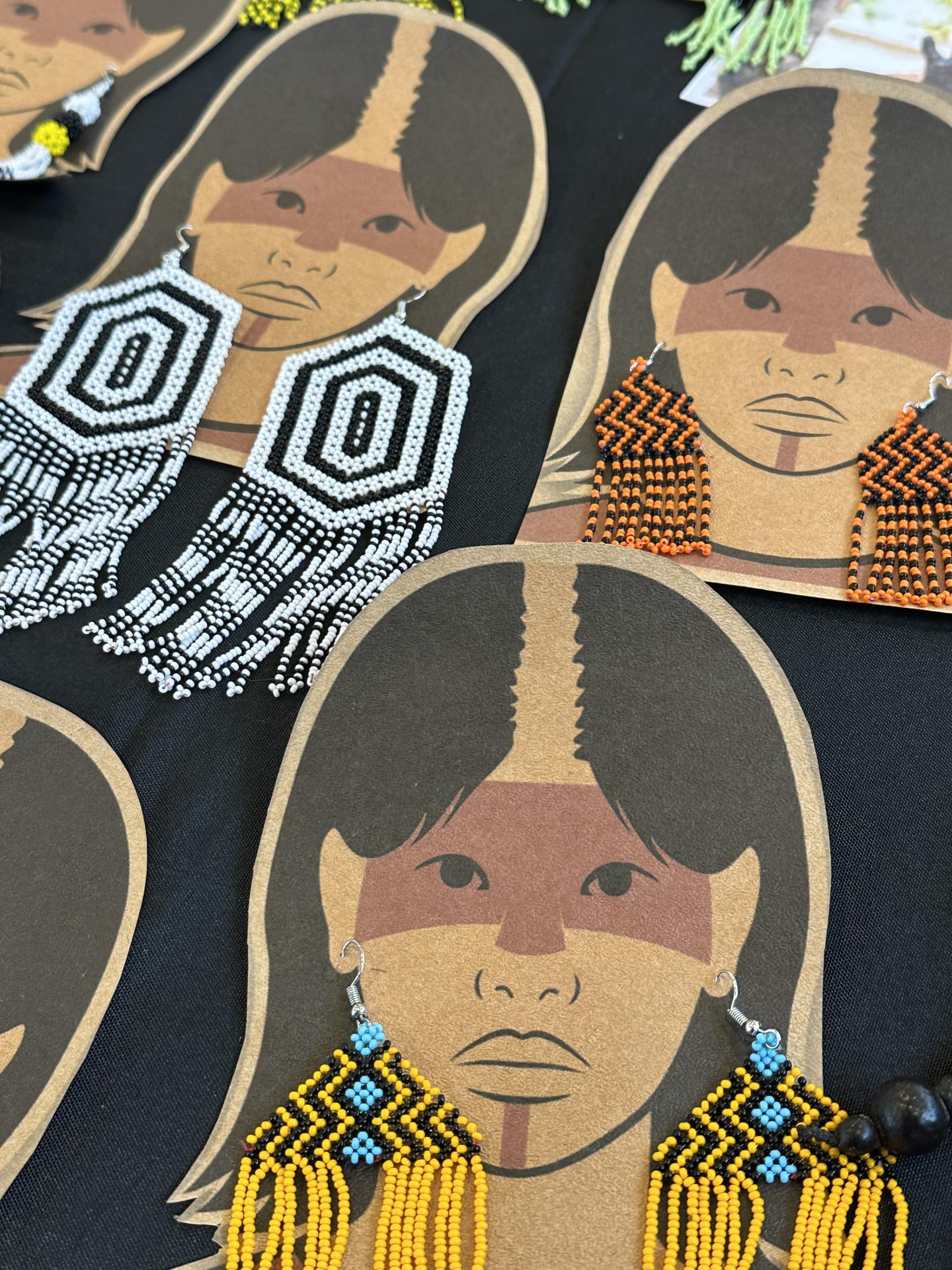
Aretes de cuentas elaborados por las mujeres de la Asociación Indígena Pykôre.
Los materiales que utiliza Kayapó —cuentas, pintura corporal, tocados, fotografía y video— son más que herramientas; son instrumentos de salvaguarda cultural. “Los materiales son muy importantes para mí. Cuando hago una película sobre la historia o registro las palabras de una persona mayor, las preservo para el futuro”, explica. Al crear cuidadosamente un archivo para guardar sus fotografías y videos, él asegura la continuidad de la cultura mebêngôkre kayapó. “Espero que las personas jóvenes busquen estos registros para ver las fotos y los videos, aprender más sobre nuestra historia y aprender de lo que se ha preservado”, dice.
La salvaguarda de la cultura enfrenta constantemente presiones externas. Kayapó identifica varios obstáculos que enfrentan las y los artistas Indígenas, comenzando por la falta de valoración. Señala que el arte Indígena “a menudo todavía se ve como ‘simple artesanía’, en lugar de una expresión artística rica, con historia, significado e identidad”, lo que dificulta su reconocimiento. La apropiación cultural es igualmente problemática. “Cuando personas externas utilizan símbolos, diseños y elementos culturales Indígenas sin comprender ni respetar su significado, se puede desvalorizar e incluso distorsionar la cultura”, afirma. El acceso limitado a espacios de exhibición, las dificultades económicas y los prejuicios profundamente arraigados también dificultan que las y los artistas Indígenas sean escuchados y respetados.
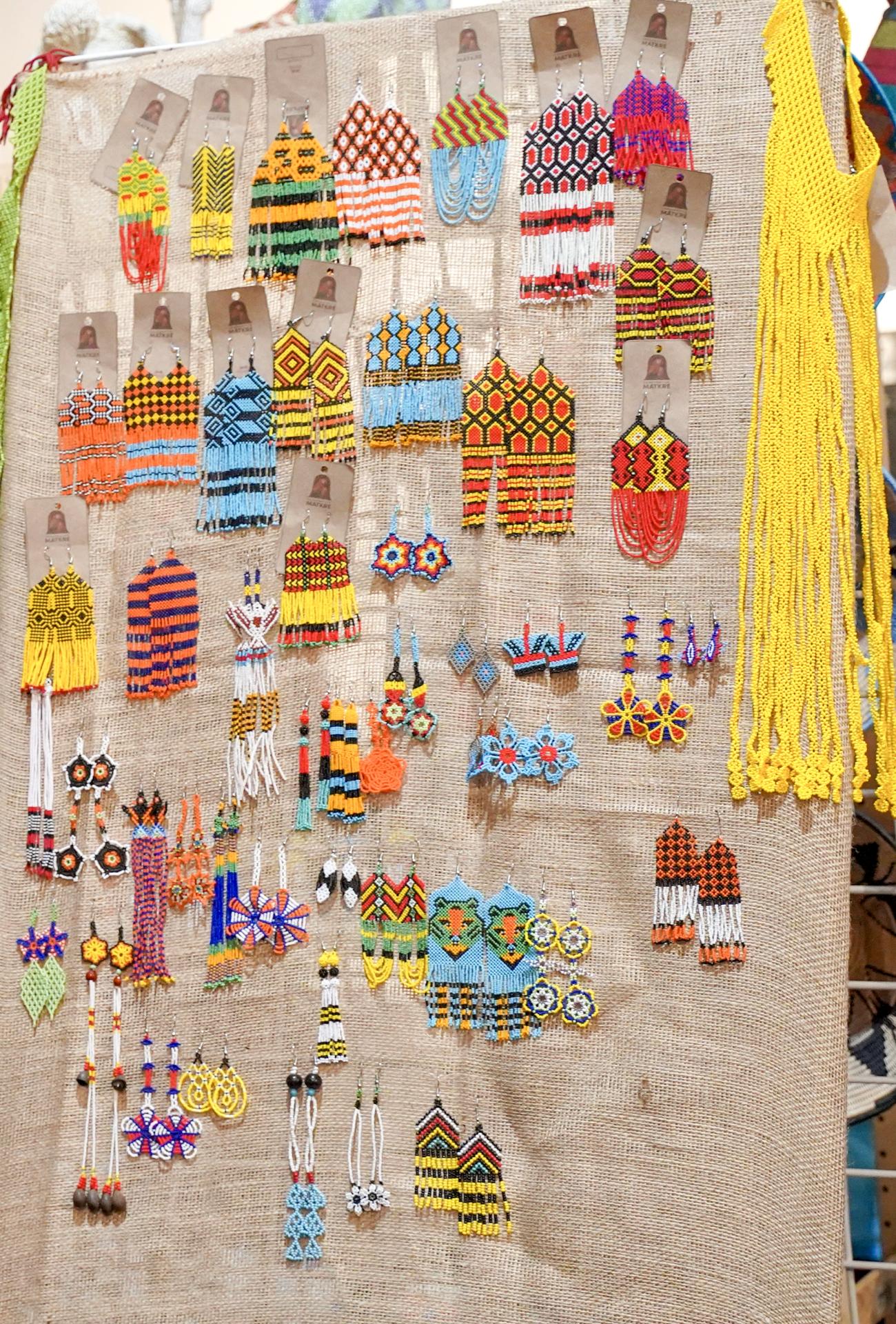
A pesar de estas dificultades, la expresión artística sigue siendo un pilar cultural. Para Kayapó y las mujeres de su colectivo, la joyería y las artesanías son formas fundamentales de mantener viva la tradición. Una simple canasta utilizada para transportar leña y mandioca tiene un significado profundo porque “no es solo un objeto: lleva consigo una utilidad cotidiana, memoria y la forma en que la comunidad preserva su conocimiento”, explica. El arte fomenta la unidad comunitaria, y la creación se convierte en un proceso colectivo en el que “las personas mayores enseñan y las más jóvenes aprenden, fortaleciendo el respeto y el vínculo entre generaciones”. El arte también afirma la conexión intrínseca con la tierra; sus elementos provienen “del bosque, los ríos y los animales, mostrando respeto y cuidado por el territorio”, dice Kayapó.
Para los Pueblos Indígenas en Brasil, donde la supervivencia suele ser la lucha principal, estas expresiones culturales son vitales. Problemas como las invasiones de tierras y la minería ilegal, la destrucción de los bosques, la contaminación de los ríos y los conflictos dentro de las comunidades son solo algunas de las amenazas que enfrentan. A pesar de la lentitud en la demarcación de tierras, la violencia contra personas defensoras del territorio y líderes, y el acceso insuficiente a la atención sanitaria y la educación, la lucha continúa: “Queremos mostrar al mundo que existimos, que tenemos voz y que nuestra cultura no está en venta”, afirma Kayapó.
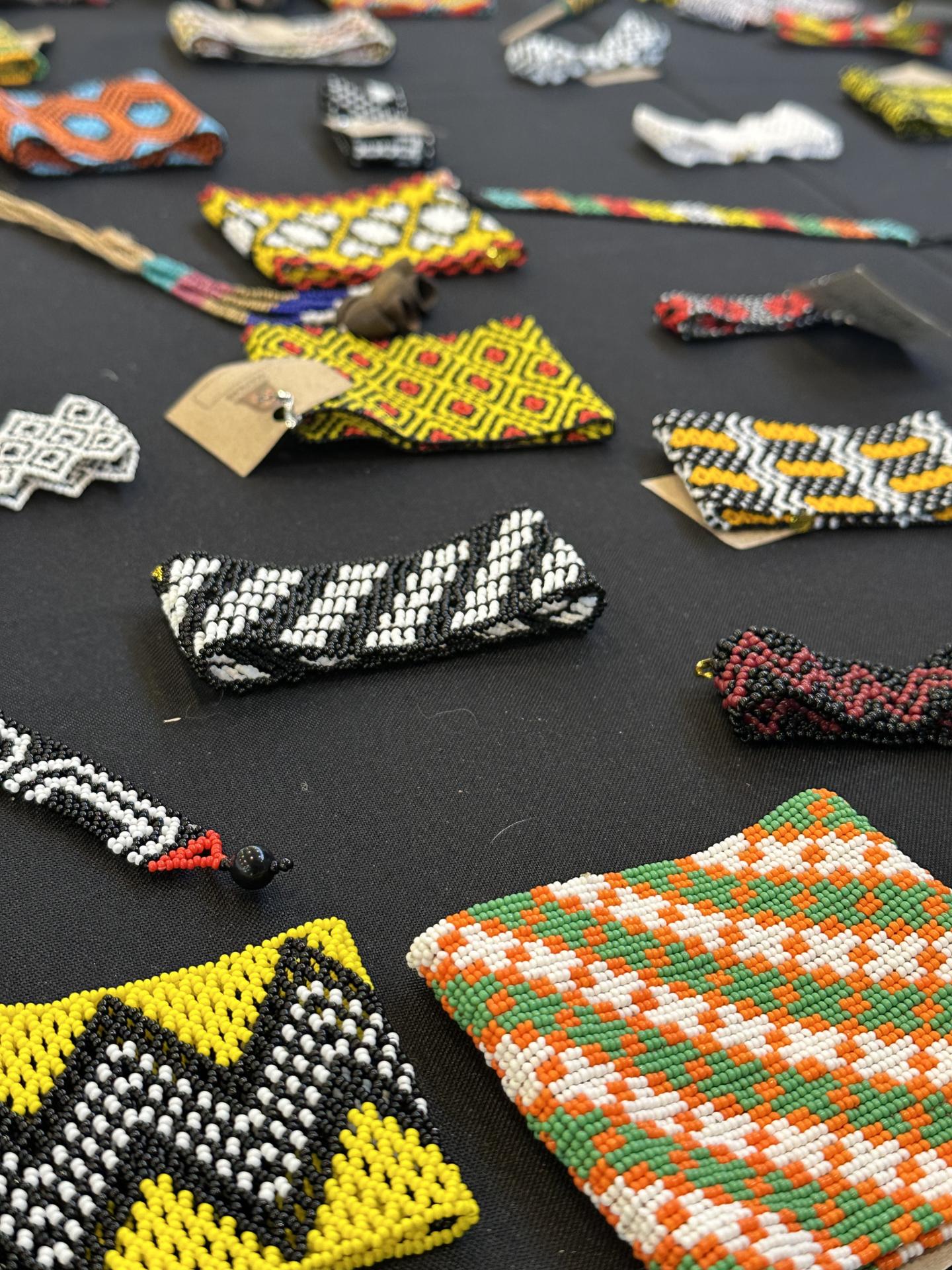
Los Pueblos Kayapó trabajan para fortalecer su cultura mediante “proyectos sostenibles, educación Indígena e iniciativas que valoran nuestra forma de vida”. Sobre los Bazares de Cultural Survival, dice: “Estamos llevando nuestro arte y nuestra cultura para mostrarlos fuera de la comunidad. Esto debe ser comprendido y respetado. El respeto es muy importante. Nuestro mayor objetivo es seguir protegiendo nuestro territorio para mantener viva nuestra cultura y garantizar la dignidad de nuestros pueblos. Nuestra cooperativa tiene una alianza muy importante con el Bazar. Para nosotros es muy importante mostrar nuestro arte y nuestra cultura”.
Asiste a los bazares de verano de Cultural Survival: del 24 al 26 de julio en Tiverton, Rhode Island, y del 1 al 2 de agosto en Providence, Rhode Island, bazaar.cs.org.
Foto: Bepbere Pat-i Kayapó. Fotografía por Cultural Survival.