
Grounded in our traditional understandings and teachings, as well as social work values of justice and human rights, Indigenous social workers are making a difference in the health and well being of Indigenous Peoples around the world. The International Federation of Social Workers (IFSW) is the worldwide body for professional social work. It comprises over 120 professional social work associations representing over 5 million social workers. IFSW has formal consultative status with the United Nations and other global bodies. In 2021, after years of advocacy from Indigenous social workers, IFSW established an Indigenous Commission. This commission consists of a Global Commissioner and five Regional Commissioners representing Europe, Asia and the Pacific, Africa, Latin America and the Caribbean, and North America. Hilary Weaver (Lakota) serves as the Global Indigenous Commissioner and facilitates the Commission’s work.
The IFSW Indigenous Commission provides leadership in advancing Indigenous issues in social work regionally and globally, centered on three interrelated themes: bringing visibility to Indigenous Peoples and issues, highlighting the importance of Indigenous Traditional Knowledge, and ensuring that the social work profession incorporates Indigenous voices and respectfully serves Indigenous people. A concise version of this article was entered into the record of the United Nations Permanent Forum on Indigenous Issues in 2026 under item 3, aligned with this year’s Forum theme, “Ensuring Indigenous Peoples’ health, including in the context of conflict.”
Members of the IFSW Indigenous Commission see important roles for social workers in ensuring the health of Indigenous Peoples. Social workers play key roles in ensuring Indigenous Peoples’ health, including in the context of conflict, as our work is often done in collaboration with community members, activists, and other professionals. Social workers can help Indigenous people access needed services and can work to change unresponsive or harmful systems and policies. When we are guided by and can embrace our own ways of being and knowing, we continue our focus on the person and their community, spiritually, physically, emotionally, and psychologically. The health of the whole person is essential for the health of the whole.
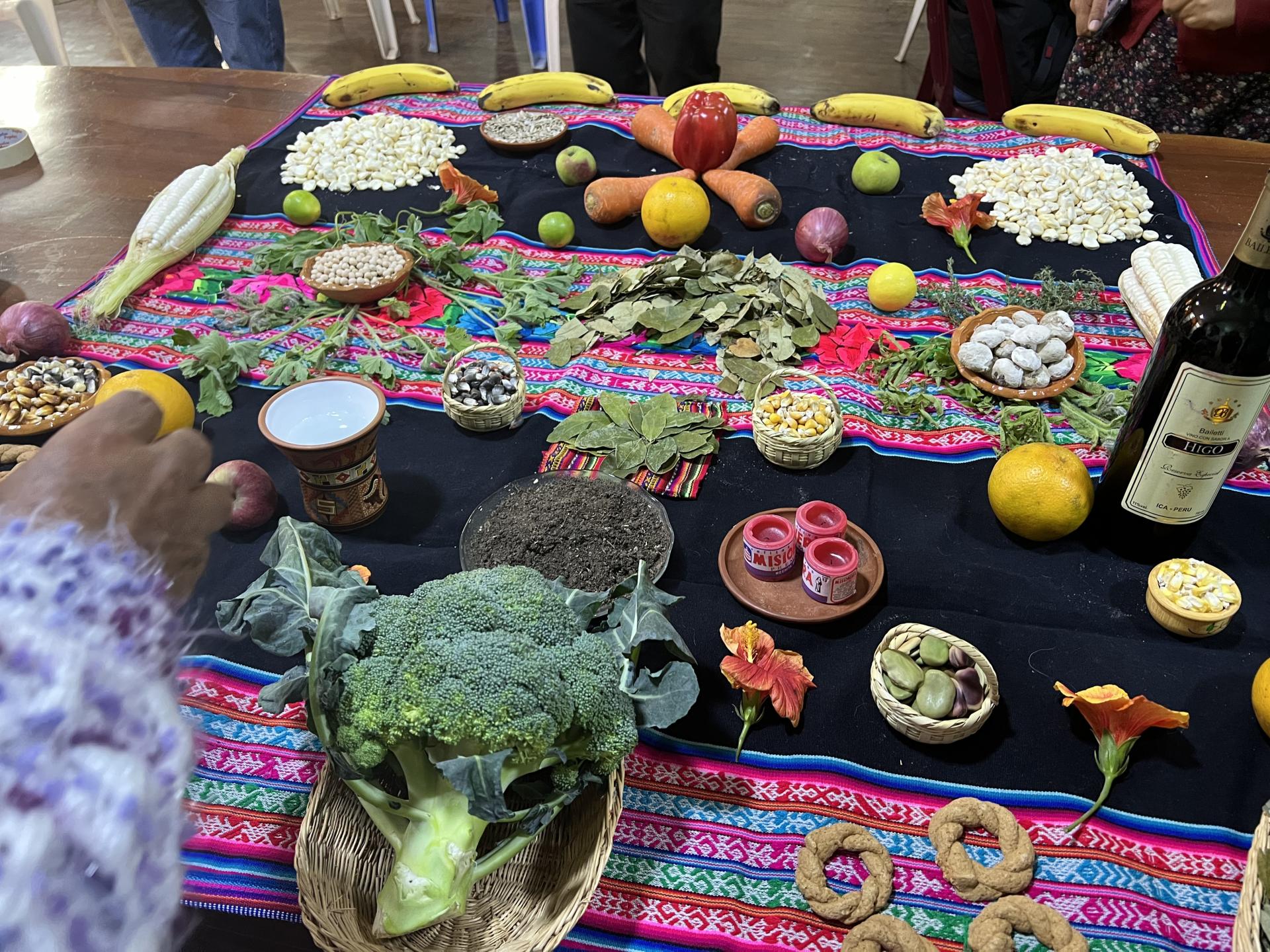
Photo by CS Staff.
Margaretha Karlberg Uutjek (Sámi) is a social worker representing the European region on the IFSW Indigenous Commission. She says that social workers can play crucial roles when Sámi individuals seek support from social service and health care systems. Her research documents that Sámi social workers bring special knowledge and skills to their work, drawing from inherited knowledge that must be valued and respected in mainstream society. For example, Sámi women and men report that Sámi women and children have been subjected to violence, which has led to trauma and various health issues contributing to decreased well being. Likewise, Sámi Elders and Sámi living with various disabilities have experienced misunderstandings and discrimination, including marginalization and racism. Uutjek points out that this can lead to inadequate treatment from systems that should serve them, resulting in isolation and health issues. Based on these experiences, some Sámi have demanded to work with Sámi professionals due to their special knowledge and cultural values, as well as demand better care from non-Sámi professionals. There are examples of non-Sámi professionals who have listened, respected their Sámi clients’ self-determination and own knowledge, and followed the guidance from the Sámi seeking support, and in these cases, Uutjek says, it has led to increased health and well being.
Daniel Flores (Kolla) represents the Indigenous Commission and the Caribbean region on the IFSW Indigenous Commission. He says that today–533 years after the invasion of Abya Yala–colonial legacies persist across many fields of knowledge, including health, and that public institutions and health professionals must recognize the contributions of traditional medicines in the healing and treatment of illnesses linked to addiction, emotional, mental, and physical conditions. For example, the midwives of Otavalo in Ecuador blend ancestral knowledge, including herbal medicine and upright birthing positions, with western practices, centering women’s intuition and cultural practices to improve women’s health. These practices have influenced Ecuador’s health policy and have been recognized by the World Health Organization.
The bonesetters of southern Chile are another example of the importance of Indigenous health practices. These healers treat fractures, dislocations, and sprains with manual manipulation, massage, and herbal remedies. Likewise, traditional herbal practices in the Andean regions during the pandemic provided undeniable evidence that, despite the dominance of western biomedical models and their reliance on pharmaceuticals, we continue to heal ourselves with our own medicines.
Member states of the World Health Organization and Pan American Health Organization that have ratified ILO Convention 169 on Indigenous and Tribal Peoples have a clear responsibility to ensure the effective implementation of its provisions on intercultural health. This requires adequate budgets, specific plans, and incorporation of traditional healers, particularly in primary care. These actions are essential to eliminate inequality, structural disadvantage, racism, and discrimination faced by Indigenous Peoples.
As we move through the International Decade of Indigenous Languages (2022-32), Flores says it is necessary to reform laws so that institutional and information systems, as well as health workers, recognize the ethnic and linguistic diversity of the regions where they operate. Social workers and other professionals must understand and support the health practices that families and communities continue to embrace. We must broaden our interventions to recognize their cultures, dietary practices, Indigenous languages, life stories, and ethnic identities. We must acknowledge the importance and socio-historical trajectories of the individuals and families we work with that extend far beyond the 200 years of history of the nation states in Latin America and the Caribbean.
Pamela L. Begay (Diné), who represents the North American region on the IFSW Indigenous Commission, says that Native people in North America reflect on their creation stories and Traditional Knowledge systems, which help ground our health. We rely on this knowledge to heal ourselves and our place in community from past events that have hindered our ways of living in balance.
The Asia Pacific region is represented by Carole Tana-Tepania (Māori). She says that in the Pacific region, health is understood through the vitality of the Vā, the relational space connecting people, ancestors, and the environment. While social workers have at times caused harm as agents of colonial systems, Indigenous practitioners are reclaiming the profession. Tangata Whenua, the Peoples of the Land, are grounded in the teachings of our wānanga (higher learning), and are moving from colonial expressions of social work toward the pursuit of holistic family well being.
Tana-Tepania describes how, as Tangata Whenua, we act as kaitiaki (guardians) of the mauri (life force) as we utilize kaupapa tuku iho (inherited values) to navigate modern conflict. We can integrate traditional healing, such as Rongoā Māori and the vibrational healing of taonga pūoro (traditional instruments), to soothe trauma that clinical models cannot reach. By centering whanaungatanga (kinship) and land-based wellness, we ensure health interventions are not imposed, but rather mana-enhancing acts of sovereignty. These community-led models, refined in our wānanga and practiced on our marae, prove that when Indigenous social workers lead with ancestral knowledge, we don’t just treat symptoms: we restore the sacred connections essential for enduring peace and wellness.
Hilary N. Weaver (Lakota) serves as President of the Indigenous and Tribal Social Work Educators’ Association as well as Global Indigenous Commissioner for IFSW.
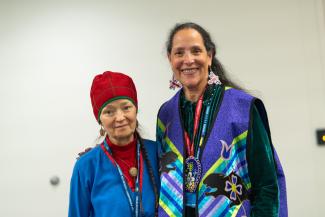
Top Photo: Margaretha Karlberg Uttjek (Sami) and Hilary Weaver (Lakota) attending the 25th session of the UNPFII. Photo by Jamie Malcolm-Brown/ Cultural Survival.