
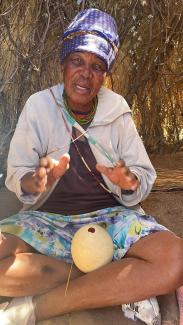
Durante la visita de campo de Cultural Survival a Botswana en abril, nos reunimos con socios subvencionados y aprendimos más sobre comunidades Indígenas de Maun y Shakawe. Al pasar por New Xade, Gumare y Ghanzi, nos encontramos con organizaciones y colectivos de jóvenes y mujeres que trabajan para salvaguardar los conocimientos Indígenas, la identidad, los derechos y las formas de vida, y que han demostrado resiliencia e innovación en el fortalecimiento de las capacidades de las comunidades Indígenas, particularmente de jóvenes y mujeres.
Los Pueblos Indígenas en Botswana están representados principalmente por las comunidades San, que se encuentran entre las culturas más antiguas con continuidad del mundo. Grupos como los Naro, !Kung y G/wi han vivido tradicionalmente como cazadores-recolectores y han desarrollado amplios conocimientos sobre plantas medicinales, vida silvestre y ciclos ambientales. Sus culturas son profundamente espirituales, con fuertes vínculos con la tierra, y su sentido de la salud, la identidad y el bienestar está estrechamente ligado a la naturaleza y a las prácticas ancestrales.
Tuvimos el privilegio de visitar la comunidad Naro en Chobokwane, lo que nos ofreció una profunda comprensión de una cosmovisión en la que la salud, la cultura y la naturaleza son inseparables. A la entrada de la aldea cultural, un sanador tradicional y las mujeres de la comunidad nos dieron la bienvenida con una danza, seguida de un ritual de purificación. Más que un acto simbólico, fue una limpieza espiritual para alejar las energías negativas y reconectarnos con la tierra y su esencia viva.
Rodeada de una rica vegetación, la propia aldea se sentía como una farmacia viva. Cada planta parecía portar significado y propósito, encarnando el conocimiento ecológico Indígena y el potencial sanador. Allí tuvimos la oportunidad de conversar con Qhoncobe Khanxla Daxo (Naro), respetado sanador tradicional y partero, quien compartió sus conocimientos sobre la medicina tradicional. Sanadores tradicionales como Daxo son verdaderas bibliotecas vivas, pues encarnan generaciones de saberes Indígenas arraigados en la relación entre las personas, la naturaleza y la espiritualidad.
La conversación que sigue destaca que este conocimiento no trata solo de sanar, sino también de mantener el equilibrio, la identidad y la continuidad dentro de la comunidad. El esfuerzo colectivo de las comunidades Indígenas y de las organizaciones que las apoyan es esencial hoy para salvaguardar estas tradiciones, fortalecer la transmisión de conocimientos a las generaciones más jóvenes y garantizar que esta sabiduría siga contribuyendo al desarrollo sostenible y a la diversidad cultural.
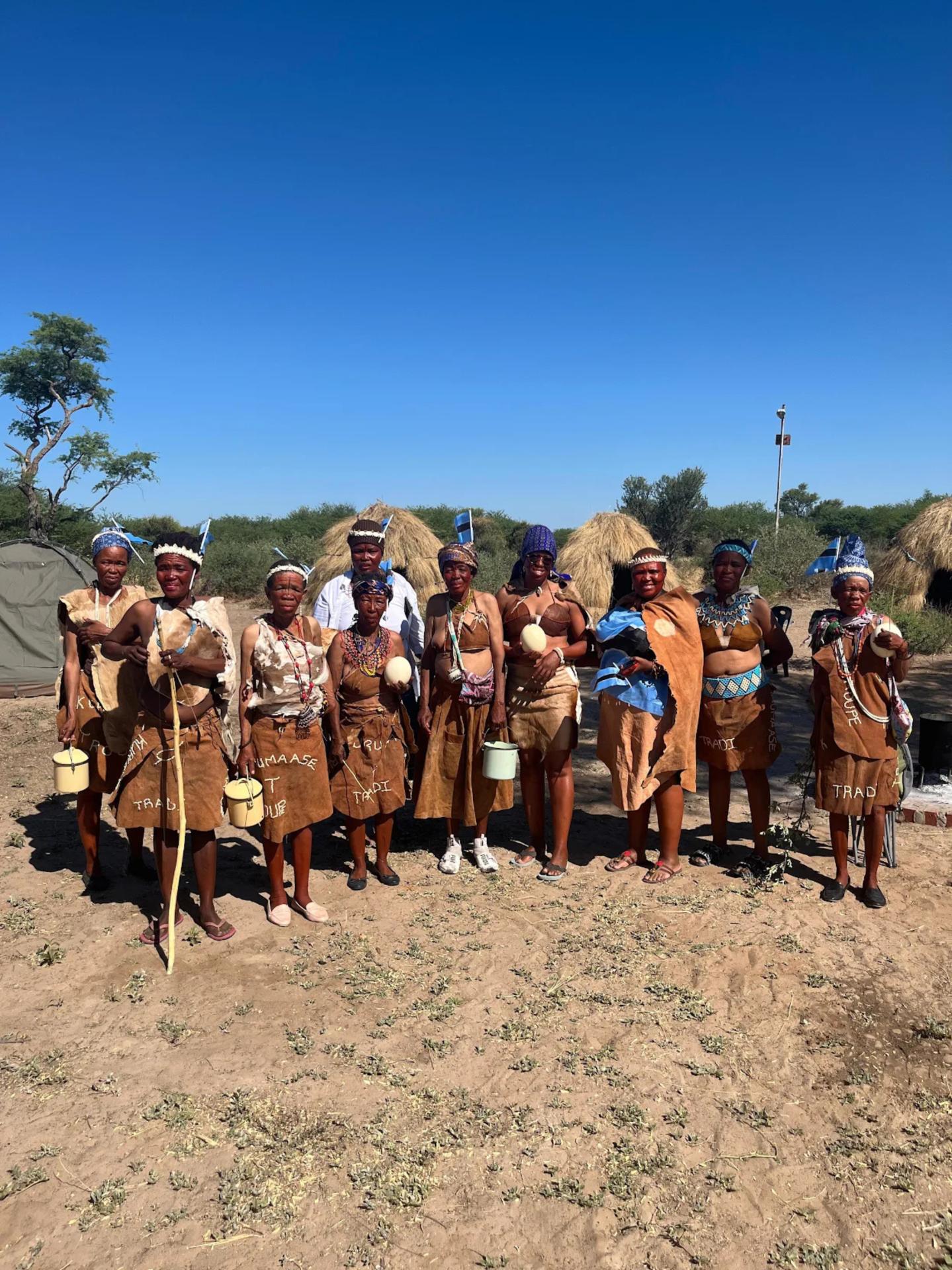
Miembros del Centro de Apoyo Familiar de Chobokwane, en Botsuana, dan la bienvenida a los visitantes. Fotografía cortesía del Centro de Apoyo a la Familia.
Cultural Survival: Cuéntanos qué papel desempeñas en tu comunidad.
Ohoncobe Khanxla Daxo: Soy sanadora tradicional Naro y partera en Chobokwane. Mi papel es asistir a las mujeres embarazadas y a las madres primerizas durante el embarazo y el parto, así como ayudar a prevenir enfermedades en niñas y niños. También soy madre de ritos de paso y formo a niñas y jóvenes en los valores San. Dirijo danzas de sanación y hablo con nuestros ancestros en nombre de la comunidad cuando hay asuntos que requieren su intervención.
CS: ¿Cómo aprendiste la sanación tradicional y quién te guió en este camino?
OKD: Aprendí de mi difunto padre, Khanxla Kii, quien también era sanador tradicional. Lo acompañaba cuando iba a desenterrar raíces o a recolectar plantas medicinales. Él me explicaba qué era cada planta y cómo actúa en el cuerpo. También me permitió dar masajes a mujeres durante la atención prenatal. Un día ayudé a una mujer a dar a luz y, desde ese momento, continué con este trabajo.
CS: ¿Cómo defines la salud y el bienestar en tu cultura?
QKD: La salud y el bienestar significan vivir en armonía con nuestro entorno, las plantas, los árboles, los animales y las personas. También significan cuidarse siguiendo nuestras normas, rituales y prácticas culturales. Las danzas de sanación también forman parte del mantenimiento del bienestar.
CS: ¿Cuáles son las principales causas de enfermedad según tus conocimientos y creencias?
QKD: En nuestra cultura, cada etapa de la vida tiene sus ritos de paso. Si estos no se respetan, pueden traer mala suerte y enfermedades difíciles de explicar. No seguir nuestros valores y tradiciones también puede causar enfermedades, las cuales también pueden venir de consumir alimentos procesados.
CS: ¿Qué métodos utilizas para sanar a las personas?
QKD: Para las personas que no han pasado por los ritos de paso o que ignoran el llamado de los ancestros, usamos danzas espirituales. Para alejar la mala suerte, usamos rituales. Para enfermedades menores, usamos plantas medicinales.
CS: ¿Puedes compartir algunos ejemplos de plantas medicinales o remedios que utilices?
QKD: Usamos distintas plantas según la enfermedad, pero este conocimiento se protege cuidadosamente y se comparte solo dentro de la comunidad.
CS: ¿Qué tipos de enfermedades o afecciones tratas comúnmente?
QKD: Apoyo a personas con problemas de la piel, enfermedades de transmisión sexual, enfermedades en niñas y niños menores de cinco años, abortos espontáneos, infertilidad tanto en mujeres como en hombres, así como cuidados durante el embarazo, masajes y acompañamiento en el parto.
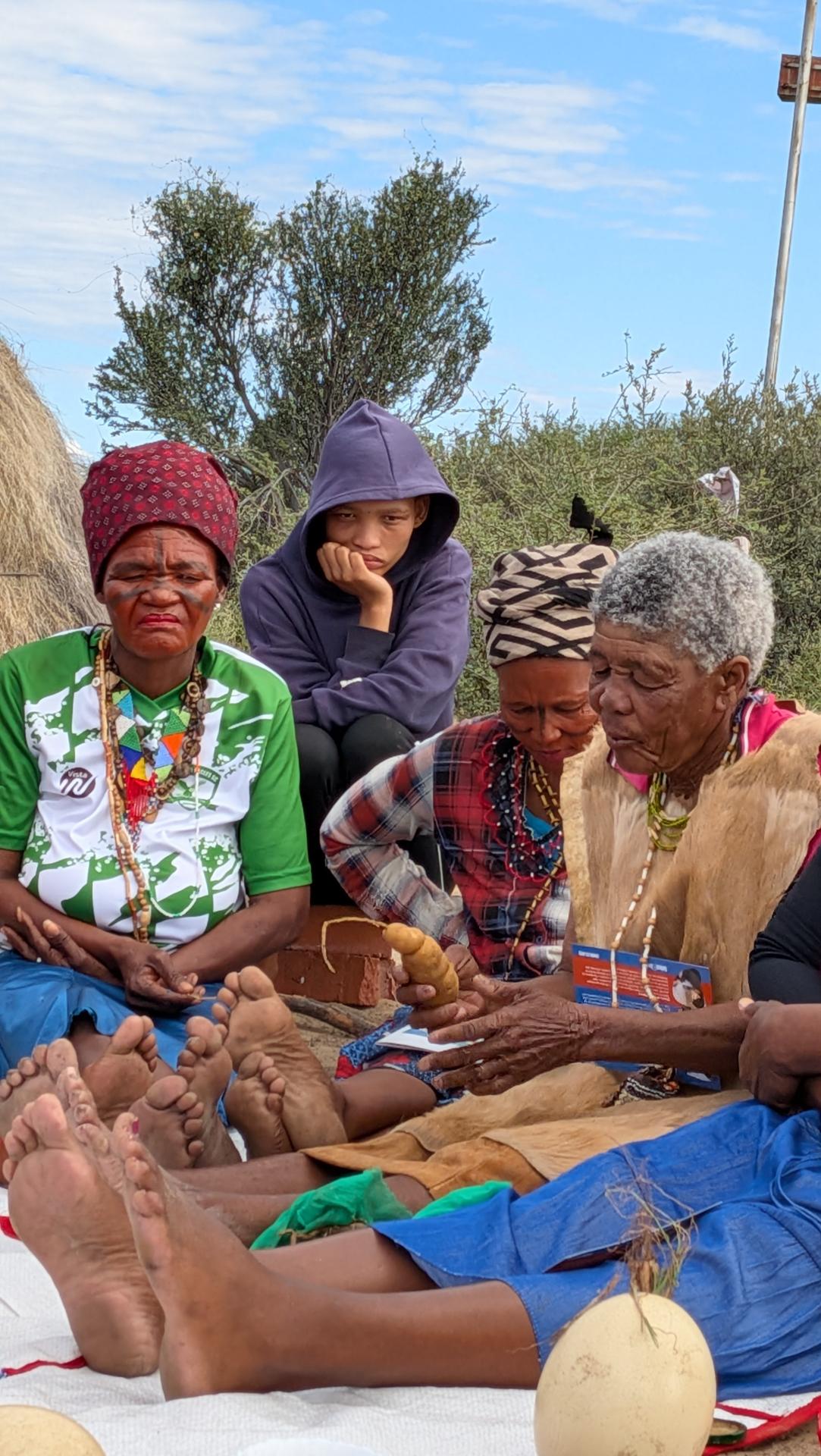
Izquierda: Qhoncobe Khanxla Daxo (Naro) junto a otras comadronas y niñas en la Aldea Cultural del Centro de Apoyo a la Familia en Chobokwane, Botsuana. Fotografía de Georges Dougnon.
CS: ¿Qué papel desempeña el entorno en tus prácticas de sanación
QKD: La tierra es central en todo lo que hacemos. Nuestras plantas medicinales crecen en lugares específicos y su fuerza depende del suelo, la lluvia y las estaciones. Cuando el clima cambia o la tierra es alterada, algunas plantas escasean o pierden su poder. Creemos que la tierra porta el espíritu de nuestros ancestros. Cuando recolectamos plantas, les hablamos y pedimos orientación. Sin un entorno sano, nuestras prácticas de sanación no pueden continuar.
CS: ¿Cómo se transmite este conocimiento a las generaciones más jóvenes?
QKD: Durante los ritos de paso, se enseña a las y los jóvenes sobre las plantas medicinales y las prácticas de sanación. Algunas personas sanan con plantas; otras, mediante el canto, la danza o el masaje. Cuando las personas mayores ven que alguien tiene un don, lo guían
CS: ¿Qué desafíos enfrentas para preservar este conocimiento? ¿Cuál es tu visión para el futuro?
QKD: El principal desafío es la falta de interés de la juventud. Hoy, gran parte de ella no está interesada en aprender. Algunas se interesan por el canto y la danza, pero incluso estos a veces se modifican y pierden su significado original. Estamos trabajando para enseñar a las pocas personas que sí tienen interés y para documentar nuestras plantas medicinales y sus usos. Nuestra esperanza es que este conocimiento continúe y no se pierda.
Derecha: Qhoncobe Khanxla Daxo. Fotografía cortesía del Centro de Apoyo a la Familia.