
One of the phrases most often heard in historic preservation, especially as the United States approaches its 250th anniversary, is “national significance.” It is spoken with authority. It appears in criteria, nominations, review processes, and decisions that determine what is worthy of recognition, protection, and investment. It is often treated as fixed, self-evident.
Recently, during a conversation with a historic preservation partner in New York, a familiar concern surfaced: one of the challenges in advancing deeper, community-based, grassroots work, particularly related to Latinx preservation, is operating within a framework of national significance that too often excludes Latinx histories. She said that early in her career, this was experienced as a burden, rooted in the reality that many colleagues did not share the same historical references or lived experiences, requiring constant efforts to educate, persuade, and justify why a place or story deserved recognition.
Preservation practice has too often conflated documentation with existence. But today, that perspective has shifted. There is an opportunity to expand the definition itself, to reshape institutional training and practice. An opportunity to pause and ask a more honest question: what do we really mean when we say “national significance”? Because much of inclusion in the American record depends on it.
At Latinos in Heritage Conservation, we understand “place” differently. We do not see regions only through census boundaries, state lines, or administrative groupings. We see them through shared histories of colonization, Indigenous dispossession and continuity, migration, labor, and resistance. These histories overlap. They do not stay neatly inside borders. Water systems, agricultural traditions, foodways, trade routes, and ceremonial practices moved across these landscapes long before modern nation-states imposed fixed boundaries.
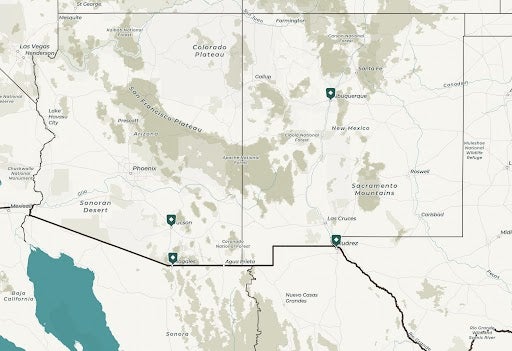
This matters deeply for Latinx preservation. Many Latinx communities in the United States carry multidimensional identities shaped by Indigenous ancestry, migration, displacement, labor, language, and survival across generations. Across the Borderlands, the Caribbean, the Pacific, and migrant corridors throughout the United States, communities have been shaped by Spanish colonization, Mexican governance, U.S. annexation, border militarization, plantation economies, agricultural labor systems, refugee movement, and Indigenous survival. These are not separate histories. They live together in families, neighborhoods, landscapes, and memory.
Preservation systems often miss the ways communities actually carry history. An acequia, a barrio plaza, a mercado, a pilgrimage route, a mural, a farmworker camp, or a kitchen table where an abuela passed down language, medicine, prayer, and memory may hold histories that are local, national, and transnational at once. The significance does not begin when an institution recognizes them. It begins with the people who have carried them. And yet, many of these places, and the people connected to them, have been told they are not significant enough. This is not due to a lack of impact. It reflects how significance has historically been measured: monuments over movements, architecture over people, permanence over lived experience.
Long before 1966, before the landmark report “With Heritage So Rich” issued the call to action for a national program for historic preservation that would lead to the National Historic Preservation Act, communities were already carrying their own histories. As that report reminds us, “Our nation began with migrations, grew with migrations, and remains a nation of people on the move. The natural result in too many cases has been a neglect of setting points and an indifference to our cultural trail of buildings and places. This is what we are trying to correct.”
Indigenous Peoples have long understood place as relational, sacred, and alive, long before borders or formal categories of significance. The lands now called the U.S. Southwest and Borderlands include Pueblo Peoples, Diné, Apache, Comanche, Ute, Tohono O’odham, Yaqui, and many other Indigenous Nations and communities whose relationships to land did not begin with the United States, Mexico, or Spain. In the Caribbean, Taíno survival and memory continue to shape conversations about identity, ancestry, and belonging. Across the Americas, Maya, Zapotec, Mixtec, Nahua, Quechua, Aymara, Garifuna, and many other Indigenous and Afro-Indigenous Peoples have shaped the histories carried by many Latinx communities today.
Some people identify directly as Indigenous. Some belong to Indigenous communities and Nations. Others carry Indigenous ancestry that was silenced, fragmented or made difficult to name through colonization, forced assimilation, racialization, migration, and border formation. To honor Latinx heritage with care, we must make room for that complexity. This is especially visible in the Borderlands, where communities moved, traded, gathered, prayed, farmed, and cared for one another across these regions long before they were divided by nation-states, checkpoints, or preservation jurisdictions.
For many Latinx people, these histories are not separate from identity. They live inside family memory, language, foodways, ceremony, migration stories, agricultural knowledge, and relationships to land. These practices are not remnants of the past. In many communities, they remain active systems of knowledge, care, and survival. Women, especially abuelas, have held history not in formal archives, but in their bodies; in braids, routines, recipes, language, prayer, medicine, and acts of love.
Practices like acequia stewardship, chile cultivation, and traditional medicine continue to reflect relationships to land, water, community, and ancestral knowledge that persist despite imposed political borders. The Tohono O'odham Nation, for example, has communities and ancestral ties that extend across what is now the U.S.-Mexico border. That reality challenges preservation frameworks that treat borders as fixed containers for history, even when the people, memory, and cultural relationships predate those borders.
In my work, I have sat with Elders who speak about migration routes, gathering spaces, murals, churches, waterways, and neighborhood landmarks not simply as historic sites, but as living extensions of identity, belonging, and survival. Sometimes the building has changed. Sometimes the history was never written down in the language institutions expected. But the community knows. The memory is still there.
As the United States prepares to commemorate 250 years of independence, many Indigenous and historically marginalized communities are still navigating the ongoing realities of displacement, erasure, and exclusion from the narratives the nation uses to define itself. But if national significance is understood as something lived, collective, and cumulative, shaped by everyday people, migrations, labor systems, acts of resistance, and intergenerational memory, the story of this country begins to look very different.
This moment calls for a shift: to challenge institutions, preservation commissions, boards of review, and the criteria they rely on. To ask harder questions about whose significance has been overlooked, and why. It calls for investing in community knowledge, lived experience, and histories carried outside institutional archives. For training the next generation of preservationists to recognize integrity not only in materials, but in memory, storytelling, and cultural continuity.
Recognition has never been a prerequisite for knowing who we are. Communities have always been the historians of their own lives, carrying stories through survival, movement, labor, and inheritance. The question is not whether these places and stories are nationally significant. The question is whether we are willing to recognize that they always have been.
--Sehila Mota Casper is Executive Director of Latinos in Heritage Conservation, an organization leading national efforts to preserve Latinx places, stories, and cultural heritage. She previously served as a senior field officer at the National Trust for Historic Preservation.
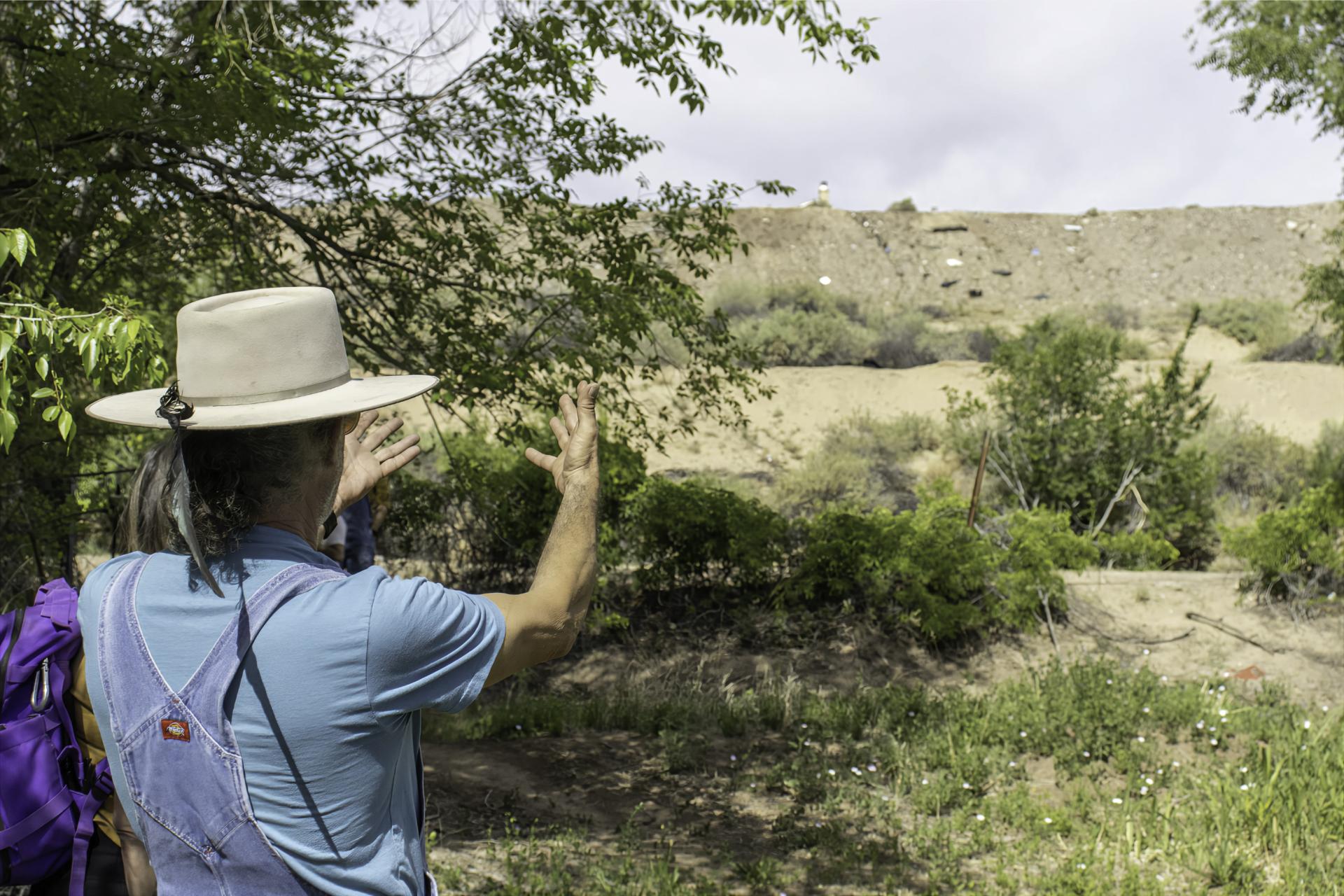
All photos courtesy of Jamie Malcolm-Brown.
Top photo: El Tiradito, a shrine in Tucson’s Barrio Viejo and the first site in Arizona listed on the National Register of Historic Places for its cultural value. People have been leaving candles, notes, and prayers here for generations.
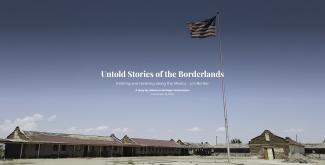
For generations, the Borderlands have carried stories that existed long before borders, checkpoints, or lines on a map. “Untold Stories of the Borderlands” is part of Latinos in Heritage Conservation's work through the Abuelas Project to document the people, places, businesses, memories, and cultural landscapes that continue to shape life along the Mexico–U.S. border. Through storytelling, preservation, and community memory, this StoryMap invites people to see the Borderlands not as a dividing line, but as a living region shaped by resilience, migration, Indigeneity, and belonging.