
Sudamérica alberga la mayor concentración de Pueblos Indígenas en Aislamiento y Contacto Inicial (PIACI) del planeta. Al vivir en lo profundo de los bosques amazónicos y chaqueños, las áreas que habitan los PIACI resguardan la biodiversidad en su forma más rica y contribuyen enormemente a la estabilidad climática. A medida que enfrentan amenazas cada vez mayores derivadas de la minería, la tala y la invasión de sus territorios, su supervivencia depende de asegurar sus territorios y bosques.
Si bien la situación de los Pueblos Indígenas en la Amazonía es relativamente conocida, no ocurre lo mismo con la grave situación de quienes viven en el bosque del Chaco, el segundo bosque más grande después de la Amazonía y una de las zonas más amenazadas por la deforestación. Las regiones del Chaco y la Amazonía son interdependientes, ya que el Chaco recicla el agua de los ríos voladores amazónicos. Estos ríos atmosféricos transportan alrededor de 20 mil millones de toneladas de agua al día, proporcionando lluvias cruciales y regulando el clima de todo el continente, lo que a su vez contribuye a la regulación del clima global.
Si el Chaco es desmontado, esto afectará tanto a la Amazonía como al Chaco, con consecuencias devastadoras para su biodiversidad. Respetar los derechos de los Pueblos Indígenas que viven y resguardan estos bosques es vital para su supervivencia y para el planeta en su conjunto.
El pueblo Ayoreo en Paraguay
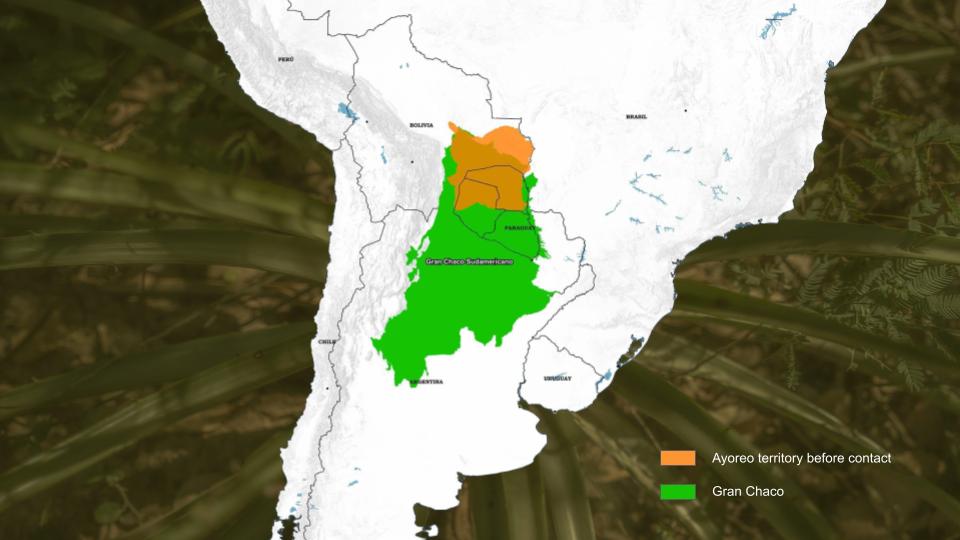
Los Pueblos Indígenas que viven en aislamiento en el Chaco son los últimos PIACI del continente fuera de la cuenca amazónica. Los Ayoreos son el grupo más numeroso entre ellos, aunque sus cifras actuales, estimadas entre 80 y 150 personas, son un indicio de la situación extrema que enfrentan estos pueblos del bosque, con la amenaza de extinción cada vez más cercana.
El territorio tradicional de los pueblos Ayoreo en Paraguay ocupa aproximadamente 110 000 kilómetros cuadrados en la región del norte del Chaco. Alrededor de 18,000 kilómetros cuadrados de este territorio permanecen intactos, pero la mayor parte está clasificada como Áreas Nacionales Protegidas. Aunque la legislación paraguaya garantiza los derechos de los Pueblos Indígenas, muchas comunidades tienen dificultades para asegurar la propiedad legal dentro de su territorio tradicional, lo que deriva en disputas por la tierra. Hasta la fecha, solo alrededor de 2,000 kilómetros cuadrados permanecen bajo control Ayoreo. Los Ayoreos quieren continuar sus vidas en su territorio boscoso. Por ello, el monitoreo ambiental de estas áreas por parte de los Ayoreos y sus aliados es crucial para su defensa y supervivencia.
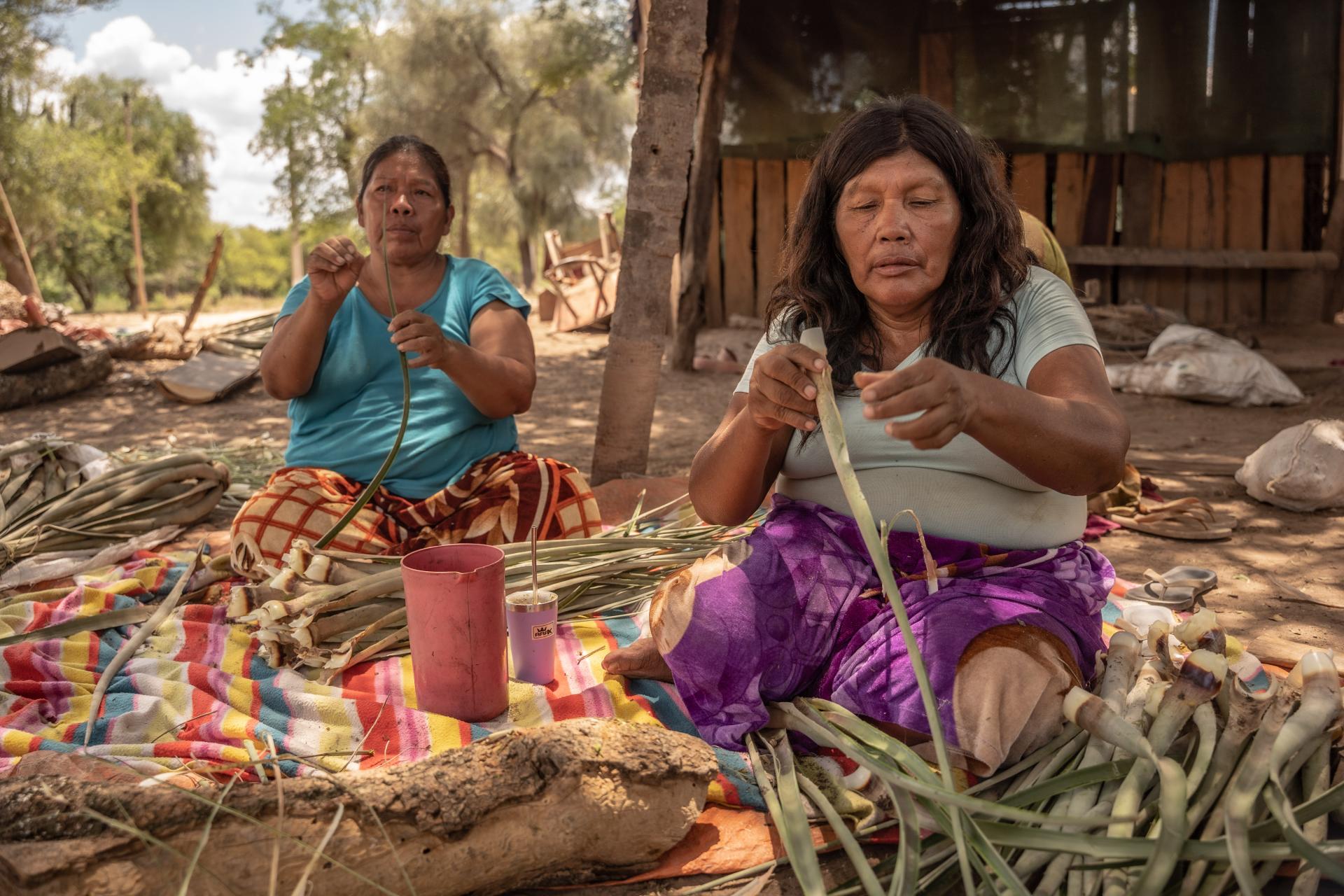 Gotó y Oide, de la comunidad Ayoreo de Ijnapui, preparan hojas de dajudie para extraer fibras destinadas al tejido.
Hoy, los hombres Ayoreo que viven en la periferia de la sociedad industrializada recurren a vender su fuerza de trabajo, por ejemplo, en ranchos ganaderos y proyectos de infraestructura, mientras que las estrategias económicas de las mujeres Ayoreo se centran principalmente en el tejido. A través de su tradición textil, tejen su relación con su territorio, sus familias, sus comunidades y sus propias historias, usando telas hechas con hilos de fibra de dajudie recolectada dentro de sus territorios e impregnando estos textos-tejido con su herencia cultural. “Nuestras madres nos enseñaron este oficio. Hoy continuamos la tradición que ellas nos transmitieron”, dice Chise Etacore, una oithedie (tejedora).
Los colores evocan paisajes del bosque y los diseños se asemejan a los símbolos de los clanes Ayoreo y de sus parientes naturales, como la huella del oso hormiguero, los tonos del horizonte, las pisadas de venado o las escamas de serpiente. Sus diseños reflejan sus esfuerzos por mantenerse conectadas con los elementos de su territorio y su cultura en medio de las realidades y desafíos actuales.
Estos hermosos tejidos ya no son solo para su propio uso; ahora también se venden para apoyar a sus familias y comunidades. “Nuestra actividad principal es trabajar con dajudie y queremos que sea continua y constante. El tejido de telas de dajudie no debe detenerse y la búsqueda de ventas tampoco debe detenerse”, dice Eremilda Chiqueno, oithedie.
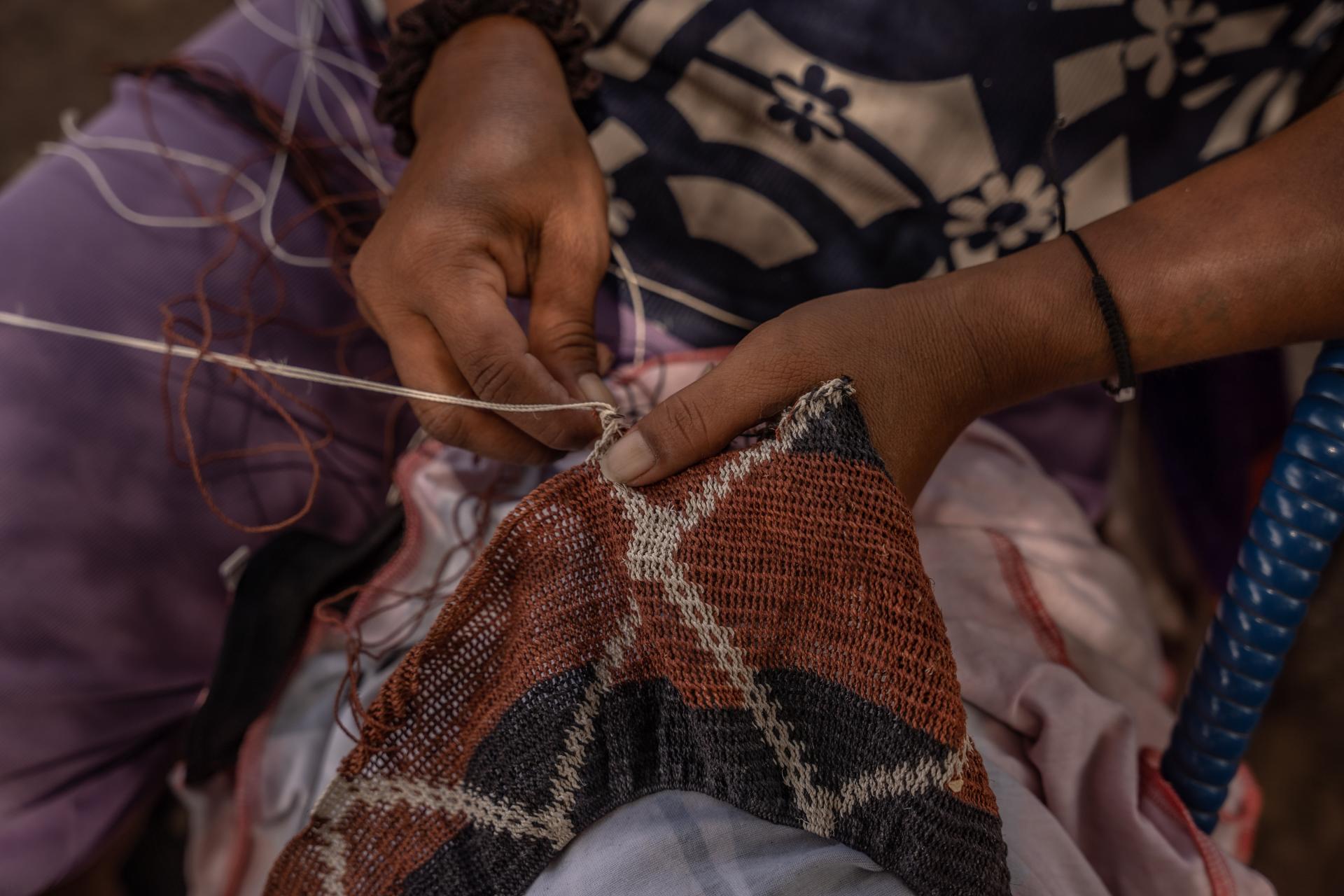
Se teje un bolso con fibras de dajudie siguiendo el diseño anchingiane (serpiente de cascabel).
Apoyo y supervivenciaLa Iniciativa Amotocodie trabaja con comunidades Ayoreo para proteger el Chaco paraguayo y defender los derechos de los pueblos Ayoreo mediante la defensa legal, el monitoreo territorial, el fortalecimiento comunitario y la conservación ambiental. Los Ayoreo han intensificado su interés en monitorear eficazmente su territorio para defenderlo y protegerlo, así como para formular estrategias de subsistencia, contingencia y resiliencia. En alianza con Quipa Collective, un colectivo multidisciplinario de activistas, líderes comunitarios y pensadores sistémicos comprometidos con la protección del vasto patrimonio biocultural del planeta, apoyan una serie de procesos cruciales para la supervivencia de la comunidad.
Junto con personas expertas Ayoreo e integrantes de la comunidad, la Iniciativa Amotocodie monitorea la deforestación y los incendios en el norte del Chaco paraguayo, territorio tradicional Ayoreo, tanto en terreno como por satélite. También monitorea y protege a grupos Ayoreo que viven en aislamiento mediante el registro de señales para identificar las áreas donde hay presencia de Pueblos en aislamiento, evitando así el contacto forzado. Los Ayoreos son los actores clave en esta labor de protección de sus parientes no contactados.
Además, la Iniciativa Amotocodie apoya los procesos de las comunidades Ayoreo en defensa de sus derechos ambientales, territoriales y culturales, contribuyendo a la defensa de su derecho a evitar el contacto y a la autodeterminación de los Ayoreo que viven en aislamiento. Lo más importante es que su enfoque se centra en la defensa del derecho de los pueblos Ayoreo a evitar el contacto, así como en la promoción y protección de la autodeterminación de los Ayoreo que viven en aislamiento.
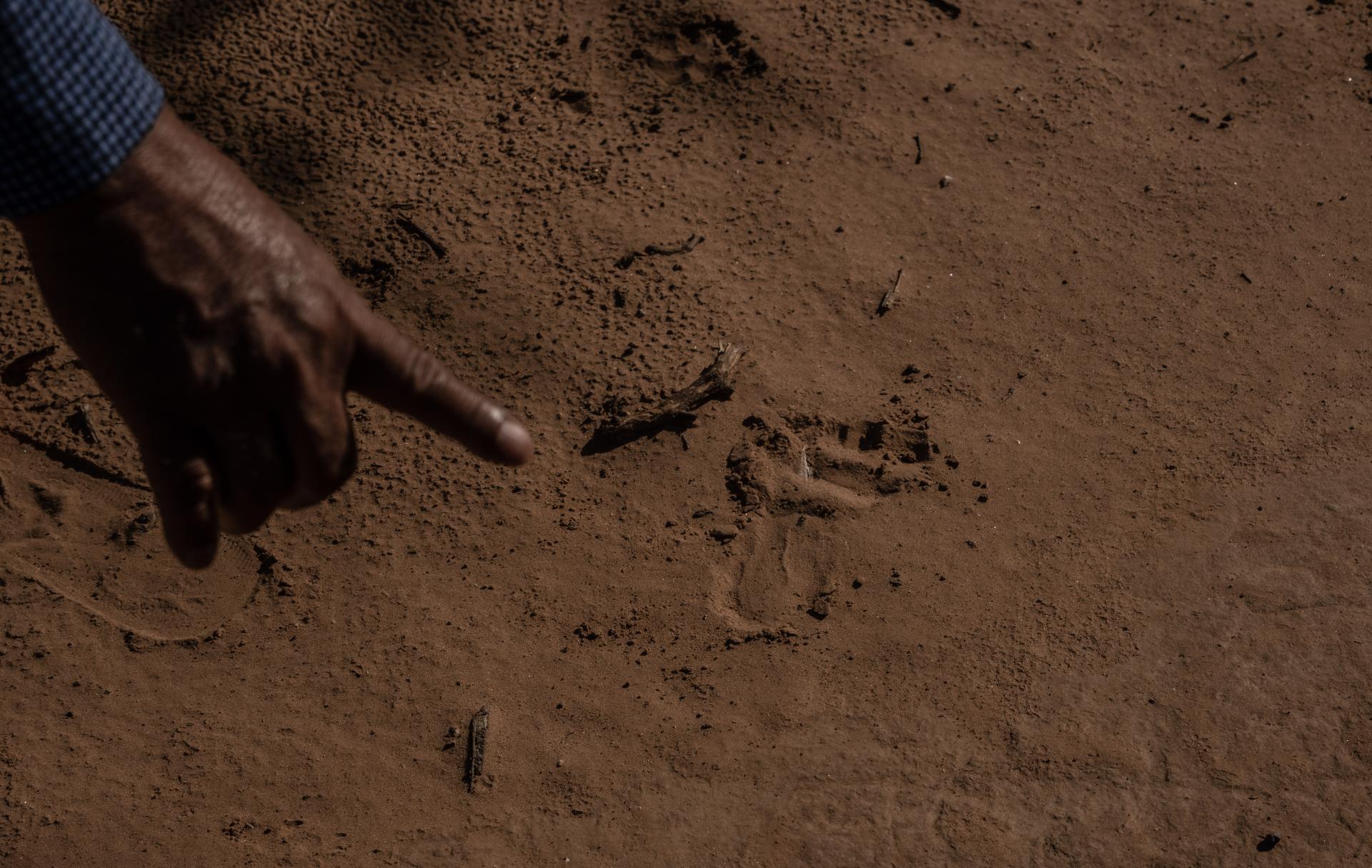 Vestigios de existencia: la huella de un miembro de la familia ayoreo que vive en aislamiento. Fotografía tomada en un camino de tierra cerca de Ijnapui, en el Chaco central.
**La Iniciativa Amotocodie, la organización If Not Us Then Who? y Quipa Collective trabajan en estrecha colaboración para visibilizar la grave situación de los Ayoreos y hacer que sus voces sean escuchadas. Durante la Semana de Acción Climática de Londres (del 20 al 28 de junio de 2026), se celebrará la exposición “Weave The Heart Beyond The Map” del 22 al 25 de junio, con una recepción inaugural el 22 de junio, de 15:30 a 17:30. El 24 de junio, de 8:30 a 10:30 de la mañana, tendrá lugar una mesa redonda sobre PIACI en el Rights & Nature Hub, The Stables, MYO King’s Cross, 2 Trematon Walk, Londres. Más información en: info@quipa.org.
--Miguel Lovera, Ph.D., es un agrónomo que ha dedicado su carrera a la conservación de los recursos fitogenéticos. Actualmente ejerce como asesor de los pueblos Ayoreo y de la Iniciativa Amotocodie. Miriam Anne Frank es consultora independiente y antropóloga aplicada que trabaja en cuestiones relacionadas con los Pueblos Indígenas, centrándose en el medio ambiente y los derechos humanos.
Visite la exposición “Weave The Heart Beyond The Map”, que presenta nuevas fotografías de Sara Aliaga Ticona y una película de Jaye Renold, de If Not Us Then Who?, realizada con comunidades Ayoreo del Chaco paraguayo.
La película, “Weaving Eami” (tejiendo Eami), documenta la lucha por proteger los bosques del Chaco en medio de la rápida deforestación, los intereses empresariales internacionales y la criminalización. En la comunidad Ayoreo de Ijnapui, los avistamientos de Ayoreos del bosque, que continúan viviendo en aislamiento, han aumentado drásticamente tras la rápida deforestación de un rancho vecino. Este era un sitio clave del territorio tradicional, con abundante agua, alimentos y dajudie, la planta con la que los Ayoreo han elaborado una amplia variedad de herramientas vitales a lo largo de su historia como Pueblo, incluidos sus hermosos tejidos. Esta planta ejemplifica el rico conocimiento ancestral que poseen las mujeres Ayoreo, arraigado en el ecosistema único del Chaco, el cual se encuentra gravemente amenazado en un país con una de las tasas de deforestación más altas del mundo y una profunda falta de voluntad política para detenerla.
Vea el tráiler de un breve documental sobre los pueblos Ayoreo, realizado por el cineasta Jaye Renold, de If Not Us Then Who? (si no nosotros, entonces quién?), que explora el trauma del contacto y el camino hacia la sanación comunitaria.
La exposición “Weave The Heart Beyond The Map” (tejer el corazón más allá del mapa) forma parte de sus campañas globales de sensibilización en curso, que cuestionan políticas injustas y abogan por mayores derechos para proteger el planeta, en colaboración con Pueblos Indígenas, comunidades locales y aliados.
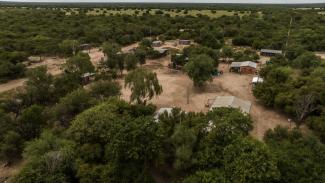
Foto: Comunidad Ayoreo de Ijnapui en el Chaco Central, Paraguay.
Todas las fotografías son de Sara Aliaga Ticona / If Not Us Then Who?