
The Tribal Peoples of India’s far northeast live not just thousands of kilometers from the country’s political and cultural hubs, but in what can feel like another universe entirely. In the state of Nagaland, rap artist Moko Koza (Chakhesang) has emerged from the city of Dimapur as a defining voice of a hip-hop scene that eschews the Bollywood-inflected imaginaries of India’s pop-culture mainstream, instead adapting this urban U.S.-born genre into a distinctly local and Indigenized form.
Drawing on the cultural wealth of his own heritage, Moko Koza’s songs speak to the lived realities of Naga Peoples today while paying homage to their ancestors, carrying forward the memories, stories, and songs of generations past. His lyrics brazenly confront and clap back at the legacies of colonial intrusion that have long marked the region—from the British Raj occupation, to Japan’s World War II invasion, to the fraught relationship that endures with the Indian state. He was recently honored with the Governor’s Award for Distinction in the Field of Music—the first hip-hop artist in Nagaland to receive it.
Cristina Verán spoke with Moko Koza in Dimapur.
*NOTE: Among the Naga Peoples of India’s far northeast, the term Tribal, instead of Indigenous or Adivasi, is used.
Cristina Veran: First, how did this New York-born music/culture/ movement of hip-hop come to your attention in India’s far northeast city of Dimapur?
Moko Koza: I should explain first that Western, rather than Indian, popular culture has probably always been the hugest influence here. My parents' generation was super into Michael Jackson, Abba, music like that. Naga People have also always loved rock music, like Metallica, the Rolling Stones, Nirvana, etc. The generation before mine had been really into punk rock, and then hip-hop came after that. Tupac Shakur, I would say, had the first and also the biggest impact overall in Nagaland.
CV: Why do you think U.S. or European stars have had that kind of impact, while those from India have or do not?
MK: India is a majority Hindu country, with Hindi being its dominant language, but out here, in the far northeast of the Subcontinent, it’s another world. We speak English, not Hindi, and don’t relate to India’s mainstream culture.
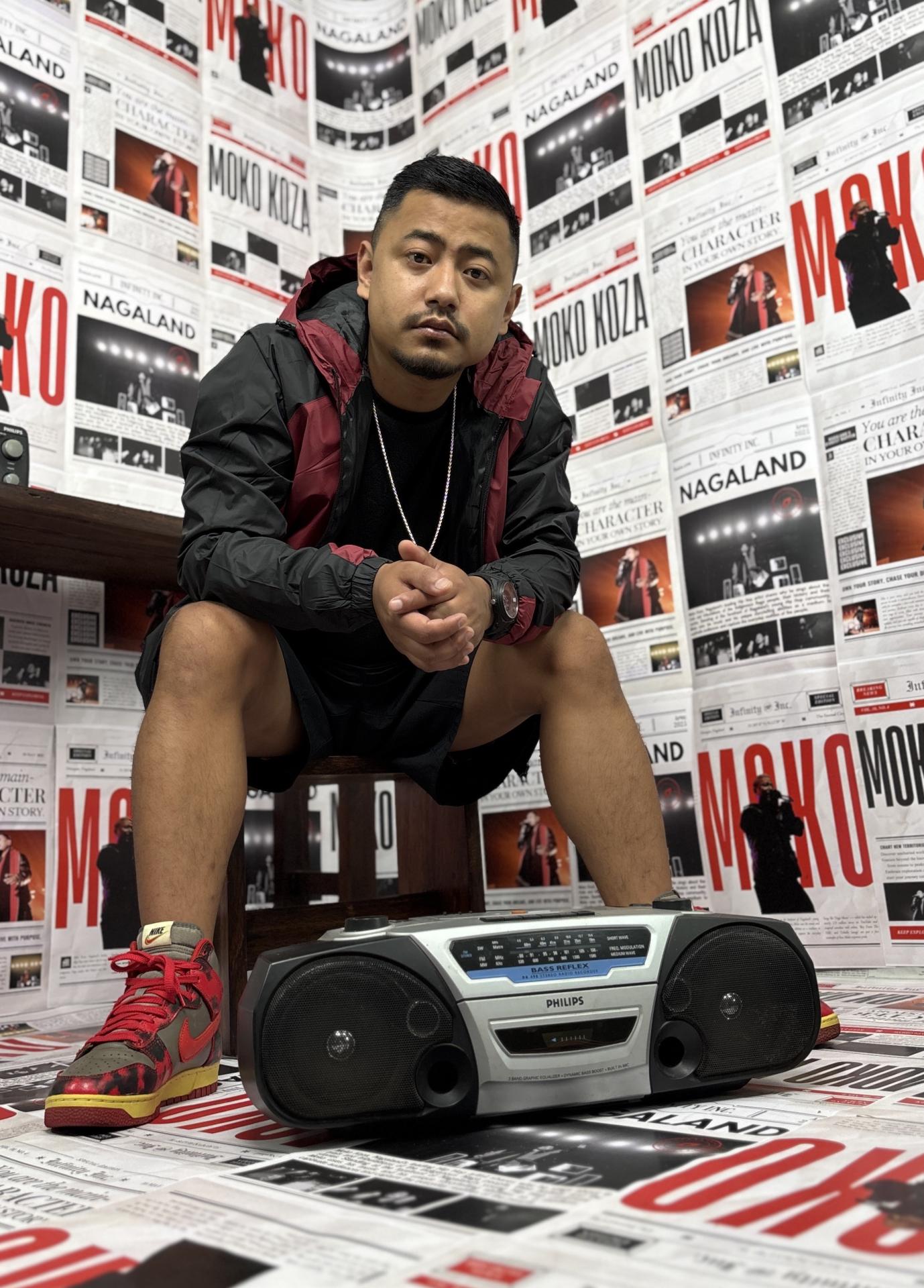
Surrounded by clips from Nagaland media. Photo by Digital 112
CV: What does identity—being a Chakhesang, a Naga, and a Tribal person, etc.—in the context of this in India, mean to you?
MK: I may be “Indian” by citizenship, but within Nagaland are 17 distinct Tribes—and we are all Naga. In addition to English, we speak our own Tribal languages. Most Nagas are Christian, too, and so we don’t engage with the country’s Hindu religious culture.
CV: How did the first definably hip-hop generation in Nagaland come together?
MK: I was born in the ’90s, in the capital city of Kohima, and later moved to Dimapur. My generation started getting into hip-hop around 2000-2003. I grew up hearing rappers like Biggie [Notorious B.I.G.], Jay-Z, and KRS-One, but the first one that I really got into was Eminem. From there, I started to dig deeper into the history of this music and its culture, by noting what he and other rappers I liked would mention; what it was like where they came from, what rappers came before and influenced each of them, and so on. I kept going back and back further in the timeline, all the way to the earliest fruits from this hip-hop tree, to pioneers like Grandmaster Flash and so on.
CV: The extent and depth of your interest is impressive. What other rappers would eventually inspire you to want to try doing this yourself?
MK: I would have to say, first and foremost, Rakim (of the renowned mid-late ‘80s duo Eric B. & Rakim). I was immediately grabbed by and got very attached to the kind of clever stories he would tell, using quite complex rhyme schemes that were somehow different from other MCs of his time. Just wow! After him, I’d say finding Nas was especially exciting for me, for similar reasons. Most of the artists I gravitated to were from New York.
CV: Your home base Dimapur—the largest city in Nagaland, with a population of about 170,000—sits within the Brahmaputra Valley fringes beyond the fertile mountainous terrain that surround it. Quite a contrast to the places your favorite U.S. rappers have come from!
MK: Well, hearing of the neighborhoods they rapped about—in the Bronx, Queens, Brooklyn, and so on—I imagined busy streets, crowded places, and kids just chilling in front of big buildings or on their front porches. Eventually, when documentaries like The Art of Rap came out, I could picture those environments even more clearly: all the record stores and barbershops where hop-hoppers would gather and have debates about which rappers had the best lyrics and songs.
CV: You got a real taste for the kind of competitiveness dominating hip-hop, then.
MK: For sure! I thought the “beef” and “battle” culture among rappers was very interesting; 50 Cent vs. Ja Rule, and all of that. If one rapper said something bad about another in a rhyme, the other would respond with their own rhyme or even a full song. They acted tough, but batted not with violence but through lyrics. Naga hip-hop fans got really into that vibe.
CV: What other styles appealed to you and your hip-hop peers at the time?
MK: At some point, West Coast (U.S.) gangster rap started really getting the attention of young Nagas. I got into NWA, for example; a group that rapped a lot about guns and violence.
CV: Was what they described truly relevant or relatable to your own environment in Dimapur?
MK: Ha! Not at all. I finally, after a while, had to acknowledge that the reality they described [in Compton, California] was very different from our own. In Nagaland, we don’t have street gangs, mafias, or drive-by shootings, for example. So I decided that, while I can be inspired by those American rappers, I should really focus on rapping in my own Naga way, about what’s going on here, where I live.
CV: There are a number of armed groups in Nagaland, though, no?
MK: Ah, yes, what we do have are armed freedom fighters—the Naga Army. Theirs is a very different kind of political reality, of course. These fighters, by the way, are big fans of Tupac, because they connect with his message about struggle and freedom.
CV: Despite the fact that you—like most in Nagaland—speak English, I can imagine that some terms used by American rappers in their music must be confusing at times.
MK: Very true! We are always trying to learn more about their slang. There has been a lot of confusion here, especially with regard to the N-word, for example. Nagas would hear MCs from the U.S. using it, and so they would just repeat it—without knowing the history behind it. I had read about its origins, though, and felt that it was my responsibility to educate them. “We shouldn’t use that word just because our favorite rappers say it,” I tell them. “It came from the oppression of their Black people. That’s not our history.”
Rappers in America will sometimes use a word we know, but in different ways, depending on context. Like with the F-word—sometimes it’s bad, yet other times it can mean something good. In Nagamese, we have this comparable word, “laura,” that we use to show anger or to insult someone. Depending on context, though, it can also be used in a lighter or even positive way.
CV: When and how did you start writing music and performing in public?
MK: I wrote my first rhyme, a love song rap, when I was just finishing high school, and recorded it as a demo. When my friends listened to it, they gave me props like, “Wow, that’s good!” So I decided to do more.
In the early days of our scene, we would mostly just download beats from the internet and insert our own verses into other rappers' songs. I liked to rap over Tupac’s tracks, making my own versions of his songs—like “Dear Mama,” for example. Then, when I went to university, I started performing live in front of audiences.
CV: How did your studies inform or ground the kind of themes you wanted to write about?
MK: I have a master's degree in Anthropology; an educational path I chose because I have always been really interested in how humans evolve from culture to culture, and how all of that connects to who and where we are right now. That same interest comes through in my music, talking about identity and culture in my songs.
CV: At what point did Nagaland really start to develop its own defined sound in hip-hop?
MK: Initially, music producers here didn’t really understand it. The big transition for us came around 2010–2011, when those who did started coming up in our scene. DJ Ina was one of the earliest and still most significant; he really knew how to create hip-hop beats and how to structure a song. After that, more and more Naga youth started producing their own music. That’s when we really started shaping our Naga style.
CV: Describe some aspects of what’s distinctly Naga about it?
MK: My generation was the first to start mixing Naga folk music elements into our hip-hop—sampling traditional melodies; our lullabies that are passed down from our grandmothers to our mothers, then to us. In my song “Boy From the Hills,” you can hear where I used part of a Naga lullaby as the hook, and by doing so, I’m passing down a new kind of oral tradition. It’s not our traditional way, no, but these Tribal songs have slowly been dying out, and it’s important for us to preserve them, to record them and document them. Hip-hop is helping us to do this for future generations.
CV: There is some significant history being shared through this song, too. Tell us about that, and your approach to telling this story visually as well.
MK: Well, the story actually goes back to World War II, when the Japanese army arrived as invaders in Nagaland and burned down our villages. My grandmother, who was very young at the time, was forced to flee. Eventually, the British stepped in to fight them off, in what became known as the Battle of Kohima. Those experiences became woven into our Tribal stories and songs.
When I told my grandmother about my idea to rap about this, and that I wanted her to be part of the video for the song—and film it in my home village of Khezhakeno—she was very happy, knowing that their stories would continue this way. The response to the song was very strong here—not only from young people, but from those older generations of Nagas who could understand and connect with the history. This experience made me realize my music should not just be for the youth. It can be for everyone.
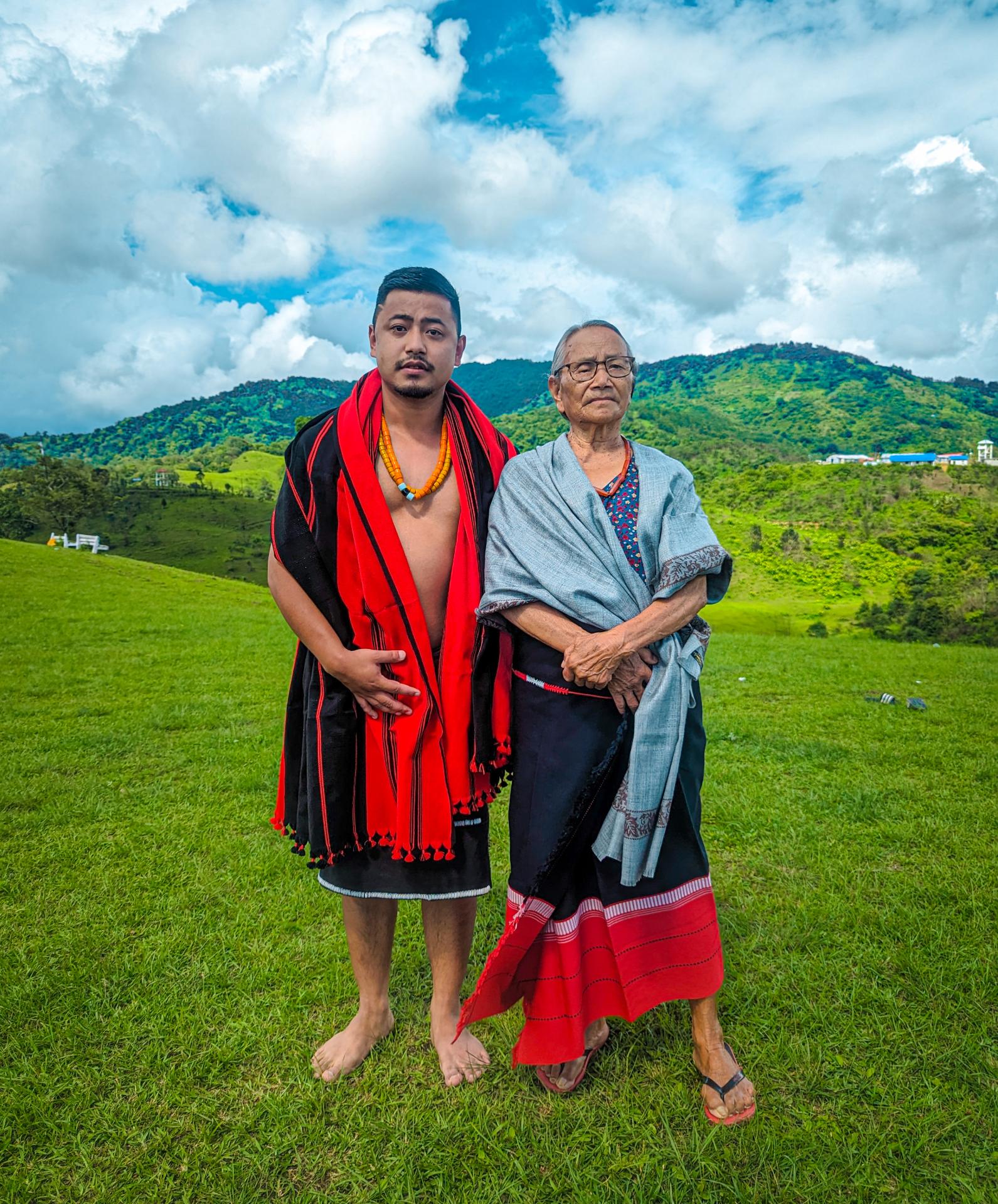
Moko Koza with his maternal grandmother, while making the music video for "Boy From the Hills" in his community - Khezhakeno Village in Phek District, Nagaland. Photo by Digital 112.
CV: This history about Japan’s invasion of your homeland is not particularly well-known outside of India. The British Empire’s colonial entanglement, however, is. And yet it seems as though your People feel less animosity toward the British than toward the nation of India that won independence from them. Why is that?
MK: We Nagas have our own history, which has nothing to do with India’s. It was the British who first linked us all together, but unlike their actions toward the rest of the Subcontinent, their policy in our region was largely one of non-interference. That’s why—considering what happened to us when they left India—we’d have appreciated it if the British had taken us with them.
CV: I don’t know that I’ve heard that said about a former colonial empire before!
MK: It’s important to understand that when India got its independence from the British, my ancestors expected our People to be able to go our own way, too, as things had been for us in the past. But Prime Minister Nehru said, “No. You are part of us now, and we won't let you go!” Nagas tried to form their own government, but then—just as the British had done to the Indians—this new Indian state came and took us by force. They sent many troops to stop us, going from village to village to attack us, quite brutally. They raped our women, beheaded our uncles and aunties—and worse.
CV: I can imagine how learning about this would have had quite an impact on you.
MK: Indeed. Those stories made me feel a deep, ingrained pain whenever I’d see any Indian uniform—even as I understand that what happened in the past is not the fault of those wearing that uniform right now.
This kind of thing is not all in the distant past, unfortunately. In 2021, something happened to stir my anger again. In a remote region of this state, some Naga workers (from Oting Village) who’d been heading home from their jobs at a coal mine were intercepted by the Indian Army. They claimed that they’d received intel about some militant Naga insurgents—the NSCN-(K), their sworn enemies—being active in the area. These Nagas that they stopped were just regular villagers from the area, though, nothing more, but the army just started shooting. Soon, everyone Naga there was dead.
CV: I understand that this incident inspired another big hit of yours, “Tribally Savage.” Given the history of that word—savage—used by colonizers to disparage, displace, and dehumanize Indigenous Peoples, why did you choose to not just reclaim but even celebrate the term as something to identify as, with pride?
MK: In India, even today, my people—like all Tribal Peoples here—are seen as “savages.” Some Indians think that we’re still headhunters, for example, and they act so scared to visit the places we live.
CV: Meanwhile, they don’t consider all the savagery that has been inflicted on your people.
MK: Right! Personally, I feel good when they call us that: Savages. I say “Thank you. Yeah, I am.” And when I say, “Bitch, I’m tribally savage!” in that song (“bitch” there referring to those Indians who underestimate or look down on Naga Peoples) that expression is a way for me to let all my anger out.
“My bloodline is savage, I don’t need a bandage.I’m wearing these scars like I got it all tatted.
I grew from the seeds that our mothers had planted.
I’m culturally rooted and this is my forest.
Bitch, I’m Tribally savage.”
CV: Meeting here, in Dimapur, I see you’re wearing some loose-fitting shorts and a t-shirt featuring rapper Ice Cube on it—not unlike the way a U.S. hip-hop fan might dress. For the video for “Tribally Savage” though, you made a point to wear distinctly Naga style clothing, and included members of your community in the same. What kind of style choices have you made over time, as an artist and otherwise, and how have local Naga designs and designers responded to the interest of hip-hop artists and fans who want to represent their culture in the gear they wear?
MK: Fashion style-wise, I’ve gone through a few different phases. As a kid, I dressed like the punk rockers here, wearing torn skinny jeans, but as I got more and more into hip-hop, I shifted toward baggy pants, vests, leather jackets; things like that. Now, I’m most into what’s simple and comfortable, like basketball jerseys and shorts; no flashy stuff. On stage, I also like to represent local Nagaland designers—Atsi (by Atsi Yhoshü), for example)—in clothes that I get custom-made. These are for more formal or special occasions though, not casual for just hanging out.
In the “Tribally Savage” video, I wore more traditional (not contemporary-designed) Naga attire—a woven wrap-around skirt-like garment called a “keshünyi”—to show pride in where I come from. You’ll rarely see Nagas wearing things like that these days, especially in the cities, but I think it’s a very beautiful way of dressing. I believe it originates mostly from the Angami Tribe, with some aspects also from my own Chakhesang Tribe, but it's a style that the majority of Nagas can wear.
CV: When you say “Nagas”, that’s not just one single Tribe but more of an umbrella or larger group name, within which are multiple and distinct Tribes, correct?
MK: Exactly. There are 17 Tribes within Nagaland, each with its own language—but we are all Naga. In the cities here, like Dimapur and Kohima (the capital), the population comprises a mix from all of them. We refer to each individual Tribe’s territory as a “district,” and the one where I come from is called Phek. The video for “Tribally Savage” was shot there, in Khonoma village, and the elders you see belong to it.
CV: Speaking of villages, local hip-hop communities can also be quite village-like. Tell us something about yours there in Dimapur.
MK: Our scene is very close, and we all know each other. Sometimes hip-hop heads hang out at clubs or cafés here or there, but usually we get together at someone’s studio. My own, for example, is not only the place I come to record music, but also a space where other Naga rappers will come and catch up, to talk about music or even work on their own music. We’ll also sometimes meet up outside for a cypher, where MCs gather to start rapping and beatboxing together. Anyone who passes by is welcome to come pop their head through the circle and start rapping with us, too. Hip-hop, in these spaces, is a real community thing for us.
CV: How do you connect to hip-hop fans beyond your homeland?
MK: I make my music, first and foremost, for my Naga people. But now heads outside Nagaland are getting to know about me from YouTube and Spotify. I’m also performing more and more in other parts of the country. Among the best of such experiences I’ve had so far was at the Spotify India show in Mumbai, two years ago—one of that city’s biggest hip-hop concerts ever. I was the only rap artist from the northeast to be part of it, so I had to make sure that I came correct and represented!
The only time I’ve performed outside of India thus far was at a music festival in Bangkok, Thailand, and I look forward to getting out there in the world more in the future.
When I do shows outside Nagaland, I like to call out from the stage: “Where’re my Tribal people at!?”—like how rappers in New York would shout, “Where’s Brooklyn at?” and “Is the Bronx in the house?” That kind of thing.
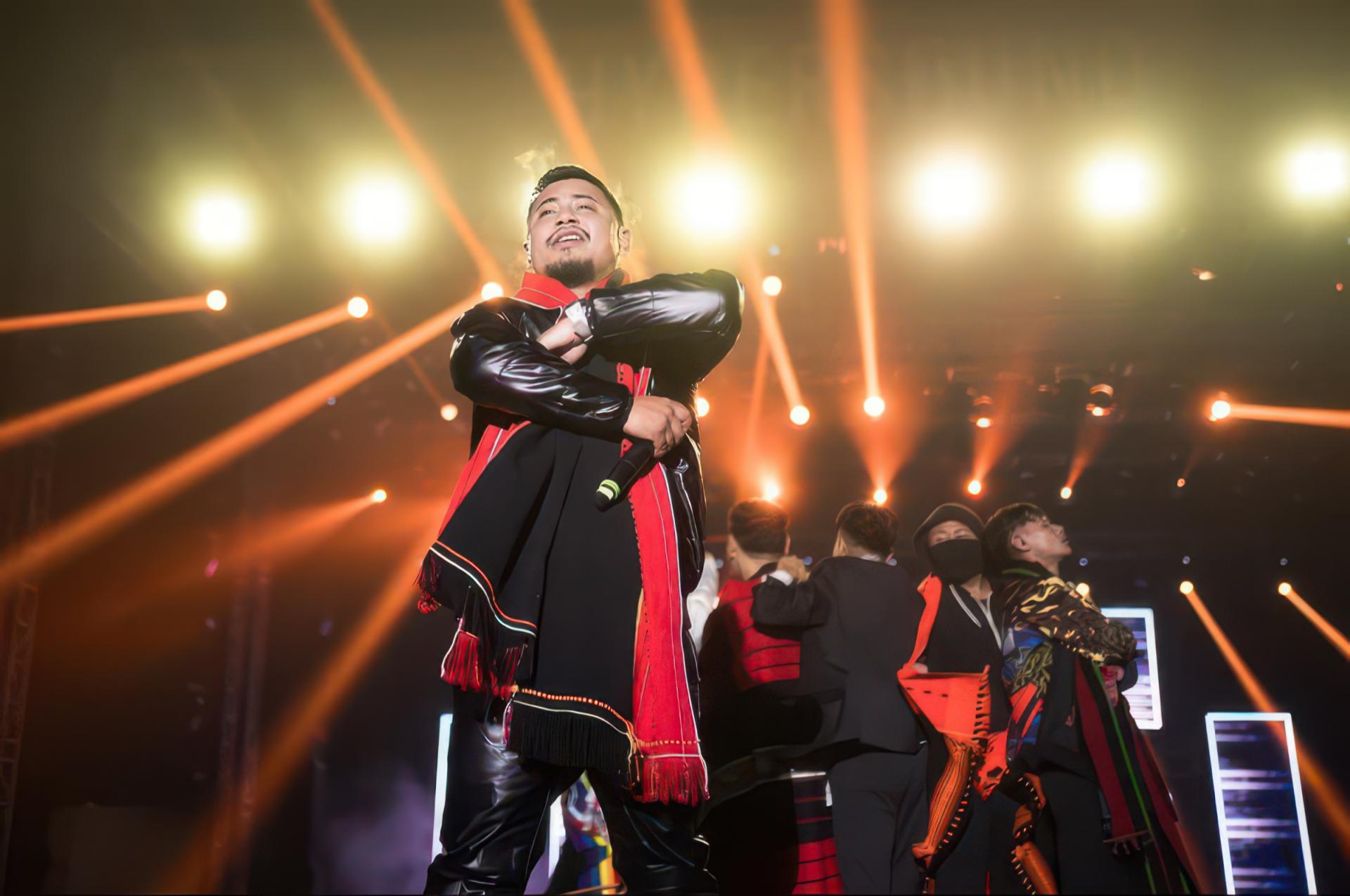
On stage, opening for international performer Sean Kingston during the Hypersound 2023 concert in Dimapur, Nagaland. Photo by Hypersound Media.
CV: And so you’re connecting with other Tribal Peoples across India this way.
MK: Yes, and I especially love it when artists from different areas come up to me after my shows and say, “Hey, we’re also Tribal, from ___, and we really relate to you!” They’ll tell me all about their communities and their own experiences.
CV: What kind of collaborations, if any, have come out of such connections thus far?
MK: Well, back in 2020, I was part of Northeast Cypher, a music video project that brought together MCs to represent all the states in our region; Nagaland, Assam, Meghalaya, Arunachal Pradesh, Sikkim, Tripura, Manipur, and Mizoram. Many (though not all) of the other artists involved are from Tribal communities.
Unfortunately, it's rare that Tribal hip-hop artists from outside the northeast get to Nagaland. It would be great to have, someday, like a “Tribal hip hop” concert or festival that included such performers, from every part of India.
CV: You’ve made clear how different Nagaland is from hip-hop centers like New York and Los Angeles, but how does it compare or relate to other regions, other states within India itself?
MK: As someone from the northeast, whenever I go out to where we refer to as the “mainlands”—which is to say the rest of India—I actually feel like a tourist; not unlike how I imagine an international artist that has come to India for the first time would feel. That underscores how different Nagas are from “Indians.”
CV: What are you working on now, and what audiences are you looking to reach with it in the future?
MK: Well, right now, I’m working on an EP of songs that will be fully in my own Tribal language. After that, I’ll go back to English, which is most helpful to reach a wider audience, including beyond India. Given that the mainstream Indian market promotes mostly, if not only, music in the Hindi language or like from Bollywood, I’m not likely to ever really break through that.
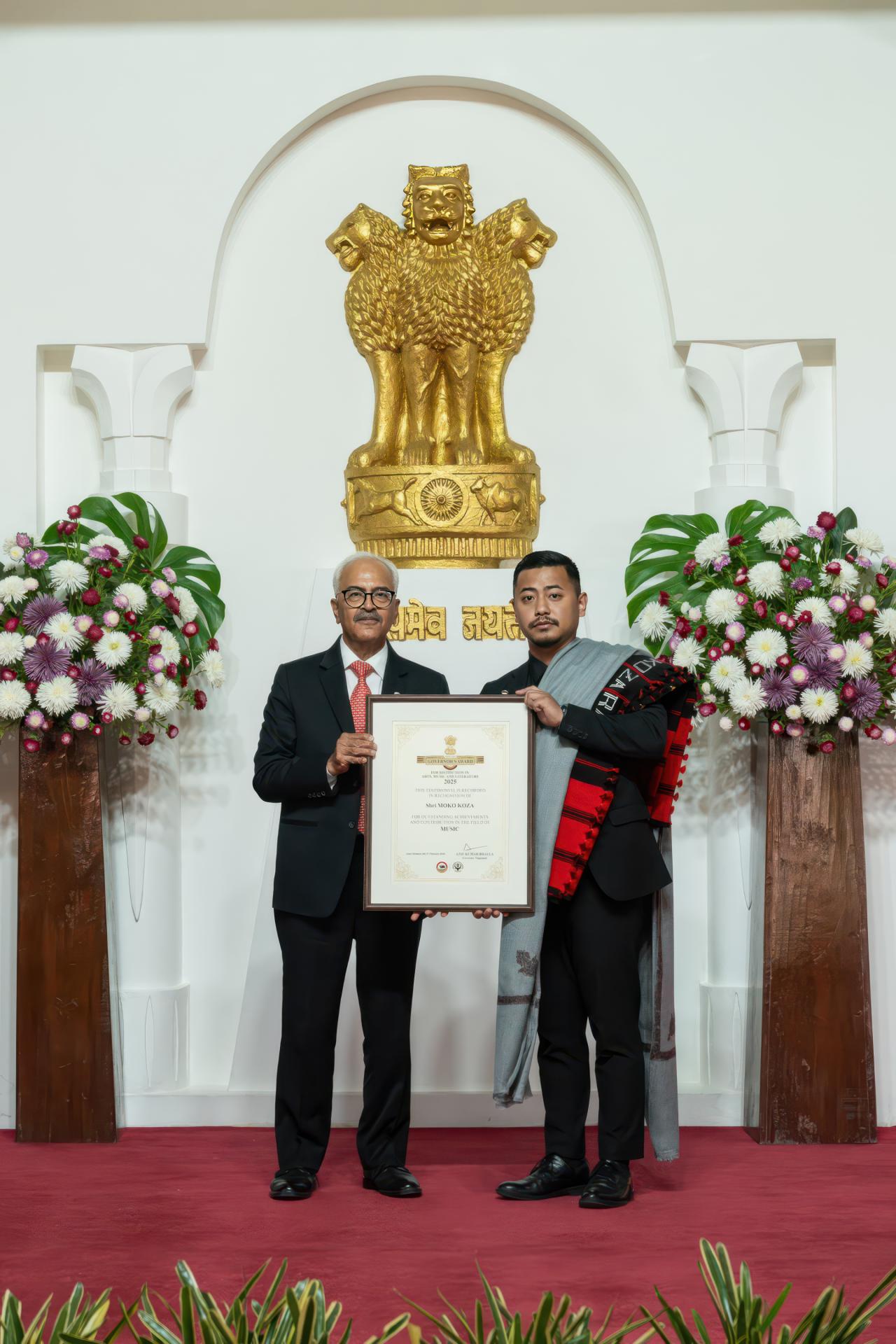
Receiving the Governor's Award for Distinction in the Field of Music, from then-Governor Ajay Kumar Bolla, at Lok Bhavan in Nagaland's capital city of Kohima. Photo by Charles Sote.
CV: You received some major recognition recently, though, yes?
MK: I was honored with the Governor’s Award for Distinction in the Field of Music—the first hip-hop artist in Nagaland to receive it. This recognition, as I see it, is not just for me but for the whole Naga hip-hop community, too.
Now, younger artists just starting out come to me asking for advice on how to write rhymes or how to record their music, and I feel like I have a responsibility to listen to and guide them. It makes me so happy that, through hip-hop, I’m doing my part for my community, now and for future generations to come. I want to be remembered not just as a musician, a rapper, but as a proud member of my Tribe.
--Cristina Verán is an international Indigenous Peoples-focused researcher, educator, advocacy strategist, network weaver, and mediamaker. She was a founding member of the United Nations Indigenous Media Network and the Indigenous Language Caucus. As Adjunct Faculty at New York University’s Tisch School of the Arts, she brings emphasis to the global histories, expressions, and socio-political impacts of Indigenous contemporary visual and performing arts, design, and popular culture(s).
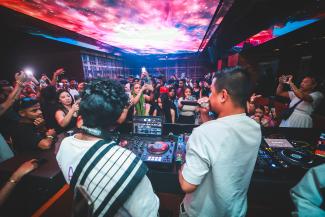
Top photo: Performing in Mumbai at Hotel Sea Princess on Juhu Beach, with DJ G-Glock. Photo by Hangatik.
--
|
|
