By Edson Krenak (Krenak, CS Staff)
Indigenous Peoples worldwide bring vital perspectives on development, human rights, and the responsibilities of the States and corporations in the green economy. Rooted in deep relationships with lands, waters, forests, and more-than-human lives, these perspectives offer essential pathways for addressing the climate crisis, for example.
Even though they constitute 6.2% of the global population, Indigenous people safeguard approximately 80% of the Earth's remaining biodiversity across various habitats such as forests, deserts, grasslands, and marine environments, which they have inhabited for centuries.
Despite their crucial contribution to maintaining a resilient and thriving planet for both humanity and other species, Indigenous efforts often go unnoticed, are under-supported, and too often put Indigenous lives at risk. After 33 years, merely 23 countries have ratified the Indigenous and Tribal Peoples Convention 169 of the International Labour Organization.
Three principles of Indigenous Peoples across the world that ground our ways of being, knowing, and doing address this disparity and protect our planet: reciprocity, respect, and relationality.
They emphasize a holistic, interconnected approach to real, powerful, sustainable development. In a just transition to a green economy, these principles play a pivotal role in promoting environmental stewardship, cultural preservation, and social justice.
Reciprocity: Paying Attention to Mother Earth
Botanist and a distinguished professor of Environmental and Forest Biology at the State University of New York, Robin Wall Kimmerer (Potawatomi), in her book “Braiding Sweetgrass,” states, “Paying attention is a form of reciprocity with the living world, receiving the gifts with open eyes and open heart.”
Reciprocity does not begin with exchange or repayment. It begins with attention, recognizing the relationships that sustain life among humans and our non-human relatives like animals, plants, rivers, forests, oceans, and all beings.
Central to Indigenous perspectives, reciprocity includes limits, proportionality, and responsibility: limits about how much we can take from the planet, and what must be given back proportionally. Reciprocity is about equal terms. We cannot talk about humans being caretakers, but caregivers, of the Earth. We don't take; we share and care because She, Mother Earth, shares and cares about us.
The point is not to manage the Earth from above, but to care for her as relatives within a shared web of life.
Indigenous communities view themselves as custodians and stewards of the Earth, the rivers, the forest, and all species that form our lifeweb. Our well being is intricately tied to the health of the environment. It is not possible to be happy, healthy, and prosperous if our environments have been destroyed. Climate change, global warming, and diseases are driven by unsustainable development practices, such as soil depletion, river contamination, and deforestation, which have disproportionately affected Indigenous Peoples.
In the race for more raw materials, such as transition minerals, to decarbonize our technology, the green economy must embrace reciprocity by integrating sustainable practices that ensure the well being of ecosystems and communities alike. This Indigenous principle can bring justice not only to humans, but to all beings on Earth.
Reciprocity is more than a practice; it is our way of life, the way of life. Instead of focusing solely on economic growth, without limit, we must pay attention to check whether all beings are enjoying life in a healthy place. Without reciprocity, the green economy will reproduce the same extractive logic it claims to overcome, and eventually fail our common home, Earth.
Respect - More Than Just Words
Respect comprises actions and attitudes to honor human rights, Indigenous rights, and nature’s rights. Respect for nature and environments must be paramount in the green economy. Indigenous Peoples, the best stewards of nature, often face marginalization and displacement due to corporate activities and projects carried out without their consent, participation, and guidance. The principle of Free, Prior and Informed Consent (FPIC) safeguards Indigenous rights in decision-making processes. When carried out correctly and on Indigenous Peoples’ terms, FPIC can offer a unique opportunity for corporations, other institutions, and civil society to work together towards Indigenous self-determination.
FPIC is not merely a procedure, a requirement, or an opportunity for a dialogue. It is a collective right grounded in Indigenous Peoples' self-determination, requiring States, corporations, and financial actors to respect Indigenous decision-making on Indigenous Peoples' own terms when projects or activities affect their lands and livelihoods. It is more than a legal mechanism; it is a moral and ethical attitude.
Shawn Wilson (Cree) states in "Research is Ceremony," “Respect is more than just saying please and thank you.” It is a relational engagement: not a business encounter, but an everyday practice. Meaningful consultation becomes an ethical foundation when we embrace the opportunity to learn from one another, fostering respectful engagement and reciprocal exchange of wisdom and knowledge.
In the green economy, States and institutions must adhere to FPIC, acknowledging Indigenous Peoples as rights-holders, political actors, and partners in truly sustainable development initiatives to protect the biodiversity of our planet.
Relationality - Walking Gently on Earth
Relationality means that land is not a passive resource and nature is not an external object. Resource, nature, environment, and sustainability are words that exist in many Indigenous languages. Lands, waters, forests, animals, spirits, ancestors, and future generations are part of the political and ethical community within which decisions must be made. The implications of our policies and actions must matter to them.
For Indigenous communities, lands and resources are not commodities but an integral part of their identities, spirituality, and life. However, the interconnectedness between humans and nature forms the foundation that connects all of us, not only Indigenous Peoples. Stewarding ancestral lands and the environment is vital to maintaining our wellbeing.
In the green economy, relationality calls for recognizing and valuing the intrinsic link between biology, spirituality, culture, and the environment. Ecology, from this perspective, is not the study of ecosystems; it is the recognition that life is a link between all our values, and it is sustained through relationships among biological, cultural, spiritual, and apolitical worlds.
Policies and initiatives should actively engage Indigenous Peoples in sustainable resource management and land stewardship. Indigenous concepts of ecology contribute to global efforts to combat climate change and biodiversity loss. By centering Indigenous voices and incorporating traditional knowledge, the green economy can achieve holistic environmental stewardship and cultural strengthening, benefiting not only Indigenous communities but the entire global community. States, corporations, and policymakers must embrace these principles and work collaboratively with Indigenous leaders to create a greener and more inclusive future for all.
There is a way to bring in Indigenous practices into public policy following these principles. Cultural Survival, the organization I’m proud to be part of for 51 years, has partnered with Indigenous communities to secure a future that respects and honors Indigenous Peoples' inherent rights and dynamic cultures. We have learned that these principles are deeply interwoven with lands, languages, spiritual traditions, and artistic expression. They are powerful because they are rooted in self-determination and self-governance, powerful words to describe freedom and security.
Threats to Indigenous Lands
To address the green economy, we have united with Indigenous-led organizations and allies to create the Securing Indigenous Peoples' Rights in the Green Economy (SIRGE) Coalition to champion a just transition to a low-carbon economy. As the global demand for the minerals necessary for renewable and green technologies continues to grow, we call upon government, corporate, and financial decision makers to avoid the mistakes of the past: Avoid dirty mining and protect the rights and self-determination of Indigenous Peoples around the globe, many of whom live in areas rich in these minerals.
Of 5,097 mining projects globally that involve some 30 minerals used in renewable energy technologies, 54% are located on or near Indigenous Peoples' lands and territories, according to Nature Sustainability. Just in the United States, 97% of nickel, 89% of copper, 79% of lithium, and 68% of cobalt reserves are located within 35 miles of Native American reservations, according to MSCI.
Over a period of 12 years, there were 510 human rights allegations made against all 115 companies involved in transition mineral extraction;; 49 of the allegations involved Indigenous Peoples, according to Business & Human Rights Resource Centre. In 2022, almost 40% of the attacks related to transition minerals were against Indigenous Peoples or their communities. Our work creates a platform for Indigenous leaders, States, and corporations to work together to guarantee a just transition.
As Ailton Krenak (Krenak) points out, "The future is ancestral, and humanity needs to learn from it to tread gently on the Earth. We only exist because the Earth allows us to live. It gives us life; nothing else does. That's why we call it Mother Earth. We have disconnected ourselves from the body of the Earth, going through a divorce, believing that we could live on our own terms. But there was a condition: to extract, dominate, and exploit everything that comes from Gaia. We divorced ourselves from this organism that sheltered us, yet we constantly continue to usurp it."
We are relatives of the Earth, of all organisms that walk on and live on this planet, and are part of it. Relationality offers an opportunity to reconnect, to return home, to rebuild our dreams of the future, progress, and development. Our dream should be with her, with our home, and our Mother Earth.
Reciprocity, respect, and relationality offer a paradigm between Indigenous Peoples, States, and corporations, for the sake of our planet and all of life.
--Originally published on the OECD Forum website in 2023
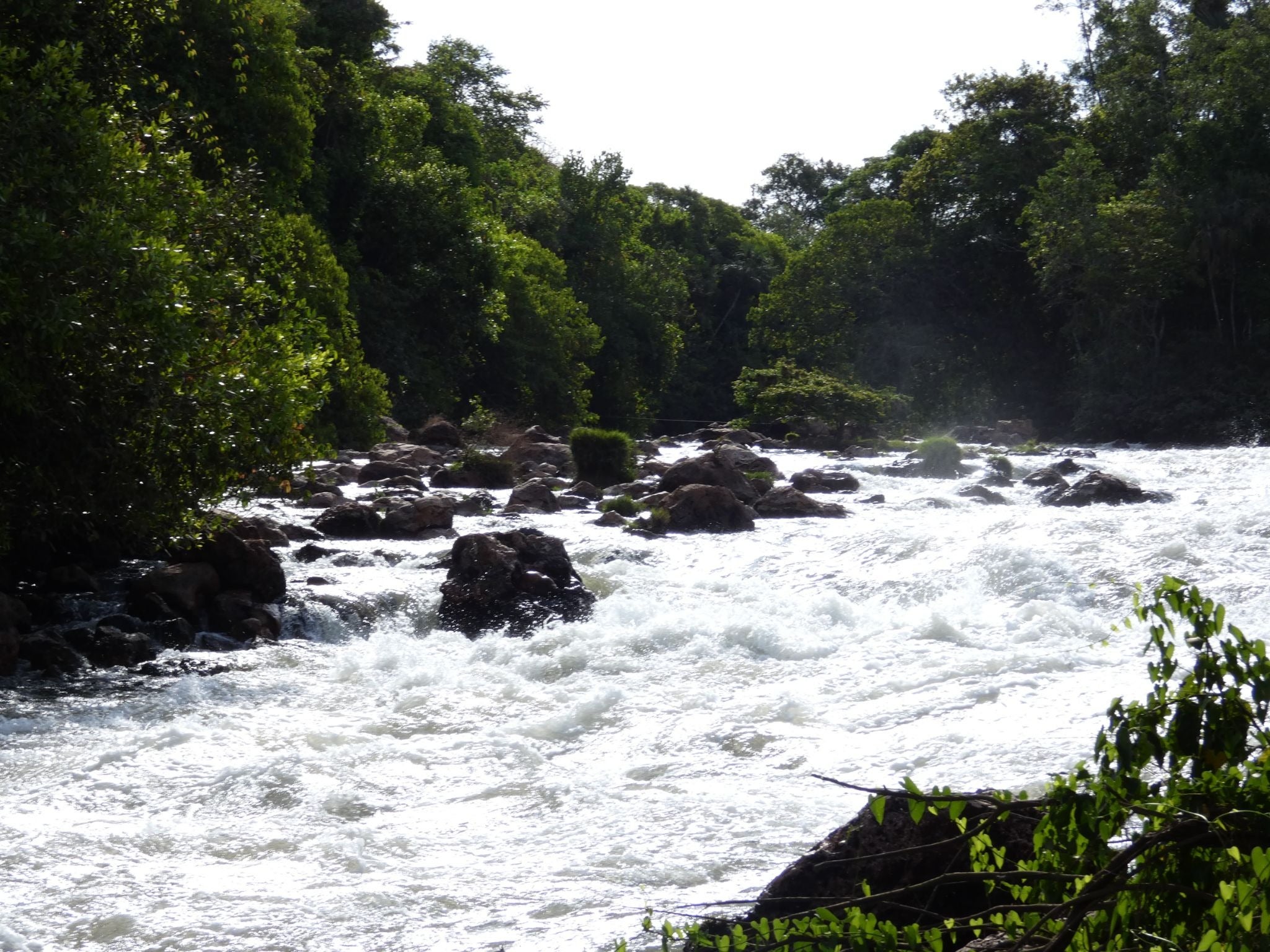
Top photo: Owawê River, a sacred ancestor of the A`uwe Xavante Peoples in Brazil. Photo by Edson Krenak.