By Phoebe Farris (Powhatan-Pamunkey)
On March 9-19, 2026, women from around the world participated in this year’s UN Commission on the Status of Women (CSW 70) at the United Nations Headquarters in New York, and at nearby off-site UN-affiliated offices to address global inequities facing women and girls.
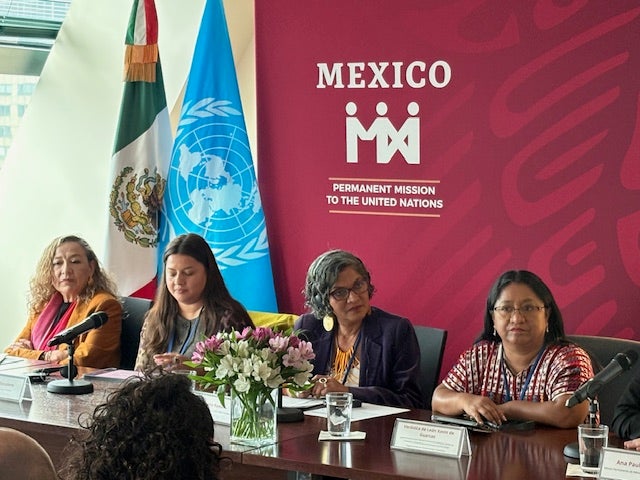
On March 11, the Mexico Permanent Mission to the United Nations hosted two panel discussions featuring Indigenous representatives from Australia, Canada, the Caribbean, Ecuador, Guatemala, and Mexico. Women from each country discussed issues affecting specific tribal communities as well as those impacting all Tribal communities in their country or region.
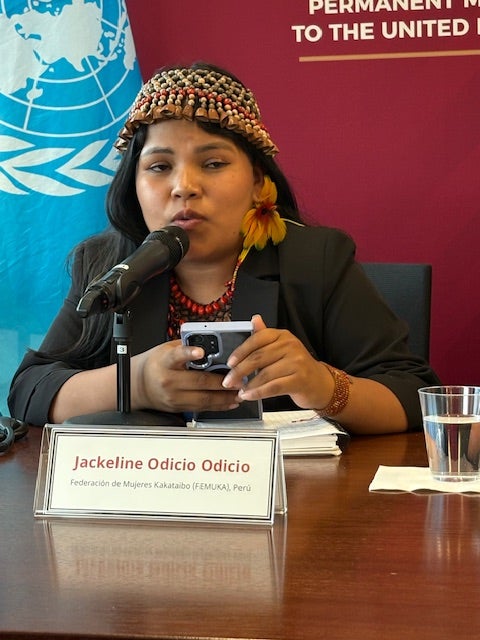
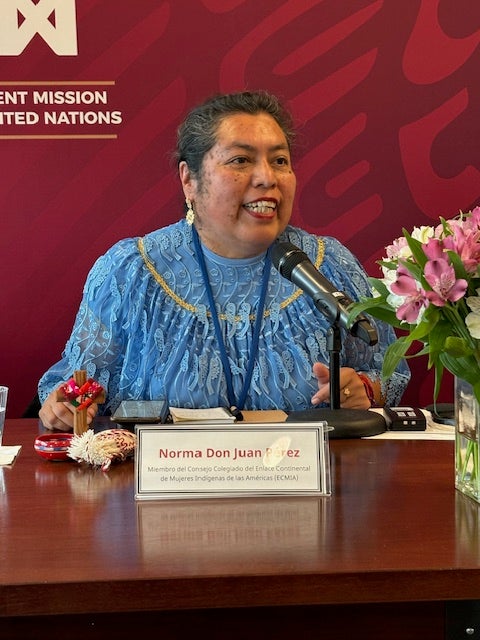
Composed of two sessions, “Access to Justice for Indigenous Women” included speakers Richie Valdez (Canada), Marisol Escudero (Latin America and the Caribbean), Ana Paula LaValle (Mexico), Veronica de Leon Xovin de Guarcas (Guatemala), Fatima Gambo (Mexico), Andrea Paul (Canada), Jackeline Odicio Odicio (Peru), Norma Don Juan Perez (South America) and Sarah Douglas (USA). They shared some of the similarities of human rights violations facing women and girls around the world, and the unique problems impacting Indigenous women and girls, as well as Indigenous men.
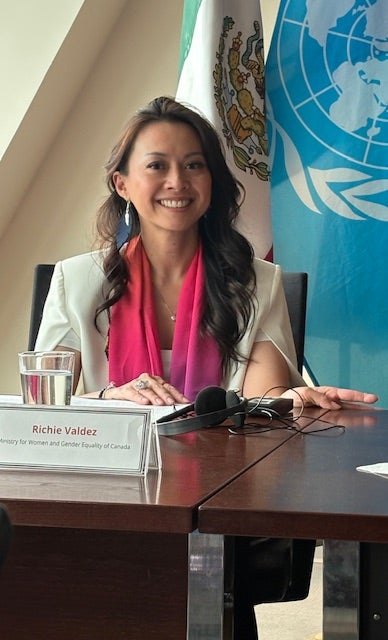
Richie Valdez from the Ministry for Women and Gender Equity of Canada discussed systemic injustice regarding sentencing of Indigenous peoples in Canada and race-based violence, especially the impact on First Nations women and girls. The National Action Plan of Canada is supposed to address these concerns. Valdez stressed the need to have an Indigenous approach to solving these problems and collaborations with the survivors of violence and their families. Indigenous women, girls, and 2SLGBTQ + victims need to be heard, to have their lived experiences shared via testimonies. In Canada, the populations most negatively impacted by the justice system are the Inuit, Métis, and First Nations.
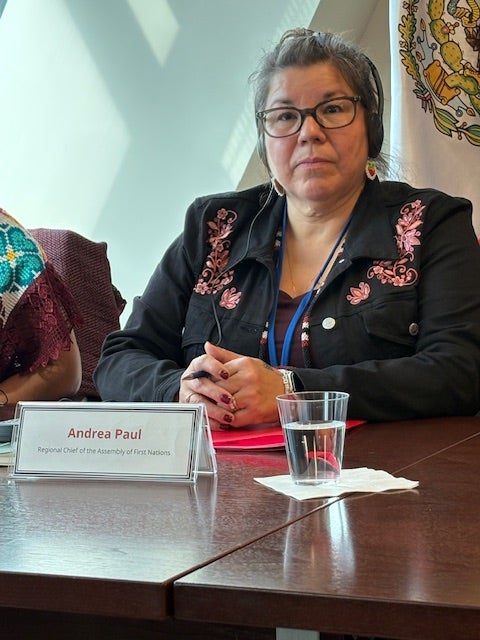
Andrea Paul, the Regional Chief of the Assembly of First Nations, also stressed justice inequity, focusing on the Indigenous women over- represented as victims of violence and also over- represented within the criminal justice system. Paul focused on the high costs of navigating the justice complex and how many First Nations defendants plead guilty just to move their cases through the backlogged system more quickly.
These women from diverse countries presented their common gender equity problems, solutions to addressing them, and explanations of how historic colonialism continues to impact their communities in the 21st century. A colonial-centered emphasis on separating Aboriginal children from their families and placing them in government-controlled institutions is one of the examples of past injustices still impacting contemporary Indigenous peoples. Also emphasized was how gender inequity for Indigenous women intersects with racism that impacts both Indigenous women and the men in their communities. The need for self-determination was perceived as needed to heal the wounds of colonialism, which unfortunately continues to play a part in present-day external violence and domestic/ family violence.
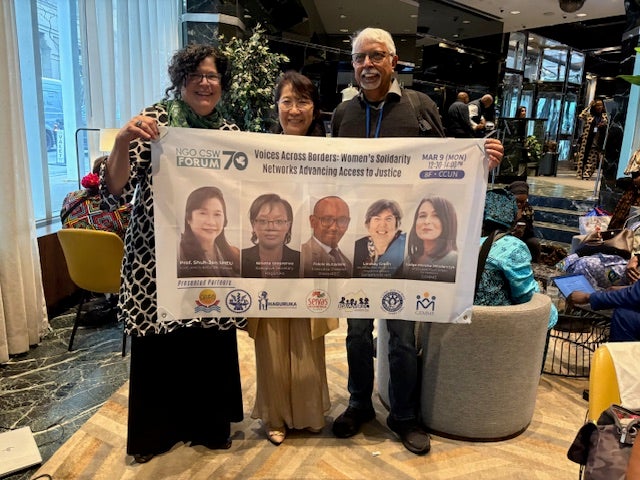
Following this panel was a meet-and-greet co-sponsored by Servas Members from around the world, UN CSW 70 attendees, and fellow NGO and member-state representatives. Held at the Millennium Hotel, One UN Plaza, discussions revolved around the Servas message of peace through dialogue and cultural exchange, creative solutions for peace, and moving forward with the hope and idea of peace in all interactions.
The 70th session of CSW 70, the UN Commission on the Status of Women, is the global gathering that focuses on accelerating gender equality, with this year’s theme centering on access to justice for all women and girls. Representatives from Member States, UN entities, and ECOSOC-accredited non-governmental organizations (NGOs) from around the world attend the sessions. This year, the USA cast the sole “no” vote against the CSW 70 annual outcome document regarding “Agreed Conclusions” on women’s rights, which passed on March 9 th. The USA opposed language on reproductive rights, gender identity, and intersectionality. The United States is currently opposed to the progressive policies outlined in the panels at the UN Permanent Mexico Commission and in the informal gathering between the pacifist-oriented Servas organization and CSW70 attendees.
--Phoebe Farris (Powhatan-Pamunkey descent) is Contributing Arts Editor for the Cultural Survival Quarterly magazine. An art critic, curator, author, and photographer, she has written extensively on Indigenous visual, literary, and performing arts for over two decades. Farris is also a Professor Emerita of Art and Design at Purdue University and has curated and contributed to exhibitions highlighting Native and global Indigenous artists. Her work bridges scholarship, creative practice, and advocacy, amplifying Indigenous voices in contemporary art and media.