Cuando me preguntas por la valentía de las mujeres Nama, te diré que habita en historias no contadas, en sus curvas, cuando se balancean, el viento se mueve con ellas, tan seguras en su andar que su valentía jamás pasa desapercibida. Basta una mirada a su rostro, a las arrugas que las cubren con un profundo conocimiento que ondea en sus pieles; esos rostros que fueron descritos por un escritor en 1968 así: “La nariz es ancha y apenas se distingue en su base, lo cual nos parece feo”.
Estos rostros, estos cuerpos que han aprendido el sufrimiento en sus propios huesos, al mantener unidas a las familias, han sido las mujeres Nama quienes sostuvieron a las comunidades, alimentaron a los hambrientos y mantuvieron el calor en la misma casa que construyeron con sus propias manos, desde tiempos inmemoriales.
El poder de las mujeres Nama fue socavado y arrebatado por colonizadores, quienes se negaban a reconocer su papel cuando solo querían hacer "tratos" con hombres, tratos de venta de armas por tierras, tratos que resultaban en la esclavitud de personas por parte del amo en su propia tierra.
La valentía de una mujer nama se puede apreciar en los campos de genocidio, cuando fueron obligadas a limpiar los cráneos de sus esposos con cuchillas, raspando la piel y el cabello; sosteniendo en sus manos las cabezas de sus seres queridos.
Porque los alemanes necesitaban realizar experimentos para demostrar una raza superior. Durante años, ellas limpiaron, sin descanso para sus pies, criando a los hijos del amo y nunca a los suyos. Por eso, cuando me preguntes por la valentía de las mujeres Nama, diré que reside en sus huesos. Así que, cuando pienses que su voz es un poco más fuerte, es porque proviene de una verdad y un conocimiento profundos; cuando pienses que es más audaz, es porque proviene de historias jamás contadas. Una mujer Nama se pone en pie y todos se ponen en pie; ella sana, ella carga, ella ama; ella es fuerte, y con toda razón.
En septiembre de 2024, mis colegas Kedireng Garises, entonces presidenta del Equipo de Investigación-Acción de la Universidad de Namibia; Immogene Classen, facilitadora comunitaria de Y-Fem para la región de Hardap; y yo fuimos a Gibeon como parte de una alianza de colaboración entre Y-Fem Namibia Trust —donde yo trabajaba entonces como gerente de programas— y el Centre for the Study of Violence and Reconciliation, con el fin de promover la justicia social y la sanación mediante una investigación participativa, feminista y descolonial.El enfoque de Y-Fem se centraba en la violencia de género sistémica y estructural contra las mujeres Indígenas, específicamente Damara y Nama, así como en el trauma intergeneracional derivado de la dominación colonial a través de las políticas estatales. El énfasis estaba puesto en las voces de las mujeres Nama, destacando su papel en la defensa comunitaria, la revitalización cultural, la preservación y la sanación.
Las mujeres Nama compartieron historias personales que ofrecieron profundas perspectivas sobre el impacto intergeneracional del trauma y la opresión coloniales, tanto bajo la colonización alemana como durante la ocupación del apartheid sudafricano. Uno de los temas más poderosos que surgió fue la exigencia de que la justicia restauradora no fuera únicamente simbólica o económica, sino que también incluyera el reconocimiento y la preservación de la lengua Nama, las prácticas culturales de sanación y la revitalización de los sistemas de conocimiento Indígena perdidos a causa de la colonización.
De niña, veía a la gente ir a los cementerios no solo para llorar a sus muertos, sino para visitarlos. Llevaban botellas de agua de dos litros y las colocaban cuidadosamente frente a las cruces que marcaban las tumbas. Nadie explicaba por qué. Era una práctica que parecía sagrada y totalmente cotidiana al mismo tiempo, una costumbre que con el tiempo desapareció de mi realidad actual, engullida por el silencio que la colonización y la modernidad imponen sobre los rituales Indígenas. Años después, en el corazón de este proyecto, ese recuerdo volvió a mí no como nostalgia, sino como un llamado a recuperar lo que estuvo a punto de perderse. Este proyecto se convirtió en mi puerta de entrada a un conocimiento más profundo que habita en la naturaleza, en las palmas de las mujeres mayores, en las historias que se resisten a desaparecer.
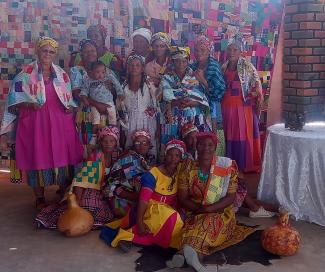
Mi camino comenzó con las voces de las mujeres Damara y Nama en la reunión inicial con ancianas, sanadoras, líderes religiosas y otras mujeres cuyo conocimiento habita en sus huesos. Me recibieron no solo como investigadora feminista participativa, sino como una hija suya deseosa de aprender de ellas. Me ofrecieron sus relatos no como una historia lejana, sino como mapas vivos. Como compartió una de las ancianas: “Tenemos el conocimiento de la sanación, pero nuestras hijas e hijos deben volver a sostenerlo o se perderá”. Llamamos al proyecto “Uts Ha-e !kho/gara its #gau#gausen: Aférrense a lo que tienen y sánense a sí mismas”. Y en ese acto de nombrarlo, algo se abrió. Se formó una responsabilidad sagrada: no solo registrar el conocimiento, sino cargarlo, vivirlo y permitir que guíe la sanación.
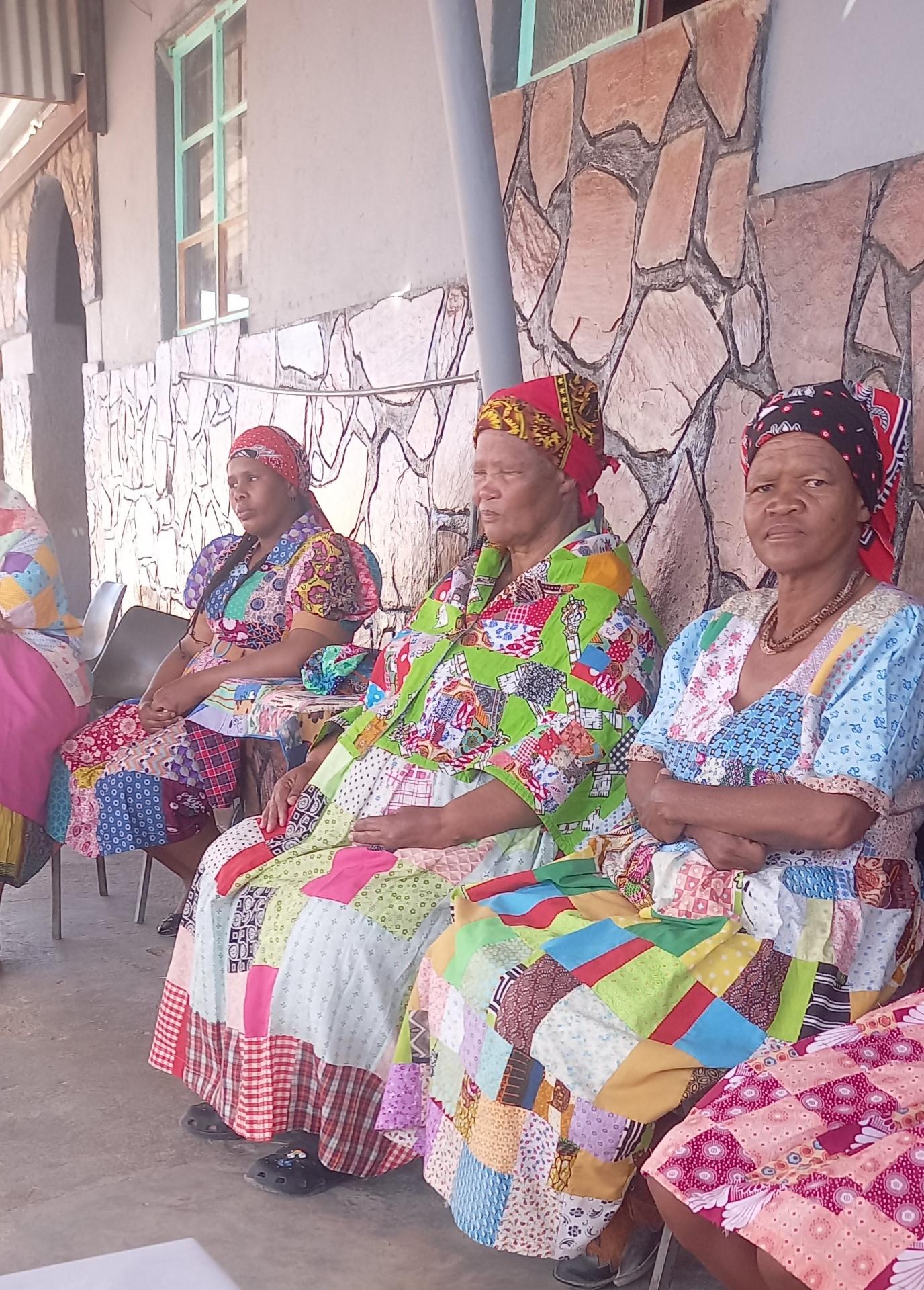
Una de las adultas mayores comentó: “Tenemos el conocimiento de la curación, pero nuestras hijas e hijos deben conservarlo o se perderá”.
Nombrar el poder: un legado marcado por el género
Gibeon es una pequeña localidad del sur, situada a 338 kilómetros de Windhoek, la capital de Namibia. Un letrero de bienvenida con la imagen del héroe namibio y Nama, el capitán !Nanseb Hendrik Witbooi, recibe a todas las personas que entran al pueblo. La imagen de su distintivo sombrero y su mirada decidida está grabada en la memoria de toda persona namibia, familiar por los libros escolares sobre la Guerra Nacional de Resistencia y ahora también presente en la moneda namibia. Mi interés se centraba en el legado de las mujeres Nama, en la memoria de las mujeres valientes que llegaron a ser líderes.
Una historia conocida localmente en Gibeon es la de /Aaoxuris. Cuenta la historia que, durante la colonización alemana, en uno de los ataques contra Gibeon, los alemanes llegaron y llevaron a toda la población a los campos de genocidio, prendiendo fuego a la tierra, quemando el ganado y disparando contra la gente, y hubo mucha sangre. Mientras esto sucedía, una mujer entró en trabajo de parto y dio a luz a una niña. Esto detuvo la matanza. Nacida en sangre, fue llamada /Aoxuris, que significa “la que recogió la sangre”. Con la llegada de la niña, se creyó que había llegado la paz.
Las mujeres Nama, al volver a contar esta historia tal como la habían escuchado de sus abuelos y abuelas, pidieron un monumento en su honor, un lugar de remembranza para las mujeres, pues ellas también vivieron con valentía. Las mujeres son guardianas de la memoria, la sanación, la lengua y la espiritualidad. También cargan con el peso del duelo por la tierra y la juventud perdidas, así como por la exclusión de las narrativas formales sobre las reparaciones. Tanto en entrevistas individuales como en grupos focales, escuché repetidamente: “Éramos ricas. Teníamos ganado, tierra, plantas, dignidad. Nos lo quitaron todo”. Este proyecto reveló hasta qué punto el género se entrecruza profundamente con el despojo histórico. En los relatos de las participantes queer, del grupo focal LGBTQ+, la marginación se duplicaba. Les arrebataron la tierra y todavía luchan por el reconocimiento de sus identidades. “Nuestros ancestros también están enterrados en esta tierra”, dijo una participante, “pero rara vez se nos convoca a hablar cuando se discute sobre la tierra”.
Memoria, riqueza y pérdida
Crecí en Stampriet, un pequeño pueblo Nama del sur, a 150 km de Gibeon, que se le parece en sus estructuras: la iglesia, la escuela, la clínica, las casas cuadradas pintadas en colores desvaídos. Estas eran casas construidas por el gobierno del apartheid en las décadas de 1950 y 1960, que ahora se caen a pedazos y albergan a ancianos que a menudo se ven obligados a sostener a sus familias, a jóvenes desempleados y a nietos con una mera asistencia del gobierno de 1 300 dólares namibios (alrededor de 80 dólares estadounidenses). Estas casas fueron construidas para albergar familias nucleares —un padre, una madre y un hijo— sin tomar en cuenta la amplitud de las familias africanas. Algunas viviendas han sido renovadas con fondos de pensión o por hijas e hijos con educación que regresaron, pero la mayoría permanece en su estado original, deteriorándose sin renovaciones desde la independencia de Namibia.
Cuando hablamos de reparaciones, un dolor profundo llenó la sala. Las mujeres recordaban haber sido ricas, no en dinero, sino en ganado, tierra y abundancia. “No nos faltaba nada”, dijo una mujer, “hasta que se llevaron el ganado y nos empujaron a este polvo”. No hablaban solo de una pérdida material. Era un despojo del tiempo, del espacio y de la dignidad. Lo que queda es una tierra que ya no florece fácilmente y una memoria que anhela ser reconocida. Patricia, una anciana respetada en Gibeon, relató cómo su bisabuela huyó con sus hijos durante el genocidio y cómo su abuelo perdió su ganado. Pero Patricia también representa la continuidad del conocimiento; enseña a las niñas sobre sus cuerpos, la menstruación y la fe. La pérdida no la endureció, profundizó su determinación.
Nuestro tiempo en Gibeon y las verdades que allí presenciamos confirman la profunda valentía y la resiliencia perdurable de las mujeres Nama. La justicia restaurativa debe ir más allá de los gestos económicos y simbólicos para incluir el reconocimiento y la revitalización de la lengua nama, las prácticas de sanación, los conocimientos Indígenas y el liderazgo de las mujeres.
Irene //Garoës (Nama) es una líder feminista, activista y escritora. Es directora de Programas e Innovaciones en Y-Fem Namibia Trust.
Todas las fotografías son cortesía de Irene //Garoës.