By Kake Kinere (Khwe)
Across our villages in Bwabwata National Park, Namibia, we believe culture is not simply a heritage of the past. It is a living system of knowledge, language, values, and identity that continues to shape our daily life. Culture informs how the Khwe people relate to our ancestral land, Bwabwata, to one another, and to the spiritual beliefs of the Khwe community. However, things are changing due to the dominance of global languages, which are placing greater pressure on the Khwe culture and language in Namibia. As younger generations move away from ancestral lands and enter formal education systems, they learn English, the dominant language, which makes it difficult for us to learn our language in government schools, and our Traditional Knowledge systems are increasingly at risk of being lost.
In response to these challenges, we are turning toward community-led cultural tourism as a pathway for empowerment. Cultural tourism creates employment opportunities for us, the Khwe Peoples. When guided by our values and controlled by us, the community members, cultural tourism can become a powerful tool for strengthening our language, restoring cultural pride, and addressing long-standing social and economic challenges. This approach positions culture as a living, respected, and evolving asset.
Khwe community members face interconnected challenges that threaten cultural continuity and overall well being. One of the most pressing issues is language loss. Our languages are endangered, with fewer fluent writers remaining each year. This loss is often the result of historical challenges, colonial education systems, and social stigma that discouraged the use of the Khwedam language. When language declines, so do Traditional Knowledge, oral histories, our spiritual beliefs, and cultural values.
Economic exclusion is another major issue affecting us. Limited access to employment opportunities, infrastructure, and markets has resulted in persistent poverty in our rural areas. As a result, young people are often forced to migrate to urban areas in search of work, distancing themselves from their cultural roots and Elders, who are the primary knowledge holders.
Cultural recognition also remains a concern; our cultural values are not respected because we are not fully practicing them. In some cases, tourism has used our culture as a commodity without community consent or meaningful benefit-sharing. Sacred practices, symbols, and stories have been used in business in ways that strip them of context and meaning. These experiences have made us worried about engaging in tourism initiatives. Additionally, Khwe identity continues to be challenged by discrimination. Community members are unhappy that our culture and language are not respected by the Namibian government in Schools, leading to disengagement from traditional practices. Addressing these issues requires approaches that restore dignity, agency, and pride.
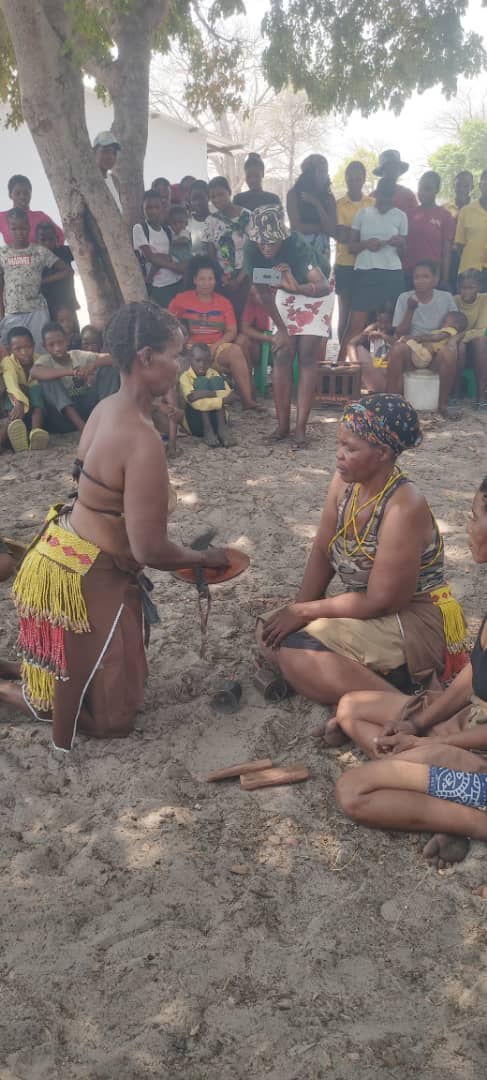
Elder women prepare a healing ceremony.
Cultural Tourism as a Tool for Community Empowerment
When cultural tourism is community-owned and community-driven, it can help address many of these challenges. Empowerment begins when communities define what aspects of their culture they wish to share, how they wish to share them, and under what conditions. This ensures that our culture is respected and that tourism activities align with our values.
Community-led tourism initiatives can generate sustainable income through guided cultural experiences, storytelling, traditional crafts, and cultural festivals. These activities create local employment opportunities that allow our community members to remain on their ancestral lands while earning livelihoods connected to their heritage.
Beyond economic benefits, cultural tourism strengthens cultural preservation efforts. Elders, youth, women, and artisans work together to design and deliver cultural experiences. This collaboration encourages intergenerational knowledge transfer and reinforces collective responsibility for cultural safeguarding.
Strengthening Indigenous Languages through Cultural Tourism
Khwedam language strengthening is most effective when used in meaningful, everyday contexts. Cultural tourism creates natural opportunities for language use and transmission. Storytelling, traditional songs, ceremonies, place-based knowledge, and environmental explanations are often best expressed in our own languages.
Many of our community members integrate our language into guided tours, greetings, signage, performances, and educational materials. Visitors may learn Khwedam clicks, mention places in Khwedam, or learn the meanings behind cultural symbols. While visitors may not achieve fluency, their engagement helps validate the language and raise awareness of its importance.
For community members, especially children and youth, seeing their language used confidently in professional and public settings helps restore it. Language becomes associated with opportunity, pride, and identity rather than living it, fading out, or being lost.
I spent most of my time with Elders, fluent speakers of our Khwedam language. When I compare our life ways now, I feel like our Elders' knowledge is no longer valued. Younger generations are less interested in traditional stories and opportunities, too, and the use of the Khwe language is limited. I believe that this will change when we, the community members, establish a cultural tourism initiative centered on land-based storytelling and ancestral knowledge. We now guide visitors along traditional pathways, sharing stories in our own language before translating key concepts. I have also learned that many ideas related to land, spirituality, and relationships cannot be fully expressed in another language.
Through this role, I have regained a strong sense of purpose. Young community members can be the solution to our cultural preservation efforts. “Now the children ask questions,” I say. “They want to learn the words because they see that our language matters.”
Many Khwe youth, identity can be complex and challenging. I, as a young community member, once believed that success meant distancing myself from my culture. I felt insecure about speaking my language and feared being laughed at when I spoke in public while working as a guide in Wolwedane in the Namib Desert.
After becoming a Founder and Chairperson of Bwabwata Living Museum, my perspective changed. I helped develop digital content for visitors, including posters introducing cultural practices and basic language phrases. Working closely with elders deepened my understanding of my heritage and I keep practicing my language skills. Today, I proudly introduce myself in my own language and encourage other youth to see cultural knowledge as a strength. Our culture is not something to hide. It is something the world respects when we present it ourselves.
Our work is deeply connected to land, relationships, and collective identity. Whether through healing, crafting, storytelling, or guiding, our work reflects values of sustainability. Cultural tourism allows this work to be recognized and valued without stripping it of meaning. However, communities must remain alert. Not all tourism is empowering, and there is a constant need to protect sacred knowledge and prevent it from spreading around. Strong governance, clear cultural protocols are very important factors. Capacity building is also important. Training in business management, language documentation, marketing, and digital tools can strengthen tourism initiatives, provided these skills complement rather than replace our traditional knowledge systems.
Community empowerment through cultural tourism and the strengthening of the Khwedam language offers a powerful pathway toward cultural preservation and renewal. When communities lead tourism initiatives on their own terms, culture becomes a daily survival tool. Our language regains its place as a living expression of knowledge, identity, and belonging.
Centering Elders, empowering youth, and grounding tourism in respect, consent, and communities can transform long-standing challenges into opportunities for sustainable development. Cultural tourism, when rooted in our values, attracts more visitors, strengthens communities from within, and ensures that language and culture continue to thrive for generations to come. Culture is community.
--Kake Kinere is Founder and Chairperson of Bwabwata Living Museum and community development advocate with a strong interest in cultural tourism and the revitalization of the Khwe language. Through thoughtful research and storytelling, Kake promotes community empowerment, cultural identity preservation, and sustainable local development initiatives.
In 2025, Bwabwata Living Museum received a Keepers of the Earth Fund (KOEF) grant to continue their work to establish a forest laboratory that integrates traditional Mapuche medicine. KOEF is an Indigenous-led fund within Cultural Survival designed to support the advocacy and community development projects of Indigenous Peoples. Since 2017, KOEF has supported 440 projects in 42 countries through small grants and a wrap-around approach totaling $2,667,147.
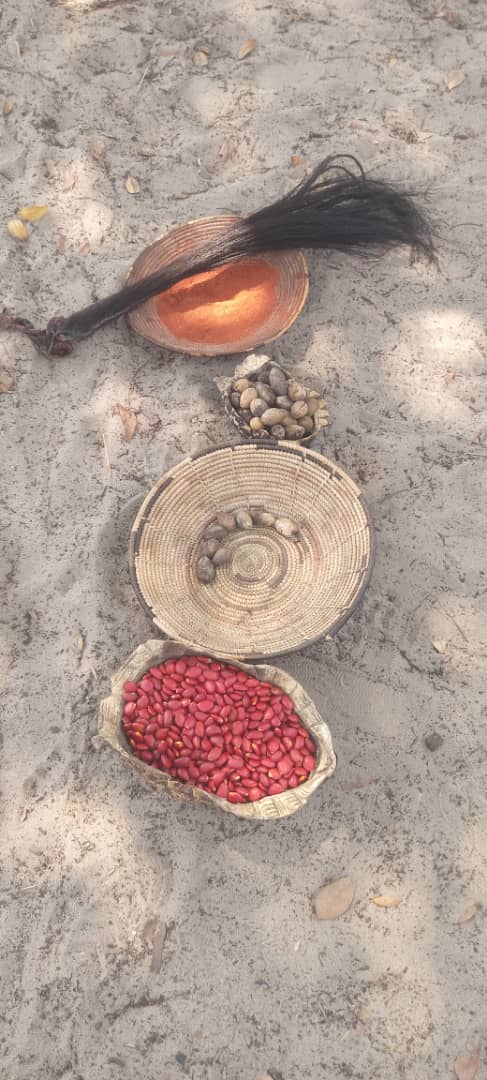
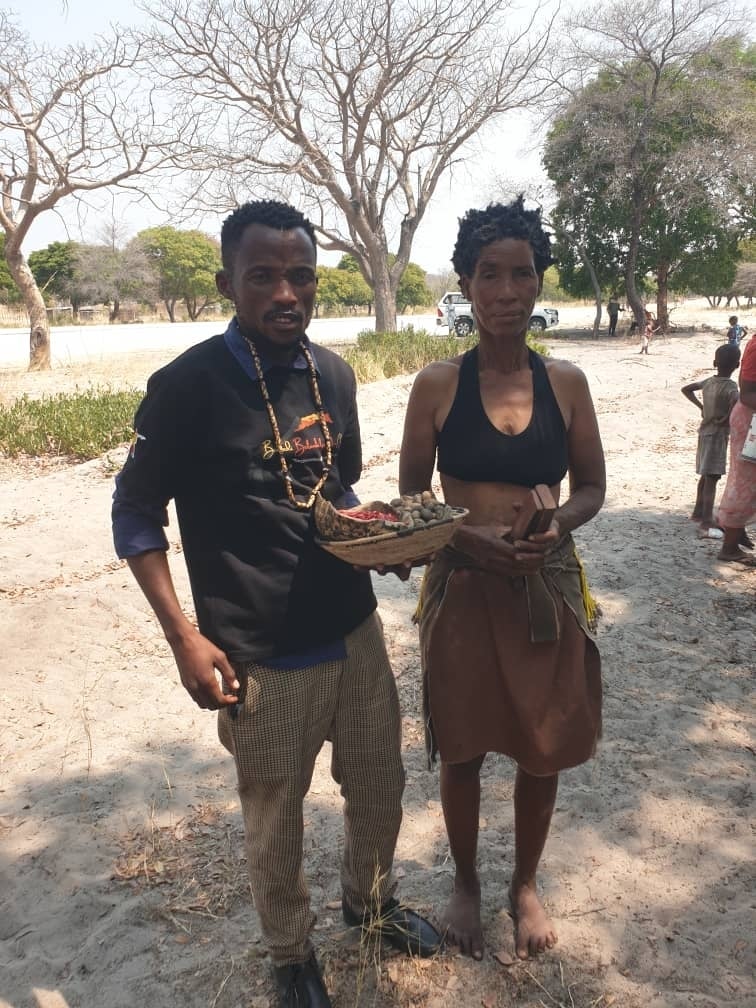
Top photo: Seeds used in rituals during healing ceremonies.