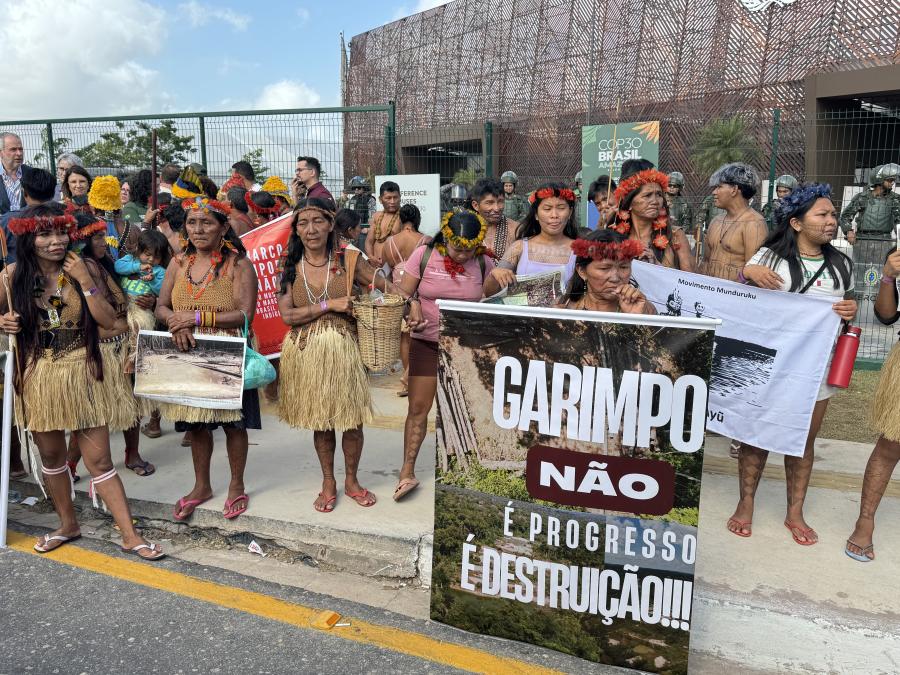
Belém, Brazil, witnessed a moment that will go down in the history of international climate negotiations. On November 10–21, 2025, while the world gathered to discuss the urgency of bold climate action and global goals at the United Nations Framework Convention on Climate Change 30th Conference of the Parties (UNFCCC COP30), Indigenous Peoples unequivocally demanded recognition of their rights in the final outcome document. According to the Indigenous Read it here: Peoples’ movement, upwards of 5,000 representatives of Indigenous Peoples participated in COP30—the largest number of Indigenous delegates in the history of climate negotiations—including 360 representatives from Brazil in the official negotiation area, the Blue Zone, and approximately 500 from other Indigenous Peoples’ organizations and Indigenous Peoples from other countries.
Key Decisions for Indigenous Peoples
The main political outcome document of COP30, known as the Global Mutirão: Uniting humanity in a global mobilization against climate change (Decision -/CMA.7), which summarizes the collective commitments made by Parties at COP30, contains an explicit statement in the preamble absent in other conferences: “When taking action to address climate change, respect, promote, and consider their respective obligations on human rights, the right to a clean, healthy, and sustainable environment, the right to health, the rights of Indigenous Peoples, as well as their land rights and Traditional Knowledge…”
The reflection of Indigenous Peoples’ land rights and Traditional Knowledge in the final document is a significant recognition of their role in combating climate change and of the contribution of their Traditional Knowledge and practices to the management of their lands, territories, and resources. This is reflected in the part of the document that “emphasizes the important role of...Indigenous Peoples...in supporting Parties and contributing to significant collective progress in achieving the long-term goals of the Paris Agreement, as well as in addressing climate change issues…”
Recognition in the preamble is much weaker than the specific obligations listed below, which are to be fulfilled by the Parties. However, for the first time in the history of COP negotiations, the rights of Indigenous Peoples to their lands have been emphasized and reflected in the final document. When something is mentioned in the preamble of a UNFCCC document, it becomes a guiding principle that runs through all subsequent decisions. It means that every decision on financing, every commitment to a just transition to a “green economy,” every implementation mechanism, should, in theory, be aligned with respect for Indigenous and territorial rights. Therefore, the mention of the rights of Indigenous Peoples in the preamble effectively links them to all other sections and decisions.
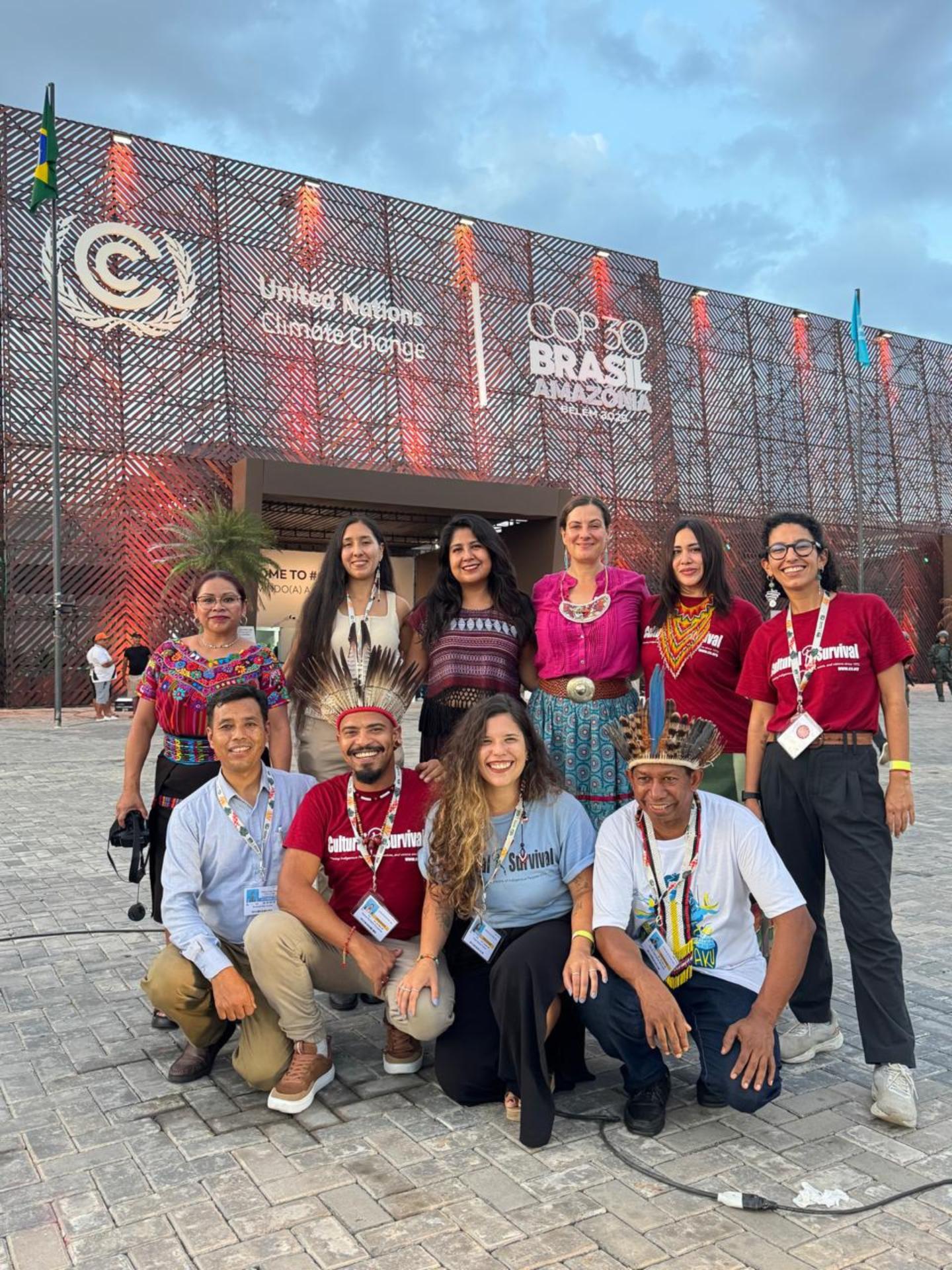
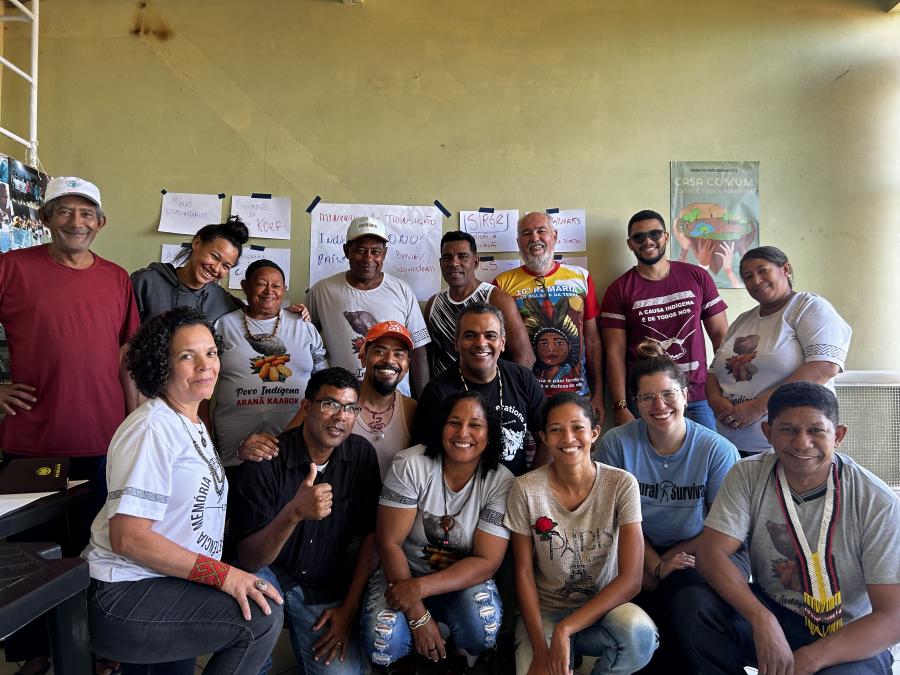
Cultural Survival’s delegation at COP30.
Inclusion in the “Just Transition” System
A Just Transition is an approach to environmentally and socially just transformation during the process of transitioning to a sustainable economy, as well as an imperative for achieving the greenhouse gas reduction targets set out in the Paris Agreement. The Just Transition Work Programme (JTWP) is a process that helps countries design fair and inclusive climate transitions through examining social, economic, labor, and human-rights dimensions of climate action. At COP30, negotiators continued developing annual outcomes of the program—non-binding political decisions that guide how governments shape national just-transition policies.
It is important that negotiators from Indigenous Peoples, with the support of friendly Parties, were able to achieve positive results, especially inclusion in the text of the JTWP. For the first time in the history of the UNFCCC, the final decision includes references to the rights and guarantees of Indigenous Peoples in Voluntary Isolation and Initial Contact. The wording also enshrines the obligation to respect and promote the collective and individual rights of Indigenous Peoples, the right to self-determination, and the need for Free, Prior and Informed Consent (FPIC) in full accordance with the UN Declaration on the Rights of Indigenous Peoples, as reflected in Para 12 (i): “The importance of the rights of Indigenous Peoples and of obtaining their Free, Prior and Informed Consent in accordance with the United Nations Declaration on the Rights of Indigenous Peoples, and the importance of ensuring that all just transition pathways respect and promote the internationally recognized collective and individual rights of Indigenous Peoples, including the rights to self-determination, and acknowledge the rights and protections for Indigenous Peoples in voluntary isolation and initial contact, in accordance with relevant international human rights instruments and principles.”
Although these decisions are not legally binding, Indigenous Peoples can treat transition-related activities as falling under the JTWP, and therefore use its standards to defend their rights. In practice, this means that Indigenous Peoples can invoke these paragraphs in consultations, impact assessments, court cases, and human-rights complaints to demand respect for self-determination, FPIC, and protection from rights violations during transition-related projects. The COP30 also became one of the most indicative in terms of decisions made on financing issues. Only time and the practice of distributing these funds will show how useful and applicable they will be for Indigenous Peoples.
Launch of a New Major Forestry Fund
The Tropical Forest Forever Fund (TFFF) was launched at COP30 as a blended finance mechanism for countries with tropical forests. It is a global fund designed to encourage forest conservation rather than deforestation. Importantly, 20% of funds are reserved for direct payments to Indigenous Peoples, giving them direct access to funding. This is perceived as a positive development for Indigenous Peoples, as the direct access to funding provides an opportunity to strengthen their forest and nature conservation projects. However, there is also potential for the fund to exacerbate existing injustices, as the direct access mechanism is unclear. Those who actually live in the forest and are its guardians have no guarantee that the money will reach their communities.
Additional concerns include: problem monitoring that does not include Traditional Knowledge and practices of Indigenous Peoples; an unfair and poorly designed penalty system; the practice, or lack thereof, of applying the SPOS principle; and many other issues concerning the future work of this fund. There is a real risk that the TFFF, instead of being an advance for Indigenous Peoples, will become another mechanism that reproduces the systemic injustices that already exist.
COP30 generated an unprecedented set of commitments involving Indigenous Peoples’ rights. The Global Mutirao, the Work Programme on Just Transition, and the financing commitments all represent years of hard work by Indigenous organizations and their allies to ensure that Indigenous voices are heard in spaces such as the COP. The political outcome document of COP30, Global Mutirão, notes the need to urgently address existing constraints, challenges, systemic inequalities, and barriers to accessing climate finance. It also reaffirmed the call to increase climate finance for developing countries from all public and private sources to at least $1.3 trillion USD per year by 2035 (para 47) and to at least triple adaptation financing by 2035, and urges Parties from developed nations to increase their collective provision of climate finance for adaptation to developing country Parties (para 53).
But just as the adoption of the Paris Agreement in 2015 did not end the climate crisis, the adoption of these outcomes at COP30 is only the first step. For Cultural Survival and the broad coalition of Indigenous organizations that participated at COP30, the work has not ended. In fact, it is just beginning. The outcomes of COP30 provide tools, but tools without organized action are meaningless.
What is clear is that 5,000 Indigenous Peoples in Belém sent an unmistakable message: we will no longer be ignored in these negotiations. We will no longer allow decisions affecting our territories to be made without us. And most importantly, our rights, our lands, and our knowledge are not up for negotiation. They are the foundation upon which any real climate action must be built. The governments of the world listened. Now the proof will lie in their actions.
Read about Cultural Survival’s work at COP30 at www.cs.org/cop30.
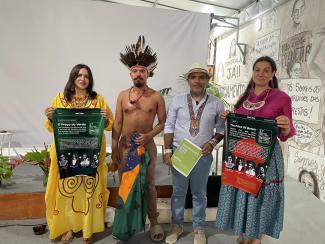
Top photo: Cultural Survival launched “The Price of Green,” a joint report about how Brazil finances mining without Indigenous consent using climate funds. Read it here.