Por Akash Poyam (Gond/Koitur, becario de CS)
“Kete ujad gaye, suna padgaye…parsa kete ma khulish khadan, paar parosi man ho gain biraan, bhai bhai man nai pahchan, apan man ab ho gaye anjaan…putu khukhdi ma din bitaan, nai mile ab lakri paan, dau dada ke nikalat he jaan, laika chauwa ke nei hai dyaan…”
(“Kete fue destruido, todo se ha quedado entumecido… la mina abrió en Parsa y Kete y el vecindario ha quedado desolado… ni siquiera los hermanos se reconocen entre sí, nos hemos vuelto extraños unos para otros… antes pasábamos los días recogiendo hongos silvestres, ahora ya ni siquiera encontramos leña ni hojas, nuestros padres están de duelo y ni siquiera pueden pensar en sus hijos…”).
Estas son palabras de “Kete Ujan Gaye” (Kete fue destruido), una canción escrita por Shiv Prasad Kusro (Gond), un artista cuya aldea, Kete, fue desalojada para dar paso a una mina de carbón en el bosque Hasdeo Arand, distrito de Surguja, Chhattisgarh. Kusro lanzó la canción en 2025 en memoria de su aldea.
Mientras Adani Enterprises, una subsidiaria del conglomerado multinacional Adani Group, sigue expandiendo sus operaciones de minería de carbón en las aldeas que rodean Kete, los habitantes, en su mayoría pertenecientes a comunidades tribales, afirman que, además de una rehabilitación fallida, la destrucción del bosque y de los sitios sagrados continúa pese a su resistencia.
Además de ser músico, Kusro, que ahora tiene 37 años, depende de la agricultura para su sustento. “Kete era hermosa”, señala. “Había campos y bosques por todas partes, y había muchas clases de animales que solían venir, como sambares (ciervos) y leopardos”. Ahora, dice, la subsistencia es extremadamente complicada: “Así como nuestras vidas se han vuelto difíciles, nuestra vida espiritual también se está volviendo ardua”.
Kusro recuerda que, en tiempos de su abuelo y de su padre, la vida era buena. Pero, desde que la mina abrió en 2010, “[Adani] empezó a mandarnos de un lado a otro. La gente de Kete ahora está dispersa”. Las personas no han recibido mucha compensación económica y el desplazamiento de la aldea de Kete ha causado un trauma colectivo en las comunidades, señala. “Todavía se me llenan los ojos de lágrimas cuando pienso en aquellos tiempos”, añade, “ni siquiera me dan ganas de hablar de ello”.

La reciente ampliación de la mina situada junto al pueblo de Hariharpur, que se encuentra a solo unos metros de distancia.
Breve cronología de la minería en el bosque Hasde
En 2007, el gobierno de la India asignó los yacimientos de carbón del bosque Hasdeo Arand a Rajasthan Rajya Vidyut Utpadan Nigam Limited, una empresa estatal de servicios públicos de Rajastán, que en 2013 designó a Adani Enterprises Limited como desarrolladora y operadora de las minas.
En 2009, el Comité Asesor Forestal del Ministerio de Medio Ambiente, Bosques y Cambio Climático declaró el bosque como una zona prohibida (“no-go”) para la minería debido a su rica cobertura forestal. Pero, en 2011, Jairam Ramesh, entonces ministro de Medio Ambiente, rechazó las recomendaciones del Comité y otorgó la aprobación para la primera mina de carbón, Parsa East y Kanta Bavan.
La aprobación para la fase II de la mina fue concedida por el ministerio de Medio Ambiente en 2012. Posteriormente, se presentó un caso en su contra ante el Tribunal Nacional Verde, un órgano independiente que se ocupa de casos relacionados con la protección ambiental y los recursos naturales.
En 2014, la minería fue suspendida en la zona. Sin embargo, Adani impugnó la orden del Tribunal y la Corte Suprema emitió una suspensión, lo que permitió que la minería continuara en Hasdeo. Además de Kete y Parsa, Adani tiene previsto adquirir tierras en las aldeas de Salhi, Hariharpur, Ghatbarra y Fatehpur, en el distrito de Surguja; así como en Tara y Janardhanpur, en el distrito de Surajpur.
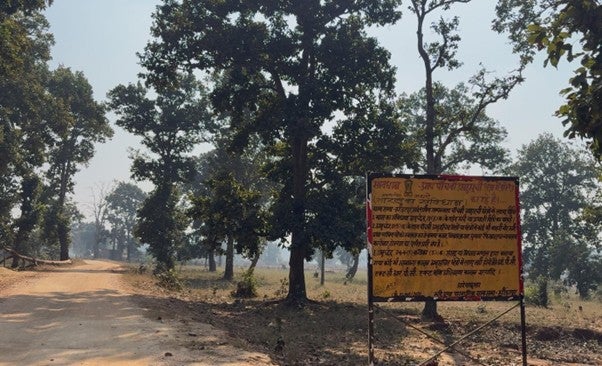
Un cartel a la entrada de la aldea de Hariharpur reivindica los derechos de los pueblos Tribales en virtud del Anexo V de la Constitución de la India.
De acuerdo con un artículo de The Guardian, los seis bloques de carbón cuya explotación fue aprobada dentro del bosque de Hasdeo contienen un estimado de 5 000 millones de toneladas métricas de carbón; de hecho, tan solo las 450 millones de toneladas métricas bajo Kete tienen un valor estimado de 5 000 millones de dólares. El artículo señala que se estima que 1 898 hectáreas de tierra forestal serán destruidas para la construcción de las minas.
Adani Enterprises es propiedad de Gautam Adani, quien es el segundo hombre más rico de Asia y de quien se dice que mantiene estrechos vínculos financieros con el primer ministro Narendra Modi. Las operaciones mineras de Adani no solo han amenazado la vida de los pueblos Indígenas en la India, sino también en Australia, donde los pueblos Wangan y Jagalingou han estado luchando contra la mina Carmichael, en Queensland.
Promesas incumplidas de rehabilitación
Komalsai, cuyo nombre ha sido cambiado para esta historia, es un habitante desplazado de Kete y empleado de Adani. Recuerda cuando la empresa llegó por primera vez a Kete, hace unos 15 años: “Yo tenía alrededor de 25 o 26 años. Al principio, vinieron geólogos del gobierno de la India para hacer un estudio. Después de eso, vino Adani [con el] gobierno de Rajastán. Hicieron estudios y aprobaron las minas aquí. Han estado activos desde 2008-2009; sin embargo, en 2012, la gente recibió compensación y fue desplazada”.
De las aproximadamente 200 familias desplazadas en Kete, entre 30 y 35 viven en la colonia de reasentamiento de la empresa, en la cercana aldea de Basen. La empresa prometió que los hijos de las familias que perdieron sus tierras tendrían derecho a empleo en la mina en cuanto cumplieran 18 años. Pero cuando alcanzaron esa edad y pidieron trabajo a Adani, “la empresa dijo que no tenía esa política”, señala Komalsai; en cambio, les dijeron a sus familias: “Si les dan una buena educación y obtienen títulos, entonces podremos darles trabajo”.

Las primeras viviendas de rehabilitación construidas, la mayoría de las cuales están vacías y cerradas con llave. Estos departamentos de dos habitaciones son minúsculos e insuficientes incluso para una sola familia.
La colonia de rehabilitación tiene menos de una milla cuadrada. “Nos dijeron que nos darían una casa. Sin embargo, no se confirmó qué tan grande sería”, dice Komalsai, y añade: “Quienes no tienen empleo no están viviendo en esta colonia. ¿Qué van a hacer y cómo se van a alimentar?”
Los paquetes de rehabilitación se dividieron en tres categorías: familias con baja, media y alta tenencia de tierra. El tamaño de las viviendas de rehabilitación debía basarse en la cantidad de tierra perdida. De las 200 familias originales, entre 60 y 70 personas consiguieron empleo como parte de la rehabilitación; de ellas, “algunas personas renunciaron. A algunas las despidieron, principalmente debido a su alcoholismo”, señala Komalsai.

Colonia de reasentamiento situada en un rincón de la aldea de Basen. La mayoría de las familias que viven aquí tienen a algún miembro trabajando en las minas de Adani, como parte de la política de reasentamiento. Sin embargo, el futuro de sus hijos sigue estando amenazado.
La empresa prometió 4.25 lakh (4 675 USD) para la construcción de cada vivienda en el asentamiento. Las casas que construyeron finalmente miden 16x16 con dos habitaciones y un baño, “pero la calidad no es buena”, afirma Komalsai. “Al principio, la empresa dijo que construiría una colonia de rehabilitación de ‘primer nivel’. Pero aquí no hay nada. Ni electricidad, ni agua, ni caminos, ni educación, ni servicios de salud. En el papel, pueden mostrar que han trabajado, pero eso no se refleja en la realidad”.

Un centro de producción de hongos que permanece cerrado, patrocinado por RVUNL Ltd., empresa que designó a Adani como socia para las minas de carbón en Hasdeo.
La colonia de reasentamiento, ubicada en las afueras de la aldea de Basen, está dividida por un pequeño río. Hasta el año pasado no había puente ni camino y la gente tenía que dejar sus motocicletas y cruzar el río. “El camino se construyó recién el año pasado”, afirma Komalsai. “Incluso ahora, durante el monzón, el agua sobrepasa el puente”.
Adani prometió educación gratuita, servicios de salud y agua potable. “Sin embargo, cuando llegamos aquí, no había agua para beber. Perforamos un pozo con nuestro propio dinero. El año pasado, la empresa hizo dos perforaciones, de las cuales una no se puede usar. La electricidad también se suponía que sería gratuita, pero no lo es”, señala Komalsai. Aunque la empresa abrió un centro de salud, no hay hospital y, según Komalsai, “no hay un médico fijo en el centro de salud. Solo hay un puesto de primeros auxilios para los trabajadores que se lesionan”.
Kusro cuenta que cuando Adani estaba adquiriendo tierras para las minas y desplazando a los aldeanos, les dijo a las autoridades: “Solo tengo una petición: que escriban en un papel timbrado que mis próximas tres generaciones estarán protegidas y cuidadas, ya que si nuestra aldea es desalojada, nuestro [asentamiento oficial de tierras] se acaba. Los funcionarios respondieron que su palabra era el sello. Yo les repliqué: ‘¿Cómo puedo creerles? Ustedes se irán mañana’. Pero mi petición fue ignorada”.
Y continúa: “Yo digo esto: vayan y hagan un estudio de cuántas personas de Kete están a salvo y vivas, y cuántas han muerto. Dijeron que se daría un estipendio mensual a la gente, que las personas mayores recibirían un estipendio, pero desde 2011 no ha habido ningún estudio ni nada; ningún gobierno ni ninguna empresa vino a hacer nada”.

Una farola solar instalada en la colonia de rehabilitación por la Fundación Adani.
En Kete, según Kusro, los funcionarios del gobierno habían prometido proporcionar casas de concreto para vivir. “Yo les dije: les estoy dando un plano de la casa. En una reunión de la aldea entregamos el plano, y ellos aceptaron construir de acuerdo con él”, cuenta. “Pero las casas que ha construido Adani son más pequeñas que las casas prometidas bajo el Pradhan Mantri Awas Yojana (un programa gubernamental de vivienda para personas de bajos ingresos). Ni siquiera dos familias pueden vivir en las casas que construyeron”. A pesar de su tamaño inadecuado, Kusro dice que hasta 16 personas están viviendo en una sola casa de reasentamiento.
“Tal vez, si la mina no hubiera abierto, mi hermana no habría muerto… dejó a dos hijos”, lamenta Kusro. “Los mayores solían decir que uno cosecha lo que siembra. De alguna manera seguimos vivos, pero no protegimos nuestros espíritus y por eso andamos de un lado a otro. Nunca imaginamos que algún día la vida sería así”.
Tanto en Parsa como en Kete hay muchas viudas. “Muchos de mis familiares han muerto”, dice Kusro. “El dinero de la compensación no sirvió de nada a los habitantes de Kete. La gente no pudo ni construir una casa ni dedicarse bien a la agricultura”.
Tal como él había anticipado, la falta de documentos de registro que prueben un derecho de tenencia sobre la tierra es ahora un enorme obstáculo para las personas desplazadas. “Cuando vamos a las oficinas, nos piden documentos de registro y de ascendencia”, menciona Kusro. “Yo les expliqué que lo hemos perdido todo y que nos dijeron que no necesitábamos documentos de registro. Ellos contestaron que aun así los necesitamos. Obtenerlos cuesta 1 000 rupias (11 dólares estadounidenses). Los funcionarios del gobierno deberían entender que nuestras tierras han sido destruidas por las minas y hacer excepciones con este documento, pero dicen que tenemos que sacar uno nuevo”.
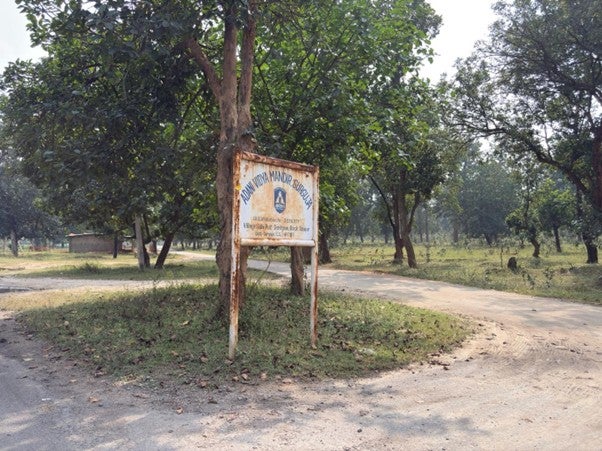
Cartel de Adani Vidya Mandir, una escuela privada gestionada por las minas de carbón de Adani. Aunque la escuela se creó para educar a las familias desplazadas y afectadas, son principalmente los hijos de los empleados de Adani quienes son admitidos.
Además, Kusro dice que los aldeanos habían exigido que se abrieran escuelas en los lugares donde viven. “Los funcionarios dijeron que establecerían servicios de anganwadi, salud y educación”, recuerda. Sin embargo, la única escuela se construyó en Salhi. “Hay un pequeño centro de salud sin médico; para el hospital tenemos que ir hasta la ciudad de Udaipur”, dice.
Kusro logró inscribir a sus tres hijos en edad escolar en el centro educativo de Adani. Cuando el cuarto estuvo listo para ingresar, la escuela lo rechazó, alegando que ya tenía a tres hijos matriculados. “Intentaron convencerme, pero, en protesta, saqué a mis hijos de esa escuela y los inscribí en una escuela pública cercana”. Komalsai se ha encontrado con un obstáculo similar: “Hemos puesto a uno de nuestros hijos en la escuela de Adani y dicen que no pueden aceptar a más. Aseguran que no podemos tener más de dos hijos. Ahora tenemos tres, cuatro, cinco hijos… ¿qué podemos hacer?”
Desplazamiento y familias fracturadas
Kusro vivía con sus padres y sus hermanos en tres casas grandes en Kete, pero desde la apertura de la mina de carbón de Adani, su familia ha quedado dispersa. Actualmente, sus familiares ya no viven juntos; cuando tuvieron que buscar nuevas tierras después del desplazamiento, compraron terrenos donde pudieron encontrar una buena oportunidad. La historia de Kusro no es única: es también la historia de las 200 familias que vivían en Kete.
Ganesh Shyam es un agricultor de 38 años y residente desplazado de Kete que ahora vive en la colonia de rehabilitación de la empresa, en la aldea de Basen. Cuatro generaciones de su familia habían vivido en Kete cuando llegaron las minas. “La vida en Kete era buena”, recuerda. “La gente no andaba de un lado a otro. Ahora, desde que la mina abrió, le preguntas a alguien dónde está y te cuenta cómo sus padres o familiares están dispersos en distintos lugares. Así es como se ha vuelto la vida”.
Viajar para encontrarse con familiares y parientes dispersos por una región extensa supone un gasto adicional. “¿Cómo puede un hombre pobre viajar tanto para ver a su familia?”, pregunta Shyam. “Mi familia está en otras aldeas como Udaipur, Palka, Morga… la situación es la misma para otras familias desplazadas”.
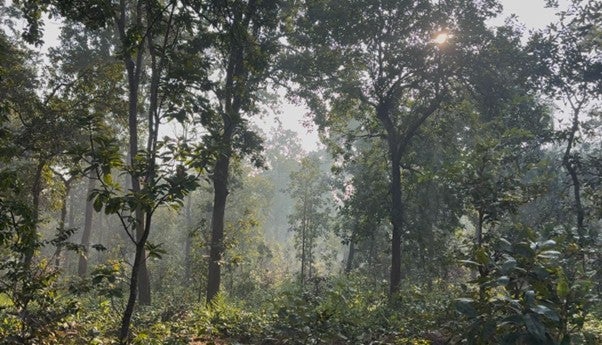
El bosque Hasdeo Arand es rico en biodiversidad y proporciona recursos vitales para las comunidades. También es un corredor para los elefantes. Los conflictos entre personas y animales se han convertido en algo habitual debido a las minas.
En la vecina aldea de Salhi, donde la gente está resistiendo la expansión de las minas de Adani, Anand Ram Kusro, de 55 años, participa activamente en el movimiento de resistencia. Su madre y sus familiares eran de Kete. Hoy, se desconoce el paradero de muchos de sus parientes. “Algunos probablemente siguen vivos, otros ya han muerto. No tenemos ninguna noticia. Ver esto nos da miedo. No queremos estar en una situación como la de Kete”, dice.
Debido al desplazamiento, señala Prasad, las futuras generaciones de la aldea de Kete enfrentarán muchas dificultades. “No podemos conseguir los certificados que acreditan que pertenecemos a una Tribu Registrada ni los de residencia para nuestros hijos”, añade. “Me pregunto cómo se desarrollarán las cosas.”
Falta de acceso al bosque
Las familias desplazadas de Kete han perdido más que sus tierras y sus viviendas: también han perdido el acceso a los valiosos recursos del bosque. “El bosque ya ha sido talado para la minería. Los árboles frutales que nuestros antepasados habían plantado, como los mangos y los árboles de yaca, ya no están. Incluso los árboles de mahua, donde la gente había delimitado áreas para que cada familia recolectara, ahora han sido talados para la mina de carbón”, dice Komalsai.
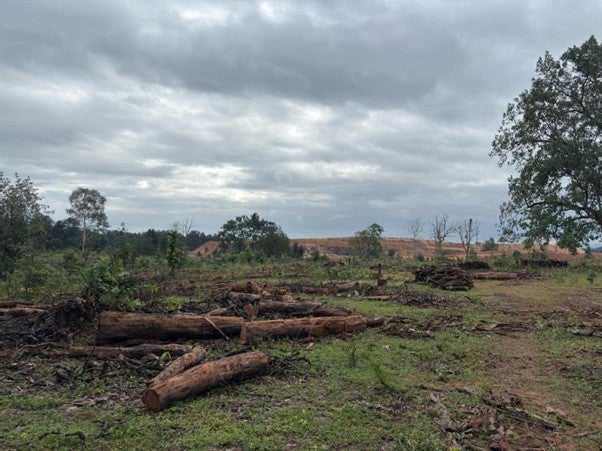
La tala de árboles llevada a cabo por Adani, en la aldea de Salhi, provocó protestas en 2024. La ampliación de las minas de Adani en la aldea de Salhi ya está en marcha, a pesar de la resistencia de la comunidad.
Komalsai dice que quienes fueron desplazados de Kete y se trasladaron a otras aldeas “tienen que vivir bajo el amparo de otros aldeanos. Como forastero no tienes muchos derechos; no puedes hacer nada y tienes que aceptar lo que digan los habitantes de la aldea. Cuando estábamos en nuestra propia aldea, vivíamos como reyes”. Pero ahora, dice, se les considera recién llegados. “Los nuevos vecinos dicen que no podemos usar nuestro bosque y tenemos que escucharlos. ¿Qué podemos hacer? A veces, cuando vamos al bosque a recoger hojas de tendu o leña, nos dicen: ‘Ya vendieron su tierra y se vinieron para acá; ahora también quieren vender la nuestra’”.
Otro habitante de Kete, Ganesh, recuerda que antes cultivaban varias clases de arroz, mijo y otros productos, pero desde que dejaron la aldea ya no les queda nada. “Ahora, ¿en qué tierra vamos a cultivar todo eso?”, pregunta. “Antes recogíamos madera para construir casas. Recogíamos del bosque los frutos de mahua, tendu y char”, dice. “Ahora tenemos que comprarlos. Un saco de leña nos cuesta 150 rupias. Cuando vamos al bosque, los funcionarios forestales nos dicen: ‘Ustedes vendieron su bosque y ahora están robando del de otros’, así que ya no vamos más. Ya no hay frutos de tendu ni de char”.

Nuevos árboles de tendu crecen a menos de 500 metros del lugar de las voladuras, cerca de Hariharpur. Las hojas de tendu son una fuente clave de ingresos y se utilizan para fabricar bidis (cigarrillos finos). El árbol también da el fruto del tendu, que puede venderse en los mercados.
En la aldea de Salhi, Anand Ram Kusro cuenta una historia similar. Dice que antes recolectaban productos de los árboles de mahua, sarai y saja, además de hongos y frutas silvestres, “pero hoy Adani ha destruido el bosque”. Después de las lluvias del monzón, la gente recoge putu y khukdi (hongos silvestres) y vende lo que sobra, lo que les da algunos ingresos extra. Después llega la temporada de mahua, char y tendu. “Trabajamos en la agricultura durante seis meses, y en los otros seis meses podemos sobrevivir gracias al bosque”, explica. “La selva es como un banco para nosotros, pero sin efectivo. Podemos vender muchas cosas del bosque y ganar dinero, como madera, semillas de saal, fruto de harra, char chironji, mahua, hojas de tendu...”
La tala de los bosques también ha provocado un aumento de los conflictos con los elefantes. El bosque Hasdeo Arand es un corredor de elefantes y la mina tiene un enorme impacto sobre la fauna silvestre. Prasad dice que nunca había visto un elefante antes de la apertura de las minas. Sin embargo, “hoy es común que los elefantes entren en las aldeas. Rompen las casas de la gente. Las autoridades deberían entender que este bosque es su primer hogar. Nosotros pedíamos que no se talara el bosque y que se dejara un lugar para los elefantes, pero ¿quién nos escucha?”

Planta de tratamiento de agua de Adani cerca de Hariharpur. A pesar de la planta de tratamiento, el agua que se vierte está contaminada y ennegrece el suelo, como se puede ver aquí.
La contaminación también es un problema. “Los utensilios y otras cosas se vuelven negros e incluso rojizos por el polvo”, dice Ganesh. “Solo hay dos perforaciones con agua potable, las otras tienen agua inutilizable. Cuando hace viento, el polvo de las minas llega a la aldea. El agua de la mina se descarga en el río Atem”.
Ramgarh, una colina sagrada cercana donde el clan Uikey del pueblo Gond realiza ofrendas, también se encuentra amenazada debido a las minas. “Tiene muchas grietas. De un lado, ya está rota. Las casas también tienen grietas; las viviendas de algunas personas ya se han derrumbado”, dice Ram. Durante los monzones, añade, “es todavía más arriesgado, ya que las casas de barro se humedecen. El polvo también se mete en la casa. Incluso cuando tapamos la vasija de agua, de alguna manera el polvo entra; no sabemos cómo”.

El cuerpo de agua que discurre junto a las minas y las aldeas afectadas. El agua contaminada se bombea a través de un canal y se mezcla con este cuerpo de agua, el cual es utilizado por personas y animales.
El mito de la rehabilitación monetaria
Hacia 2013, cuando Adani inició sus operaciones mineras en el bosque de Hasdeo y comenzó a entregar compensaciones a las personas desplazadas, un habitante de la aldea de Kete recibió alrededor de 1.5 crore rupias (164 000 dólares estadounidenses) como compensación por sus tierras. Cuando visité la aldea de Basen en 2022, donde viven muchas familias desplazadas de Kete, Prasad me habló de un hombre al que le quedaban menos de 5 000 rupias (55 dólares estadounidenses) en su cuenta bancaria. Murió el año pasado a causa de una enfermedad.
Como parte de la rehabilitación, Adani construyó pequeñas viviendas con baños compartidos en la aldea de Basen, pero esas casas están hoy en su mayoría vacías y las personas han optado por establecerse en otros lugares. Si bien unos pocos recibieron una indemnización tan elevada, muchos otros recibieron pagos por reasentamiento que apenas representaban el 10 % de las cantidades originales, una cifra inferior al valor de mercado de sus tierras.
Las políticas de rehabilitación suelen incluir la promesa de empleo y beneficios monetarios, lo que se ha convertido en un motivo de tensión entre las generaciones jóvenes y de adultos mayores dentro de las comunidades Tribales. En 2018, Lalsu Nogoti nos dijo que, en el movimiento contra la mina de hierro de Surajagarh, eran sobre todo los mayores quienes participaban en la resistencia, mientras que las personas jóvenes y con educación veían oportunidades de empleo y tendían a alinearse con la empresa, una situación que sigue siendo similar hoy.

Shiv Prasad Kusro, un artista del pueblo de Kete, cuya familia se vio obligada a desplazarse tras ser desalojada de su hogar. Ahora vive en la comunidad de reasentamiento del pueblo vecino de Basen, junto con su numerosa familia, en una casa relativamente pequeña.
La Ley de Adquisición de Tierras de 2013 incorpora una sección que establece que: “En caso de desplazamiento en las Áreas Registradas (Scheduled Areas), en la medida de lo posible, las familias afectadas deberán ser reubicadas en una zona ecológica similar, a fin de preservar las oportunidades económicas, la lengua, la cultura y la vida comunitaria de las comunidades Tribales”. Sin embargo, la cláusula “en la medida de lo posible” es un término ambiguo que puede ser mal utilizado, y diversos estudios han destacado el fracaso en la implementación de estas políticas en las áreas registradas.
Los habitantes de la aldea de Salhi aparecieron en las noticias el año pasado por sus protestas, después de que Adani talara cientos de árboles y ampliara la mina de carbón, pese a la oposición de la población. Actualmente, la mina está operando justo al borde de un sarna, o bosque sagrado, y de otro sitio sagrado dedicado a Persa Pen, un espíritu ancestral.
La política de rehabilitación solo considera a los seres humanos como parte de la “comunidad”. Entonces, ¿qué ocurre con los seres no humanos como las colinas, los árboles, los estanques, los ríos, los bosques y demás, que son considerados seres sintientes e incluso parte de una red ampliada de parentesco en las cosmologías Tribales? El problema es doble: en primer lugar, el significado sociocultural y económico del dinero entre las comunidades Tribales y, en segundo lugar, una disonancia entre la vida y la cosmovisión de las comunidades Tribales y las políticas de rehabilitación diseñadas para ellas.
“Los que tenían menos tierra recibieron menos dinero. Algunos pensaron: tengo dinero, voy a comprar motos; otros lo gastaron todo. Ahora andan de un lado para otro. Algunos están cerca, los que no se han quedado con tierras. Algunos venden leña; otros hacen algo más”, dice Komalsai.
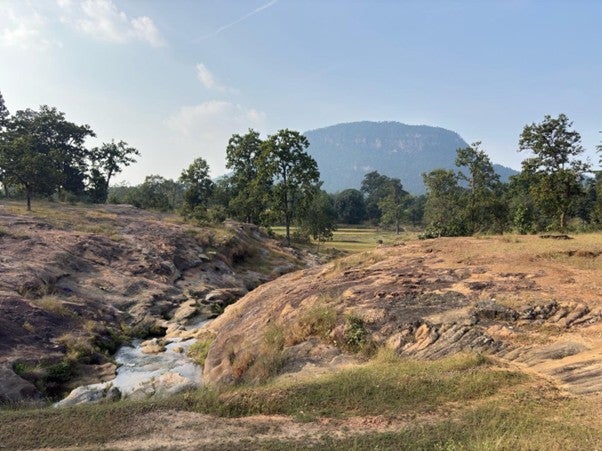
Un pequeño arroyo fluye hacia las colinas de Ramgarh, que en su origen eran el monte sagrado del clan Uikey y que ahora ha sido apropiado por el hinduismo. Las rocas de la colina, situada a unos 20 km de la zona minera, están empezando a agrietarse debido a las voladuras de las minas cercanas.
Pérdida de los espíritus ancestrales
En Kete había muchos espíritus ancestrales, como Gaura Mata, Isarraja, Sundorani, Sivarihya, Diharin, Thakur, Deur Gosain, Dhodi Gosain y Manwair, por nombrar solo algunos. “La mayoría de nuestros espíritus ancestrales de Kete quedaron abandonados a un lado de la aldea”, dice Prasad, con pesar. “Están vagando de un lado a otro”. A lo largo del año, los aldeanos realizaban rituales para distintos espíritus. Por ejemplo, explica: “Sivarhiya es un espíritu del bosque y cada vez que la gente iba al bosque por leña o para recolectar productos, le pedían a Sivarhiya que los cuidara y los acompañara en el bosque.
Del mismo modo, el árbol sarai es sagrado, Persa Pen reside en el árbol saja y otro espíritu femenino habita en el árbol de tamarindo. Según relataban mi abuelo y mi padre, Geur Gosain Dai, un espíritu femenino de la aldea, decía que podíamos vivir bien en Kete durante más de cien años”, menciona Prasad. Pero después de que la mina abrió, “ni siquiera hicieron falta 10 años para que Kete y el bosque quedaran destruidos”.
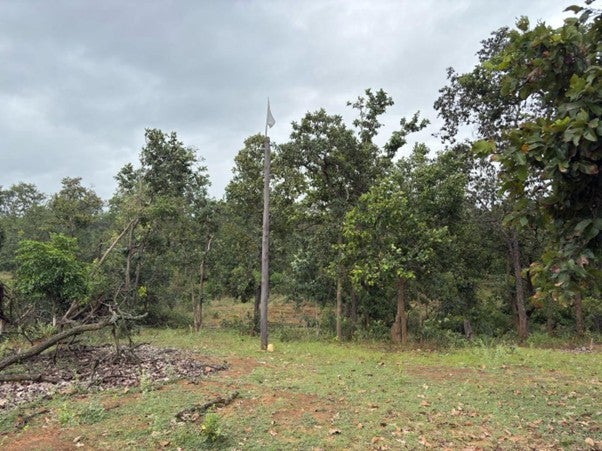
El lugar sagrado de Persa Pen, el espíritu ancestral supremo para los Gond y otras tribus, se encuentra a menos de 500 metros de las minas y corre el riesgo de ser destruido.
Prasad menciona que, cuando Adani llegó a Kete, ellos dijeron: “Esta aldea no es nada en comparación con los lugares a donde podrían ir”. La gente de la aldea respondió que no podían abandonar su aldea ni a sus espíritus. La empresa expresó que podían trasladar los espíritus a otro lugar. “Yo le dije al baiga (sacerdote), ‘¿Cómo puede hacer eso?’”, recuerda Kusro. “El baiga respondió: ‘Eres un niño, no lo vas a entender’. Yo le dije: ‘Está bien’. Busqué a un anciano, y él estuvo de acuerdo en cuestionar la destrucción de tantos espíritus y espacios espirituales”.
En Salhi, los lugares sagrados de los espíritus ancestrales también corren el riesgo de ser destruidos. “Si ellos no están, ¿cómo vamos a sobrevivir?”, pregunta Ram. “Nos dan fuerza en tiempos de necesidad. Somos adivasis; no adoramos ídolos. Nuestros dioses son los árboles saja y sarai. Eso es lo que nos da poder, nos da sombra y frutos. ¿Quién mejor que ellos para ser venerado?”

Lugar sagrado dedicado al espíritu de un pueblo, traído desde Kete con su permiso.
Prasad siente arrepentimiento y culpa por la pérdida de la aldea de Kete: “Como dice el dicho, se cosecha lo que se siembra. Siento que la gente de Kete está pagando por haber entregado su tierra a la empresa. Murió el esposo de alguien, murió la esposa de alguien, murieron parientes… creo que todo ocurrió por nuestro error. Yo lo acepto. Por causa de los ancianos de nuestra aldea, estamos teniendo que enfrentar este sufrimiento”, dice.
“El baiga y los Ancianos deberían haber convocado a todos los espíritus ancestrales; era responsabilidad del baiga, de los patel (propietarios de las tierras) y de los Ancianos. Yo era joven. Intenté advertirles en repetidas ocasiones, pero no me escucharon”, relata Prasad. “Hoy me encuentro bajo la tutela de los espíritus de la aldea de Basen. Estoy vivo gracias a ellos. Se me saltan las lágrimas al pensar en la lucha y las dificultades con las que sobrevivimos en este momento”.

Las comunidades Tribales de las aldeas afectadas sostienen pancartas en las que se lee: “No a la minería ilegal”, “No a la explotación de los adivasis, respeten sus derechos” y “No a la violación de la Ley PESA y de la Ley de Derechos Forestales”, junto con lemas que incluyen el hashtag #SaveHasdeo (#SalvaHasdeo).
La resistencia de la comunidad contra la expansión
En la cercana aldea de Salhi, los habitantes están resistiendo la expansión de las minas de Adani. En octubre de 2024, los aldeanos de Salhi, Hariharpur, Ghatbarra y Fatehpur se enfrentaron violentamente con la policía de Chhattisgarh, mientras se oponían a la tala de árboles sagrados para la fase II.
“Esta es una aldea de Budhadev [espíritu ancestral]”, dice Ram. “Tenemos cientos de tipos de árboles como saja, sarai y dhaura en este bosque. Pero hoy la empresa Adani ha talado y destruido nuestro bosque de Hasdeo. La empresa nos amenaza y nos hostiga para sacar adelante su trabajo”.
Las personas llevan más de 10 años luchando contra las minas, pero aún no han aceptado la derrota. “Seguiremos esta lucha pase lo que pase”, dice Ram. “Creo que algún día ganaremos esta batalla. Nuestra lucha es por la verdad. [Adani] avanza con sus planes mediante la organización de gram sabhas (consultas) fraudulentas, amenazando y hostigando a la población, y sobornando a la gente con alcohol, pollo y otras prebendas”.
Ram señala que el gobierno y Adani están trabajando de la mano y que “a nadie le preocupa lo que va a pasar con nuestros hijos. El río se está secando. Nuestros espacios espirituales están siendo destruidos. Somos adivasis. ¿Cómo podemos vivir sin el bosque?”
Ram dice que han estado exigiendo al gobierno que saque la mina del bosque, pero el gobierno no los ha escuchado: “Lucharemos hasta el final, hasta nuestro último aliento. Lucharemos hasta la muerte. Porque, si no, ¿adónde más iremos? No abandonaremos esta lucha. En nuestra aldea, Salhi, en Surguja, en todo el estado de Chhattisgarh y en la India, las consecuencias de esta mina de carbón serán visibles”.
---Akash Poyam (Gond/Koitur) es un escritor e investigador afincado en Chhattisgarh, India. Colabora como escritor en la revista The Caravan, de Nueva Delhi. Antiguo miembro del cuerpo docente del Asian College of Journalism de Chennai, cuenta con una maestría en Sociología de la Universidad de Hyderabad. Es becario del programa de Periodismo Indígena de Cultural Survival 2025.
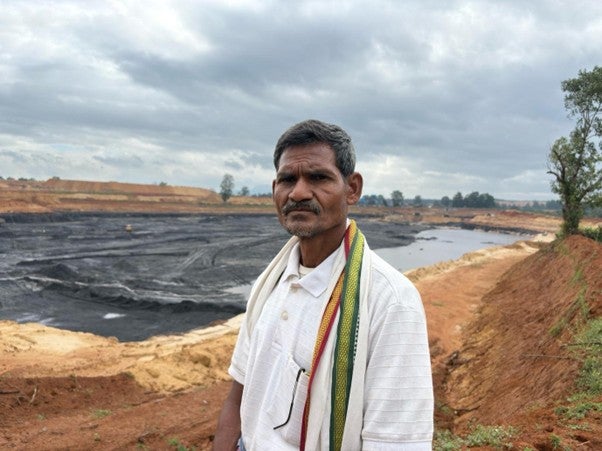
Foto superior: Anand Ram Kusro posa frente a las obras de ampliación de la mina Adani en la aldea de Salhi. Detrás de él se encuentra un bosque sagrado de árboles de sal.
Top photo: Anand Ram Kusro stands in front of the ongoing expansion site of the Adani mine in Salhi village. Behind him lies a sacred grove of sal trees.