By Phoebe Farris (Powhatan-Pamunkey)
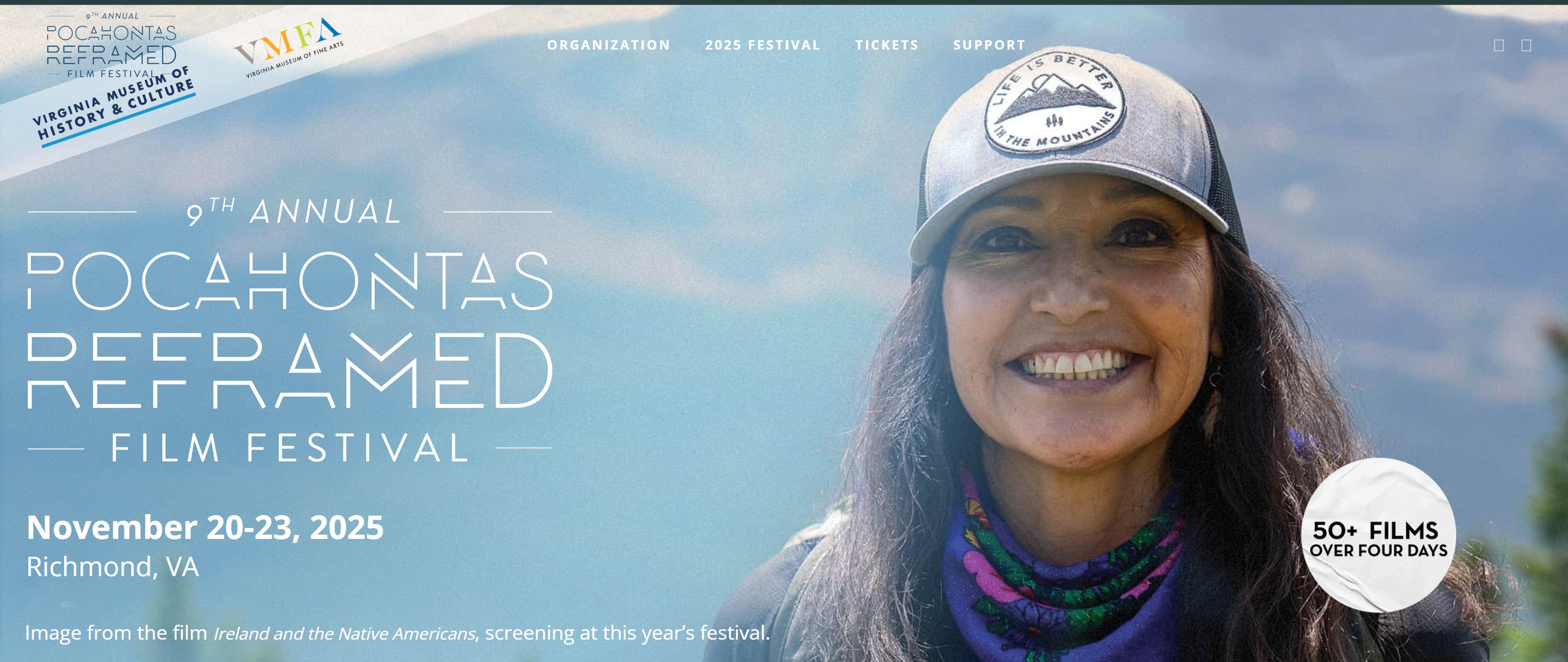
The 9th Annual Pocahontas Reframed Film Festival took place November 20-23, 2025, in Richmond, Virginia. This year’s festival included new themes, notably the relationships between Afghan refugees and Aboriginal Peoples in Australia, through two feature films from Australia: “Limbo” (2024) and “Watandar, My Countryman” (2023). Relations between Irish and Indigenous Peoples in Canada and the U.S. were examined in the documentary, “Ireland and the Native Americans” (2025), produced by Ronan McClosky. The film looked at the impact that intermarriages between Irish settlers and Indigenous Tribes had on colonial government, and the commonalities of oppression that both groups experienced under British rule.
In keeping with the festival’s goal to include more international Indigenous themes, Frederico Cuatlacuatl returned with his new film, “Quemarle Las Patas Al Imperio/To Burn the Feet of the Empire” (2025), an exploration and reclaiming of ancestral Mexican Nahua lineage, land, and languages.
Themes and legal issues from last year’s festival, such as the 1924 Virginia Racial Act, were evident in several of this year’s documentaries. Also referenced again were the various controversies concerning so-called “Pretendians” and dialogues about whether being Indigenous is based on blood quantum rules, DNA, having a Tribal enrollment card, or self-identification.
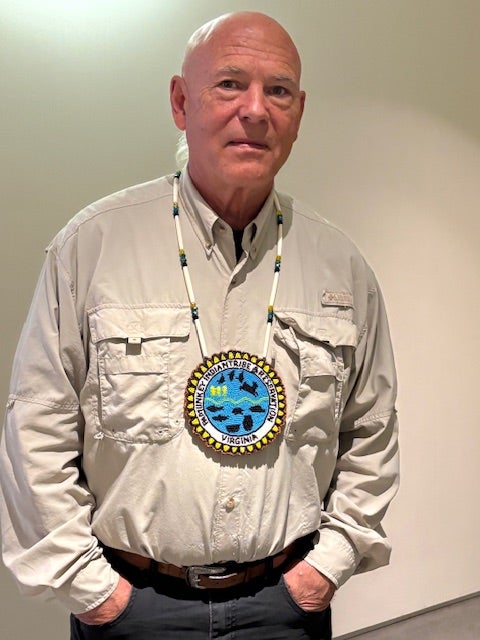
Pamunkey Chief Kevin Brown
Close to home for many attendees were the series of shorts titled “Made in Virginia,” which included the documentaries, “Resilience on the River” (2025), “Life in the Heartland-Monacan Nation” (2023), and “Culture Keepers: Voices of the Land” (2025), along with “Pamunkey Portrait” (2025), which was featured in the Sunday Shorts Program series.
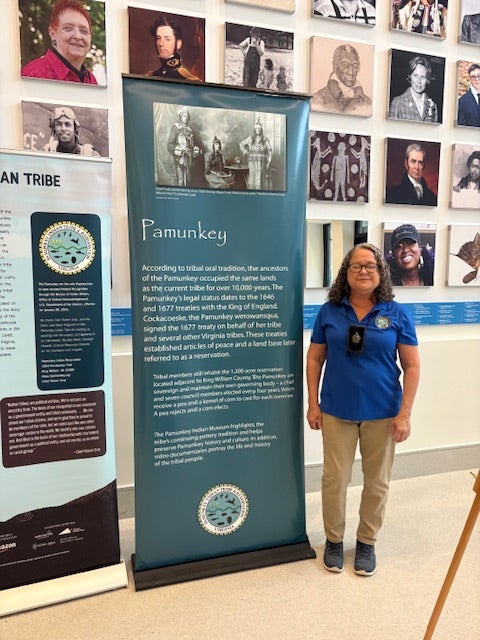
Pamunkey display at the festival and Kim Taylor, Cultural Resources Director.
The three female Virginia chiefs, Lynette Allston (Nottoway), Joanne Howard (Eastern Chickahominy), and Anne Richardson (Rappahannock), featured prominently in recounting the common history shared by Virginia Tribes regarding paper genocide, school segregation, and the loss of their Algonquin and Siouan languages. Each short portrayed the optimistic present and plans for language revitalization, ancestral land reacquisition, and more positive cooperation from the state and federal governments.
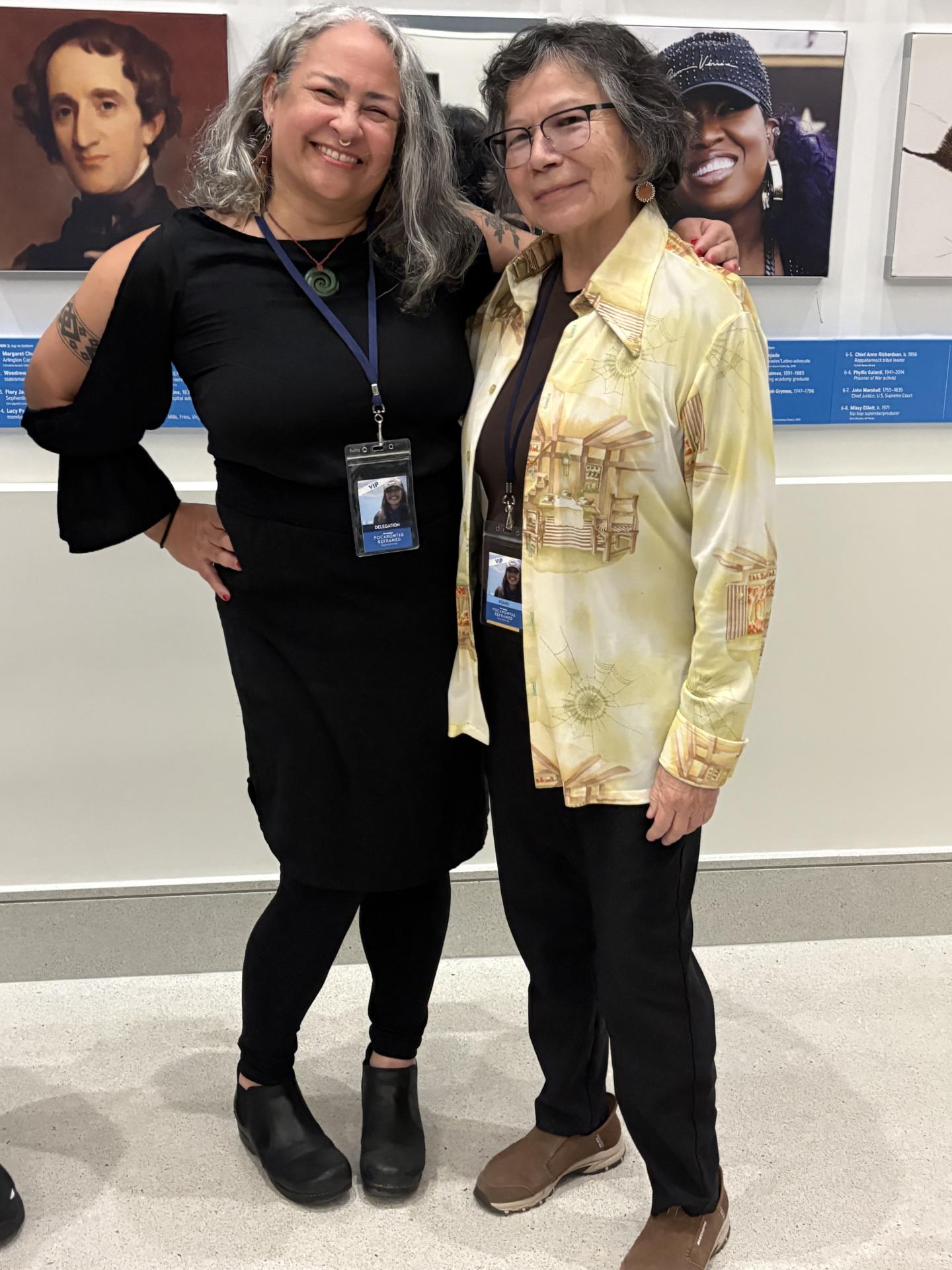
Paige Bethmann(Haudenosaunee), producer of “Remaining Native” (2025) with filmmaker and board member, Shelley Niro (Mohawk)
“Bearing Witness: Native American Voices in Hollywood”, a documentary presented by Producer Darrell Redleaf-Fielder, included cast commentary by several renowned Native actors such as Tantoo Cardinal (Cree/Metis) and Irene Bedard (Inupiat/Cree). Discussions revolved around films such as “Little Big Man”, “Smoke Signals”, and “Billy Jack”, as well as the actors’ personal experiences with complex issues. Bedard discussed how Dr. Martin Luther King’s civil rights activism, women’s rights, environmental-social justice, Two-spirit identity, Russell Means of the American Indian Movement (AIM), and the 1970s Wounded Knee occupation interfaced with the old films discussed above.
Cardinal, who is from Canada, described her first visit to the U.S. in Atlanta, Georgia, as her initial foray into civil rights activism. The exposure to civil rights was facilitated by her first husband, a civil rights organizer. She addressed some of the commonalities among American Indian oppression/activism, Vietnam War-era protests, and civil rights marches of the time. “Little Big Man,” starring Dustin Hoffman, was analyzed for its portrayal of a Two-Spirit character.
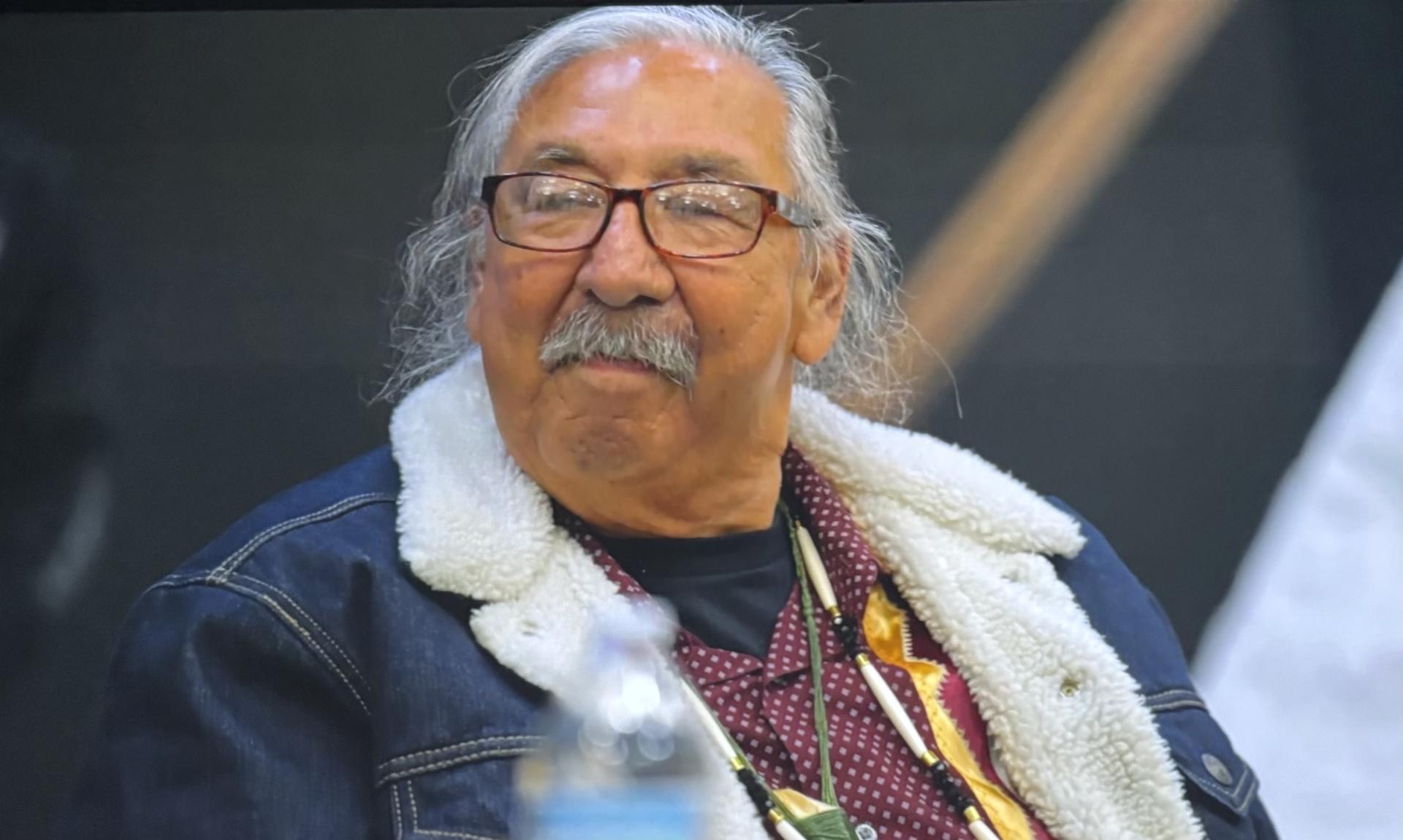
Still from "Free Leonard Peltier."
Connections between film and social justice were furthered by the screening of “Free Leonard Peltier” (2025), co-directed by Jesse Short Bull and David France and co-produced by Naglis Tomas, and presented by producer Jhane Myers. Contemporary interviews with Malona Thunder Hawk (Lakota), Butler Rubin, Dino Butler, Myrtle Poor Bear, and several attorneys are combined with archival footage and AI recreations to guide viewers through the emergence of AIM, Peltier’s imprisonment for the 1975 murders of two FBI agents on the Pine Ridge Reservation in South Dakota, his clemency release by President Biden during his last day in office, and finally Peltier’s return home. Two of the film’s most striking interviews were with Thunder Hawk, who was involved with the resistance occupation of the Bureau of Indian Affairs in the 1970s, and Poor Bear, who lied about her affair with Peltier and her knowledge of his alleged murders due to the FBI threatening her with losing custody of her child. The emotions in the theater were palpable during the scenes of Peltier’s release from prison, and the crowds lined up to see him and his reunion with family and friends.
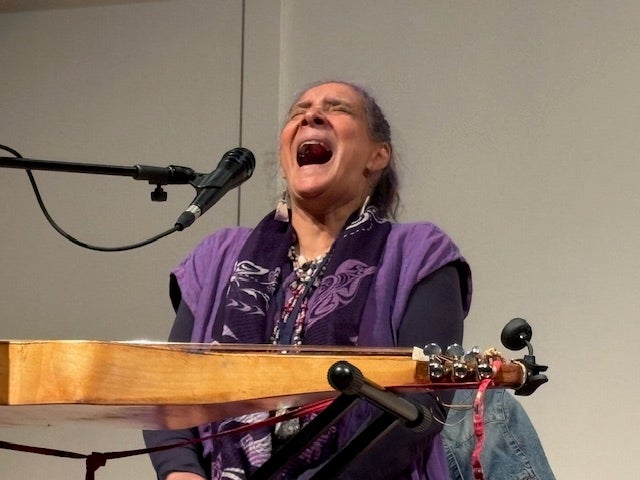
Pura Fe’(Tuscarora/ Taino).
The festival’s organizers were wise to follow “Free Leonard Peltier” with an evening performance by Pura Fe’ (Tuscarora/ Taino) and Cary Morin. Their voices and guitars, loud and also soft, the strong rhythms, and Pura Fe’s body movements and dramatic facial expressions offered needed healing after the emotionally charged screening.
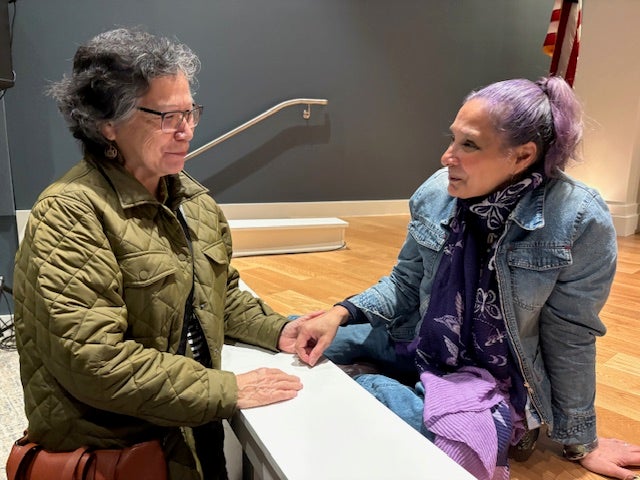
Post-performance chat with Shelley Niro (Mohawk), filmmaker and board member, and Pura Fe’.
Board member Jack Kohler’s (Hupa) presentation, “Stroke: The Circle of Healing” (2024), by Sacramento filmmaker Jaime Tafoya, highlighted the filmmaker’s personal recovery from his stroke by blending western and traditional Native American medicines. The film included information about the Sacramento Native American Center for Health and featured Certified Medical Herbalist Sage LaPena, who was instrumental in Tafoya’s recovery. Both the concert and the film provided the necessary reflection and emotional release after viewing films with challenging subject matter.
It is impossible to see and review all of the films that were screened over four days, so I want to give a special shoutout to one film that I missed: congratulations to Andrew Troy (Apache), writer, director, and producer of “Midnight in the Orange Grove” (2025). Troy won Best Director at the 2025 LA Skins Fest and was recently mentioned in Variety magazine.
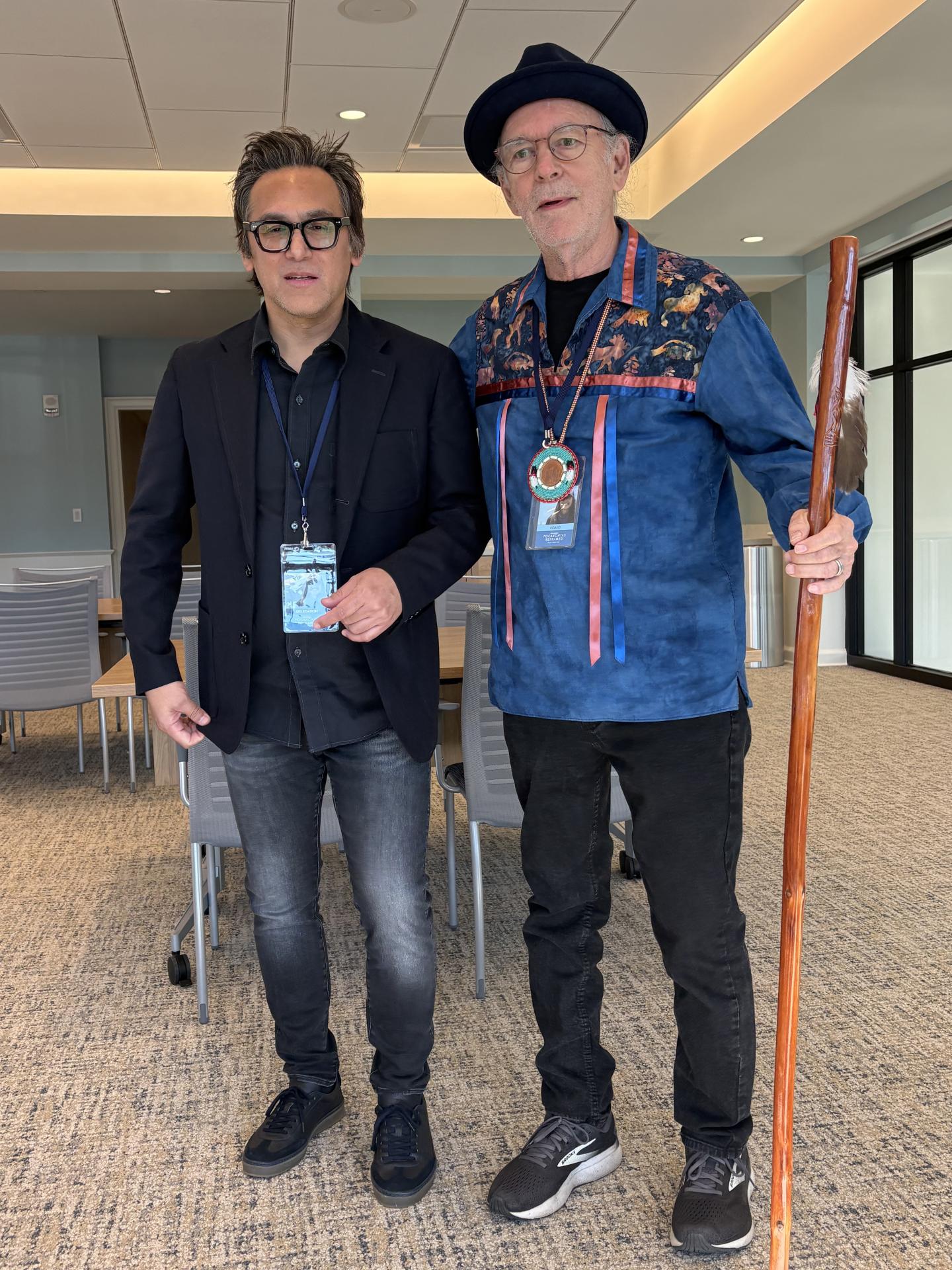
Andrew Troy (Apache), director of “Midnight in the Orange Grove,” and Brad Brown (Pamunkey).
The themes of belonging, identity, land loss, occupation, immigration, assigned racial identities, climate change, and food sovereignty will continue to be addressed at the Pocahontas Reframed Film Festivals because these issues continue to impact Indigenous communities here in Turtle Island. It is worth considering this as the United States prepares to celebrate 250 years of independence.
--Phoebe Farris (Powhatan-Pamunkey descent) is Contributing Arts Editor for the Cultural Survival Quarterly magazine. An art critic, curator, author, and photographer, she has written extensively on Indigenous visual, literary, and performing arts for over two decades. Farris is also a Professor Emerita of Art and Design at Purdue University and has curated and contributed to exhibitions highlighting Native and global Indigenous artists. Her work bridges scholarship, creative practice, and advocacy, amplifying Indigenous voices in contemporary art and media.