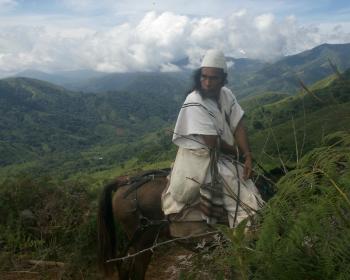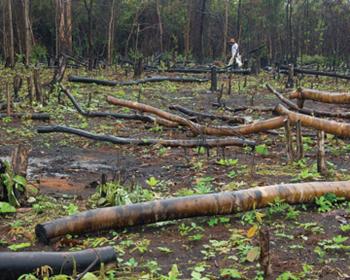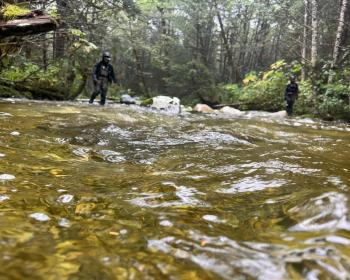

On March 8, 2012 several hundred Indigenous people began a two week march across Ecuador to call attention to their protest of a large-scale open-pit copper mine. Ecuacorriente, a Chinese company, has been authorized by the Correa government to develop a mine near El Pangui, Zamora-Chinchipe Province, in the southern part of the country.
By Boureima Guindo (Dogon, CS Investigative Journalism Fellow)
In Mali, particularly in Dogon Country, an upland area of the former Mopti region, communities are increasingly feeling the effects of climate change. Indigenous women involved in market gardening are among those most affected.
Despite growing difficulties in accessing water, these women continue to work hard to maintain their gardening activities. Faced with severe water shortages, many of them have turned to traditional methods of finding and conserving water.
By Damaris Lenantare (Rendille, CS Journalism Fellow)
For pastoralist communities in Northern Kenya, livestock is everything. It is more than a source of livelihood; it is a means of survival.
Del 24 al 27 de septiembre de 2026, Cultural Survival tuvo el orgullo de participar en Terra Madre Salone del Gusto en Turín, Italia. Organizado por Slow Food International, la Ciudad de Turín y la Región del Piamonte, Terra Madre reunió a más de 1.500 delegados de 125 países para "celebrar la biodiversidad, compartir historias y reafirmar el poder de los alimentos para tender puentes entre comunidades, culturas y fronteras".
Por Byron Tenesaca (Kichwa Kañari, Equipo de CS)
Rendille Indigenous Community Faces Growing Water Crisis as Climate Change Intensifies Drought
By Damaris Lenantare (Rendille, CS Journalism Fellow)
By Damaris Lenantare (Rendille, CS Journalism Fellow)
In Marsabit’s vast Arid and Semi-Arid Lands (ASAL), a land of great beauty, a quiet crisis is unfolding in Kenya. Repeated failed rainy seasons are pushing Indigenous pastoralist communities to the limits of their resilience.

Reconocimiento de tierra
Reconocemos que nuestra sede está en la tierra de Massachusetts, en Cambridge, MA, y agradecemos a los administradores Indígenas pasados, actuales y futuros de este territorio.