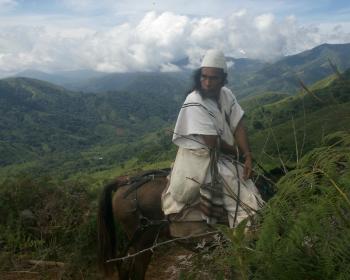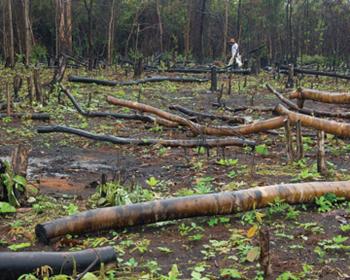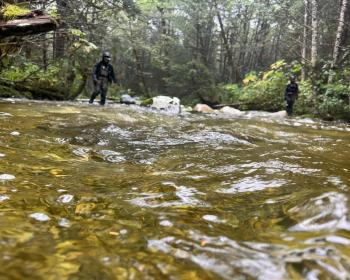

On March 8, 2012 several hundred Indigenous people began a two week march across Ecuador to call attention to their protest of a large-scale open-pit copper mine. Ecuacorriente, a Chinese company, has been authorized by the Correa government to develop a mine near El Pangui, Zamora-Chinchipe Province, in the southern part of the country.
By CS Staff
From October 5–8, 2026, Cultural Survival staff joined the fourth biennial National Tribal Infrastructure Coordination Conference (NTICC) in Reno, Nevada, under the powerful theme, “Honoring Our Knowledges, Healing Our Mother Earth.” As a proud sponsor, Cultural Survival was honored to support this space where Indigenous Knowledge, community leadership, and collective action flourished, connections were made, and resilience was strengthened.
Seventeenth meeting of the Conference of the Parties to the Convention on Biological Diversity 19–30 October 2026, Yerevan, Armenia
COP17 AGENDA ITEM: Opening Statement on behalf of the International Indigenous Forum on Biodiversity (IIFB) delivered by Andrei Isakov
Seventeenth meeting of the UN Conference of the Parties to the Convention on Biological Diversity, Yerevan, Armenia, 19–30 October 2026
Agenda Item 1.
This statement is submitted to UN CBD COP17 on behalf of Cultural Survival, an Indigenous-led organization.
We request that the Parties pay attention to and support the following set of issues regarding Indigenous Peoples.
Del 19 al 30 de octubre de 2026, se celebrará en Ereván (Armenia) la Conferencia de las Partes (COP17) del Convenio sobre la Diversidad Biológica (CDB) de las Naciones Unidas.
By Georges Theodore Dougnon (Dogon, CS Staff)
Across Indigenous communities, young leaders are creating opportunities that connect sustainable livelihoods with the protection of their lands, cultures, and knowledge. With support from Cultural Survival’s Indigenous Youth Fellowship, Louivenzia Komases (Nama) in Namibia and Mommon Makko (Maasai) in Tanzania are putting this vision into practice.
Louivenzia Komases (Nama) from Namibia
Brazil will arrive at COP31 after an election that strengthened political forces historically opposed to Indigenous territorial rights. What does this mean for forests, biodiversity, critical minerals, and Brazil`s international climate leadership for Indigenous perspectives?
By Edson Krenak (Krenak, CS Staff)
From COP30 to COP31: Waking up to a Different Political Landscape
El 10 de agosto de 2026 ocurrió un terremoto de magnitud 7,4 en Colombia. Los departamentos más lastimados fueron Risaralda, Valle del Cauca, Chocó y Caldas. Entre la población más afectada se encuentran numerosos Pueblos Indígenas, que hoy enfrentan una situación de emergencia aún más compleja.

Reconocimiento de tierra
Reconocemos que nuestra sede está en la tierra de Massachusetts, en Cambridge, MA, y agradecemos a los administradores Indígenas pasados, actuales y futuros de este territorio.