
En los últimos años, las instituciones mundiales de salud y medio ambiente han reconocido cada vez más que los Pueblos Indígenas son centrales para la conservación de la biodiversidad, la salud humana y la resiliencia climática. Sin embargo, persiste una brecha entre el reconocimiento del liderazgo Indígena y los conceptos y marcos que estas lideresas y líderes utilizan para comprender la salud, el medio ambiente y la interconexión de todo lo que existe. El Marco de los Determinantes Indígenas de la Salud (IDH, por sus siglas en inglés) surgió como una herramienta práctica para orientar políticas, financiamiento e implementación con base en los principios de seguridad cultural y en la Declaración de las Naciones Unidas sobre los Derechos de los Pueblos Indígenas, con el fin de abordar esta brecha.
Patrocinado por el Foro Permanente de las Naciones Unidas para las Cuestiones Indígenas, el Marco IDH fue presentado en 2023 con el estudio “Los determinantes de la salud Indígena en la Agenda 2030 para el Desarrollo Sostenible”, que replanteó la salud más allá de los indicadores convencionales. El estudio estableció la Indigeneidad como un determinante amplio de la salud, que incluye 33 factores de riesgo y de protección que impactan específicamente la salud de los Pueblos Indígenas. Esta afirmación estableció que la salud Indígena no se define únicamente por el acceso a los servicios, sino por la integridad de las relaciones entre los Pueblos, las tierras, los sistemas de gobernanza y el conocimiento. En esencia, este estudio situó la autodeterminación como un determinante primario de la salud, desplazando la narrativa de la vulnerabilidad hacia los derechos.
El estudio de 2024 sobre los IDH, “Mejoramiento de la salud y el bienestar de los Pueblos Indígenas a nivel mundial: puesta en práctica de los determinantes de la salud Indígena”, amplió esta base de manera más extensa, reforzando que las cosmovisiones Indígenas están interconectadas con todos los aspectos de la vida y con la Madre Tierra. Este estudio marcó un cambio decisivo hacia una orientación estructural y operativa diseñada explícitamente para proporcionar herramientas a las entidades de la ONU, los Estados Miembros y otras instituciones, con el fin de implementar los Determinantes Indígenas de la Salud en las políticas y en la práctica. También describe las transformaciones institucionales necesarias para hacerlo, entre ellas reconocer a los Pueblos Indígenas como titulares de derechos, incorporar el consentimiento libre, previo e informado, garantizar una representación significativa en la toma de decisiones y desarrollar políticas y procedimientos organizacionales que apoyen enfoques liderados por Pueblos Indígenas.
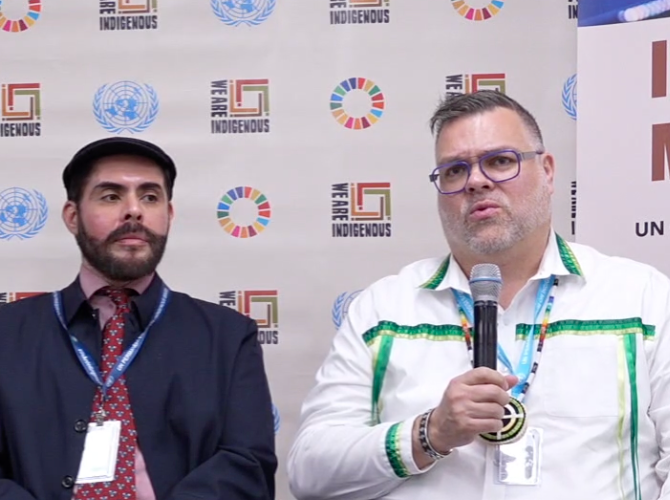
Geoffrey Roth interviene en la Zona de Medios Indígenas del UNPFII. Fotografía de Jamie Malcolm-Brown.
El estudio de 2025, “Evaluación de las estructuras institucionales para mejorar la salud y el bienestar de los Pueblos Indígenas en todo el mundo: instrumento para medir los determinantes de la salud Indígena” presentó el Instrumento de Evaluación IDH, para valorar en qué medida las instituciones están abordando los riesgos y factores de protección relacionados con la salud Indígena y si están preparadas para defender los derechos Indígenas en la práctica. El estudio amplía la evaluación para incluir la gobernanza, el medio ambiente y el bienestar comunitario, ofreciendo una herramienta de puntuación para apoyar enfoques culturalmente seguros, basados en derechos y orientados a la rendición de cuentas institucional.
El Marco IDH no se limita a añadir nuevos indicadores: redefine el sistema de análisis, exigiendo a las instituciones rendir cuentas sobre derechos, gobernanza y relaciones, y no solo sobre resultados. Por esta razón, el estudio IDH de 2026, “Restitución de la salud Indígena interconectando los sistemas desde la perspectiva de los determinantes de la salud Indígena: experiencia local y mundial”, se centró en demostrar cómo la salud Indígena funciona como un integrador de sistemas y como un indicador de resultados entre sectores.
En otras palabras, la salud Indígena debe entenderse como un indicador diagnóstico de la integridad de las políticas en distintos sectores, reflejando cómo las decisiones relacionadas con la tierra, el medio ambiente, la gobernanza, la cultura y los sistemas de conocimiento moldean directamente el bienestar Indígena.
En 2023, 2024 y 2025, el Foro Permanente de las Naciones Unidas para las Cuestiones Indígenas presentó recomendaciones específicas en las que instó a los Estados Miembros y a las agencias de la ONU a adoptar el concepto de Indigeneidad, el Marco IDH y su instrumento de evaluación como herramientas para promover los derechos Indígenas, fomentar la paz y apoyar la gobernanza ambiental liderada por Pueblos Indígenas y la justicia global.
Tras la recomendación de 2023 del Consejo Ejecutivo de la Organización Mundial de la Salud de reconocer la Indigeneidad como un determinante de la salud, el Informe de la OMS sobre los Determinantes Sociales de la Equidad en Salud, publicado en 2025, reconoció oficialmente la Indigeneidad y los determinantes específicos de la salud de los Pueblos Indígenas. Dicho reconocimiento refleja la comprensión de que la salud Indígena es holística y abarca todos los aspectos de la vida, más allá del ámbito clínico, e incluye el medio ambiente y la salud de la Madre Tierra.
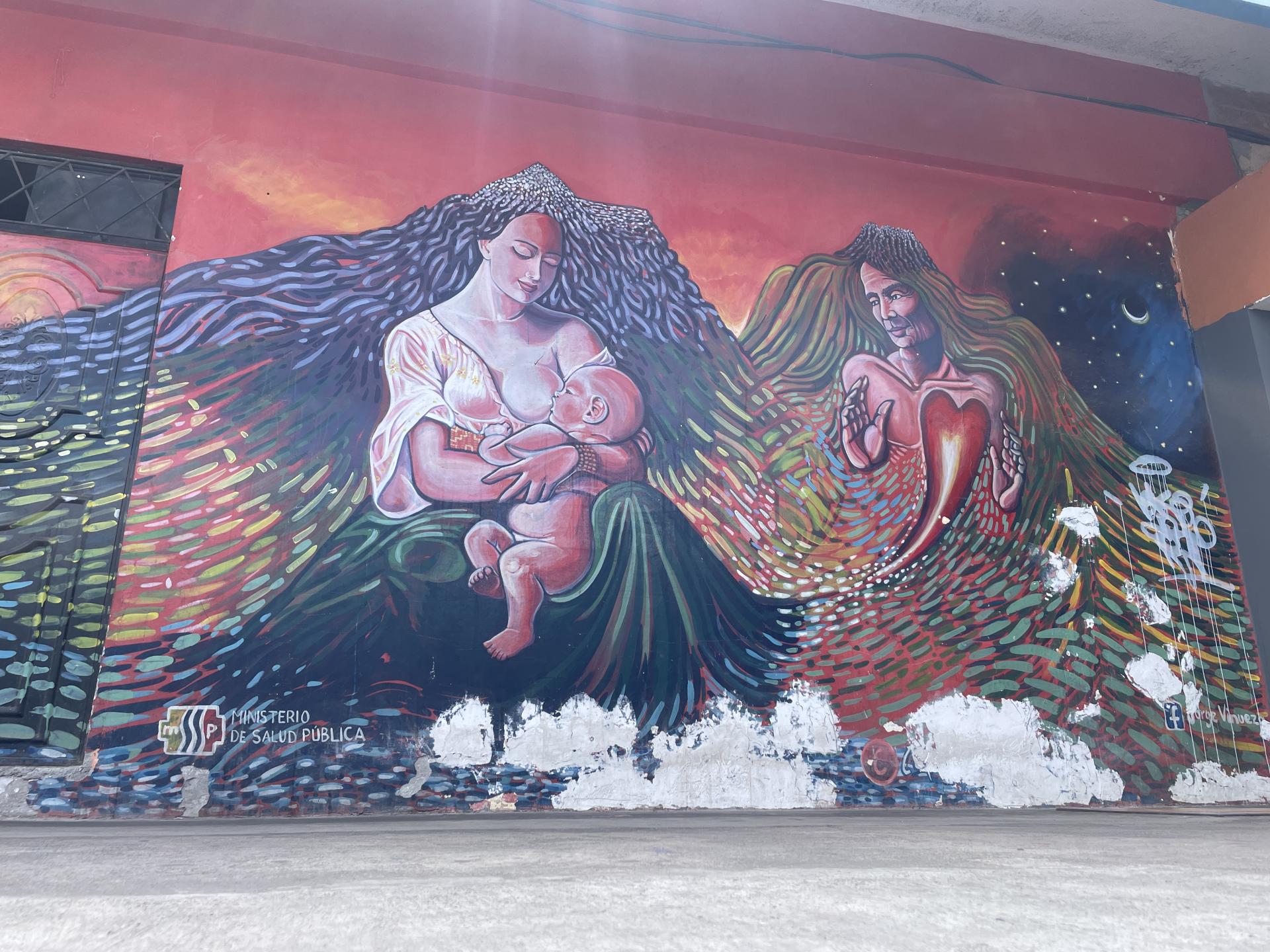 Izquierda: Mural de Jorge Vinueza en Ecuador, encargado por el Ministerio de Salud Pública.
Posteriormente a la recomendación del Foro Permanente de las Naciones Unidas, el Convenio de las Naciones Unidas sobre la Diversidad Biológica emitió la Decisión 16/19 en 2024, que hace referencia oficial al Marco IDH como parte de su Plan de Acción Mundial sobre Biodiversidad y Salud. La implementación del Marco IDH en las agencias de la ONU permite que los Pueblos Indígenas cuenten con una plataforma integral para promover sus necesidades locales a través de un marco que respeta, fomenta y protege los derechos Indígenas en todos los aspectos de la vida.
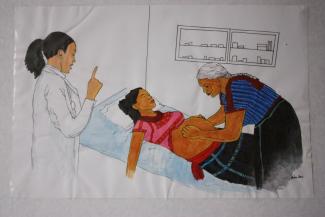
Uno de los ejemplos más claros de la relevancia de la evolución del Marco IDH como plataforma holística es la partería Indígena. La partería Indígena no se limita al parto como un evento clínico; es un sistema de salud arraigado en las relaciones entre las personas, la tierra, el conocimiento y la espiritualidad. Las parteras actúan como portadoras de conocimiento, cuidadoras y lideresas comunitarias, guiando no sólo el proceso de nacimiento, sino también la plena integración de una nueva vida en los sistemas culturales, territoriales y espirituales. Esto refleja un principio central del Marco IDH: que la salud es relacional, intergeneracional y está basada en los sistemas Indígenas de gobernanza y conocimiento.
Las prácticas de partería Indígena están profundamente conectadas con el territorio. El nacimiento se acompaña mediante prácticas culturalmente específicas que se nutren de los ecosistemas locales, como plantas medicinales, alimentos tradicionales y condiciones ambientales propias de cada región. La partería Indígena demuestra que la salud de las personas es inseparable de la salud de su tierra, su biodiversidad y sus sistemas de conocimiento.
Sin embargo, las parteras Indígenas enfrentan numerosas barreras sistémicas que reflejan problemas estructurales más amplios, incluyendo la falta de reconocimiento de la gobernanza, los sistemas de conocimiento y los derechos Indígenas. Su conocimiento ancestral suele ser subordinado y desvalorizado por políticas que tratan esta práctica como auxiliar de los sistemas biomédicos, negando su carácter autónomo. Los procesos de profesionalización y certificación —a menudo presentados como mecanismos para garantizar la seguridad o la “interculturalidad”— pueden regular y reformular la partería Indígena para que se ajuste a estándares externos. Y, en algunas zonas, sus prácticas son criminalizadas.
Al mismo tiempo, la partería Indígena ha demostrado resiliencia. Durante crisis de salud pública y en regiones remotas con acceso limitado a servicios biomédicos, las parteras suelen actuar como proveedoras primarias de cuidado, sosteniendo la salud comunitaria mediante prácticas culturalmente arraigadas. Su trabajo demuestra que los sistemas Indígenas de salud no son periféricos, sino sistemas de cuidado plenamente funcionales más allá de los entornos clínicos.
El Marco IDH ayuda a visibilizar estas realidades. Subraya que fortalecer la salud Indígena requiere no solo mejorar el acceso a los servicios, sino también reconocer, proteger y apoyar los sistemas Indígenas de cuidado —incluyendo la partería— como sistemas autónomos, basados en derechos y fundamentales para el bienestar de las comunidades. Afirma que proteger los conocimientos Indígenas, la gobernanza y las relaciones con la tierra es esencial para sostener la salud a lo largo de las generaciones.
-- Geoffrey Roth (descendiente Lakota de la Tribu Sioux de Standing Rock) es presidente de la Alianza de Determinantes Indígenas de la Salud, y exmiembro experto y vicepresidente del Foro Permanente de las Naciones Unidas para las Cuestiones Indígenas. Dora-Lucia Mendez-Alfonzo (Tseltal) es partera de la Alianza Continental de Parteras Tradicionales e Indígenas de las Américas. Alejandro Bermudez-del-Villar (Mestizo) forma parte de Cedar Rock Alliance y de la Alianza de Determinantes Indígenas de la Salud.
Aspectos clave de los Determinantes Indígenas de la Salud reconocidos por la OMS
• Pilares centrales: La Indigeneidad como determinante general de la salud; la conexión con tierras, territorios y recursos tradicionales; la continuidad cultural; la revitalización lingüística; y la autodeterminación.
• Factores estructurales: Los impactos de la colonización, el racismo sistémico y la necesidad de una gobernanza liderada por Pueblos Indígenas en los sistemas de salud.
• Bienestar holístico: El equilibrio entre las dimensiones espiritual, ambiental, física y mental, a menudo entendido como un derecho colectivo más que puramente individual.
• Conexión ambiental: La relación con la Madre Tierra y el cuidado de la biodiversidad.
• Factores clave: La sabiduría intergeneracional, las prácticas de sanación tradicionales y la resiliencia comunitaria.
[Pie de foto] Geoffrey Roth interviene en la Zona de Medios Indígenas del UNPFII. Fotografía de Jamie Malcolm-Brown.
Derecha: Dibujos de parteras del Área de Mujeres y Parteras de la Organización de Médicos Indígenas en el Estado de Chiapas, México.
