A growing network of Indigenous journalists across Java and Jambi is taking media representation into their own hands to protect their customary forests and report on intense land conflicts. Through a specialized training organized by Aliansi Masyarakat Adat Nusantara (AMAN), an Alliance of Indigenous Peoples of Archipelago, dozens of community members with no prior writing experience have transformed into active reporters. This grassroots movement addresses a long-standing gap in mainstream media coverage, ensuring that violations of Indigenous Peoples’ rights are documented and shared directly by the people experiencing them.
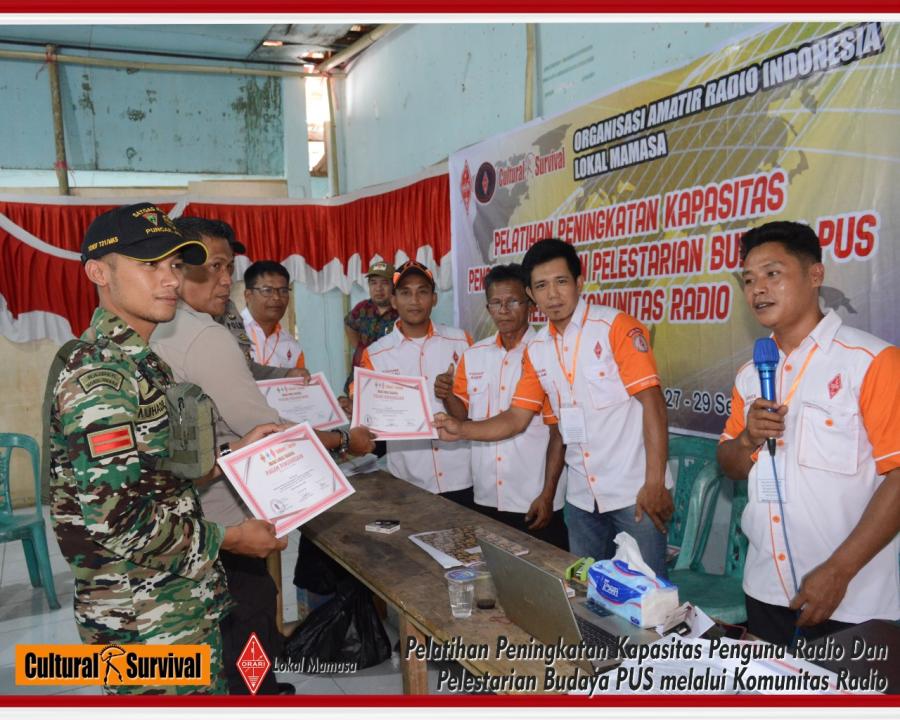
For generations, the deep-rooted challenges faced by remote communities, such as the loss of ancestral lands and the heavy impacts of industrial development, have remained largely invisible to the public. To counter this, a dedicated training program was organized which equipped 32 men and women from various Indigenous groups, including the Osing, Banyuwangi, and Kasepuhan, with essential skills in fact-checking, interviewing, and journalistic news writing. The newly trained reporters are now actively publishing their own news and providing wider coverage across various digital platforms, pushing local struggles into the national spotlight.
“Indigenous journalists are the main spearhead of the resistance and struggle of our Indigenous friends who are fighting for their rights. Issues concerning Indigenous Peoples have not been widely covered or published by mainstream media. The stories, aspirations, voices, and resistance of Indigenous Peoples demanding their rights must be voiced and published by the Indigenous Peoples themselves,” said Agung Sedayu, a trainer from Tempo Witness.
The impact of the program is already visible online. Articles and multimedia content are being distributed widely through the AMAN website, Tempo Witness, and various social media channels, allowing local stories to reach unprecedented audiences. This surge in reporting has not only amplified individual community struggles, but has also led to the official consolidation of the Association of Indigenous Journalists of the Archipelago (AJMAN). The national network now serves as a permanent platform for collaboration, mutual support, and information exchange among Native reporters.
“The benefit of this training for me and my fellow members is to enhance our skills regarding news coverage and proper, accurate writing,” explained Zenba Bimbi Galuh, a training participant and member of the AJMAN National Council for the Java region. “We can now convey the rights of Indigenous communities that have never been heard before.”
Organizers noted that the initiative successfully drew a high level of participation from women and younger community members, which is really important for the long-term sustainability of their advocacy. By building a self-reliant media structure, these communities are no longer waiting for outside journalists to tell their stories. They are establishing an independent archive of their history and current legal battles.“We can no longer rely on mainstream media to communicate or report on all the issues occurring in our communities; it is now up to us to take on that responsibility and play that role,” said Apriadi Gunawan, Chairperson of AJMAN.
Looking ahead, AMAN plans to maintain regular coordination and continuous training to ensure the journalism network remains sustainable. As young people increasingly step up to explore their heritage and document the realities of their ancestral lands, the movement is poised to permanently alter how Indigenous rights are defended across Indonesia. “This training is extremely important, especially since young people are eager to explore new things and learn about Indigenous communities,” said Shakila, a participant from the Lake Sipin community in Jambi. “Because many of them have not been exposed before, we can give them a voice here.”